
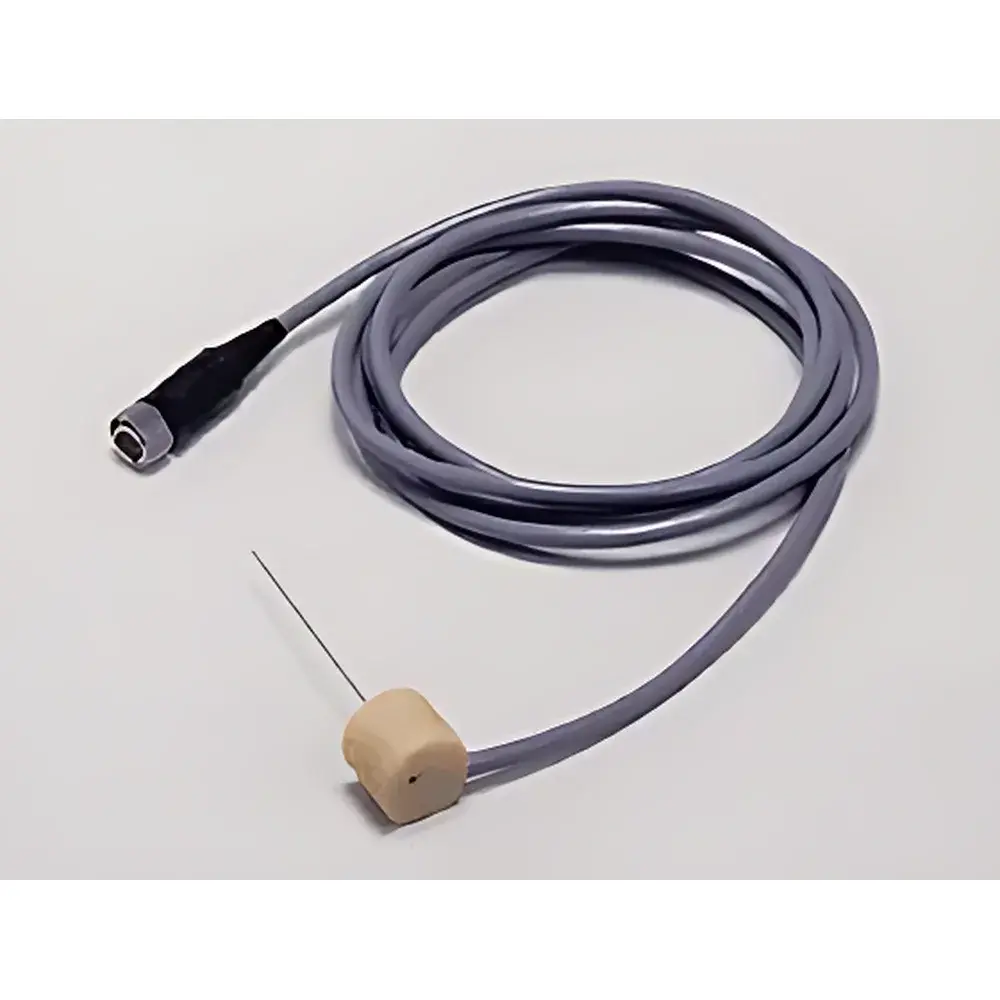
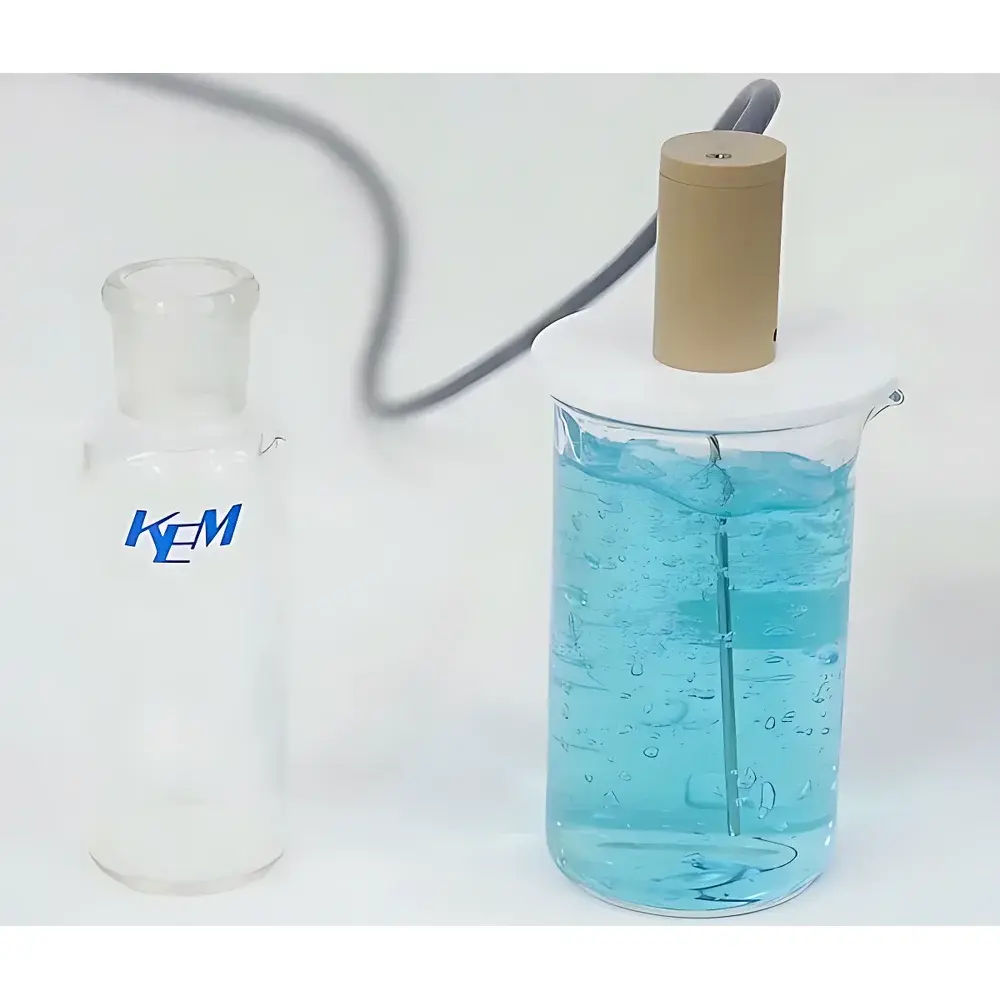
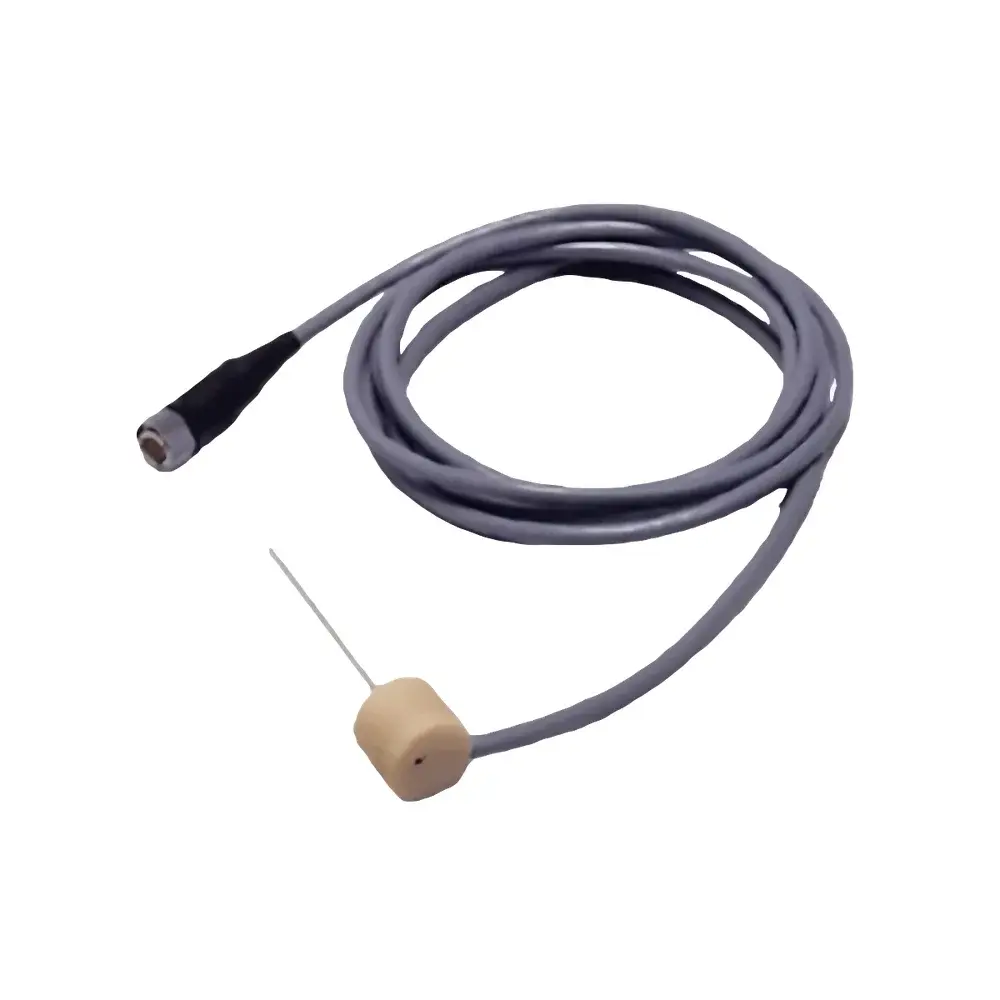
KEM PD-NO Needle-Probe Thermal Conductivity Analyzer
| Brand | KEM (Kyoto Electronics Manufacturing) |
|---|---|
| Origin | Japan |
| Manufacturer | Yes |
| Import Status | Imported |
| Model | PD-NO |
| Measurement Principle | Transient Hot Wire (THW) Method |
| Dimensions (L×W×H) | 262 × 276 × 158 mm |
| Accuracy | ±5% |
| Thermal Conductivity Range | 0.0116–0.1 W/m·K |
| Repeatability | ±3% |
| Operating Temperature Range | −100 to +180 °C |
| Standard Measurement Time | 40 s |
Overview
The KEM PD-NO Needle-Probe Thermal Conductivity Analyzer is a compact, benchtop instrument engineered for rapid and reliable thermal conductivity measurement of heterogeneous, soft, or semi-solid materials using the transient hot wire (THW) method. Unlike steady-state techniques, THW employs a linearly embedded needle probe that serves simultaneously as both heater and temperature sensor. A short-duration current pulse heats the wire, and the resulting time-dependent temperature rise is recorded with high temporal resolution. Thermal conductivity is derived from the slope of the ln(ΔT) vs. ln(t) plot in the intermediate time domain—where conduction dominates and boundary effects are negligible. This principle ensures minimal sample preparation, no requirement for geometrically perfect specimens, and immunity to interfacial contact resistance—a critical advantage when characterizing foams, gels, pastes, powders, and food matrices. The PD-NO is specifically optimized for applications where conventional guarded-hot-plate or laser-flash systems are impractical due to sample geometry, thermal instability, or low thermal diffusivity.
Key Features
- Integrated stainless-steel needle probe (diameter: ~0.1 mm, length: 40 mm) designed for direct insertion into soft, viscous, granular, or porous media without pre-compaction or molding.
- Real-time thermal response acquisition with microsecond-level timing resolution, enabling robust signal-to-noise ratio even in low-conductivity materials (down to 0.0116 W/m·K).
- Wide operational temperature range from −100 °C to +180 °C, supported by optional cryogenic and high-temperature probe housings compatible with environmental chambers.
- Self-contained electronics with digital PID-controlled current source and high-precision RTD-based temperature monitoring—no external data loggers or calibration shunts required.
- Rugged aluminum chassis (262 × 276 × 158 mm) with EMI-shielded enclosure, meeting IEC 61326-1 for electromagnetic compatibility in laboratory environments.
- Compliance with ASTM D5334–22 (Standard Test Method for Determining Thermal Conductivity of Soil and Soft Rock by Thermal Needle Probe Procedure) and ISO 22007-2:2015 (Plastics — Determination of Thermal Conductivity and Thermal Diffusivity — Part 2: Transient Plane Source and Transient Hot Wire Methods).
Sample Compatibility & Compliance
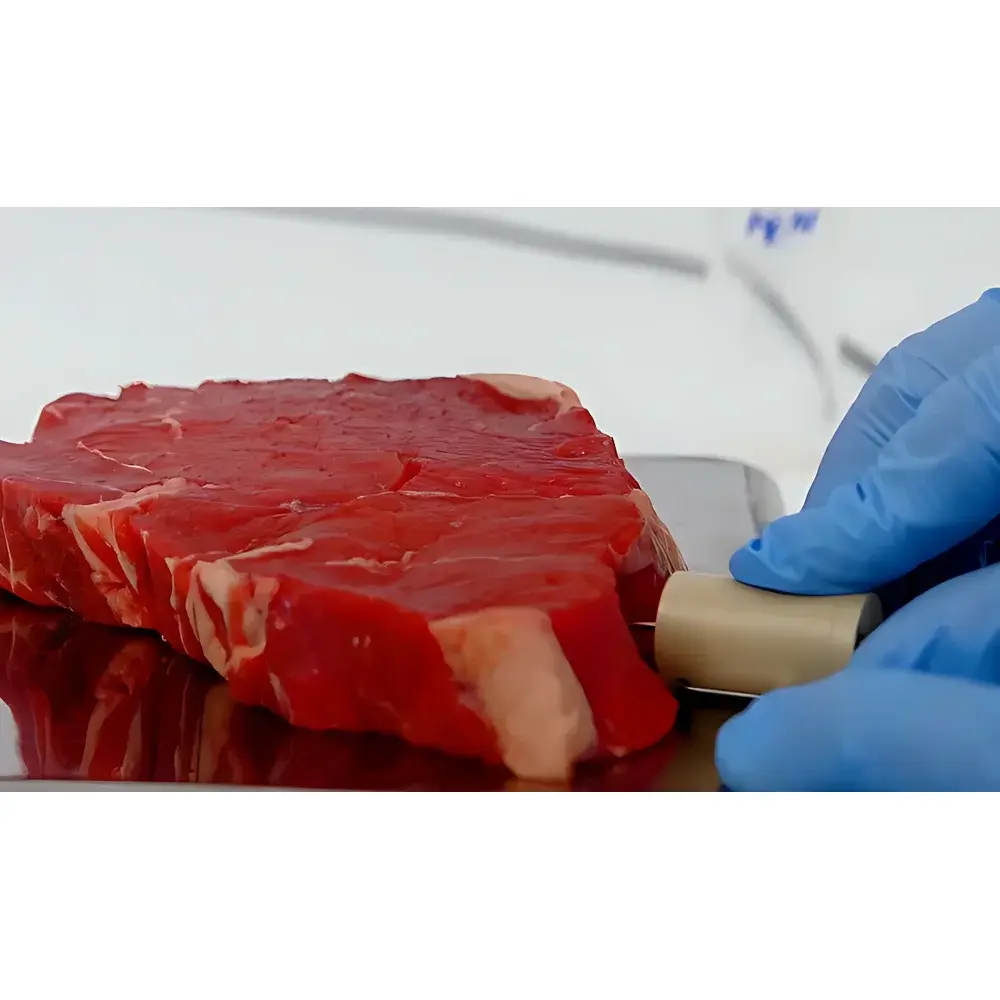
The PD-NO accommodates a broad spectrum of thermally fragile or structurally irregular samples, including rigid and flexible polymeric foams, aerogels, hydrated food gels (e.g., tofu, cheese, meat emulsions), pharmaceutical ointments, ceramic slurries, catalyst powders, and frozen soil analogs. Its needle-probe architecture eliminates the need for parallel, flat surfaces or uniform density—key limitations of comparative methods. All measurements adhere to GLP documentation standards: raw voltage/time datasets are timestamped, stored with instrument ID and operator metadata, and support audit trails per FDA 21 CFR Part 11 when integrated with KEM’s optional LIMS-ready software module. Calibration verification is traceable to NIST SRM 1470 (glassy carbon) and certified reference oils (e.g., Paratherm NF), with certificate-of-calibration provided upon delivery.
Software & Data Management
The PD-NO operates via KEM’s proprietary ThermalLab v3.2 software (Windows 10/11, 64-bit), which provides real-time visualization of temperature transients, automated baseline correction, and multi-point curve fitting using the classical Carslaw–Jaeger analytical solution for infinite line sources. Export formats include CSV (for MATLAB/Python post-processing), PDF test reports (with configurable headers, logos, and QA stamps), and XML files compliant with ASTM E1447–21 (Standard Practice for Exchange of Analytical Data). Software supports user-defined test protocols—including variable heating duration, stepwise temperature ramping, and sequential multi-location probing—and enforces electronic signatures, change logs, and version-controlled method templates aligned with ISO/IEC 17025 internal audit requirements.
Applications
- Quality control of thermal insulation materials (e.g., mineral wool, phenolic foam) during R&D and production line release testing.
- In-process monitoring of thermal homogeneity in food extrusion, freeze-drying, and fermentation batches.
- Characterization of phase-change materials (PCMs) in latent heat storage systems across sub-zero to elevated temperature regimes.
- Validation of computational fluid dynamics (CFD) and finite element analysis (FEA) thermal models for battery pack thermal management and packaging design.
- Academic research on nanocomposite polymer thermal percolation thresholds, where localized needle probing avoids bulk averaging artifacts.
FAQ
What sample volume is required for a valid PD-NO measurement?
A minimum cylindrical volume of Ø30 mm × 50 mm is recommended to ensure radial thermal diffusion remains unbounded during the 40-second test window. Smaller volumes may be assessed using empirical correction factors documented in KEM Technical Note TN-PD-07.
Can the PD-NO measure anisotropic materials?
Yes—by performing orthogonal insertions (axial vs. radial) in oriented samples such as fiber-reinforced composites or layered geopolymer membranes, directional conductivity ratios can be quantified with ≤±4% inter-directional uncertainty.
Is probe recalibration required between samples?
No. The needle probe is factory-calibrated with NIST-traceable references and retains calibration over ≥5,000 insertions. A daily verification using distilled water at 25 °C (k = 0.606 W/m·K) is recommended per ISO/IEC 17025 Clause 7.7.
Does the instrument comply with regulatory submissions for pharmaceutical excipients?
Yes—when operated under validated software configuration (ThermalLab v3.2 IQ/OQ/PQ package), PD-NO data meet ICH Q5C stability protocol requirements and support USP and Ph. Eur. 2.2.42 thermal property documentation.



