
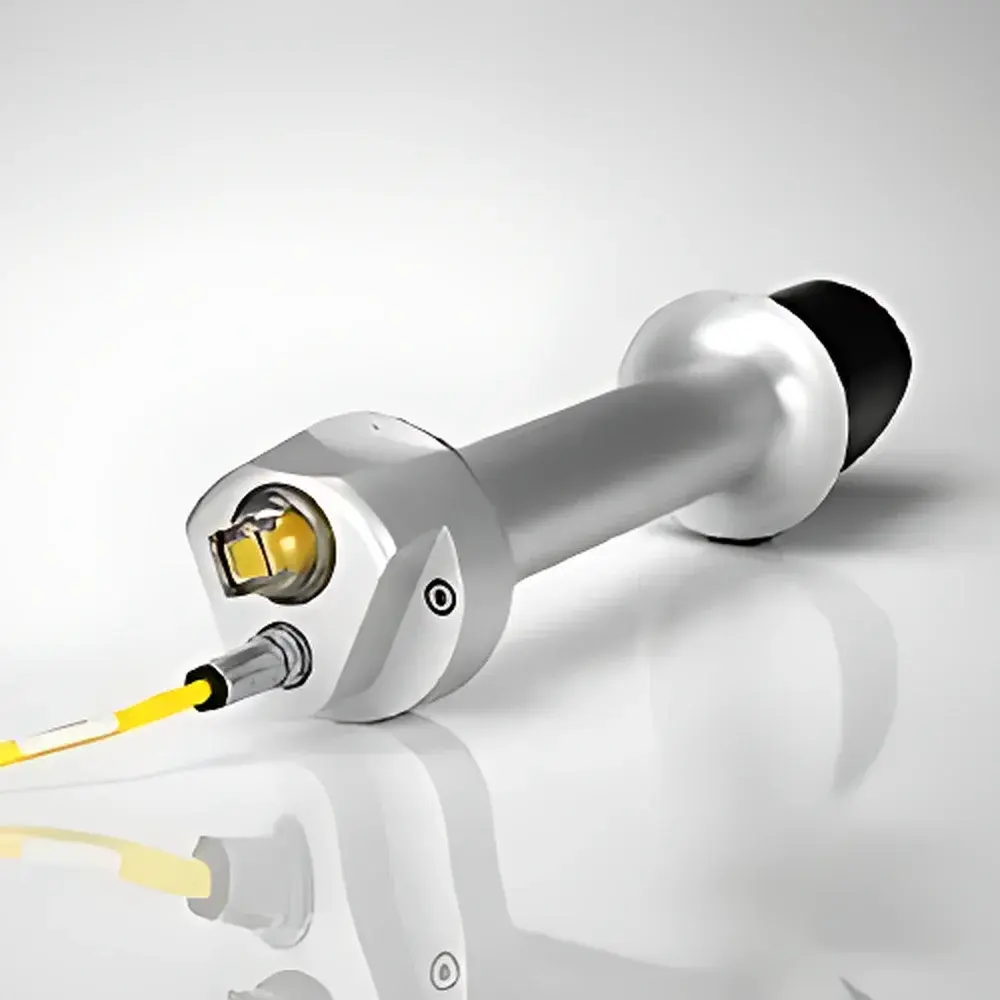
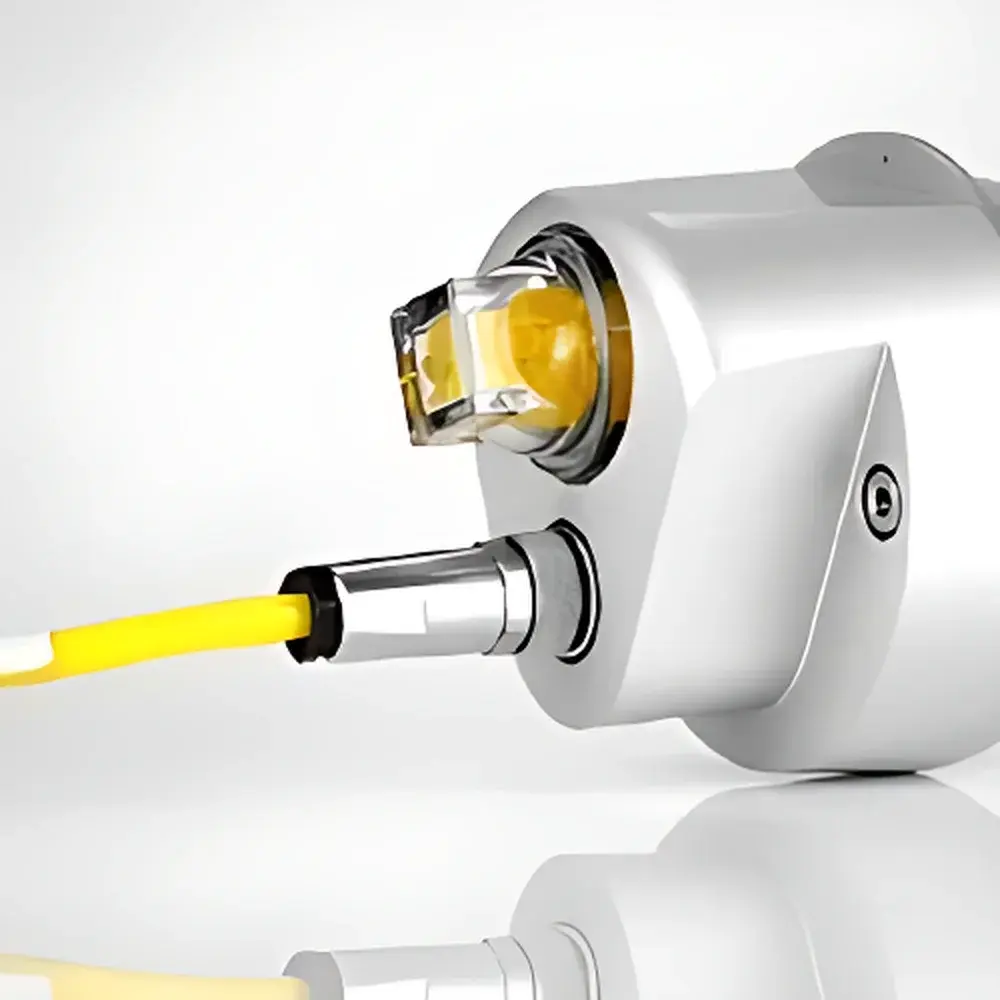
Kipp & Zonen CHP1 Direct Solar Radiometer
| Brand | Kipp & Zonen |
|---|---|
| Origin | Imported |
| Manufacturer Type | Authorized Distributor |
| Model | CHP1 |
| Price | Upon Request |
Overview
The Kipp & Zonen CHP1 Direct Solar Radiometer is a precision optical instrument engineered for the continuous, high-accuracy measurement of direct normal irradiance (DNI) — the component of solar radiation arriving at Earth’s surface in a collimated beam directly from the sun. Operating on the principle of thermopile-based detection with optical collimation, the CHP1 employs a 5° field-of-view (FOV) defined by a precisely machined collimator tube and aperture stop to isolate the direct solar beam while rejecting diffuse sky radiation. Its spectral response spans 200 nm to 4000 nm, covering the full solar shortwave spectrum, enabled by a fused quartz entrance window that serves both as environmental protection and a broadband transmissive filter. Designed and calibrated to exceed ISO 9060:2018 Class A (formerly “First Class”) specifications for pyrheliometers, the CHP1 meets and surpasses the stringent performance requirements of the Baseline Surface Radiation Network (BSRN), a global reference network established by the World Climate Research Programme (WCRP) for climate monitoring, satellite validation, and long-term radiative forcing studies.
Key Features
- Thermopile sensor with blackened absorbing surface and temperature-compensated design for high linearity and low thermal offset
- 5° full-angle collimation achieved via precision-bore aluminum tube and internal baffling, minimizing stray light contribution
- Fused quartz window with >92% transmission across 200–4000 nm; resistant to UV degradation and environmental abrasion
- Zero-offset drift < ±1 W/m² under rapid ambient temperature changes; zero-point stability maintained within ±0.5% over -20°C to +50°C operating range
- Integrated Pt-100 and 10 kΩ thermistor temperature sensors for real-time thermal compensation and diagnostics
- Weathertight rain shield with built-in leveling bubble and azimuth alignment aid for rapid, repeatable solar tracker mounting
- Spiral-type desiccant cartridge accessible without disassembly — ensures long-term optical clarity and internal dryness
- Standard 10 m shielded cable with IP67-rated connector; compatible with industry-standard data loggers (e.g., Campbell Scientific CR series, Delta-T DL2e)
Sample Compatibility & Compliance
The CHP1 is designed exclusively for outdoor, unobstructed solar exposure mounted on a solar tracker (e.g., SOLYS 2 or STR32). It requires no sample preparation or consumables and operates continuously under natural atmospheric conditions — including high humidity, dust, snow, and temperature extremes. It complies with ISO 9060:2018 (Class A), WMO Guide to Instruments and Methods of Observation (CIMO Guide, Chapter 7), and BSRN instrumentation protocols. Calibration is traceable to the World Radiometric Reference (WRR) maintained at PMOD/WRC (Davos, Switzerland), with each unit supplied with an individual WRR-traceable calibration certificate valid for two years. The instrument supports GLP-compliant data acquisition when paired with audit-trail-capable data loggers and timestamped metadata logging.
Software & Data Management
The CHP1 outputs an analog voltage signal (typically 0–20 mV per 1000 W/m²) proportional to DNI, requiring no embedded firmware or proprietary software. Signal conditioning, scaling, and unit conversion are performed externally via configurable data loggers or SCADA systems. When integrated into BSRN-compliant stations, raw voltage, thermistor resistance, and time-stamped metadata are archived in standardized NetCDF or ASCII formats aligned with BSRN Level 1.5 processing guidelines. Optional Kipp & Zonen METEON software (v3.x+) provides automated quality control flagging (e.g., for cloud obscuration, dew formation, or tracker misalignment) and supports export to CF-compliant netCDF for interoperability with CMIP6 and NASA POWER databases.
Applications
- Long-term climate monitoring networks (e.g., BSRN, GAW, SURFRAD)
- Ground-truthing of geostationary and polar-orbiting satellite radiance products (e.g., GOES-R, Meteosat SEVIRI, Sentinel-3 SLSTR)
- Performance assessment and bankability validation of concentrating solar power (CSP) and CPV installations
- Atmospheric science research: aerosol optical depth (AOD) retrieval, water vapor column estimation, and clear-sky model validation
- Calibration transfer between reference radiometers and secondary standards in national metrology institutes
- Education and training in solar resource assessment and atmospheric physics laboratories
FAQ
What is the recommended mounting configuration for the CHP1?
The CHP1 must be mounted on a high-precision solar tracker with active dual-axis control and sub-0.1° pointing accuracy. A passive shadow band is not acceptable — only full-beam tracking ensures compliance with BSRN and ISO standards.
How often does the CHP1 require recalibration?
Kipp & Zonen recommends recalibration every two years under routine operational conditions. Units deployed in high-dust, coastal, or high-UV environments may benefit from annual verification against a traveling reference standard.
Can the CHP1 operate without a solar tracker?
No. The 5° FOV necessitates continuous solar pointing; fixed-mount operation yields non-compliant, non-representative DNI data and violates ISO 9060 classification criteria.
Is the quartz window user-replaceable?
Yes — the window assembly is a field-serviceable module. Replacement requires certified cleaning protocol and post-installation zero-check; Kipp & Zonen provides OEM replacement kits and procedure documentation.
Does the CHP1 support digital output or Modbus communication?
No. The CHP1 is an analog-only sensor. Digital integration requires external signal conditioning (e.g., Campbell Scientific AM16/32B multiplexer or dedicated pyrheliometer interface modules).
Related Products







