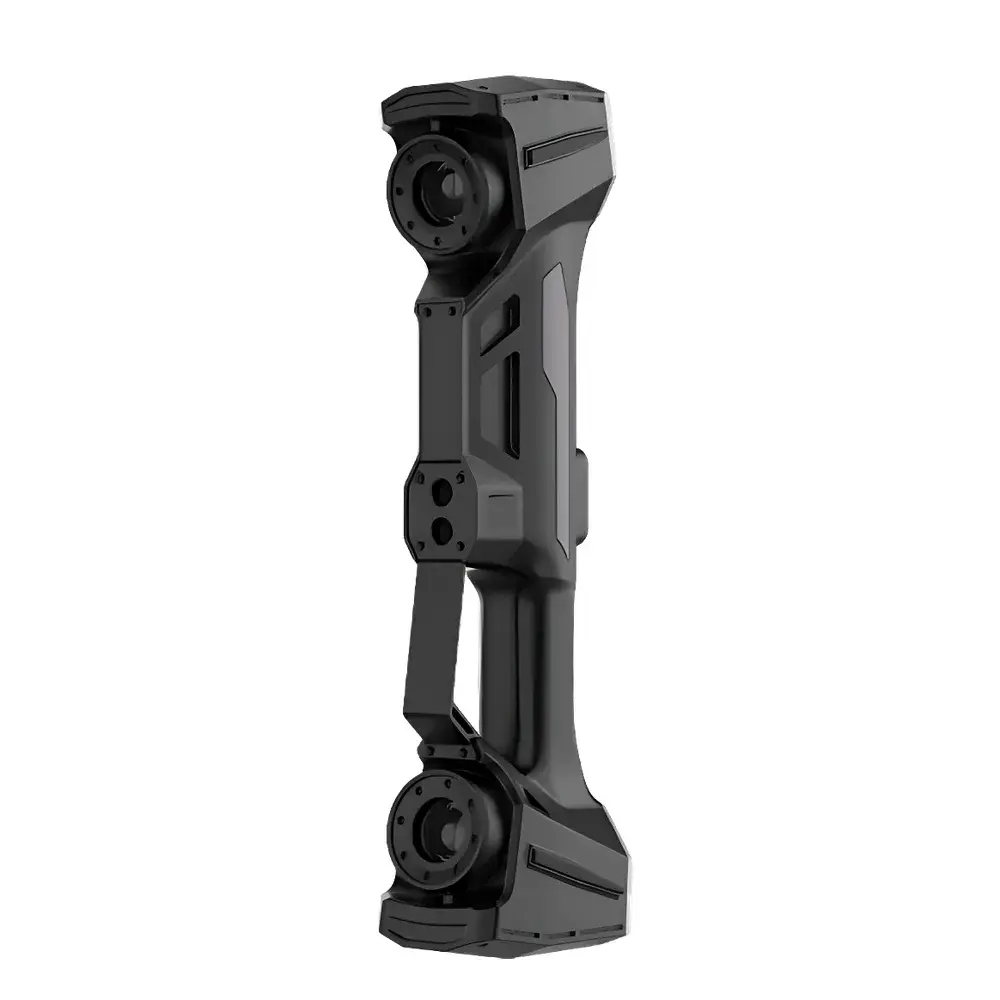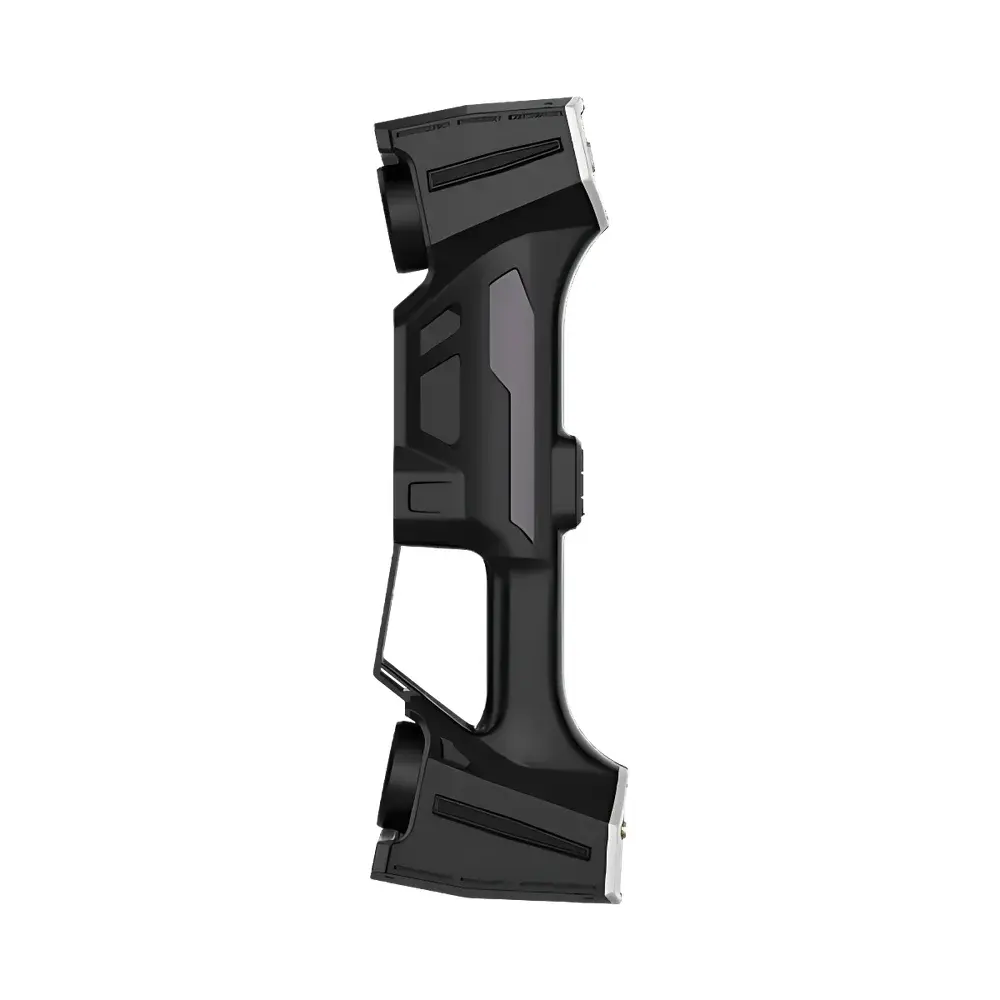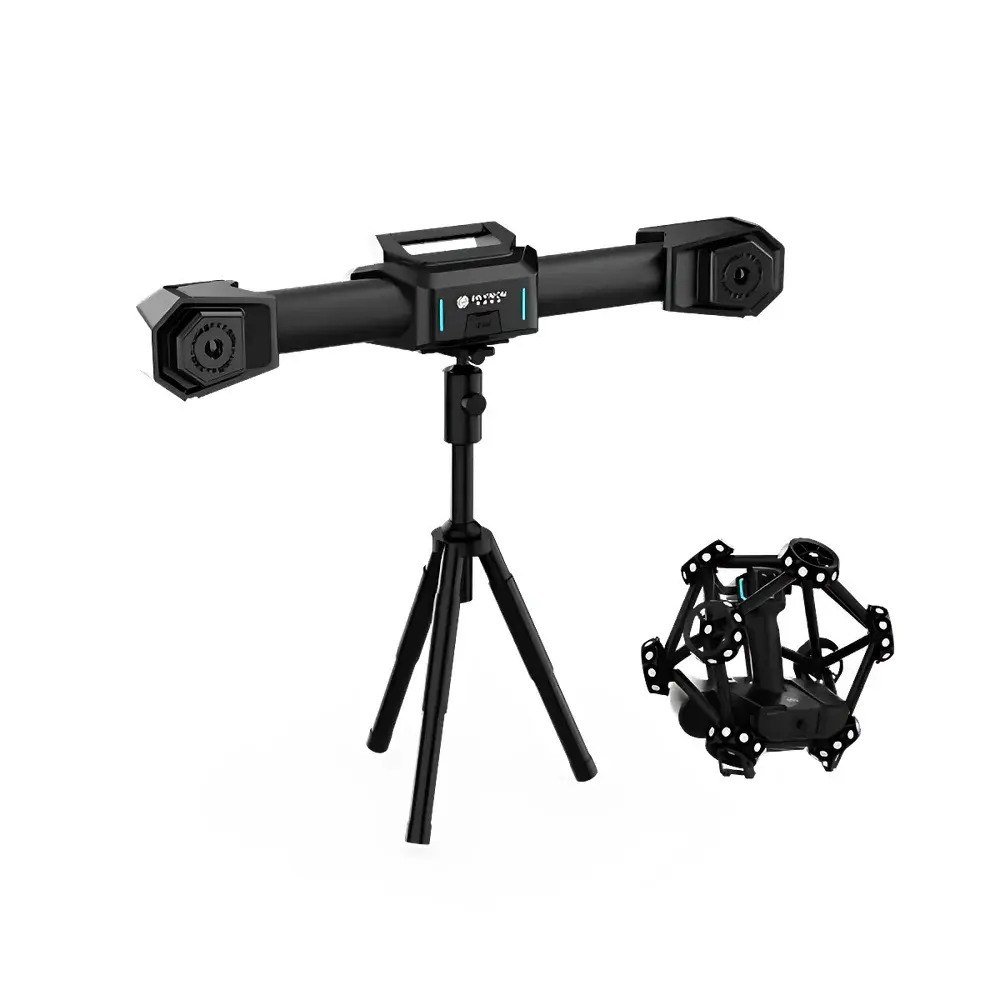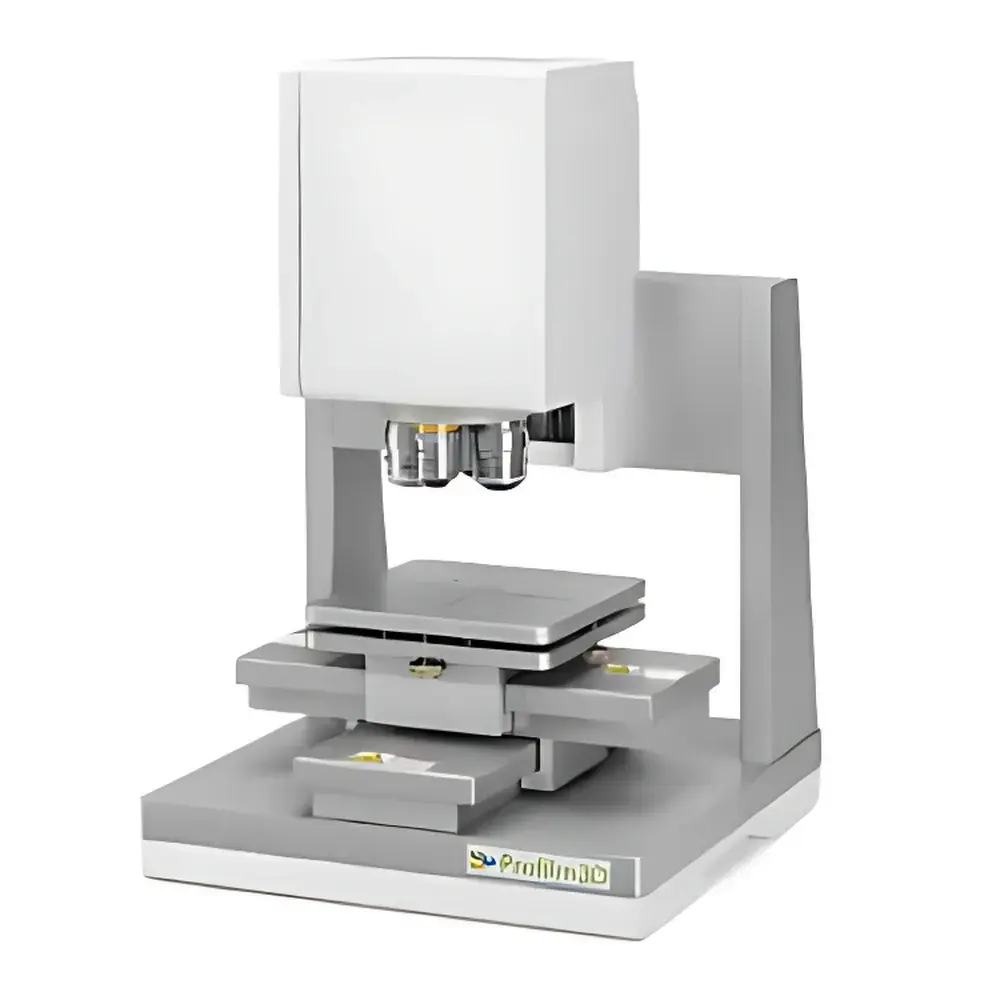
KLA Profilm3D White Light Interferometric Profilometer
| Brand | KLA |
|---|---|
| Origin | Malaysia |
| Model | Profilm3D |
| Product Type | Non-contact 3D Optical Profilometer / Surface Roughness Analyzer |
| Operating Principle | White Light Interferometry |
| Measurement Modes | Vertical Scanning Interferometry (VSI) and Phase Shifting Interferometry (PSI) |
| Z-Stage Travel | 100 mm |
| Objective Turret | 5×–100× (Michelson 5×, Mirau 10×/20×/50×/100×) |
Overview
The KLA Profilm3D is a high-performance, non-contact white light interferometric profilometer engineered for quantitative 3D surface topography measurement across research, development, and production environments. Based on the physical principle of white light interferometry—where broadband illumination generates localized interference fringes at the point of optical path length equality—the system achieves sub-nanometer vertical resolution without dependence on objective numerical aperture. This enables simultaneous high-resolution imaging and large field-of-view coverage, making it uniquely suited for surfaces exhibiting extreme height variations (exceeding objective depth of field), steep slopes (up to 60° with Enhanced Roughness Mode), low reflectivity, or heterogeneous material composition. Unlike stylus-based profilers, the Profilm3D eliminates mechanical contact, preventing sample damage and enabling repeatable measurements on delicate, soft, or coated substrates—including thin films, MEMS structures, optical components, and biological specimens.
Key Features
- Multi-mode interferometric operation: integrated Vertical Scanning Interferometry (VSI) for broad dynamic range (nanometers to millimeters) and Phase Shifting Interferometry (PSI) for ultra-high vertical repeatability on smooth surfaces.
- TotalFocus™ technology: computationally refocuses every pixel in the acquired 3D dataset, delivering diffraction-limited, true-color 3D images where all surface features—regardless of local slope or height discontinuity—are rendered in sharp focus.
- Enhanced Roughness Mode (ERM): dynamically optimizes fringe contrast and signal-to-noise ratio for challenging surfaces such as ground optics, machined metals, laser-textured surfaces, and low-reflectivity coatings.
- Motorized precision stages: standard 100 mm × 100 mm X-Y stage with ±5° manual tilt; optional 200 mm × 200 mm stage (Profilm3D-200 variant) supports full-wafer metrology (50–200 mm diameter) with R-theta alignment capability.
- Z-axis piezo scanner with 100 mm travel range ensures robust autofocus across multi-level topographies, including stacked dies, solder bumps, and multi-layer thin-film stacks.
- Modular objective turret accommodating five interferometric objectives (5× Michelson, 10×/20×/50×/100× Mirau), enabling seamless transition from macro-scale warpage analysis to nanoscale roughness quantification.
- Fully integrated hardware-software architecture compliant with FDA 21 CFR Part 11 requirements for electronic records and signatures, including configurable audit trails, user access controls, and encrypted data export.
Sample Compatibility & Compliance
The Profilm3D accommodates a wide spectrum of sample types—from silicon wafers and compound semiconductor devices to biomedical thin films, polymer optics, and precision-machined metal components—without requiring conductive coating or vacuum conditions. Its non-destructive optical methodology satisfies stringent requirements for process monitoring in ISO 9001-certified manufacturing lines and GLP/GMP-regulated laboratories. Surface characterization adheres to internationally recognized standards, including ISO 25178 (geometrical product specifications—surface texture), ISO 4287 (profile method for roughness parameters), and ASME B46.1 (surface texture standards). Traceable calibration is supported via NIST-traceable step-height standards (e.g., Cr-on-Si 10 µm reference artifacts), with optional certified standards available at 0.1 µm, 2 µm, and 4 µm increments.
Software & Data Management
The Profilm software suite comprises three interoperable components: Profilm Desktop (Windows-native application), ProfilmOnline® (cloud-based SaaS platform), and mobile applications for iOS and Android. All modules support native import/export of industry-standard formats (STL, OBJ, XYZ, CSV, TIFF) and enforce end-to-end encryption during cloud synchronization. Profilm Desktop delivers comprehensive analysis workflows—including leveling, spatial filtering (Gaussian, robust Gaussian, spline), step-height extraction, bearing ratio curve generation, and full ISO 25178 parameter computation (Sa, Sq, Sz, Sdr, etc.). ProfilmOnline enables secure remote collaboration, role-based data sharing, version-controlled report generation, and real-time dashboard visualization across distributed teams. Audit logs record operator identity, timestamp, parameter changes, and measurement history—fully compliant with regulatory documentation requirements for quality systems validation.
Applications
The Profilm3D serves as a primary metrology tool across advanced technology sectors. In semiconductor backend processes, it quantifies bump coplanarity, under-bump metallization (UBM) uniformity, and redistribution layer (RDL) topography for flip-chip and 2.5D/3D packaging qualification. In precision optics, it characterizes Fresnel lens profiles, anti-reflective coating uniformity, and edge bevel geometry with <0.1 nm vertical repeatability. For MEMS and microfluidic device development, it maps actuator displacement, channel depth fidelity, and bonding interface integrity. In medical device manufacturing, it verifies surface finish of implant-grade stainless steel, ceramic orthopedic components, and polymer-based drug delivery substrates. Additional validated use cases include LED epitaxial wafer bow measurement, power semiconductor trench depth profiling, data storage media defect morphology analysis, and academic research in soft matter physics and thin-film growth kinetics.
FAQ
What vertical resolution can the Profilm3D achieve?
Vertical resolution is instrument- and mode-dependent: VSI mode achieves ≤0.1 nm RMS noise floor on stable platforms; PSI mode delivers sub-Ångström repeatability on smooth, coherent surfaces.
Does the system require vibration isolation?
Yes—optimal performance requires active or passive vibration mitigation. The optional Accurion Nano30 six-degree-of-freedom active isolation platform is recommended for metrology-grade repeatability in non-dedicated lab environments.
Can Profilm3D measure transparent thin films?
Yes—its broadband interferometric detection enables accurate thickness and interface topography mapping of single- and multi-layer dielectric films on transparent or reflective substrates without destructive cross-sectioning.
Is automated recipe-based measurement supported?
Yes—users define and save complete measurement protocols (objective, scan area, focus strategy, analysis parameters) for unattended batch processing across multiple sites or shifts.
How is data security managed in ProfilmOnline?
All data transmissions are TLS 1.2+ encrypted; stored datasets reside in SOC 2 Type II–certified cloud infrastructure with per-user encryption keys and configurable retention policies.