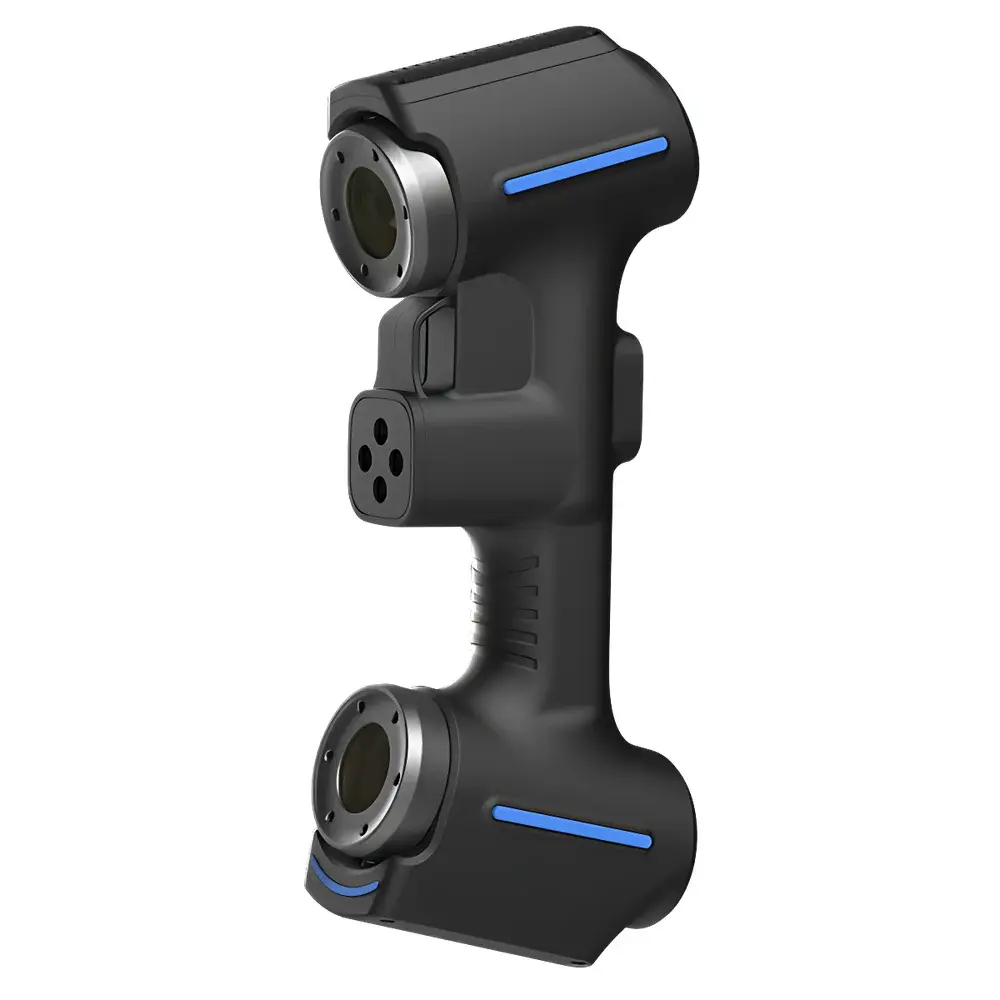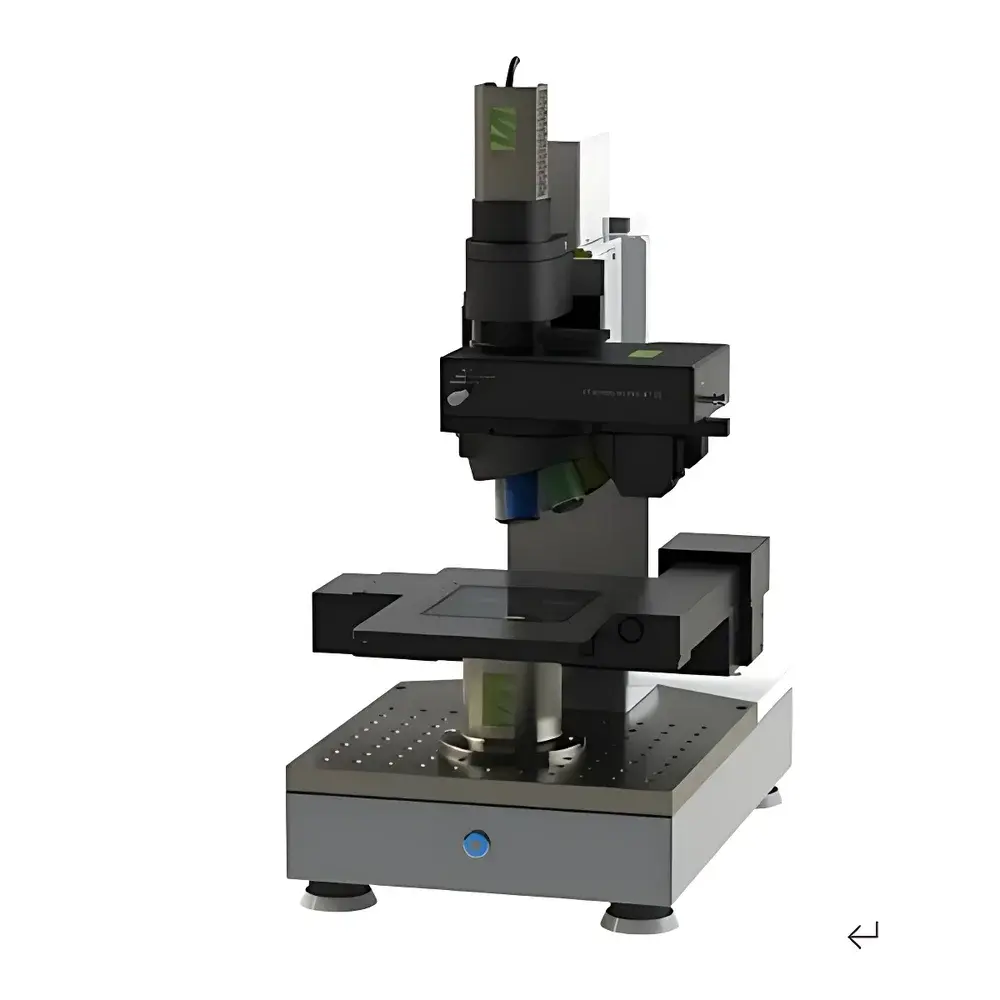
KLA ZETA-20 3D Optical Profilometer
| Brand | KLA |
|---|---|
| Origin | Malaysia |
| Manufacturer Type | Authorized Distributor |
| Origin Category | Imported |
| Model | ZETA-20 |
| Product Type | Non-contact Optical Profilometer / Surface Roughness Analyzer |
| Operating Principle | White-light Interferometry |
| Key Imaging Technology | ZDot™ 3D Imaging |
| Vertical Resolution | Sub-Ångström (≤0.1 nm) |
| Measurement Modes | Six Integrated Optical Modules |
| Surface Reflectivity Range | 0.5% – >85% |
| Output | True-color 2D/3D Images |
| Compliance | ASTM E2921, ISO 25178-2, ISO 4287, USP <1056>, FDA 21 CFR Part 11 Ready (via optional software module) |
Overview
The KLA ZETA-20 3D Optical Profilometer is a high-precision, non-contact surface metrology instrument engineered for quantitative topographic characterization of micro- and nano-scale features across diverse material systems. It operates on the principle of white-light interferometry (WLI), leveraging coherence scanning to generate height maps with sub-Ångström vertical resolution—enabling reliable measurement of step heights, roughness parameters (Sa, Sq, Sz), curvature, volume, and film thickness in a single acquisition. Unlike stylus-based profilometers, the ZETA-20 eliminates mechanical contact, eliminating risk of sample damage or tip wear—critical for fragile MEMS structures, patterned wafers, biomedical coatings, and optically sensitive thin-film stacks. Its core architecture integrates six complementary optical measurement modules within a unified platform, allowing seamless switching between modes without hardware reconfiguration. The system is calibrated traceably to NIST standards and supports full uncertainty budgeting per ISO/IEC 17025 guidelines.
Key Features
- ZDot™ patented 3D imaging technology: Minimizes reflectivity-dependent measurement artifacts—enables simultaneous, accurate profiling of surfaces ranging from 0.5% to >85% reflectivity (e.g., silicon wafers, black anodized aluminum, ITO-coated glass, polymer films).
- Six integrated optical modules: Includes white-light differential interference contrast (WL-DIC), phase-shifting interferometry (PSI), vertical scanning interferometry (VSI), reflection spectroscopy (for thin-film thickness & n/k determination), confocal chromatic sensing (for high-aspect-ratio trenches), and true-color RGB imaging.
- Sub-Ångström vertical resolution: Achieved via high-stability piezo-scanning stage and real-time fringe analysis algorithms—validated per ISO 25178-603 for areal surface texture measurement.
- Modular hardware design: Supports field-upgradable components including motorized XY stages (100 mm × 100 mm travel), auto-focus lens changers (5×–100× objectives), and environmental enclosures for vibration/isolation-sensitive labs.
- Intuitive operator interface: Touch-enabled GUI with guided workflow templates—designed for both novice users and expert metrologists; includes one-click ISO-compliant roughness report generation (per ISO 4287/ISO 25178-2).
Sample Compatibility & Compliance
The ZETA-20 accommodates substrates up to 200 mm in diameter (standard chuck) and handles samples with extreme surface heterogeneity—including polished optics, etched semiconductor wafers, textured solar cells, biomedical implants, and multi-layer OLED stacks. Its non-destructive nature ensures compatibility with soft polymers, hydrogels, and photoresists. The system complies with international surface metrology standards including ASTM E2921 (Standard Practice for Measuring Surface Topography Using Optical Profilometers), ISO 25178-2 (Geometrical Product Specifications—Surface Texture), and ISO 4287 (Profile Method for Roughness Assessment). Optional software modules provide audit trails, electronic signatures, and data integrity controls aligned with FDA 21 CFR Part 11 and EU Annex 11 requirements—making it suitable for regulated QC environments under GLP/GMP frameworks.
Software & Data Management
KLA’s ZetaWare™ software suite delivers comprehensive analysis tools: advanced filtering (Gaussian, robust, spline), statistical process control (SPC) charting, cross-section extraction, grain analysis, and automated defect detection via threshold-based segmentation. All measurements support full metadata embedding (operator ID, timestamp, calibration status, environmental conditions). Raw interferograms and 3D point clouds are stored in vendor-neutral formats (HDF5, STP, OBJ) for third-party integration. Data export supports CSV, Excel, and PDF report generation with customizable templates compliant with internal QA protocols or external customer requirements. Version-controlled software updates are delivered through KLA’s secure portal, with documented change logs traceable to ISO 9001 quality management system records.
Applications
- Semiconductor R&D and fab metrology: Critical dimension (CD) verification, trench depth profiling, CMP uniformity assessment, and post-etch residue analysis.
- MEMS/NEMS device characterization: Release etch validation, stiction evaluation, and dynamic deformation mapping under thermal or electrostatic actuation.
- Optical coating & display manufacturing: Thin-film thickness uniformity mapping, scratch resistance quantification, and AR/HR coating morphology analysis.
- Medical device quality assurance: Surface finish verification of orthopedic implants, microfluidic channel geometry, and drug-eluting stent strut topography.
- Academic materials science: In-situ corrosion progression tracking, nanoparticle dispersion analysis, and tribological wear scar quantification.
FAQ
What surface reflectivity range does the ZETA-20 support without recalibration?
The ZDot™ imaging mode enables stable measurement across 0.5% to >85% reflectivity—no manual gain adjustment or mode switching required.
Can the ZETA-20 measure transparent or semi-transparent layers?
Yes—using reflection spectroscopy and multi-wavelength VSI, it determines thickness and optical constants (n, k) of single or stacked dielectric films (e.g., SiO₂, SiNₓ, photoresist) down to ~1 nm.
Is the system compatible with cleanroom Class 100 environments?
With optional laminar flow enclosure and ESD-safe chassis, the ZETA-20 meets ISO 14644-1 Class 5 (Class 100) certification requirements.
Does ZetaWare support automated pass/fail decision logic based on user-defined tolerances?
Yes—customizable SPC rules, tolerance overlays, and conditional reporting are embedded in the scripting engine (Python API available for advanced automation).
How is traceability maintained for calibration and measurement uncertainty?
Each system ships with NIST-traceable step-height standards; ZetaWare calculates expanded uncertainty (k=2) per GUM (JCGM 100:2008) incorporating repeatability, reproducibility, calibration uncertainty, and environmental drift factors.