
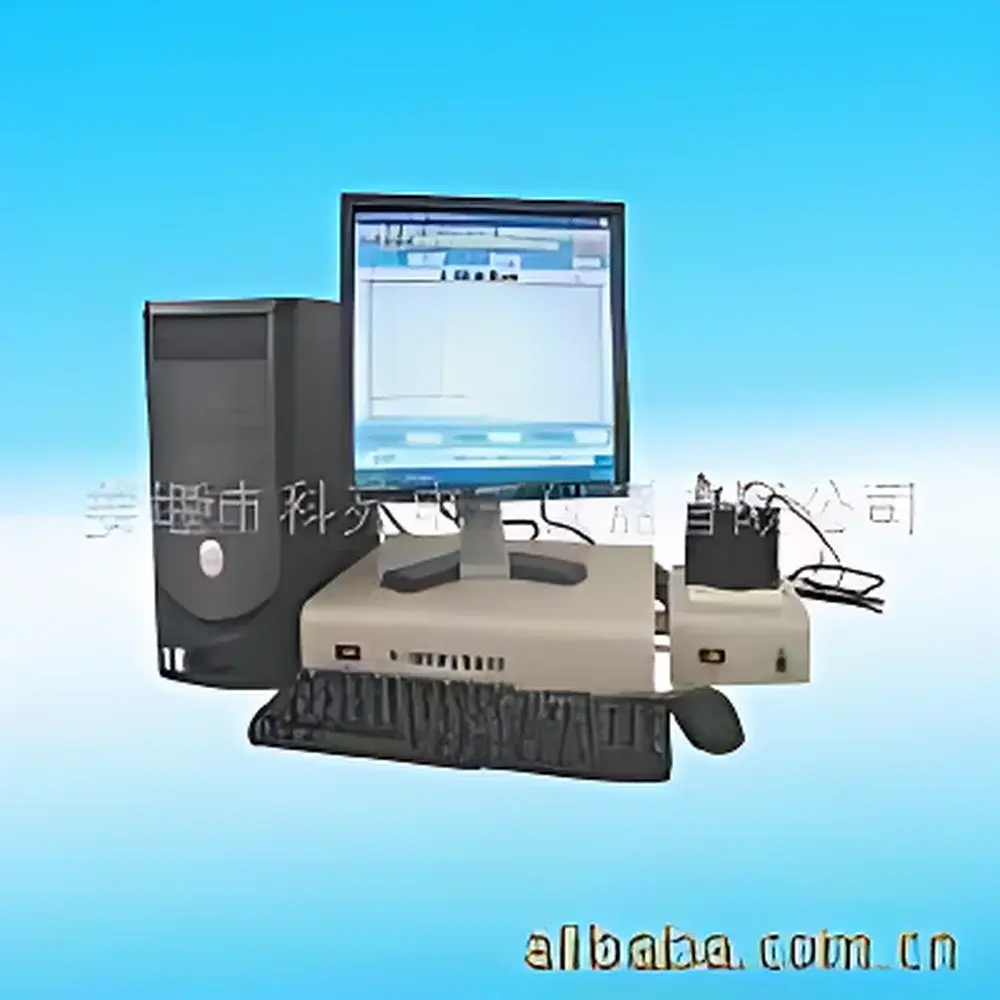
Kyoyuan KY-4 AS Arsenic Content Analyzer (Microcoulometric Titrator)
| Brand | Kyoyuan |
|---|---|
| Origin | Jiangsu, China |
| Manufacturer Type | Direct Manufacturer |
| Region Classification | Domestic (China) |
| Model | KY-4 AS |
| Price | USD 6,950 (FOB Jiangsu) |
| Detection Range | 1×10⁻⁹ % to % (w/w or w/v, matrix-dependent) |
| Operating System | Windows-based embedded control software |
| Principle | Microcoulometric titration with electrogenerated titrant (iodine or silver, configurable) |
| Compliance | Designed to meet ASTM D3229, ISO 8765, and GB/T 11141 requirements for trace arsenic analysis in hydrocarbons and aqueous matrices |
Overview
The Kyoyuan KY-4 AS Arsenic Content Analyzer is a dedicated microcoulometric titration system engineered for the quantitative determination of total arsenic in complex industrial matrices. It operates on the fundamental principle of controlled-potential microcoulometry: arsenic species—oxidized to As(V) during high-temperature combustion in a quartz furnace under oxygen-rich conditions—are swept into an electrolytic cell where they react stoichiometrically with electrogenerated iodine (or silver ions, depending on configuration). The charge consumed to regenerate the titrant is measured in real time; based on Faraday’s law, this current integral yields absolute arsenic mass with high specificity and minimal interference from sulfur, chlorine, or heavy metals. Unlike atomic absorption or ICP-MS methods, this technique delivers direct trace quantification without calibration curves—only certified reference materials (CRMs) are required for system verification. The KY-4 AS is purpose-built for routine, high-throughput arsenic screening in environments where regulatory compliance, method ruggedness, and operator independence are critical—especially in refinery QC labs, catalyst manufacturing QA, and food safety testing facilities.
Key Features
- Integrated high-temperature combustion unit (up to 1050 °C) with dual-stage quartz reaction furnace and ceramic catalyst bed for complete arsenic oxidation across hydrocarbon, gaseous, and solid-supported samples.
- Microcoulometric detection cell with platinum indicator electrodes and Ag/AgI or Pt/I₂ redox couple, optimized for low-noise current measurement (resolution: 10 pA) and rapid endpoint stabilization (≤3 s typical).
- Dedicated Windows-based embedded controller with real-time current integration, automatic baseline correction, and adaptive endpoint discrimination via second-derivative algorithm.
- Full audit trail functionality compliant with GLP and GMP documentation requirements—including user log-in authentication, parameter change history, and raw current-time data export (CSV/Excel).
- Modular sample introduction: liquid autosampler (1–100 µL), gas sampling loop (1–50 mL), and solid probe adapter for catalyst powders or filter media.
- Self-diagnostic routines including cell resistance monitoring, electrode polarization checks, and combustion efficiency validation using internal standard spikes.
Sample Compatibility & Compliance
The KY-4 AS supports diverse sample types without dilution or pre-concentration in most cases: liquid fuels (gasoline, diesel, naphthas, crude oils, vacuum residues), liquefied petroleum gases (LPG), propylene feedstocks, supported catalysts (e.g., CoMo/Al₂O₃, NiW/SiO₂), process water, drinking water, fruit juices, and edible oils. All measurements adhere to the stoichiometric equivalence of As → As(V) + 5e⁻, ensuring traceability to SI units. Method validation aligns with ASTM D3229 (Standard Test Method for Trace Quantities of Arsenic in Gasoline by Microcoulometry), ISO 8765 (Petroleum products — Determination of arsenic content — Microcoulometric method), and Chinese national standard GB/T 11141 (Hydrocarbon fuels — Determination of arsenic content — Microcoulometric method). Instrument design incorporates electrical safety per IEC 61010-1 and electromagnetic compatibility per IEC 61326-1.
Software & Data Management
The KY-4 AS runs Kyoyuan’s proprietary Analytical Control Suite (ACS v3.2), a Windows 10-compatible application deployed on an embedded industrial PC. ACS provides full method setup—including combustion temperature ramp profiles, titrant selection, integration window width, and spike recovery protocols. All analytical data (raw current vs. time, integrated charge, calculated mass%, sample ID, operator, date/time stamp) are stored in encrypted SQLite databases with optional network backup to NAS or LIMS via TCP/IP. Electronic signatures, 21 CFR Part 11-compliant audit logs, and PDF report generation (with customizable templates per ISO/IEC 17025) are enabled out-of-the-box. Raw data files retain full metadata for retrospective reprocessing without instrument re-run.
Applications
- Petroleum refining: Monitoring arsenic ingress in FCC feedstocks and hydrotreating catalysts to prevent permanent deactivation.
- Fuel certification: Verifying compliance with ultra-low arsenic limits (<10 ppb) in aviation turbine fuel (ASTM D1655 Annex A5) and marine distillate fuels (ISO 8217).
- Catalyst R&D: Quantifying arsenic poisoning thresholds in noble-metal reforming catalysts and evaluating guard-bed performance.
- Environmental testing: Measuring arsenic leachates from coal ash, soil extracts, and wastewater effluents per EPA Method 7060A principles.
- Food safety: Screening arsenic in rice-based infant formulas and apple juice against FDA action levels (10 ppb inorganic As).
FAQ
What sample preparation is required for solid catalysts?
Crushed catalysts are homogenized and weighed directly into quartz boats; no acid digestion is needed. Combustion converts all arsenic species to volatile As₂O₃, which is quantitatively captured.
Can the instrument distinguish between inorganic and organic arsenic species?
No—KY-4 AS measures total arsenic. Speciation requires coupling with HPLC-ICP-MS. However, combustion efficiency validation ensures >98% recovery of both As(III) and As(V) forms.
Is method validation support provided?
Yes—Kyoyuan supplies certified reference materials (CRM-As-01 series), detailed IQ/OQ/PQ protocols, and on-site installation qualification with NIST-traceable calibration verification.
What maintenance intervals are recommended?
Electrolyte replacement every 150 analyses; combustion tube cleaning every 500 runs; annual cell refurbishment and furnace thermocouple calibration.
Does the system support remote diagnostics?
Yes—via secure TLS-encrypted VNC access with prior authorization; firmware updates and method library synchronization are managed through Kyoyuan’s cloud portal (KY-Cloud Connect).
Related Products







