
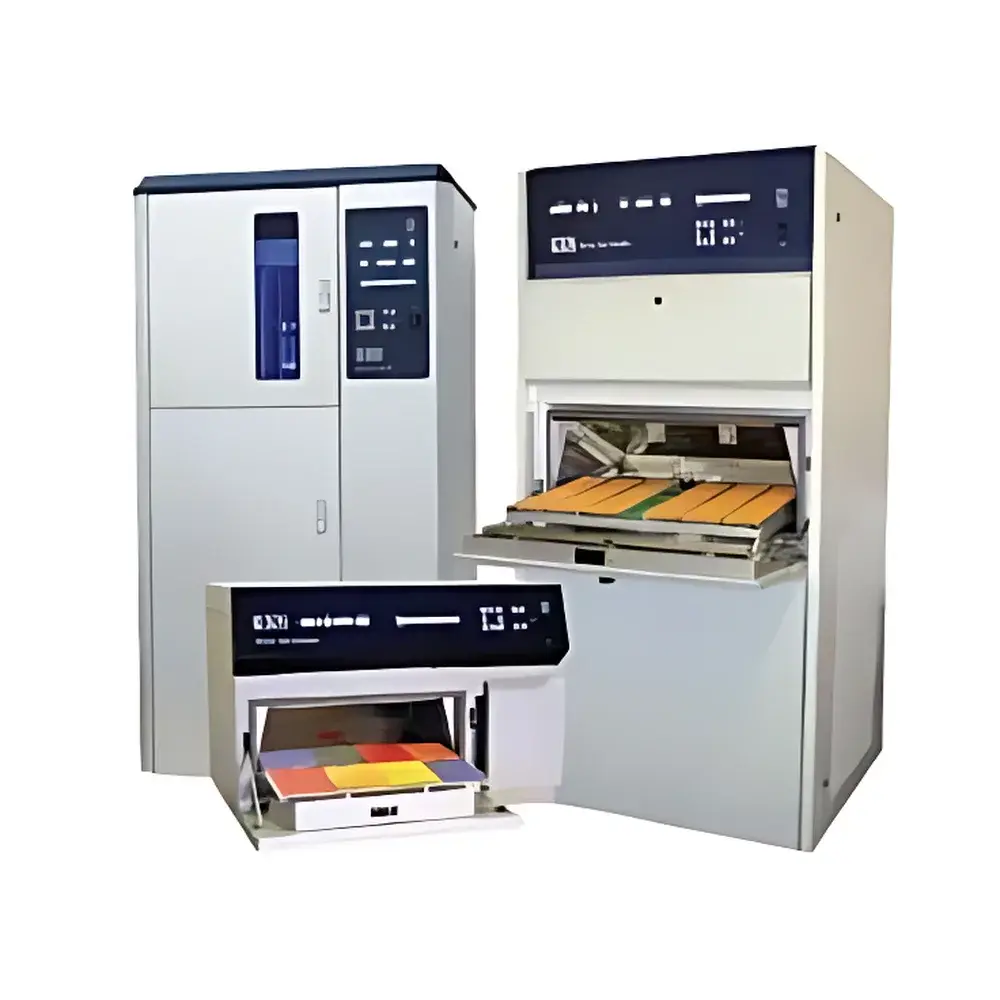
Q-LAB Q-SUN Xe-1-S Water-Spray Xenon Arc Weathering Test Chamber
| Brand | Q-LAB |
|---|---|
| Origin | USA |
| Model | Xe-1-S |
| Lamp Power | 1800 W |
| Sample Capacity | 17 specimens |
| Sample Tray Load Capacity | 14 kg (30 lbs) |
| Sample Area | 25 × 46 cm (d × w) |
| Sample Dimensions | 51 × 102 mm |
| Tilt Angle | 10° from horizontal |
| Lamp Type | Full-spectrum xenon arc lamp |
| Irradiance Calibration | AUTOCAL CR20 compliant with ISO standards |
| Black Panel Temperature Sensor | CT202 |
| Inlet Water Pressure | 2.1–6.2 bar (30–90 psi) |
| Water Purity | <1 ppm dissolved solids, <0.1 ppm suspended silica |
| Water Consumption | 0.1 L/min during spray |
| External Dimensions | 78 × 52 × 65 cm |
| Electrical Supply | 208 V / 230 V |
| Spray Nozzles | 2 (top-mounted) |
| Spray Timing | configurable in light or dark cycles |
| Network Interface | built-in Ethernet for data acquisition |
| User Interface Languages | English, French, Spanish, Italian, German |
Overview
The Q-LAB Q-SUN Xe-1-S Water-Spray Xenon Arc Weathering Test Chamber is an engineered solution for accelerated weathering and light stability evaluation of materials exposed to outdoor environmental stressors. It employs a full-spectrum 1800 W xenon arc lamp—optically filtered to closely replicate natural solar radiation (290–800 nm)—combined with controlled temperature, relative humidity, and programmable water spray cycles. Unlike UV-only or fluorescent lamp-based systems, the xenon arc source delivers spectrally accurate irradiance across UV, visible, and near-infrared regions, enabling realistic simulation of photodegradation, thermal oxidation, hydrolysis, and moisture-induced failure mechanisms. The Xe-1-S specifically integrates top-mounted dual-nozzle water spray functionality, allowing precise emulation of rain, dew, and condensation events during both illuminated and dark phases of test cycles—critical for evaluating coating adhesion loss, blistering, chalking, color shift, and mechanical property degradation in compliance with ASTM G155, ISO 4892-2, and SAE J2527.
Key Features
- Compact flat-bed design with 10° specimen tilt angle—optimized for uniform irradiance distribution and realistic runoff behavior during spray cycles.
- True full-spectrum xenon arc lamp (1800 W) with precision optical filtering to meet spectral power distribution (SPD) requirements of ISO 4892-2 Class A and ASTM G155 Cycle 1–4.
- Dual high-precision water nozzles mounted at the chamber ceiling, delivering consistent, low-pressure spray using ultra-pure water (<1 ppm dissolved solids, <0.1 ppm suspended silica).
- AUTOCAL system with CR20 irradiance calibration sensor—enabling rapid, traceable, ISO-compliant lamp output verification without external instrumentation.
- Integrated Ethernet port supporting real-time data logging, remote monitoring, and secure file export via standard TCP/IP protocols—compatible with laboratory LIMS and centralized QA/QC databases.
- Intuitive multilingual touchscreen interface (English, French, Spanish, Italian, German) with preloaded test standards, customizable cycle programming, and on-screen diagnostics.
- Self-diagnostic architecture with automated fault detection, maintenance alerts, and event-triggered notifications—supporting GLP/GMP-aligned operational integrity.
Sample Compatibility & Compliance
The Xe-1-S accommodates up to 17 standard specimens (51 × 102 mm) on a rigid aluminum tray rated for 14 kg loading. Its 25 × 46 cm exposure area ensures reproducible irradiance uniformity per ISO 4892-2 Annex B. The chamber meets critical regulatory and industry-standard requirements including ASTM D4329 (plastics), ASTM D4587 (coatings), ISO 11341 (paints), IEC 60068-2-5 (electrotechnical), and AATCC TM16 (textiles). All temperature and irradiance control subsystems are validated per ISO/IEC 17025 calibration traceability pathways. Black panel temperature sensors (CT202) provide direct measurement of surface heating effects under irradiation—essential for correlating lab results with field performance.
Software & Data Management
Firmware supports native CSV and XML export of time-stamped irradiance (W/m² @ 340 nm), black panel temperature (°C), chamber humidity (%RH), and spray activation status. Audit trails record user actions, parameter changes, and calibration events—fully compliant with FDA 21 CFR Part 11 requirements for electronic records and signatures when deployed in regulated pharmaceutical or medical device environments. Optional Q-LAB’s SunTest® software enables advanced cycle scripting, multi-chamber fleet management, and statistical trend analysis across historical test runs.
Applications
This chamber serves as a core tool for R&D, quality assurance, and regulatory submission testing across diverse sectors: automotive exterior trim and interior fabrics; architectural coatings and sealants; polymer-based packaging films and labels; wind turbine blade composites; photovoltaic encapsulants and backsheets; cosmetic formulations and sunscreen efficacy validation; food-contact plastics subjected to retail lighting; and conservation-grade pigments used in museum-grade archival printing. Its ability to decouple and recombine light, heat, moisture, and mechanical wetting makes it indispensable for root-cause analysis of synergistic aging phenomena.
FAQ
What standards does the Q-SUN Xe-1-S support for irradiance calibration?
It complies with ISO 4892-2 Annex C and ASTM G155 Section 7.3 using the AUTOCAL CR20 sensor, traceable to NIST-certified reference standards.
Can the water spray function operate independently of the light cycle?
Yes—spray timing is fully programmable and may be scheduled exclusively during dark periods, light periods, or both, enabling simulation of nocturnal dew formation or daytime rainfall events.
Is external cooling required for continuous operation?
No—the Xe-1-S features integrated air-cooled lamp housing and optimized thermal management, permitting uninterrupted 24/7 operation under standard ambient laboratory conditions (15–30°C, ≤70% RH).
How is water purity verified prior to use?
Users must validate feed water conductivity (<1 µS/cm) and particulate content via inline filtration and resistivity monitoring; Q-LAB provides specification guidelines and compatible deionization system recommendations.
Does the system support remote firmware updates and diagnostic reporting?
Yes—via secure HTTPS-enabled web interface and Q-LAB’s centralized Device Management Portal, enabling over-the-air updates and predictive maintenance analytics.



