
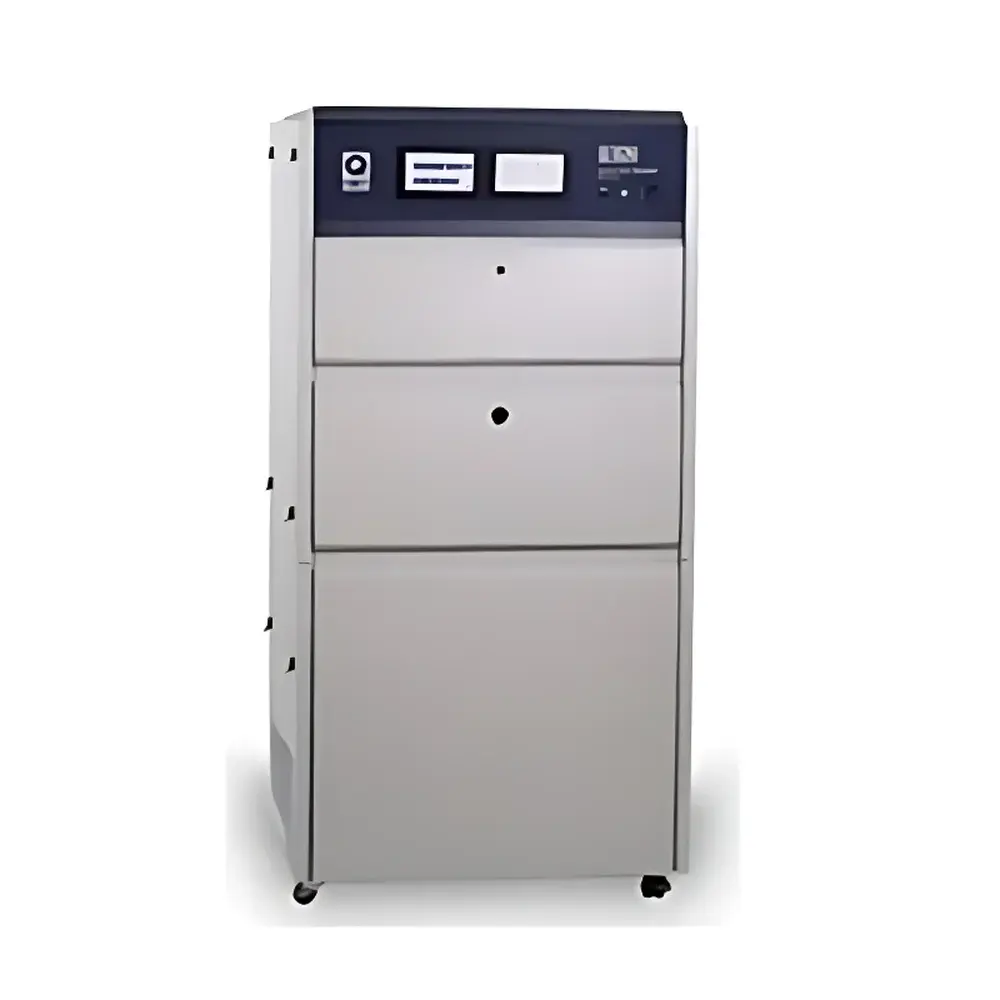
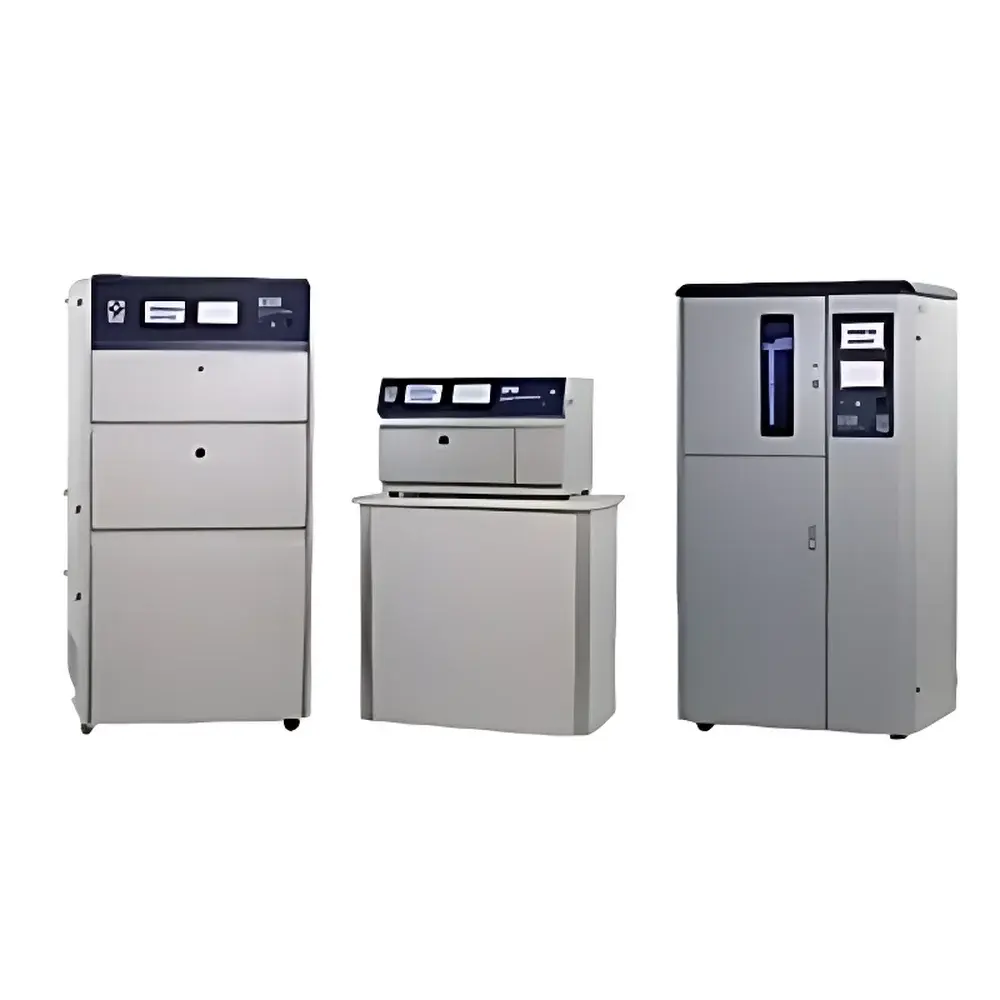
Q-Lab Q-SUN Xe-3-HS Xenon Arc Weathering Test Chamber
| Brand | Q-Lab |
|---|---|
| Origin | USA |
| Model | Q-SUN Xe-3-HS |
| Xenon Lamp Power | 1800 W |
| Irradiance Range | ≤1800 W/m² |
| Light Exposure Duration | 1–9999 h (continuously adjustable) |
| Humidity Control Range | up to 95% RH |
| Water Spray Function | Integrated top-mounted dual-nozzle system |
Overview
The Q-Lab Q-SUN Xe-3-HS is a high-performance xenon arc weathering test chamber engineered for accelerated simulation of full-spectrum solar radiation, including ultraviolet (UV), visible, and near-infrared (IR) wavelengths. Based on the fundamental principle of xenon arc irradiation—where a stabilized, filtered xenon lamp reproduces the spectral power distribution (SPD) of natural sunlight—the Xe-3-HS enables precise, repeatable exposure testing under controlled thermal, photometric, and hygric conditions. Its “HS” designation indicates integrated Humidity control and Water Spray functionality—critical for replicating real-world outdoor degradation mechanisms such as thermal cycling, moisture absorption, and wet/dry alternation. Designed for compliance with international exposure standards—including ASTM G155, ISO 4892-2, SAE J2527, and AATCC TM16—the chamber delivers metrologically traceable irradiance, black panel temperature (BPT), and relative humidity (RH) profiles across its operational envelope.
Key Features
- Full-spectrum xenon arc source: 1800 W water-cooled lamp with interchangeable optical filters (e.g., Daylight, Window Glass, Extended UV) to match specific spectral requirements per application or standard.
- Independent environmental control: Simultaneous regulation and real-time monitoring of black panel temperature (BPT), chamber air temperature, and relative humidity (up to 95% RH) via dedicated sensors and PID-controlled systems.
- Programmable water spray: Dual-nozzle overhead spray system activated during light or dark cycles; uses purified water to simulate rain, dew, or condensation events—fully configurable in timing, duration, and frequency.
- Large-format flat sample tray: 45 cm × 72 cm exposure area accommodates up to 55 standard specimens (51 mm × 102 mm) or heterogeneous 3D samples (e.g., bottles, cosmetics containers, automotive trim parts).
- User-serviceable calibration architecture: Field-calibratable sensors include CT202-series black panel thermometers (BP/IBP variants) and CR20-series SOLAR EYE irradiance meters (340 nm, 420 nm, or 300–400 nm TUV options), ensuring long-term measurement integrity.
- Robust industrial enclosure: Stainless steel construction with insulated double-wall chamber, quartz-filtered lamp housing, and integrated safety interlocks compliant with IEC 61000-4 EMC directives.
Sample Compatibility & Compliance
The Q-SUN Xe-3-HS supports broad material classes—including polymers, coatings, textiles, automotive interiors, architectural façade components, and packaging films—without requiring custom fixtures. Its flat tray design accepts rigid planar substrates (e.g., ASTM D6675 panels) as well as irregular 3D objects secured via optional clamps or custom jigs. All exposure protocols align with globally recognized weathering standards: ASTM D4329 (plastics), ASTM D4459 (interior automotive), ISO 11341 (paints and varnishes), and ISO 105-B02 (textile colorfastness). The chamber’s irradiance stability (< ±5% over 1,000 h), BPT repeatability (±1.5°C), and RH accuracy (±3% RH) are validated per Q-Lab’s internal metrology framework and support GLP/GMP audit readiness when paired with optional data logging and 21 CFR Part 11-compliant software modules.
Software & Data Management
While the Xe-3-HS operates via intuitive front-panel controls, optional Q-Lab’s SunTest™ PC software enables remote configuration, real-time parameter trending, automated report generation (PDF/CSV), and secure user access management. Data logs include timestamped irradiance (W/m²), BPT (°C), RH (%), chamber temperature (°C), and spray event markers—exportable for statistical analysis or integration into enterprise LIMS platforms. Sensor calibration records, maintenance logs, and exposure history are retained with full audit trail capability, satisfying regulatory documentation requirements for quality assurance departments operating under ISO/IEC 17025 or FDA-regulated environments.
Applications
- Accelerated UV degradation assessment of automotive clearcoats and interior trims under SAE J2412/J2527 protocols.
- Color shift and gloss retention evaluation of architectural sealants and elastomeric coatings per ASTM D4329 and ISO 4892-2.
- Durability validation of medical device packaging materials exposed to ambient daylight conditions.
- Textile lightfastness testing per AATCC TM16 and ISO 105-B02, particularly for outdoor apparel and awning fabrics.
- Photostability screening of pharmaceutical packaging under ICH Q1B guidelines (optionally with UV-filtered configurations).
- Corrosion initiation studies on coated metal substrates subjected to cyclic UV/moisture/spray sequences.
FAQ
What type of water must be used for humidity and spray functions?
Deionized or distilled water with conductivity ≤1 µS/cm is required to prevent mineral buildup in humidifiers and nozzles—tap or softened water is strictly prohibited.
Is the Xe-3-HS suitable for testing specimens requiring elevated temperature profiles beyond standard black panel limits?
The chamber maintains black panel temperatures from 35°C to 100°C depending on irradiance level and filter selection; for sustained >100°C thermal stress, convection ovens or specialized high-temperature chambers are recommended.
How often should irradiance and temperature sensors be calibrated?
Q-Lab recommends quarterly irradiance calibration using a CR20 meter and annual black panel sensor verification with a CT202 reference thermometer; humidity sensors should be replaced annually per manufacturer guidance.
Can the Xe-3-HS replicate window-filtered sunlight exposure?
Yes—by installing the optional Q/B filter, the system delivers a spectral output matching indoor daylight through standard glass, enabling testing per ASTM D4459 and ISO 105-B04.
Does the chamber support automated multi-step exposure cycles?
Yes—via SunTest™ software, users can define complex sequences combining irradiance levels, temperature ramps, RH setpoints, and timed spray events without manual intervention.



