
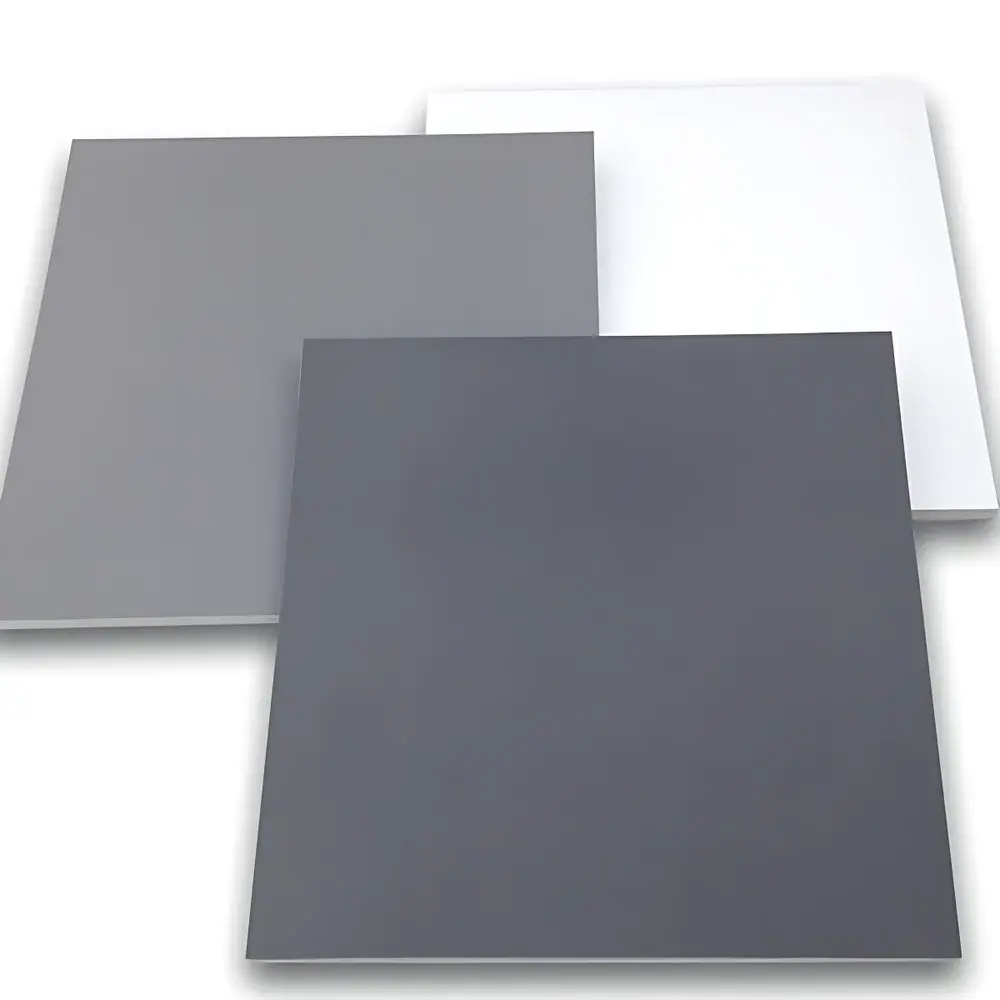
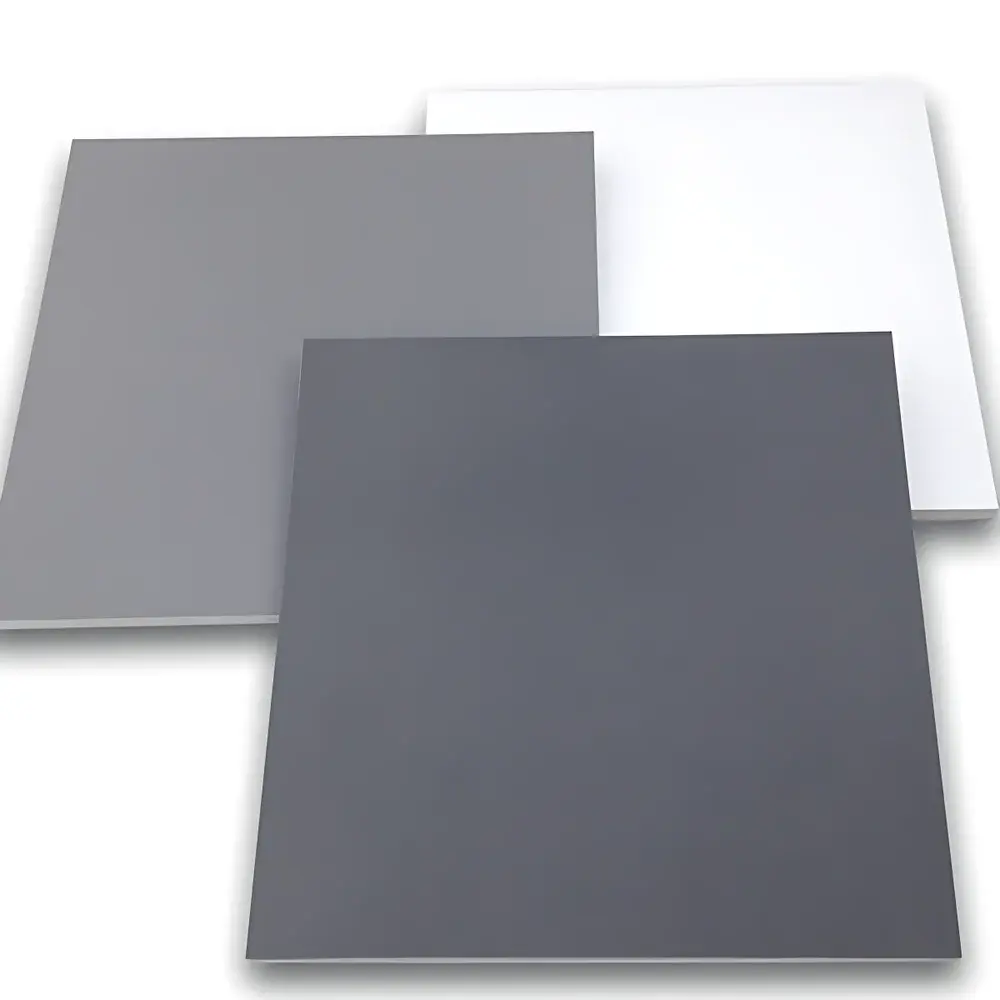
Labsphere Permaflect Rigid LiDAR Diffuse Reflectance Target Board PFT
| Brand | Labsphere |
|---|---|
| Origin | USA |
| Manufacturer Type | Authorized Distributor |
| Product Origin | Imported |
| Model | PFT |
| Pricing | Available Upon Request |
Overview
The Labsphere Permaflect Rigid LiDAR Diffuse Reflectance Target Board (Model PFT) is an engineered optical reference standard designed specifically for calibration, validation, and performance characterization of time-of-flight (ToF) LiDAR systems, spectral imaging sensors, and active 3D sensing platforms. Based on Labsphere’s proprietary Permaflect diffuse coating technology, these targets deliver near-Lambertian reflectance behavior across critical infrared wavelengths—including 850 nm, 905 nm, 940 nm, and 1550 nm—enabling traceable, repeatable measurements of distance sensitivity, dynamic range, signal-to-noise ratio (SNR), and system linearity. Unlike conventional gray cards, fabrics, or paper-based references, Permaflect targets maintain stable, spectrally uniform reflectance under variable illumination conditions, thermal cycling, UV exposure, and mechanical abrasion. Their rigid aluminum substrate ensures dimensional stability and minimal warping, supporting high-precision alignment in both laboratory and field-deployed test environments.
Key Features
- Near-Lambertian reflectance profile with angular independence up to ±60° incidence, verified per ASTM E259 and ISO 2813 standards
- Five certified reflectance levels: 5%, 10%, 50%, 80%, and 94% (±0.5% absolute uncertainty at key LiDAR wavelengths)
- Permaflect coating exhibits non-polarizing, non-fluorescent, matte surface characteristics with negligible specular component
- Rigid anodized aluminum substrate with mechanical flatness tolerance of ±0.005″ (±0.127 mm) per radial inch (0.305 m), ensuring consistent beam interaction geometry
- UV-stable, thermally robust (operational range: −40 °C to +85 °C), and resistant to humidity, oxidation, and particulate abrasion
- Customizable dimensions (standard sizes: 0.5 m × 0.5 m, 1.0 m × 1.0 m, 1.5 m × 1.5 m, and 1.2 m × 2.4 m) and optional patterned or shaped geometries for ADAS and autonomous vehicle testing
- M10 × 1.5 threaded mounting points integrated into all LiDAR-grade boards for secure, vibration-resistant installation on tripods or test fixtures
Sample Compatibility & Compliance
The PFT series supports full compatibility with pulsed and continuous-wave LiDAR transceivers operating in the NIR and SWIR bands. Its reflectance values are certified traceable to NIST via Labsphere’s ISO/IEC 17025-accredited calibration laboratory. Each board includes a documented Certificate of Calibration covering either single-point spectral reflectance (350–2400 nm), multi-point spatial uniformity mapping (9-point grid at 850/905/1550 nm), or combined spectral averaging plus wavelength-specific homogeneity assessment. The material complies with MIL-STD-810G for environmental durability and meets RoHS and REACH requirements. For regulated applications—including automotive ADAS validation and airborne remote sensing—the boards support audit-ready documentation packages aligned with ISO 16750, SAE J3016, and FDA 21 CFR Part 11-compliant data integrity protocols when used with calibrated spectroradiometric acquisition systems.
Software & Data Management
While the PFT target itself is a passive optical standard, its integration into automated test workflows is supported through Labsphere’s optional SpectraSuite™ software suite and third-party SDKs compatible with LabVIEW, Python (via PyVISA), and MATLAB. Users may import certified reflectance curves and spatial uniformity maps directly into sensor simulation models (e.g., Zemax OpticStudio, FRED, or TracePro) for synthetic scene generation. All calibration reports are delivered in PDF and CSV formats, with metadata structured to comply with FAIR (Findable, Accessible, Interoperable, Reusable) data principles. Audit trails, version-controlled calibration histories, and digital signatures are available upon request for GLP/GMP-regulated deployments.
Applications
- LiDAR system sensitivity and range validation across operational distances (100 m to >200 m)
- Dynamic range characterization using multi-level reflectance kits (10%/50%/80% standard set)
- Time-of-flight sensor linearity verification and drift monitoring over thermal cycles
- Airborne hyperspectral imager ground-truth referencing for radiometric calibration
- ADAS hardware-in-the-loop (HIL) testing with custom-shaped 3D targets simulating real-world objects
- Factory-floor production testing of automotive LiDAR modules under IATF 16949 quality management systems
- Reference standard for ISO 13234-based laser safety and power measurement intercomparisons
FAQ
What wavelengths are certified for reflectance accuracy?
Certified reflectance data is provided at 850 nm, 905 nm, and 1550 nm for LiDAR-grade boards; extended spectral coverage (350–2400 nm) is available for Commercial-grade variants.
Is the reflectance uniform across the entire surface?
Yes—each board undergoes nine-point spatial uniformity mapping at target wavelengths, with reflectance variation limited to ≤±1.2% across the active area.
Can these targets be used outdoors under direct sunlight?
Yes—Permaflect coating is UV-stabilized and rated for continuous outdoor exposure; however, long-term solar irradiance exposure (>5 years) may require re-calibration per ISO 9001 maintenance schedules.
Do you offer NIST-traceable calibration certificates?
All PFT boards ship with ISO/IEC 17025-accredited calibration certificates issued by Labsphere’s NVLAP Lab Code 200602-0.
Are custom shapes or reflectance gradients available?
Yes—custom patterning (e.g., checkerboards, concentric rings, vehicle silhouettes) and gradient reflectance profiles can be fabricated under NDAs for OEM development programs.




