
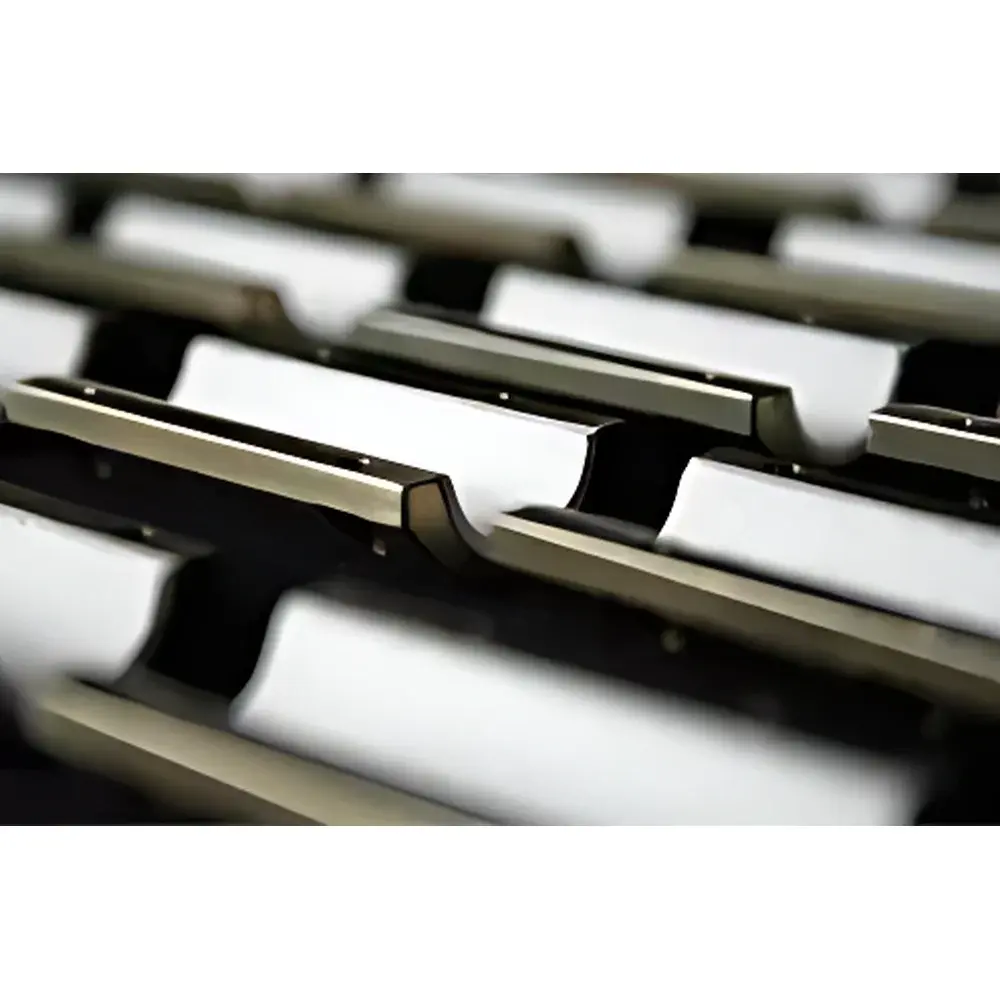
Labsphere SPECTRAFLECT High-Diffuse Reflectance Coating
| Brand | Labsphere |
|---|---|
| Model | SPECTRAFLECT |
| Origin | USA |
| Base Material | Barium Sulfate (BaSO₄) with Proprietary Binder System |
| Spectral Range | 300–2400 nm |
| Average Diffuse Reflectance (400–700 nm) | 96–98% |
| Lambertian Character | >99.5% (cosine angular response) |
| Thermal Stability | Up to 100 °C |
| Laser Damage Threshold | 1.7 J/cm² (at 1064 nm, 10 ns pulse) |
| Application Method | Air-spray or HVLP spray |
| Substrate Compatibility | Aluminum, stainless steel, anodized metals, ceramics, and machined polymers |
| Compliance | RoHS-compliant, non-toxic, solvent-based formulation (proprietary low-VOC carrier) |
Overview
Labsphere SPECTRAFLECT is a high-performance, spectrally neutral diffuse reflectance coating engineered for precision optical calibration and radiometric reference applications. Formulated using ultra-pure barium sulfate (BaSO₄) suspended in a proprietary thermally stable binder system, SPECTRAFLECT delivers near-ideal Lambertian reflectance across the ultraviolet–visible–near-infrared (UV–Vis–NIR) spectrum (300–2400 nm). Its optical behavior conforms closely to the cosine law—exhibiting <0.5% deviation from ideal Lambertian scattering over ±80° field-of-view—making it suitable for absolute reflectance calibration, integrating sphere linings, spectrophotometer baffles, and reference standards traceable to NIST SRMs. Unlike polymer-based white paints or titanium dioxide coatings, SPECTRAFLECT avoids spectral artifacts such as UV absorption tails, NIR water-band interference, or photobleaching under prolonged irradiation.
Key Features
- Spectrally flat reflectance: 96–98% average diffuse reflectance between 400–700 nm; maintains >90% reflectance at 300 nm and >85% at 2400 nm, validated per ASTM E275 and ISO 21348.
- High Lambertian fidelity: Angular reflectance profile adheres to cos(θ) dependence within ±0.3% across full hemisphere—critical for accurate flux integration in integrating spheres and goniometric measurements.
- Thermal and environmental robustness: Stable under continuous operation up to 100 °C; resistant to humidity cycling (tested per IEC 60068-2-30) and compatible with Class 100 cleanroom handling protocols.
- Laser damage resistance: Certified laser-induced damage threshold (LIDT) of 1.7 J/cm² (1064 nm, 10 ns, 20 Hz), enabling use in pulsed laser metrology setups without coating ablation or carbonization.
- Controlled application consistency: Optimized viscosity and drying kinetics ensure uniform film thickness (typically 25–35 µm after curing) with minimal orange-peel effect or microcracking—even on curved or textured substrates.
Sample Compatibility & Compliance
SPECTRAFLECT is routinely applied to aluminum (6061-T6, 7075-T6), stainless steel (304/316), anodized aluminum (Type II & III), fused silica, and high-purity alumina ceramics. Surface preparation follows ISO 8501-1 Sa2½ blast cleaning or equivalent solvent degreasing (IPA + acetone) prior to spraying. The coating meets RoHS Directive 2011/65/EU requirements and contains no heavy metals, halogens, or restricted phthalates. It is non-toxic per OSHA 29 CFR 1910.1200 and carries full SDS documentation compliant with GHS Rev. 7. While not FDA-approved for medical device contact, it is widely accepted in GLP-compliant optical laboratories for instrument validation per ISO/IEC 17025:2017 Annex A.2.
Software & Data Management
SPECTRAFLECT itself is a passive optical material and does not incorporate embedded electronics or firmware. However, its spectral reflectance data (measured via NIST-traceable double-monochromator spectrophotometers) are distributed in standardized formats: ASCII .txt files (wavelength in nm vs. %R), CSV-compatible tables, and CIE 15:2018-compliant SPD (Spectral Power Distribution) datasets. Labsphere provides downloadable calibration reports—including uncertainty budgets per GUM (JCGM 100:2008)—for each production lot. These reports support audit readiness for ISO/IEC 17025 accreditation and facilitate integration into LIMS or laboratory QA workflows requiring documented metrological traceability.
Applications
- Interior coating for integrating spheres used in reflectance/transmittance measurement (e.g., PerkinElmer Lambda, Hitachi UH4150, Avantes AvaSpec systems).
- Reference standards for bidirectional reflectance distribution function (BRDF) characterization in optical scatterometry.
- Diffuse reflectance panels for UAV-based multispectral imaging calibration (e.g., MicaSense RedEdge-MX, DJI P4 Multispectral).
- Light-tight baffling and stray-light suppression surfaces in space-qualified spectrometers (aligned with ECSS-E-ST-32-01C radiation hardness guidelines).
- Calibration targets for hyperspectral sensors operating in VNIR-SWIR bands (400–2500 nm), including those deployed in ASTM E2597-compliant solar reflectance testing.
FAQ
Can SPECTRAFLECT be applied to plastic substrates such as ABS or polycarbonate?
Yes—provided the substrate is solvent-resistant and pre-treated with plasma or corona activation to ensure adhesion. Adhesion testing per ASTM D3359 is recommended for qualification.
Is re-coating possible after aging or mechanical abrasion?
Yes. Degraded or damaged layers may be fully removed using Labsphere-recommended solvent (Labsphere Cleaner LC-1) followed by standard surface prep and recoating. No substrate etching occurs during removal.
Does SPECTRAFLECT require post-application curing?
Air-drying at ambient temperature (23 °C, 50% RH) for 24 hours achieves full binder crosslinking. Forced curing at 60 °C for 2 hours is acceptable but not required.
How is batch-to-batch reflectance consistency verified?
Each production lot undergoes spectrophotometric verification against a master reference standard calibrated at NIST’s Spectral Measurement Facility (Gaithersburg), with certificate of analysis issued per ISO/IEC 17025.
Can SPECTRAFLECT be used in vacuum environments?
It has been tested to 1×10⁻⁵ Torr with negligible outgassing (total mass loss <0.5% per ASTM E595), making it suitable for moderate-vacuum optical chambers—but not ultra-high vacuum (UHV) applications.




