
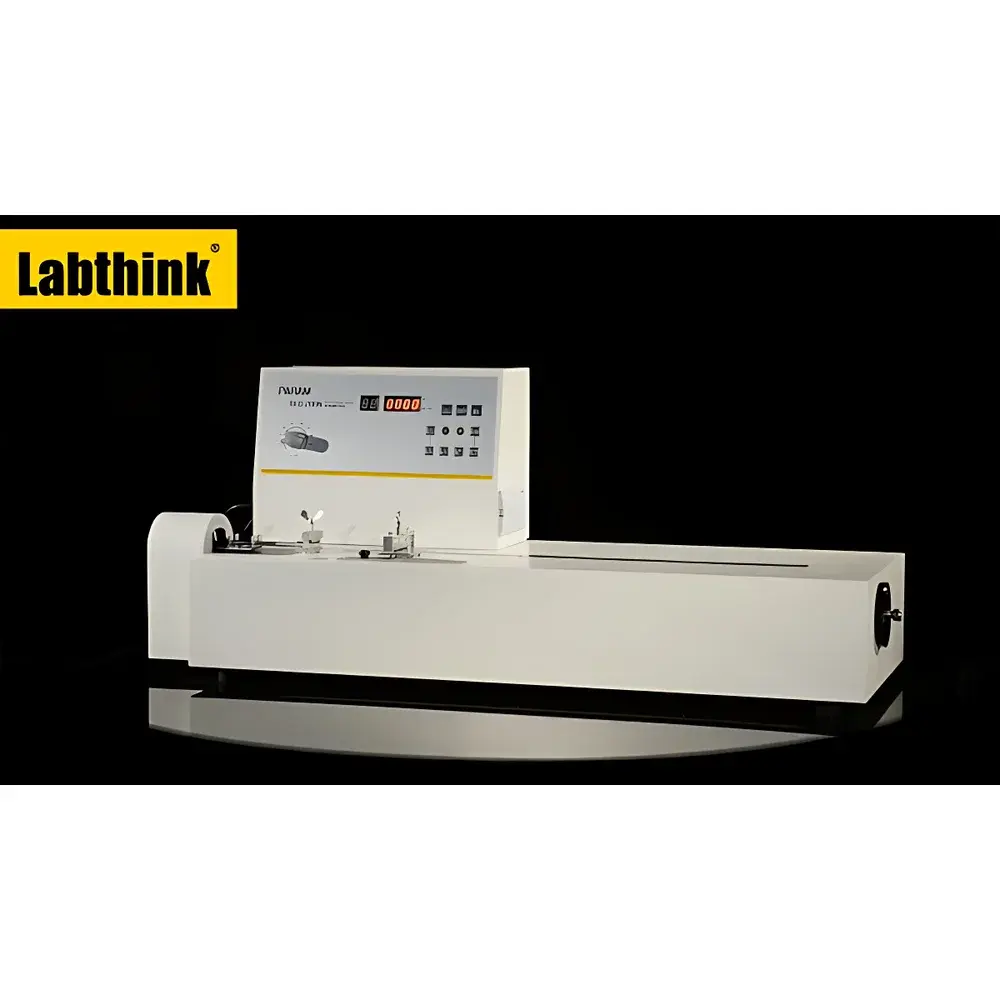
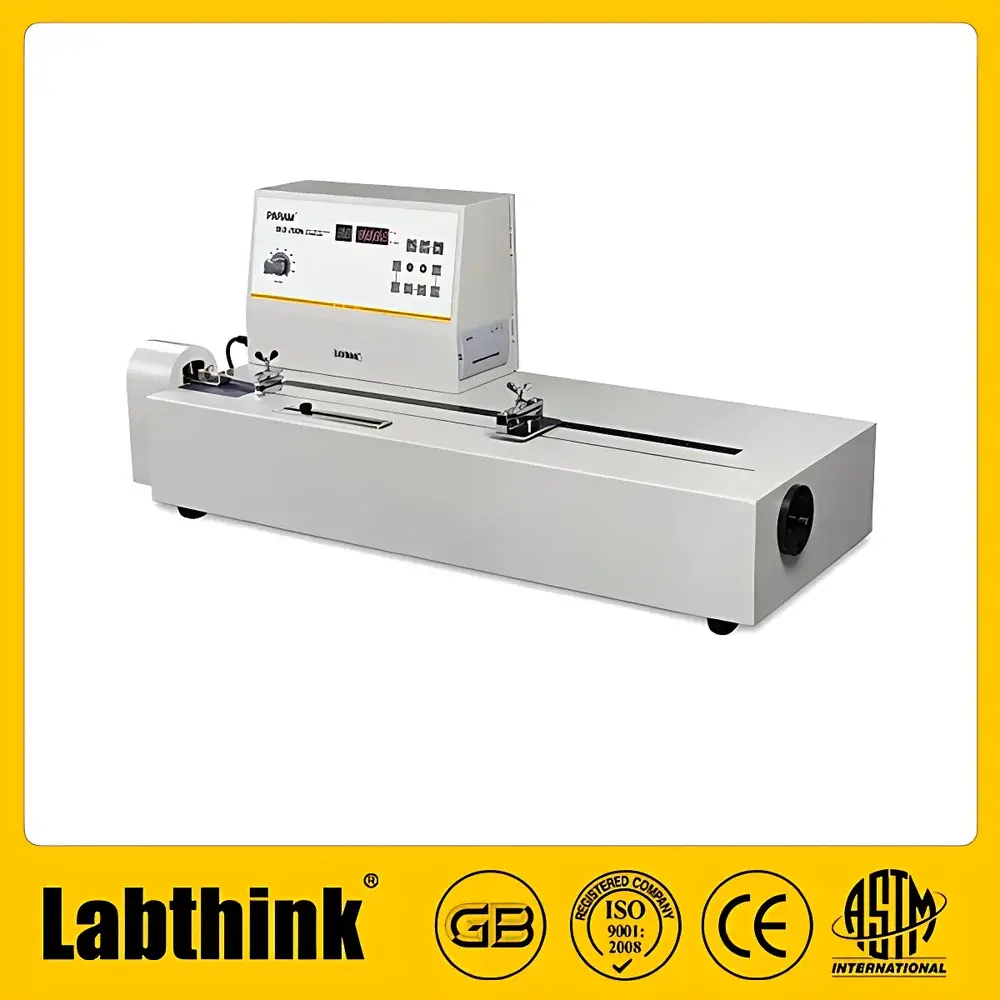
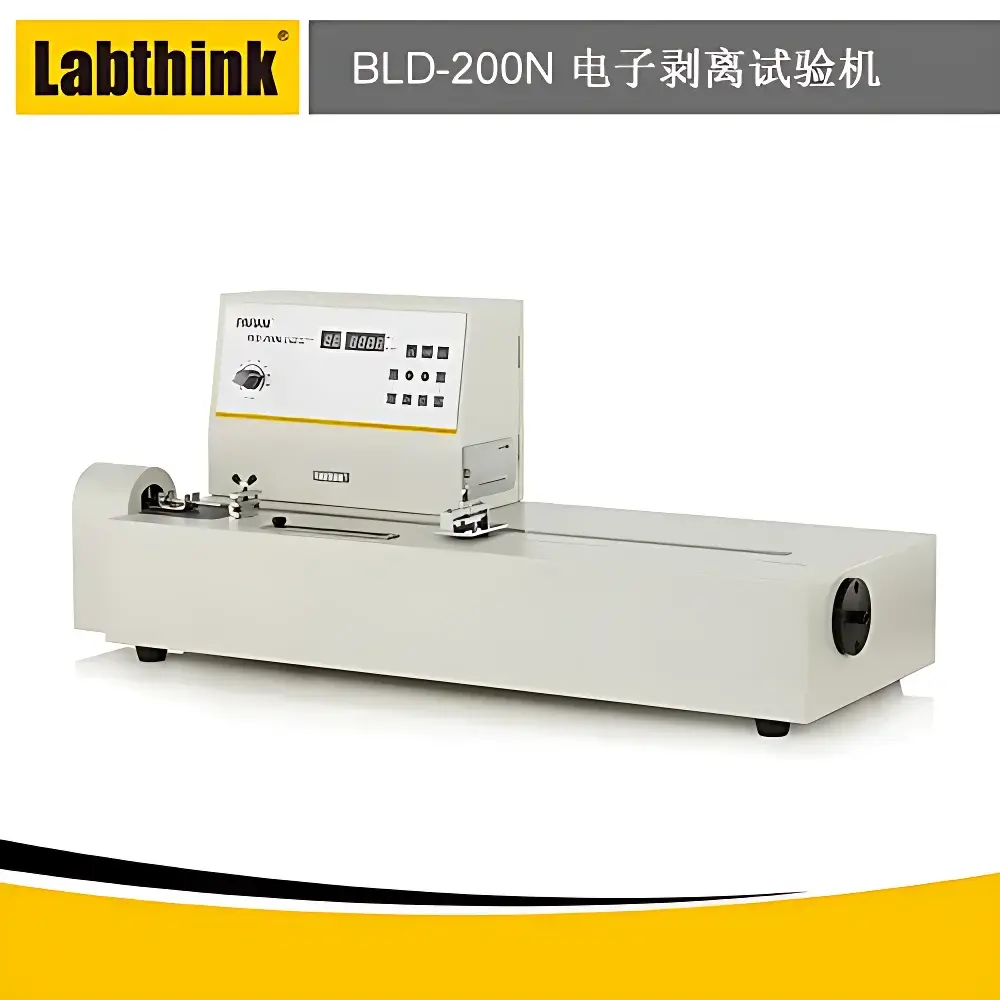
Labthink BLD-200N 180° Peel Strength Tester for Adhesive Tapes
| Brand | Labthink |
|---|---|
| Model | BLD-200N |
| Type | Microprocessor-Controlled Digital Peel & Tensile Testing Machine |
| Load Capacity | 200 N (standard), optional ranges: 10–500 N |
| Accuracy Class | Class 1 (per GB/T 17200 / ISO 7500-1) |
| Resolution | 0.01 N |
| Test Speeds | 7 selectable speeds (50–500 mm/min) |
| Max Travel | 500 mm |
| Specimen Width | ≤30 mm |
| Power Supply | 220 VAC 50 Hz / 120 VAC 60 Hz |
| Dimensions (L×W×H) | 1000 × 370 × 400 mm |
| Net Weight | 27 kg |
| Compliance | GB/T 4850-2002, GB/T 2792, GB/T 2790, GB/T 2791, GB/T 1040.3-2006, GB 8808, QB/T 2358, ASTM D3330, ASTM D903, ISO 8510-2 |
Overview
The Labthink BLD-200N 180° Peel Strength Tester is a precision-engineered digital testing system designed specifically for quantitative mechanical evaluation of adhesive performance in tapes, films, laminates, and flexible packaging materials. It operates on the principle of controlled uniaxial tension applied at a fixed 180° peel angle—where the adherend is folded back upon itself—and measures the force required to progressively separate the adhesive interface under standardized kinematic conditions. This method delivers reproducible, traceable data essential for QC/QA laboratories, R&D departments, and regulatory submissions in medical device, pharmaceutical packaging, and industrial adhesive manufacturing sectors. The instrument conforms to both Chinese national standards (e.g., GB/T 4850-2002 for pressure-sensitive tapes) and internationally recognized test protocols including ASTM D3330 (peel adhesion of pressure-sensitive tapes), ASTM D903 (peel resistance of adhesive bonds), and ISO 8510-2 (adhesives — determination of peel resistance — part 2: 180° peel). Its rigid frame, high-resolution load cell, and thermally stable drive mechanism ensure minimal drift and consistent force transmission across extended test cycles.
Key Features
- Microprocessor-based control architecture with LED digital display and tactile PVC membrane keypad for intuitive operation and real-time parameter monitoring
- Dual-mode functionality: supports both 180° peel testing and tensile testing (e.g., tensile strength, elongation at break, yield point) using interchangeable fixtures
- Seven programmable crosshead speeds (50, 100, 150, 200, 250, 300, and 500 mm/min), enabling compliance with diverse standard requirements and material-specific deformation kinetics
- Class 1 force accuracy per GB/T 17200 and ISO 7500-1, with 0.01 N resolution across the full 200 N standard range (optional 10–500 N transducers available)
- Integrated safety systems: mechanical limit switches, overload cut-off protection, automatic zero calibration, and fault diagnostics with on-screen alerts
- Onboard statistical engine computes peak force, minimum force, arithmetic mean, and coefficient of variation for each test group; stores up to 100 test records internally
- Equipped with precision vernier scale for manual elongation measurement and calibrated stainless-steel specimen clamps with adjustable grip pressure
Sample Compatibility & Compliance
The BLD-200N accommodates specimens up to 30 mm wide and 500 mm travel length, making it suitable for single-layer and multilayer flexible substrates—including acrylic- and rubber-based pressure-sensitive tapes, silicone-coated release liners, medical transdermal patches, protective films, and laminated pouch structures. All test configurations comply with Good Laboratory Practice (GLP) documentation requirements when paired with optional Lystem™ Laboratory Data Management System. The system supports audit-ready reporting aligned with FDA 21 CFR Part 11 (when used with validated software and electronic signature modules), as well as ISO/IEC 17025-compliant calibration traceability through accredited third-party providers. Standardized test plates, chromed steel rollers (2 kg, 84 mm diameter), and die-cutting tools are available as certified accessories to ensure inter-laboratory comparability.
Software & Data Management
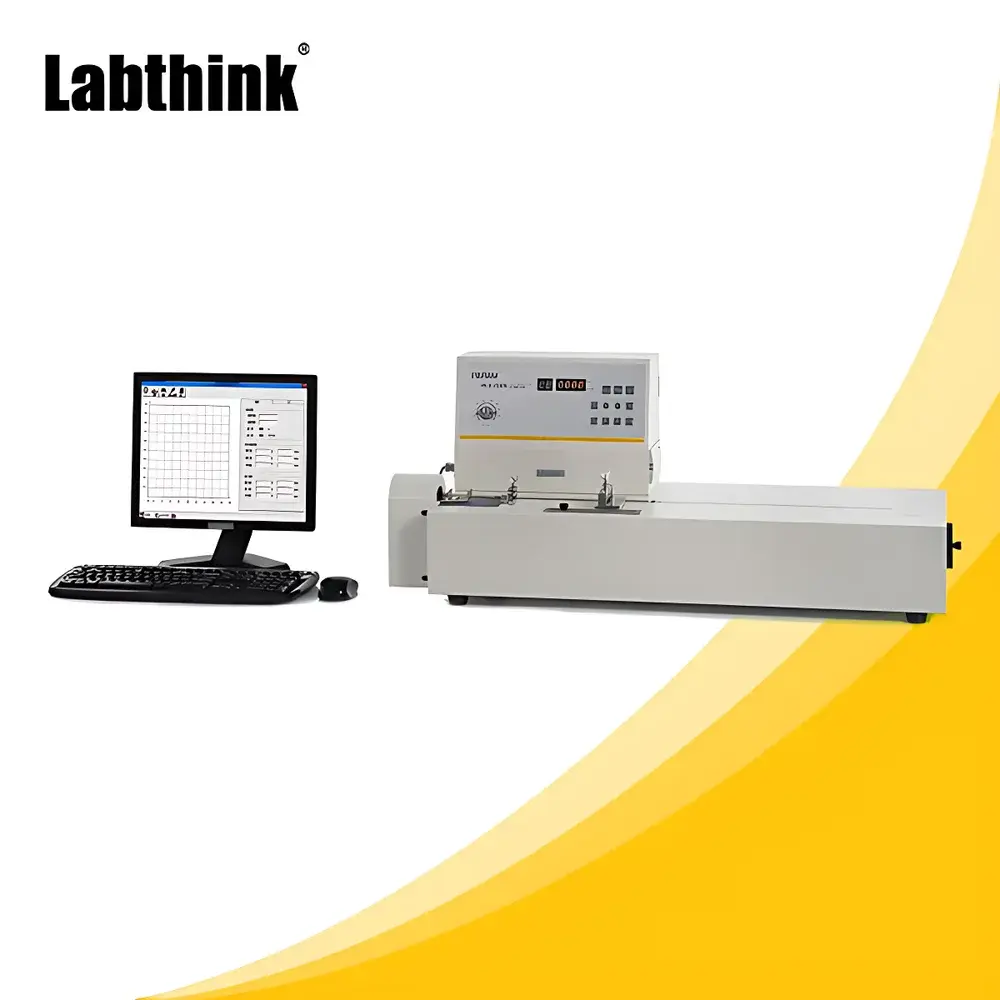
While the base unit operates autonomously via embedded firmware, optional PC-based software enables advanced data acquisition, curve visualization (force vs. displacement), batch reporting, and export to CSV, PDF, or XML formats. The Lystem™ platform provides centralized user management, role-based access control, electronic audit trails, and long-term archival of raw data files with immutable timestamps—critical for GMP-regulated environments. All communication occurs via RS232 serial interface (standard) or optional USB-to-RS232 converter; no proprietary drivers required. Data integrity is preserved through cyclic redundancy check (CRC) validation during transmission and automatic checksum logging for every test event.
Applications
- Quantitative assessment of 180° peel adhesion strength for pressure-sensitive tapes per GB/T 4850-2002 and ASTM D3330
- Evaluation of 90° peel performance on non-planar or low-stiffness substrates
- Tensile property characterization (UTS, modulus, elongation) of thin films and foils per GB/T 1040.3-2006 and ISO 527-3
- Measurement of liner release force (low-speed unwind torque simulation) and tab removal force for child-resistant packaging
- Shear adhesion failure testing (SAFT) under static load conditions using custom fixture kits
- Hot-tack and seal strength analysis of heat-sealable films when integrated with temperature-controlled platen accessories
- Adhesive bond durability screening under accelerated aging protocols (e.g., 40°C/75% RH for 7 days prior to peel testing)
FAQ
What standards does the BLD-200N support for peel testing?
It fully complies with GB/T 4850-2002, GB/T 2792, ASTM D3330, ASTM D903, and ISO 8510-2 for 180° peel measurements.
Can the instrument perform tensile tests in addition to peel tests?
Yes—its dual-mode design allows seamless switching between peel and tensile configurations using dedicated grips and alignment fixtures.
Is calibration traceable to national metrology institutes?
Yes; Labthink provides ISO/IEC 17025-accredited calibration certificates upon request, with uncertainty budgets stated per ILAC-P10 guidelines.
What is the maximum specimen width supported?
The standard configuration accepts specimens up to 30 mm wide; wider samples require custom jaw adaptation and may affect force linearity.
Does the system meet FDA 21 CFR Part 11 requirements?
When operated with validated Lystem™ software, electronic signatures, and audit-trail-enabled hardware, it satisfies Part 11 criteria for electronic records and signatures in regulated environments.



