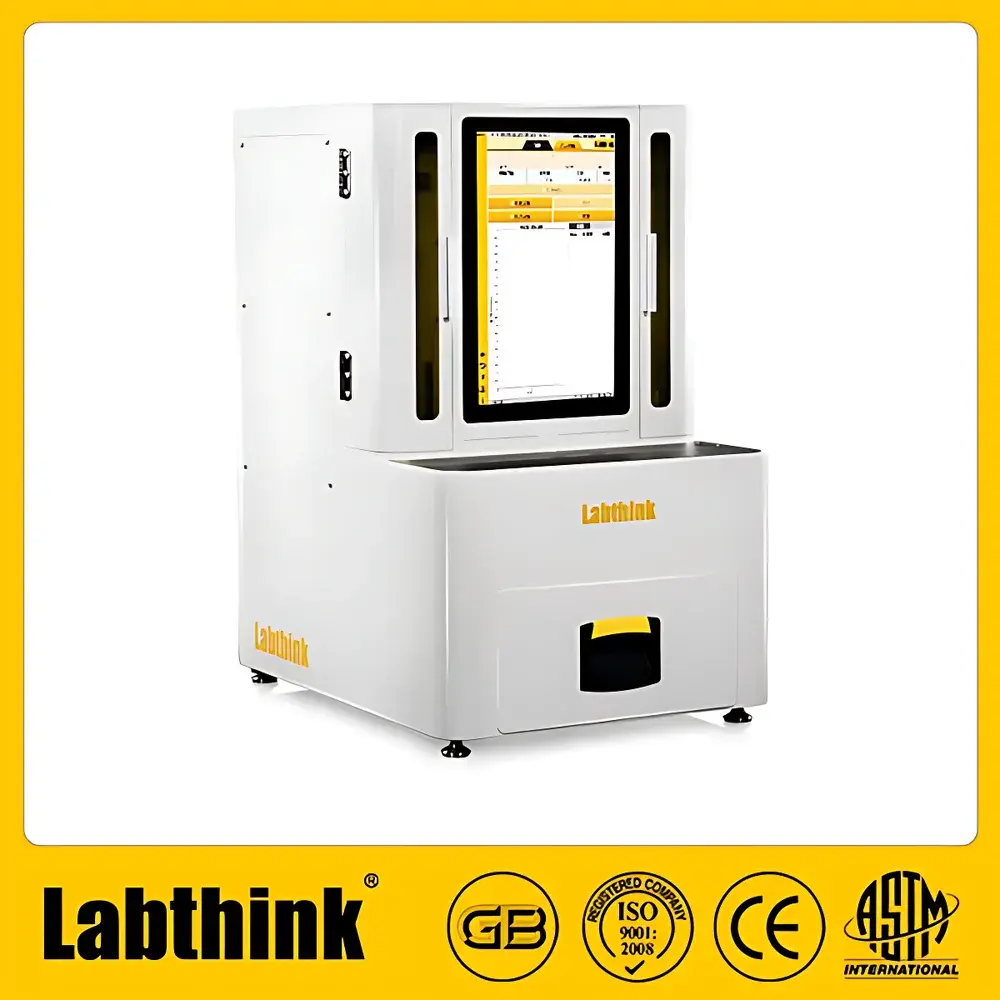
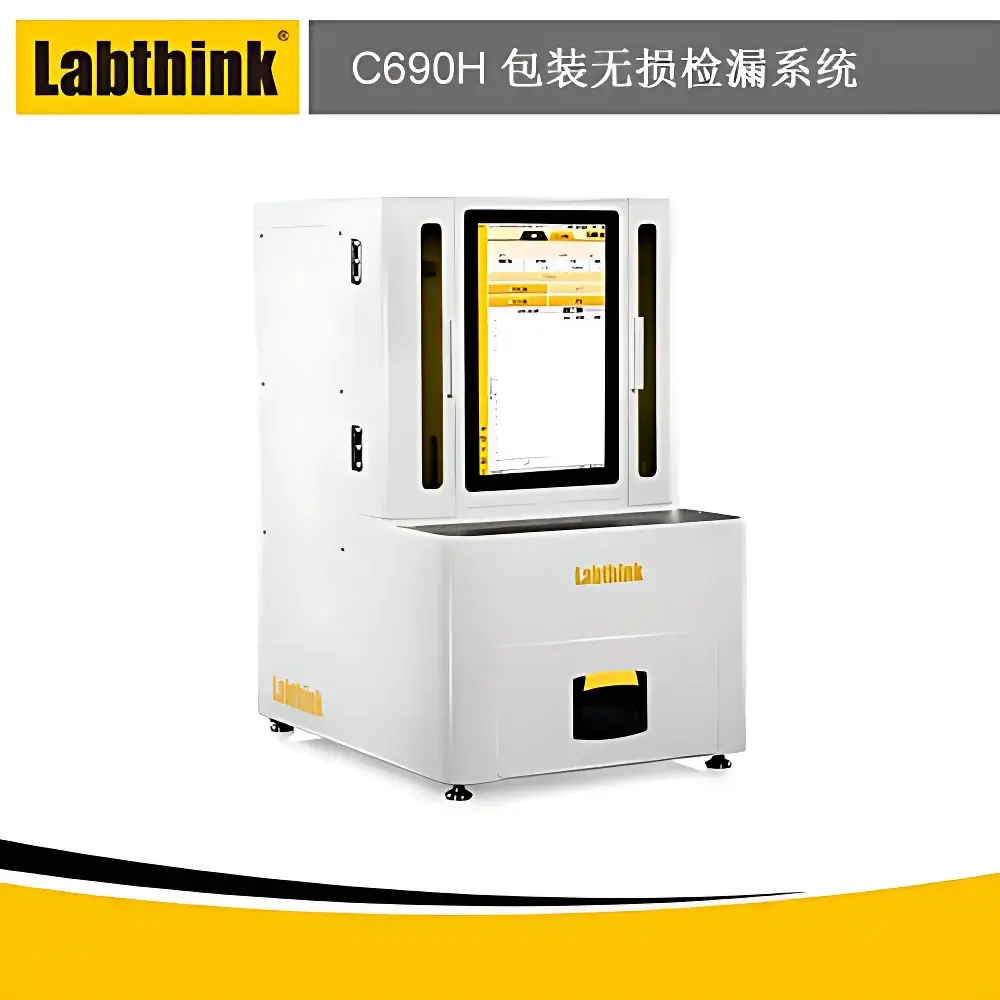
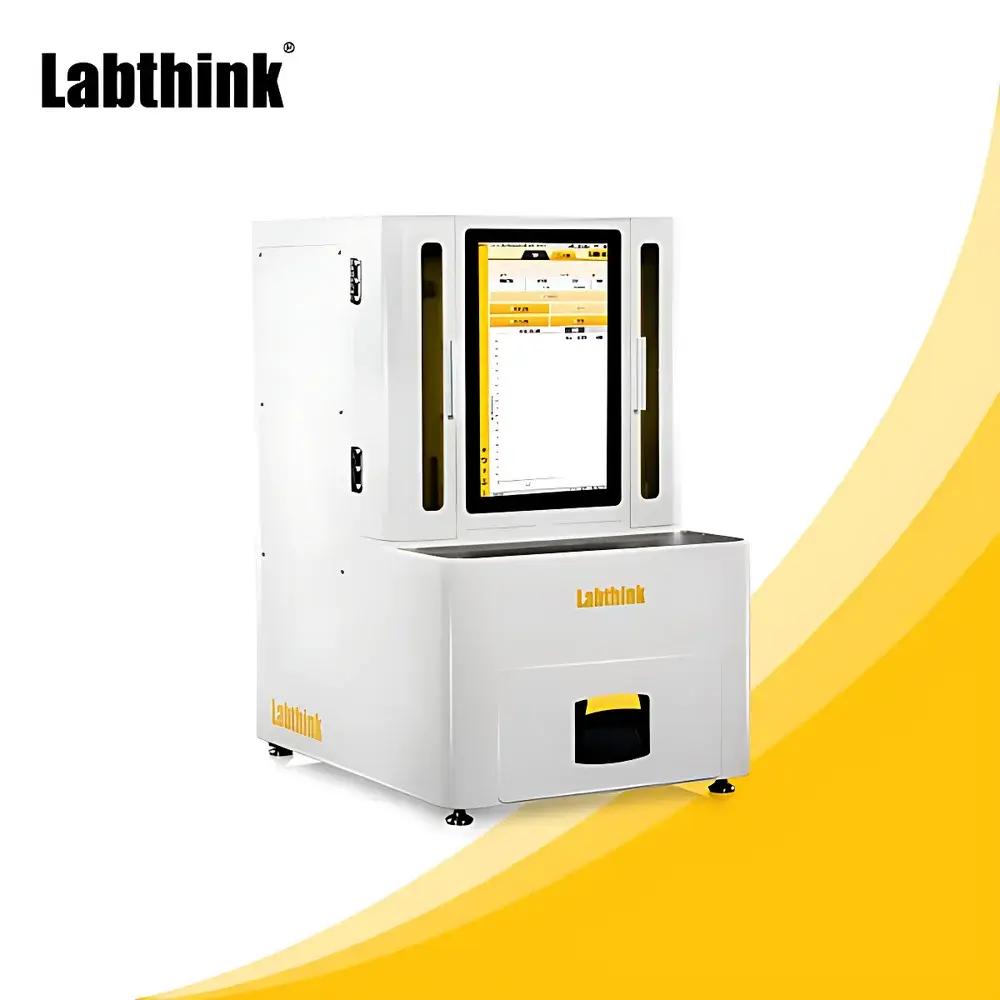
Labthink C690H Non-Destructive Package Leak Tester (Vacuum Decay Method)
| Brand | Labthink |
|---|---|
| Model | C690H |
| Origin | Shandong, China |
| Manufacturer Type | Direct Manufacturer |
| Detection Principle | Vacuum Decay |
| Test Method | ASTM F2338–22, YY/T 0681.18–2022, USP <1207> |
| Sample Capacity | 20–120 units per batch |
| Test Chamber | Dual independent chambers (A & B) |
| Sample Size Limit | ≤ Φ45 mm × 80 mm |
| Pressure Range | –100 to +100 kPa |
| Detection Limit | ≤ 3 µm (equivalent reference orifice per USP <1207>) |
| Resolution | 0.1 µm |
| Repeatability | ±1 µm |
| Gas Supply | Compressed air (user-supplied, ≥500 kPa / 72.5 psi) |
| Interface | Φ6 mm polyurethane tubing |
| Power Supply | 120 VAC ±10% 60 Hz OR 220 VAC ±10% 50 Hz (configurable) |
| Dimensions | 850 × 500 × 730 mm (W×D×H) |
| Net Weight | 95 kg |
| Compliance Options | Optional 21 CFR Part 11 electronic signature & audit trail module |
Overview
The Labthink C690H Non-Destructive Package Leak Tester is an engineered vacuum decay-based integrity verification system designed for high-throughput, quantitative assessment of container closure integrity (CCI) in pharmaceutical primary packaging. It operates on the fundamental principle of measuring minute pressure differentials within a sealed test chamber following controlled vacuum application — a method validated under ASTM F2338–22 and aligned with the risk-based framework of USP . Unlike destructive dye ingress or microbial challenge methods, the C690H preserves sample sterility and structural integrity throughout testing, enabling full-batch evaluation without compromising product usability. Its dual-channel architecture supports concurrent validation of two distinct container formats — critical for multi-product manufacturing lines or comparative stability studies. The system integrates traceable pressure transduction calibrated against NIST-traceable standards, ensuring metrological continuity across laboratories and regulatory submissions.
Key Features
- Dual independent test channels (A & B) with fully configurable vacuum setpoints, enabling parallel assessment of heterogeneous container types — e.g., 2R vials and 10R syringes — within a single run.
- Automated drop-feed sample handling system supporting 20–120 units per batch; programmable dwell time and vacuum ramp profiles accommodate variable wall rigidity and headspace volume.
- Vacuum–pressure hybrid mode eliminates false negatives caused by transient pore occlusion: after initial vacuum decay analysis, the system applies regulated positive pressure to re-open latent microchannels before secondary measurement.
- Embedded 15.6-inch industrial touch panel running Windows OS with vertically optimized UI; real-time pressure decay curve visualization, auto-threshold leak classification, and on-device calculation of equivalent reference orifice diameter (µm) per USP Annex 1.
- NIST-traceable differential pressure sensors and microflow control valves ensure long-term signal stability; temperature-compensated algorithms mitigate environmental drift during extended qualification runs.
- Integrated safety interlocks, door position sensing, and over-pressure relief prevent operational hazards; all status alerts trigger audible/visual notifications and log timestamps in the audit trail.
Sample Compatibility & Compliance
The C690H accommodates standard parenteral containers including glass and polymer-based vials (e.g., West Pharma 2R–50R), ampoules (Type I–III), cartridge systems (Kigami, SCHOTT), pre-filled syringes (BD, Gerresheimer), and IV bags (with rigid support fixtures). All test protocols are documented per ISO/IEC 17025:2017 requirements for method validation, including specificity, precision (repeatability ≤ ±1 µm), detection limit (≤3 µm), and robustness across ambient humidity (30–70% RH) and temperature (15–30°C) ranges. The system satisfies GMP data integrity mandates per EU Annex 11 and FDA Guidance for Industry: Data Integrity and Compliance With Drug CGMP, supporting ALCOA+ principles through immutable electronic records, role-based user authentication, and configurable permission matrices.
Software & Data Management
Labthink’s proprietary LeakTest™ software provides full lifecycle data governance: automated generation of IQ/OQ/PQ documentation templates, exportable CSV/PDF reports with embedded metadata (operator ID, timestamp, instrument serial, calibration due date), and native integration with LIMS via OPC UA or RESTful API. Optional 21 CFR Part 11 compliance package includes biometric or token-based electronic signatures, granular audit trail (covering parameter changes, result overrides, and report deletions), and encrypted database storage with automatic backup scheduling. All raw sensor outputs — pressure vs. time arrays, flow rate derivatives, and thermal compensation coefficients — remain accessible for retrospective reanalysis.
Applications
- Batch release testing of lyophilized drug products in serum vials where residual moisture content prohibits dye penetration methods.
- Stability study monitoring of cold-chain transport containers to quantify cumulative seal degradation under thermal cycling.
- Comparative CCI assessment between stopper formulations (bromobutyl vs. chlorobutyl) under identical vacuum profiles.
- Root cause investigation of out-of-specification microbial ingress events using correlation of measured leak rates with simulated worst-case defect geometries.
- Qualification of assembly line stoppering processes via statistical process control (SPC) charts tracking mean leak rate shift across consecutive lots.
FAQ
What regulatory standards does the C690H directly support?
ASTM F2338–22, USP (Method I – Vacuum Decay), YY/T 0681.18–2022, and ISO 11607–2:2019 Annex D.
Can the system validate both glass and polymer containers simultaneously?
Yes — dual-channel configuration allows independent vacuum ramping and dwell times per channel, accommodating differing material compliance characteristics.
Is NIST traceability provided for calibration certificates?
Yes — factory calibration reports include NIST-traceable uncertainty budgets for all pressure and flow sensors, with recalibration intervals defined per ISO/IEC 17025.
Does the system require external compressed air conditioning?
User-supplied air must meet ISO 8573–1 Class 2:2:2 specifications (oil-free, dew point ≤ –40°C, particulate ≤ 0.1 µm); optional integrated dryer/filter modules are available.
How is method transfer supported between sites?
LeakTest™ enables export of complete test method files (including vacuum profile, pass/fail logic, and reporting templates), ensuring identical execution across global manufacturing facilities.