
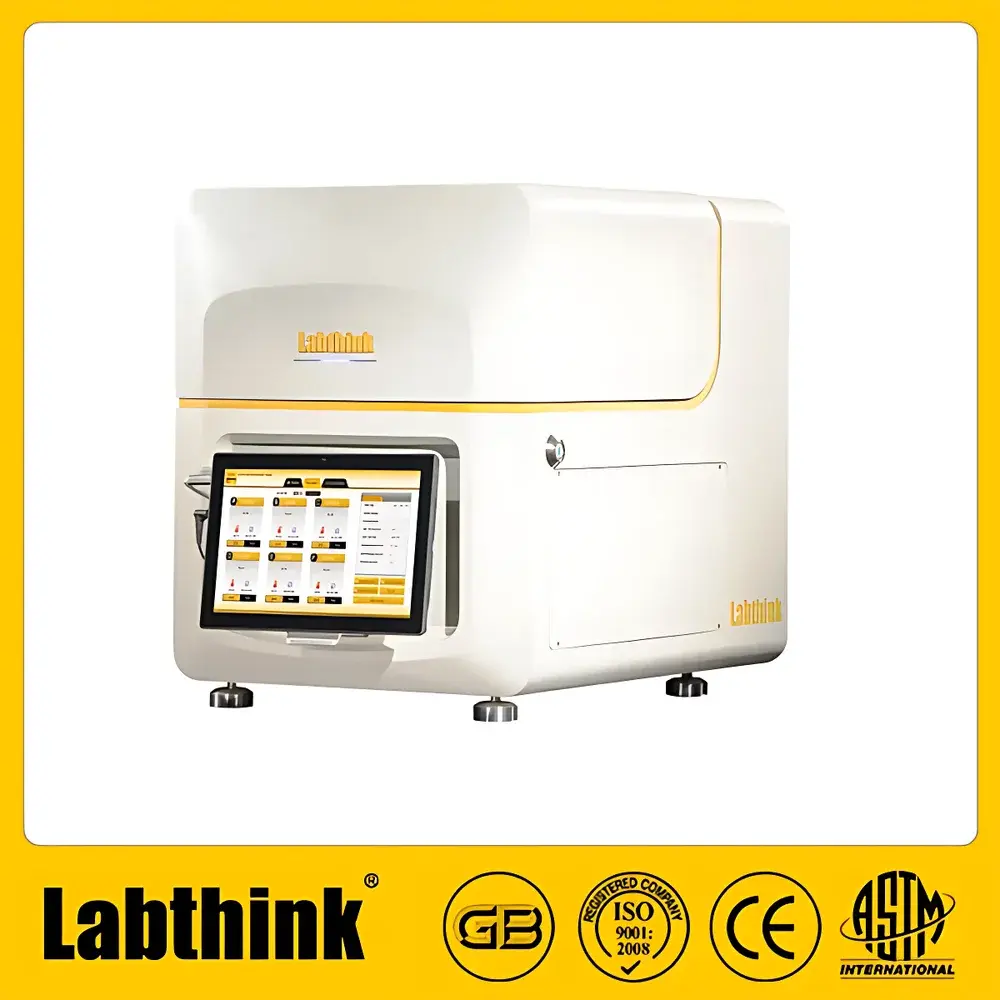
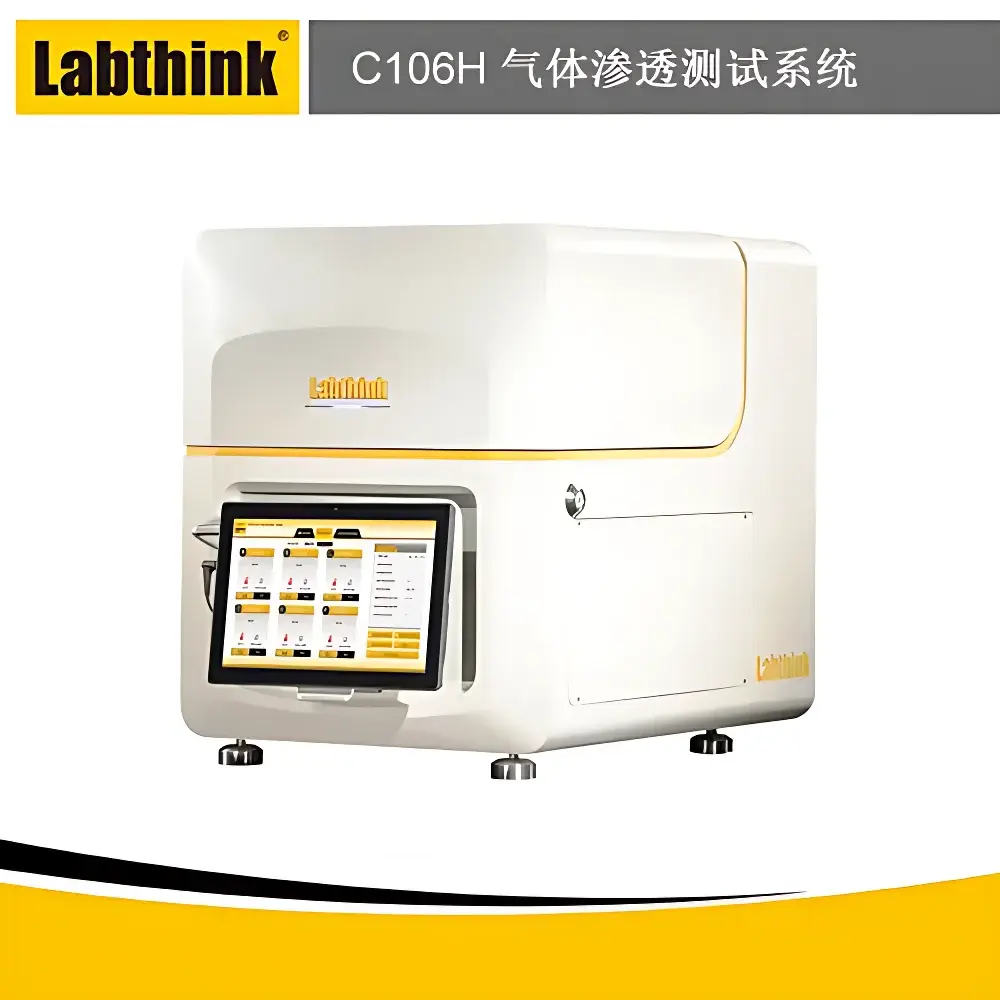
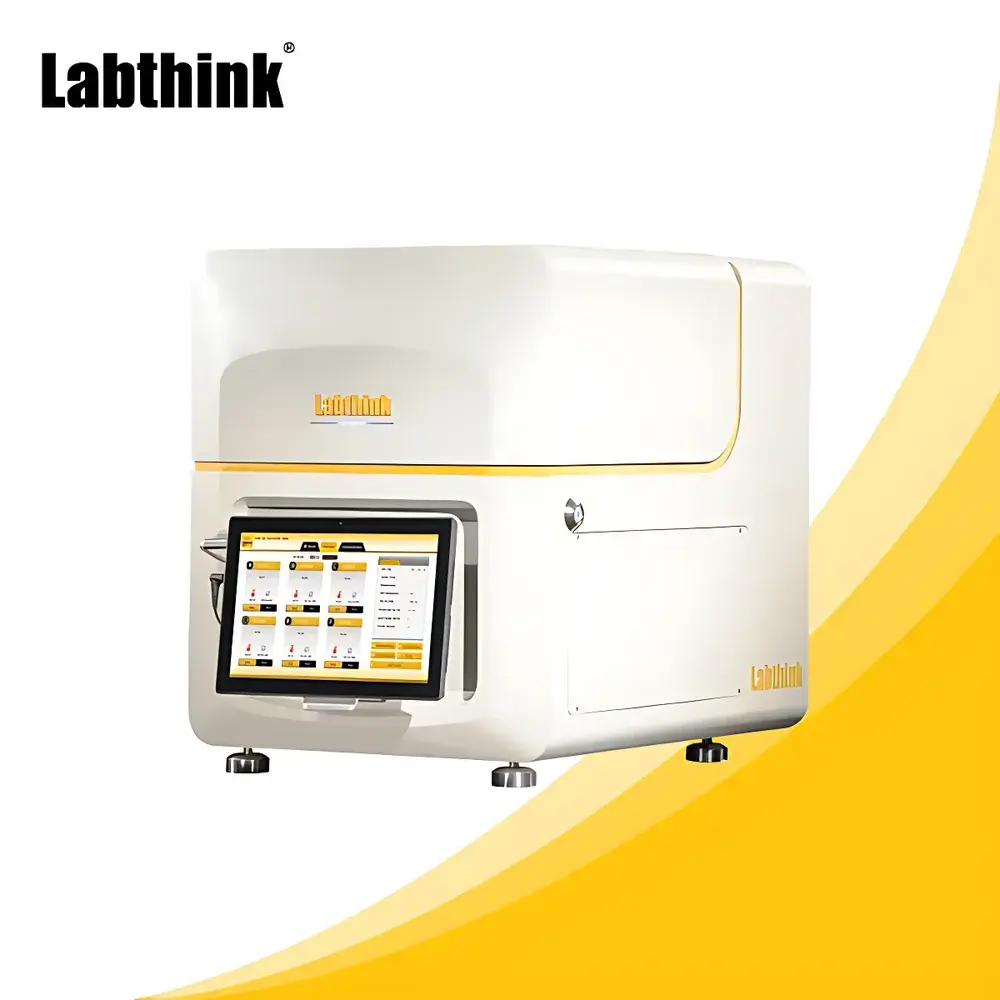
Labthink C106H Helium Gas Permeability Tester for Plastic Films and Flexible Packaging Materials
| Brand | Labthink |
|---|---|
| Origin | Shandong, China |
| Manufacturer Type | Direct Manufacturer |
| Country of Origin | China |
| Model | C106H |
| Price Range | USD 14,000 – 98,000 |
| Test Principle | Differential Pressure Method (ISO 15105-1, ASTM D1434, GB/T 1038-2000) |
| Test Gases | He, O₂, N₂, CO₂, CH₄ (customizable) |
| Temperature Range | 15–50 °C (standard) |
| Humidity Range | 0% RH (dry), or 5–90% ±2% RH (optional) |
| Vacuum Resolution | 0.01 Pa |
| Vacuum Accuracy | ±0.2% of reading (1–100% of sensor span) |
| Test Chamber Vacuum Level | ≤10 Pa |
| Permeability Range | 0.01–50,000 cm³/(m²·24h·0.1MPa) |
| Resolution | 0.001 cm³/(m²·24h·0.1MPa) |
| Temperature Stability | ±0.15 °C |
| Test Area | 38.48 cm² per chamber |
| Sample Size | 11.2 cm × 11.2 cm |
| Max Sample Thickness | 3 mm |
| Number of Test Chambers | 6 independent |
| Pressure Control Range | 10–150 kPa (adjustable) |
| Pressure Stability | ±0.2 kPa |
| Gas Inlet | Φ6 mm polyurethane tubing |
| Power Supply | 120 VAC ±10%, 60 Hz OR 220 VAC ±10%, 50 Hz |
| Net Weight | 100 kg |
| Dimensions | 600 mm × 490 mm × 660 mm |
Overview
The Labthink C106H Helium Gas Permeability Tester is a high-precision differential pressure-based gas permeation analysis system engineered for quantitative determination of gas transmission rates—including helium—through plastic films, laminates, foils, and other flexible packaging materials. It operates on the fundamental principle of Fick’s law of diffusion, where a controlled pressure gradient across a conditioned specimen drives gas molecules from the high-pressure (upstream) side to the low-pressure (downstream) side. The system continuously monitors pressure rise in the evacuated downstream chamber using ultra-sensitive vacuum transducers, enabling calculation of gas permeability coefficient (P), diffusion coefficient (D), solubility coefficient (S), and oxygen/helium transmission rate (OTR/HTR) under standardized conditions. Designed specifically for packaging R&D, quality control, and regulatory compliance laboratories, the C106H meets critical international test standards including ISO 15105-1, ISO 2556, ASTM D1434, JIS K7126-1, GB/T 1038-2000, and YBB 00082003. Its helium-compatible configuration supports stringent barrier validation for pharmaceutical blister packaging, medical device pouches, and aerospace-grade encapsulation where helium serves as a tracer gas due to its small molecular size and inert behavior.
Key Features
- Six independent test chambers with standardized 38.48 cm² active area—triple the throughput of conventional single- or dual-chamber instruments.
- Rainbow Bridge™ test cavity architecture with 360° circumferential air circulation ensures uniform thermal distribution and temperature stability of ±0.15 °C across all chambers.
- Imported high-resolution vacuum sensors (0.01 Pa resolution) calibrated to ±0.2% accuracy over full scale, enabling reliable measurement of ultra-high-barrier materials down to 0.01 cm³/(m²·24h·0.1MPa).
- Integrated pneumatic actuation system with imported solenoid valves and pressure regulators ensures repeatable sample clamping force, leak-tight sealing, and minimal maintenance over extended service life.
- High-efficiency vacuum pump (ultimate vacuum ≤0.2 Pa) with automated start/stop logic—eliminates manual intervention and reduces energy consumption during idle cycles.
- Precision pressure regulation module maintains upstream test pressure between 10–150 kPa with real-time feedback control; pressure drift limited to ±0.2 kPa during test execution.
- Auto-compensation pressurization technology actively adjusts upstream pressure to counteract minor leakage or thermal expansion effects, preserving constant ΔP throughout the test duration.
- 12-inch Windows-based touchscreen HMI with intuitive workflow navigation, preconfigured test templates, and one-touch initiation for routine QC assays.
Sample Compatibility & Compliance
The C106H accommodates a broad spectrum of planar specimens up to 3 mm thick and 11.2 cm × 11.2 cm in dimension—including monolayer polymers (e.g., PET, PP, PE), metallized films (AlOx, SiOx), aluminum foil laminates, paper-plastic composites, rubber sheets, and silicon wafers. Its modular gas delivery interface supports certified helium, nitrogen, oxygen, carbon dioxide, and methane sources (user-supplied), with optional hazardous gas handling packages compliant with IEC 60079-0 for Class I, Division 2 environments. All firmware and data handling modules are designed to support audit-ready operation under GLP and GMP frameworks. Optional CFR 21 Part 11-compliant software add-ons provide electronic signatures, role-based access control, and immutable audit trails—essential for FDA-regulated pharmaceutical packaging validation.
Software & Data Management
The embedded Labthink Permeation Suite v4.x delivers comprehensive test automation, real-time curve visualization (permeation vs. time, pressure vs. time, temperature profile), and multi-parameter export (CSV, PDF, XML). Raw sensor data is timestamped at 100 ms intervals and stored locally with SHA-256 hashing for integrity verification. Users may generate comparative reports across batches, materials, or environmental conditions; overlay curves for accelerated aging studies; and apply ASTM E171-compliant humidity correction algorithms when testing under non-standard RH conditions. Optional DataShield™ encryption module secures data at rest and in transit, satisfying ISO/IEC 27001-aligned information security policies. Remote diagnostics and firmware updates are supported via secure HTTPS channel without exposing internal network infrastructure.
Applications
- Quantitative helium transmission rate (HTR) assessment for cold-form blister packaging used in sterile pharmaceuticals and biologics.
- Barrier performance benchmarking of retortable pouches, vacuum-sealed meat trays, and modified atmosphere packaging (MAP) films.
- Accelerated shelf-life modeling via Arrhenius-based temperature-dependent permeability analysis (15–60 °C range).
- Validation of coating integrity on barrier-coated PET or cellulose films intended for food contact applications.
- Comparative evaluation of nanocomposite films, graphene-enhanced laminates, and bio-based polymer alternatives.
- Regulatory submission support for USP , EP 3.2.1, and ISO 11607-1 packaging qualification dossiers.
FAQ
What gases can the C106H test besides helium?
The system is configured by default for O₂, N₂, and CO₂. Helium capability is standard; CH₄ and other non-corrosive gases are available upon customization with appropriate gas train components and safety interlocks.
Is humidity control integrated into the base model?
Standard configuration operates under dry (0% RH) conditions. Humidity-controlled testing (5–90% ±2% RH) requires optional environmental chamber integration and is subject to material compatibility review.
How does the six-chamber design improve laboratory efficiency?
Each chamber runs fully autonomous tests with independent parameter sets—enabling parallel evaluation of six replicates, six different materials, or six temperature/pressure conditions without cross-contamination or sequential delay.
Can the C106H meet FDA 21 CFR Part 11 requirements out of the box?
No. CFR Part 11 compliance requires installation of the optional GMP Computer System Package, including electronic signature modules, audit trail logging, and user permission hierarchies—all validated per IQ/OQ protocols.
What vacuum level must be achieved before initiating a test?
The system automatically evacuates all chambers to ≤10 Pa prior to test commencement. Final stabilization is confirmed via real-time vacuum decay monitoring before upstream gas introduction.






