
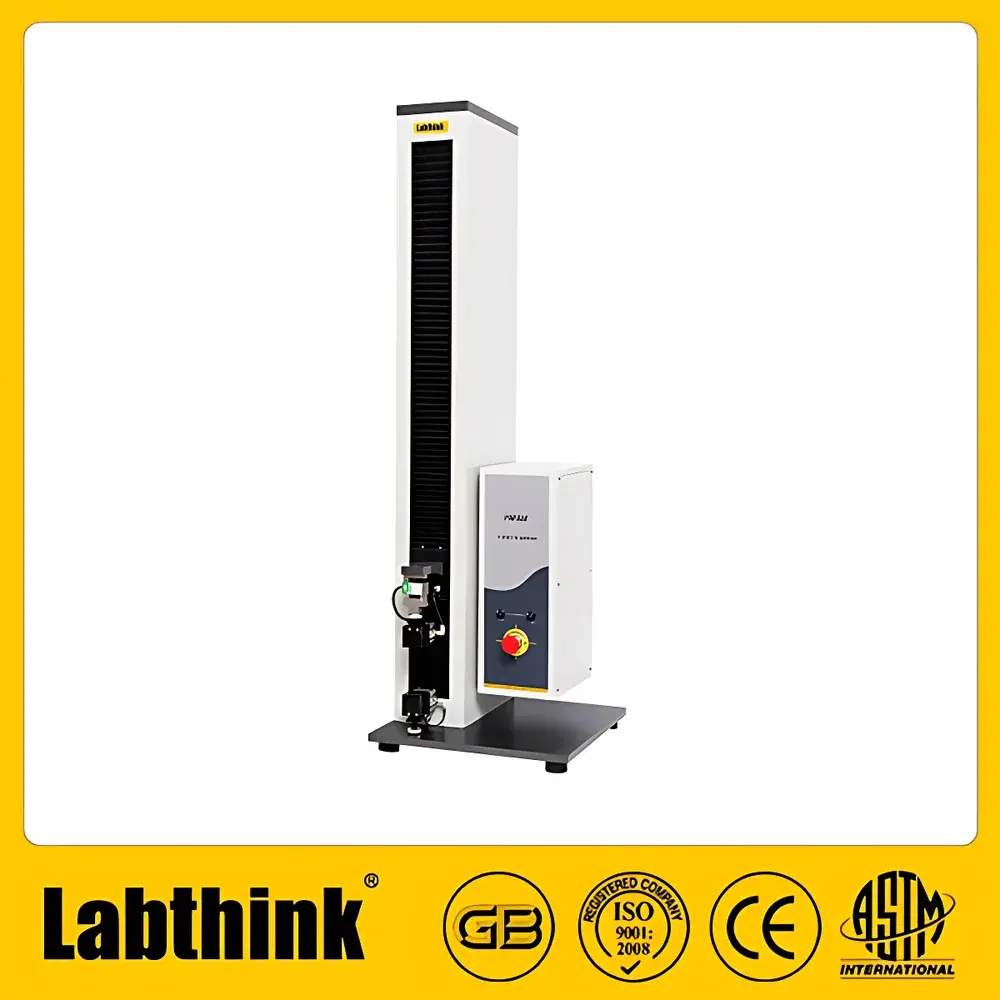
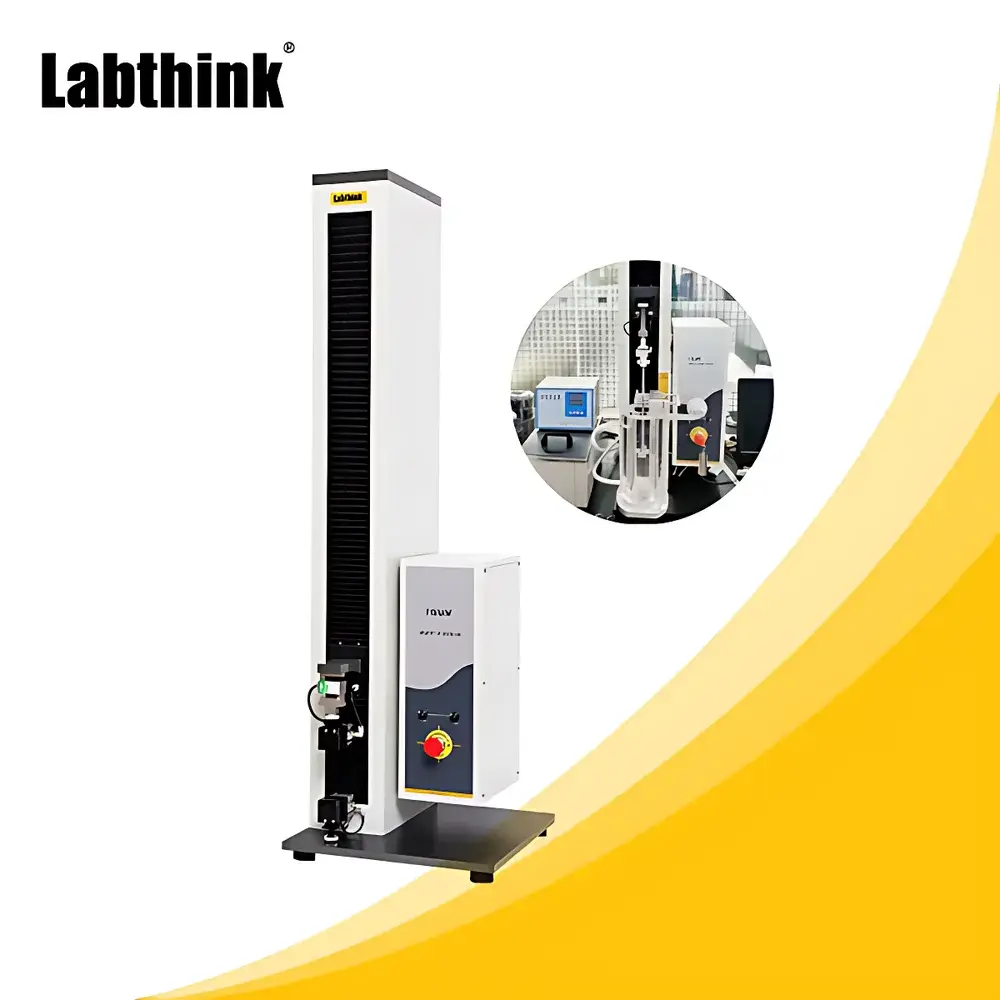
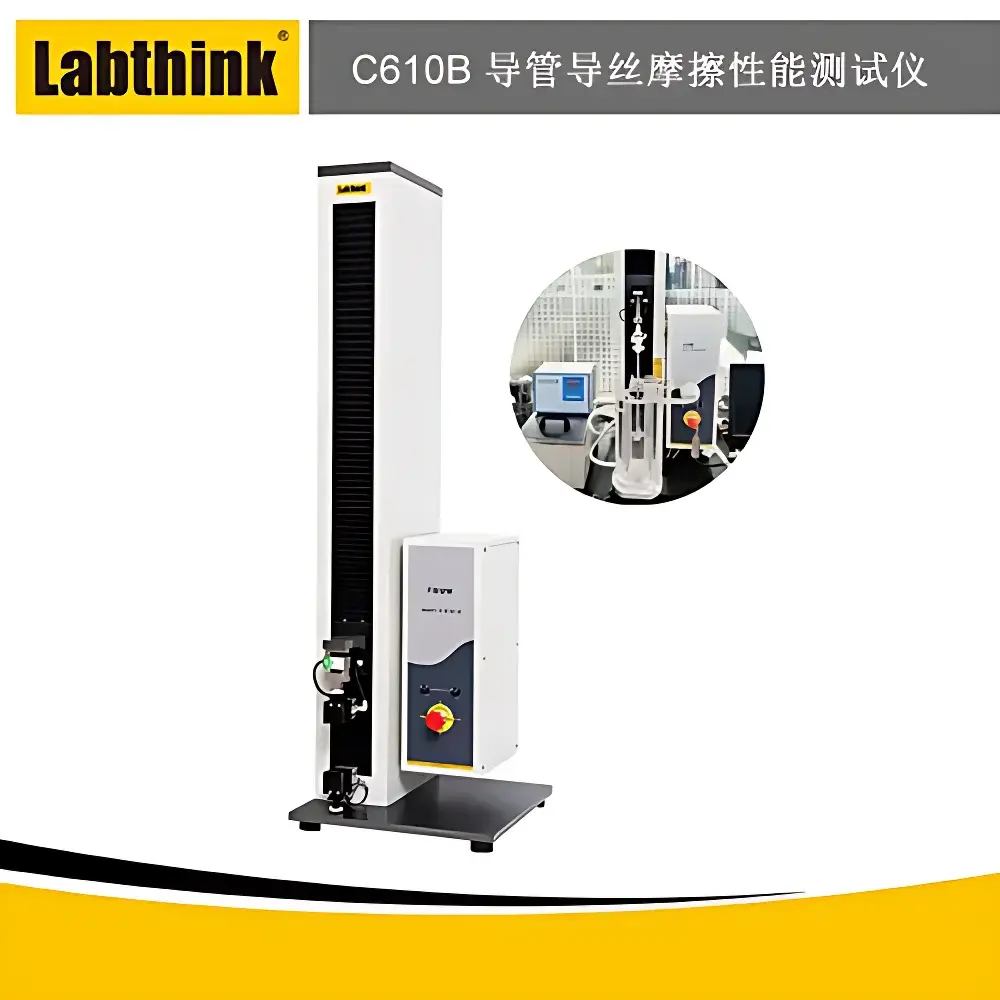
Labthink C610B Catheter-Guide Wire Friction Performance Tester
| Brand | Labthink |
|---|---|
| Model | C610B |
| Origin | Shandong, China |
| Manufacturer Type | Direct Manufacturer |
| Origin Category | Domestic (China) |
| Quotation | Upon Request |
| Sensor Capacity | 10 N (2 units standard: vertical lift + lateral clamping) |
| Force Accuracy | Class 0.5 |
| Display Resolution | 0.001 N |
| Test Speed Range | 1–600 mm/min (adjustable) |
| Speed Accuracy | ±0.5% of set value |
| Specimen Count per Test | 1 |
| Water Bath Temperature Control Range | Ambient to 40 °C |
| Friction Cycle Count | 1–99 cycles |
| Normal Clamping Force Range | 0–10 N (adjustable) |
| Vertical Stroke | 950 mm |
| Specimen Travel Distance | >150 mm |
| Clamping Method | Pneumatic (vertical), Electromechanical (lateral) |
| Air Supply Requirement | 0.5–0.7 MPa, Ø4 mm polyurethane tubing (user-supplied) |
| Dimensions (L×W×H) | 450 × 450 × 1410 mm |
| Weight | ~95 kg |
| Power Supply | 220 VAC ±10%, 50 Hz OR 120 VAC ±10%, 60 Hz (dual-voltage compatible) |
Overview
The Labthink C610B Catheter-Guide Wire Friction Performance Tester is a precision-engineered mechanical testing system designed specifically for quantifying the dynamic sliding resistance between medical catheters and guidewires under physiologically relevant conditions. It operates on the principle of controlled normal force application combined with unidirectional axial displacement, enabling direct measurement of kinetic friction force during simulated insertion or withdrawal. The instrument implements a dual-axis force-sensing architecture—separate 10 N load cells monitor both vertical lifting force (friction response) and lateral clamping force (normal load)—ensuring traceable, orthogonal force resolution per ISO 17025-aligned metrology practices. Its integrated water bath system maintains specimen temperature at 37 °C ±0.5 °C, replicating human core body temperature to assess lubricity degradation or hydrophilic coating performance under thermal stress. Compliance with YY/T 1536–2017, YY/T 1898–2025, T/CSBME 021–2020, and T/CAMDI 021–2019 is embedded in test protocol logic, including automatic cycle counting, statistical aggregation (mean, min, max, standard deviation), and audit-ready data capture.
Key Features
- Dual independent force transducers (10 N each) for simultaneous normal load control and friction force acquisition, calibrated to Class 0.5 accuracy per GB/T 7722–2008 (equivalent to ISO 376)
- Pneumatically actuated vertical specimen lifting mechanism with adjustable speed (1–600 mm/min, ±0.5% repeatability) and programmable stroke (>150 mm effective travel)
- Electromechanically regulated lateral clamping system enabling precise, repeatable normal force application from 0 to 10 N in 0.001 N increments
- Integrated thermostatic water bath (ambient to 40 °C) utilizing PID-controlled heating and circulation, compliant with YY/T 1536–2017 thermal conditioning requirements
- Automated multi-cycle friction testing (1–99 repetitions) with real-time force logging and post-test statistical analysis (mean, SD, extrema)
- Bidirectional load frame capability supporting compression-mode tests including rubber stopper puncture (per ISO 8537) and ampoule breakage force (per USP )
- Hardware safety interlocks: mechanical end-stop limit switches, electronic overload cutoff, emergency stop button, and auto-return function upon test completion
Sample Compatibility & Compliance
The C610B accommodates a broad range of single-use non-vascular and vascular-intended devices, including urinary catheters, tracheal tubes, balloon catheters, and hydrophilic-coated guidewires. Standard fixtures include silicone elastomer clamping pads and surgical membrane interface layers, dimensionally and durometer-matched to YY/T 1536–2017 Annex A specifications. All test configurations adhere strictly to the geometric constraints, surface finish tolerances, and environmental conditioning stipulated in referenced standards. Data output meets GLP/GMP documentation requirements: timestamps, operator ID, calibration status, environmental logs (temperature, humidity), and raw force-vs.-displacement curves are stored in immutable binary format. Optional DataShield software module provides 21 CFR Part 11-compliant electronic signatures, audit trails, and role-based access control for regulated environments.
Software & Data Management
Embedded test software features intuitive workflow-driven operation with preloaded protocols for YY/T 1536–2017 (non-vascular), YY/T 1898–2025 (vascular guidewire adhesion), and T/CSBME 021–2020 (hydrophilic coating durability). Real-time graphical display shows force vs. displacement curves with selectable smoothing filters and derivative overlays. Post-test reports export to PDF, CSV, and XML formats—including full metadata (calibration certificates, environmental logs, user credentials). Raw data archives support third-party statistical analysis (e.g., JMP, Minitab) via standardized .csv schema. Optional GMP-compliant computer system configuration includes validated OS image, encrypted local storage, and network isolation for FDA-auditable deployments.
Applications
- Quantitative evaluation of hydrophilic coating lubricity retention after hydration time gradients (e.g., 30 s, 60 s, 120 s immersion)
- Comparative friction coefficient profiling across catheter materials (PVC, PU, Pebax, silicone) and surface modifications (plasma treatment, grafting)
- Accelerated aging studies correlating friction increase with thermal/oxidative stress exposure (per ISO 11607–2)
- Regulatory submission support for 510(k), CE Mark, and PMDA dossiers requiring objective sliding performance evidence
- In-process quality control of coating uniformity and batch-to-batch consistency in high-volume manufacturing
- Root cause analysis of clinical insertion resistance incidents via forensic friction signature matching
FAQ
What standards does the C610B natively support?
The instrument’s firmware and test templates are preconfigured for YY/T 1536–2017, YY/T 1898–2025, T/CSBME 021–2020, and T/CAMDI 021–2019. Custom protocol development is available for ASTM F2624, ISO 80369–7, or client-specific SOPs.
Is external air supply mandatory?
Yes—the vertical clamping actuator requires clean, dry compressed air at 0.5–0.7 MPa supplied via Ø4 mm polyurethane tubing. An optional Labthink-branded oil-free scroll compressor (C-AC10) is available as an accessory.
Can the system validate coating adhesion strength?
While not a peel tester, YY/T 1898–2025 compliance enables indirect assessment of hydrophilic coating integrity via cyclic friction hysteresis analysis: increasing coefficient of friction over repeated strokes indicates progressive delamination.
Does the water bath meet ISO 13485 environmental monitoring requirements?
The bath includes PT100 sensor logging with ±0.1 °C accuracy and 0.01 °C resolution; temperature records are embedded in every test report and exportable for QMS integration.
What is the recommended calibration frequency?
Per ISO/IEC 17025, annual accredited calibration is advised; internal verification using NIST-traceable reference weights (supplied) should be performed daily prior to use.



