
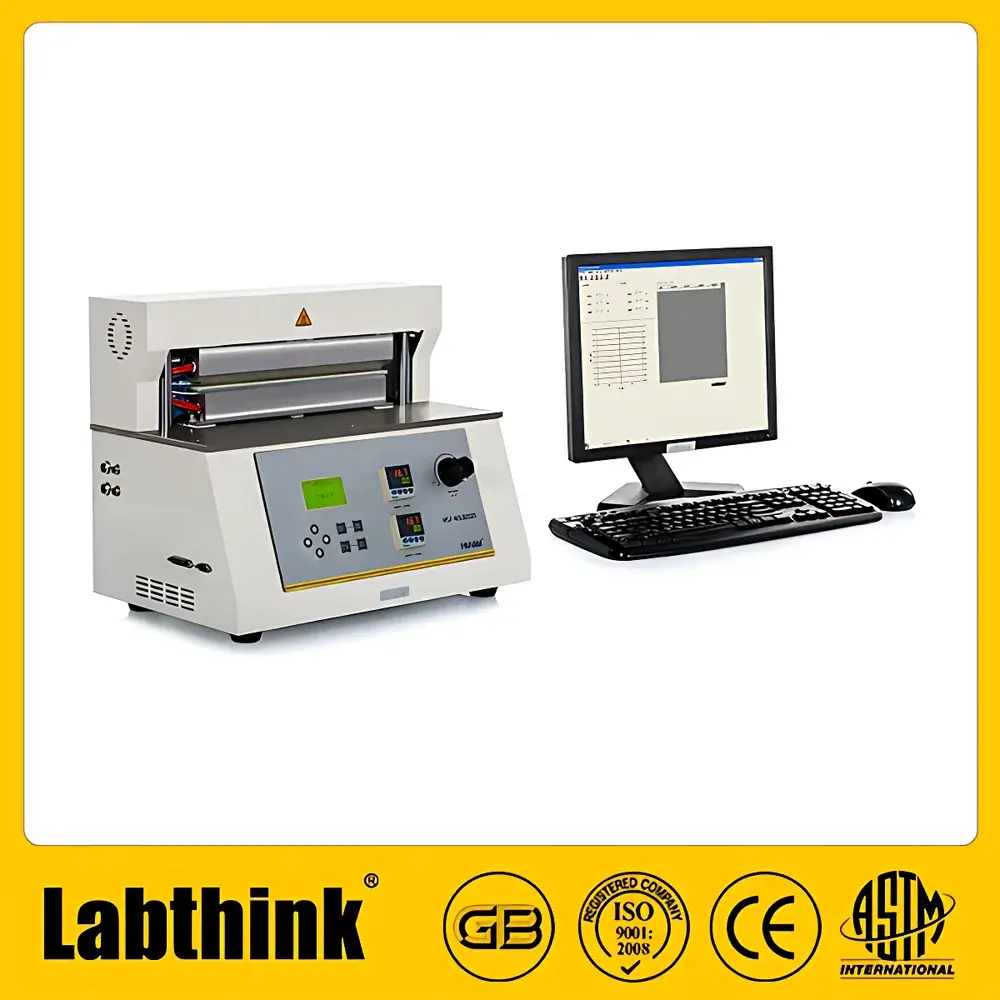
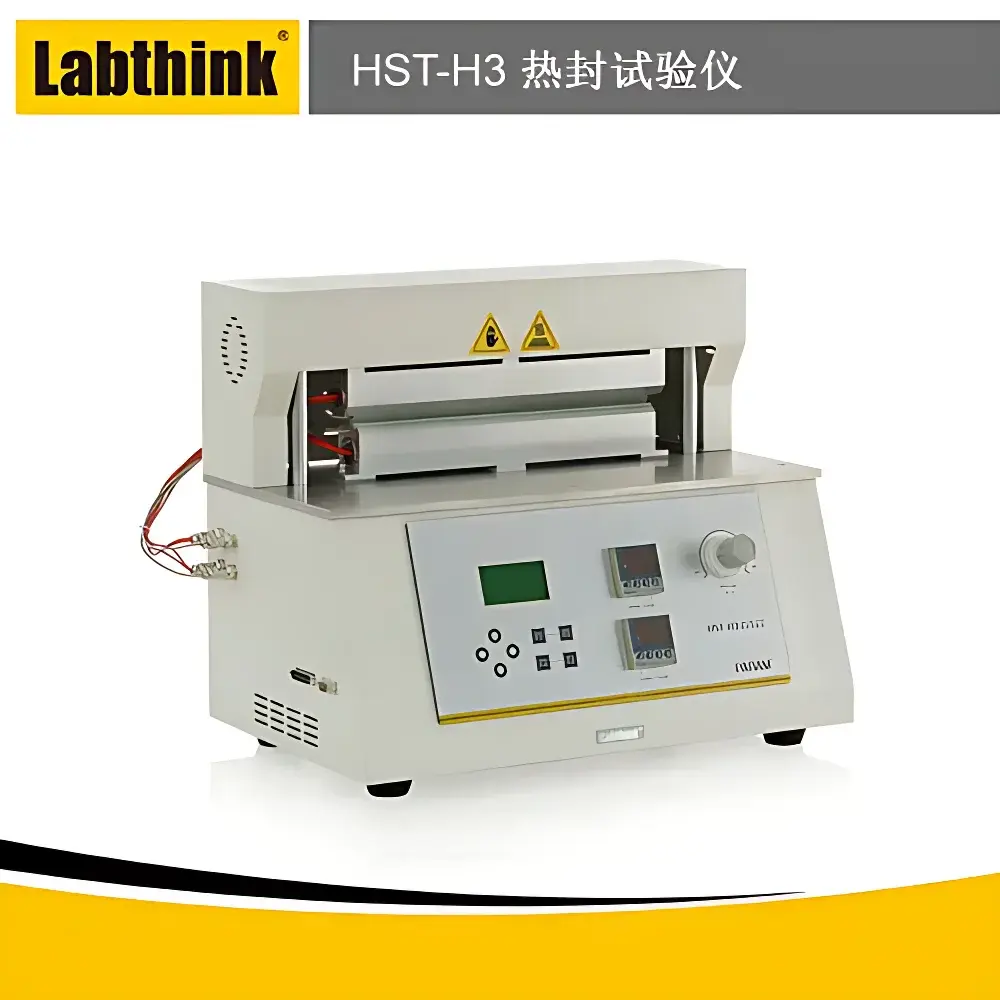
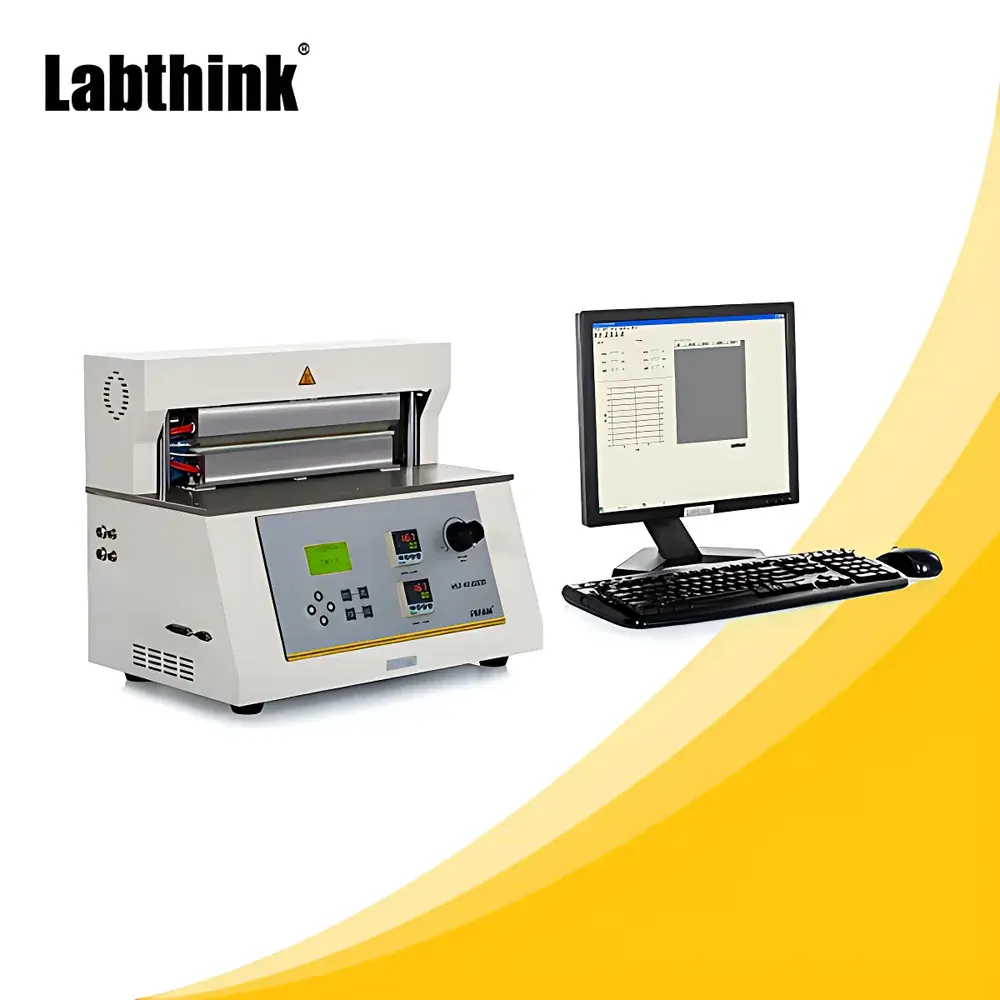
Labthink PARAM Boyou HST-H3 Heat Sealing Tester
| Brand | Labthink |
|---|---|
| Origin | Shandong, China |
| Manufacturer | Jinan Labthink Electromechanical Technology Co., Ltd. |
| Model | PARAM Boyou HST-H3 |
| Thermal Sealing Temperature Range | Ambient to 300 °C |
| Temperature Control Accuracy | ±0.2 °C |
| Sealing Time Range | 0.1–999.9 s |
| Sealing Pressure Range | 0.05–0.7 MPa |
| Sealing Jaw Dimensions | 330 mm × 10 mm (customizable) |
| Heating Mode | Single or Dual Heating |
| Pneumatic Supply Requirement | 0.5–0.7 MPa (user-supplied) |
| Air Inlet Fitting | Φ6 mm polyurethane tubing |
| Power Supply | 220 VAC 50 Hz / 120 VAC 60 Hz |
| Net Weight | 43 kg |
| Dimensions (L×W×H) | 536 × 335 × 413 mm |
Overview
The Labthink PARAM Boyou HST-H3 Heat Sealing Tester is a precision-engineered laboratory instrument designed for the quantitative evaluation of heat seal integrity in flexible packaging materials. It operates on the principle of controlled thermal compression—applying calibrated temperature, pressure, and dwell time across opposing heated jaws to replicate industrial sealing conditions under standardized, repeatable parameters. This method enables objective assessment of seal initiation temperature, optimal sealing window, and ultimate seal strength potential—critical inputs for process validation, material qualification, and packaging line setup. Unlike empirical trial-and-error approaches, the HST-H3 delivers traceable, physics-based data aligned with fundamental polymer melting behavior, interfacial diffusion kinetics, and viscoelastic deformation under constrained thermal load.
Key Features
- Standard-Compliant Thermal Jaws: Precision-machined aluminum jaws conforming to dimensional and surface flatness requirements specified in QB/T 2358, ASTM F2029, and YBB00122003—ensuring regulatory acceptability of test results.
- High-Fidelity Temperature Control: PID-regulated heating system with ±0.2 °C accuracy across a 0–300 °C range; dual-zone capability (optional) allows independent top/bottom jaw control for asymmetric sealing studies.
- Pneumatically Actuated Uniform Pressure Application: Cylinder-driven jaw closure delivers consistent, non-deforming force across the full 330 mm sealing length—minimizing edge effects and enabling statistically robust seal quality mapping.
- Modular Electrical Interface: Quick-connect heating element terminals support rapid maintenance and field calibration; universal power input (220 VAC/50 Hz or 120 VAC/60 Hz) ensures global deployment readiness.
- Configurable Sealing Parameters: Independent adjustment of temperature (0.1 °C resolution), time (0.1 s resolution), and pressure (0.01 MPa resolution) enables full factorial experimental design for DOE-based process optimization.
Sample Compatibility & Compliance
The HST-H3 accommodates single-layer films (e.g., LDPE, PP, PET), coextruded structures, metallized laminates, foil composites, and coated papers—provided sample width fits within the 330 mm jaw span and thickness remains within mechanical handling limits (typically ≤ 500 µm). Its design supports both research-grade material screening and production support testing. All operational protocols comply with Good Laboratory Practice (GLP) documentation requirements. When paired with optional audit-trail-capable software (sold separately), the system meets data integrity expectations under FDA 21 CFR Part 11 for regulated environments. Test reports generated via compliant configurations are admissible for packaging validation dossiers submitted to regulatory authorities including NMPA, FDA, and EMA.
Software & Data Management
Optional Labthink proprietary software provides instrument control, real-time parameter monitoring, automated test sequence execution, and exportable CSV/PDF reporting. The software enforces user role-based access control (RBAC), timestamps all critical actions, and maintains immutable electronic records—including original sensor readings, operator ID, environmental metadata (ambient temperature/humidity if logged externally), and version-controlled test methods. Raw data files retain full resolution prior to statistical aggregation, supporting retrospective analysis and root-cause investigation. Integration with LIMS platforms is achievable via standard RS232 or USB virtual COM port interfaces.
Applications
- Determination of minimum seal initiation temperature (SIT) and upper seal degradation limit for new film formulations.
- Validation of seal parameter windows during packaging line transfer or material supplier changeovers.
- Root-cause analysis of package leakage failures linked to marginal seal integrity.
- Comparative evaluation of seal performance between conventional and sustainable bio-based barrier layers.
- Supporting ASTM F1884 burst test or ASTM F88 peel strength testing by generating standardized seal specimens.
- Accelerated aging studies correlating initial seal quality with post-storage delamination risk.
FAQ
What pneumatic supply specifications are required?
A clean, dry compressed air source delivering 0.5–0.7 MPa at ≥10 L/min flow rate is mandatory. Users must provide an inline filter-regulator-lubricator (FRL) unit upstream of the Φ6 mm polyurethane tube connection.
Can the sealing jaw width be modified for narrow-format applications?
Yes—custom jaw widths down to 100 mm are available upon request; standard configuration is 330 mm × 10 mm, with parallelism maintained to ≤5 µm across the entire sealing surface.
Is calibration traceable to national standards?
Yes—factory calibration certificates reference NIST-traceable temperature and pressure standards; annual recalibration services include as-found/as-left data and uncertainty budgets per ISO/IEC 17025.
Does the instrument support GLP-compliant electronic signatures?
When used with the optional validated software module and configured with appropriate IT controls (e.g., password policies, session timeouts), it satisfies ALCOA+ data integrity principles required for GxP-regulated workflows.
How is thermal uniformity verified across the sealing surface?
Each unit undergoes infrared thermography mapping at three temperature setpoints (100 °C, 180 °C, 280 °C); maximum deviation from mean surface temperature is documented and guaranteed ≤±1.5 °C over the central 90% of the jaw area.
Related Products







