
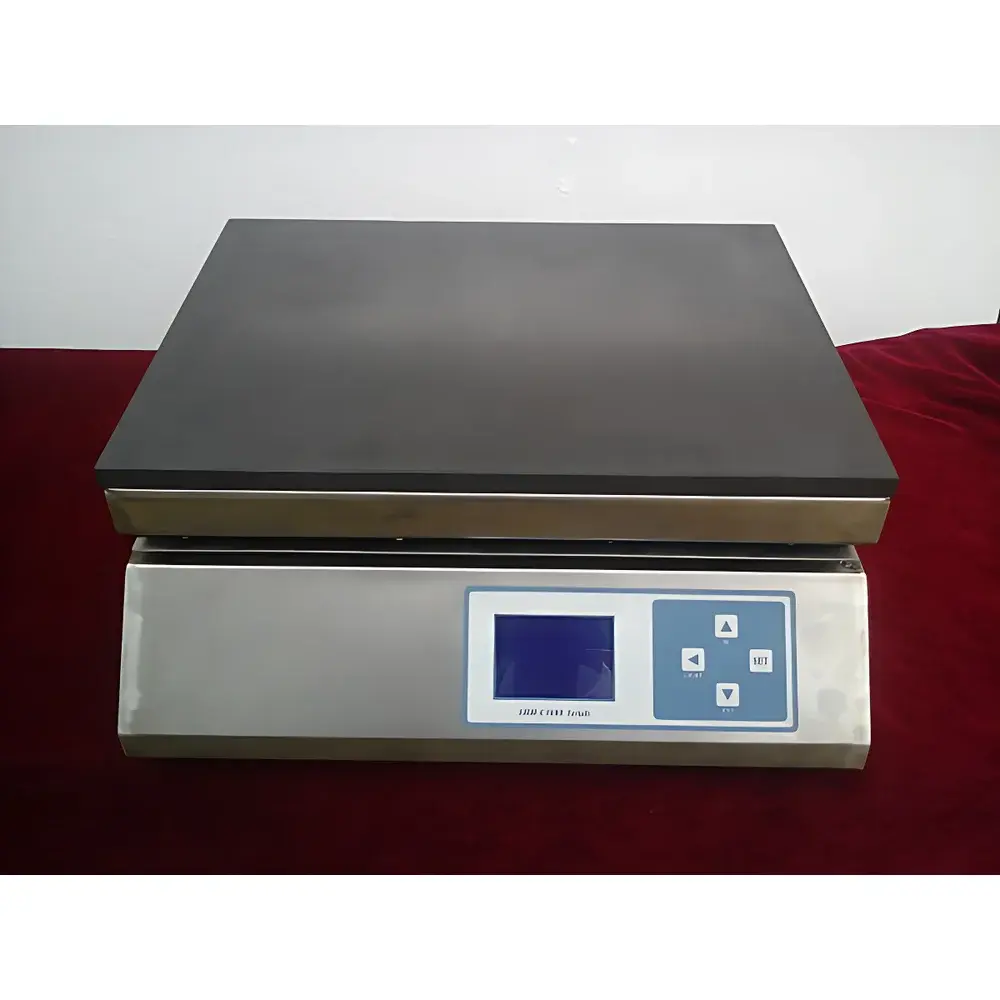
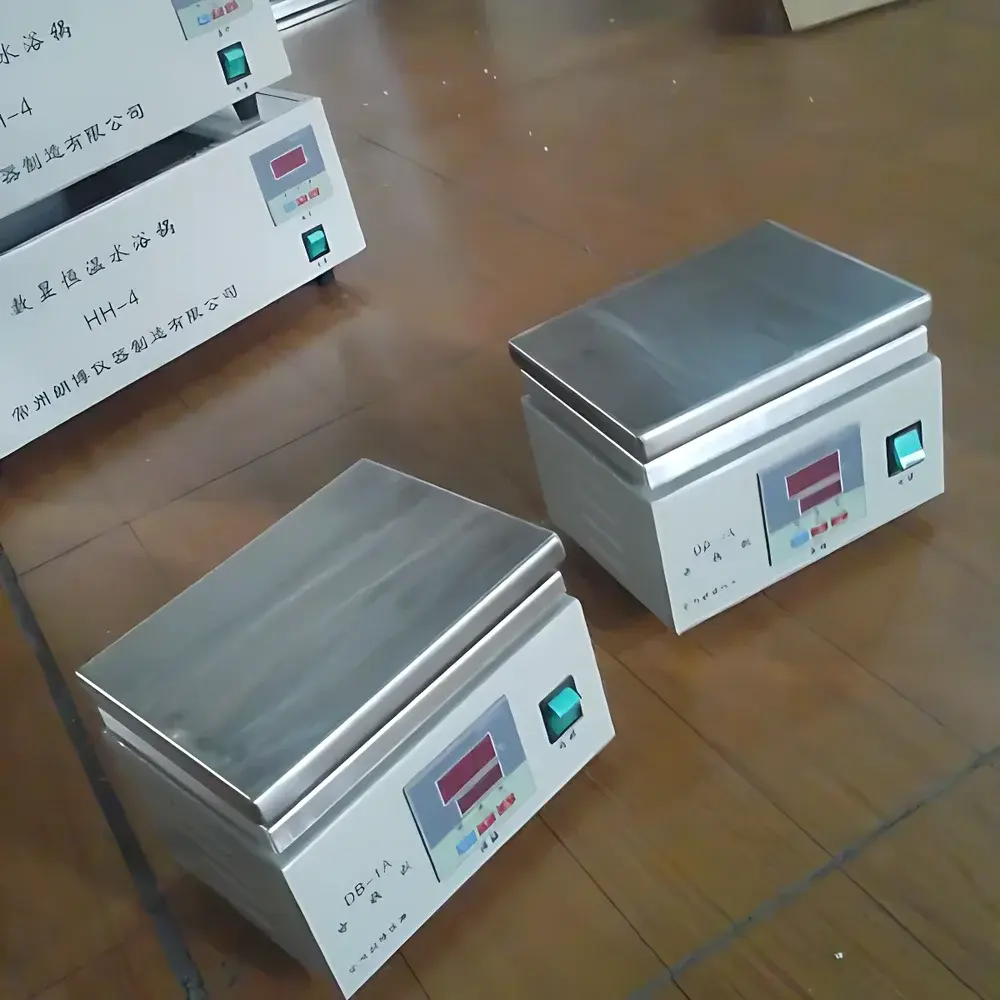
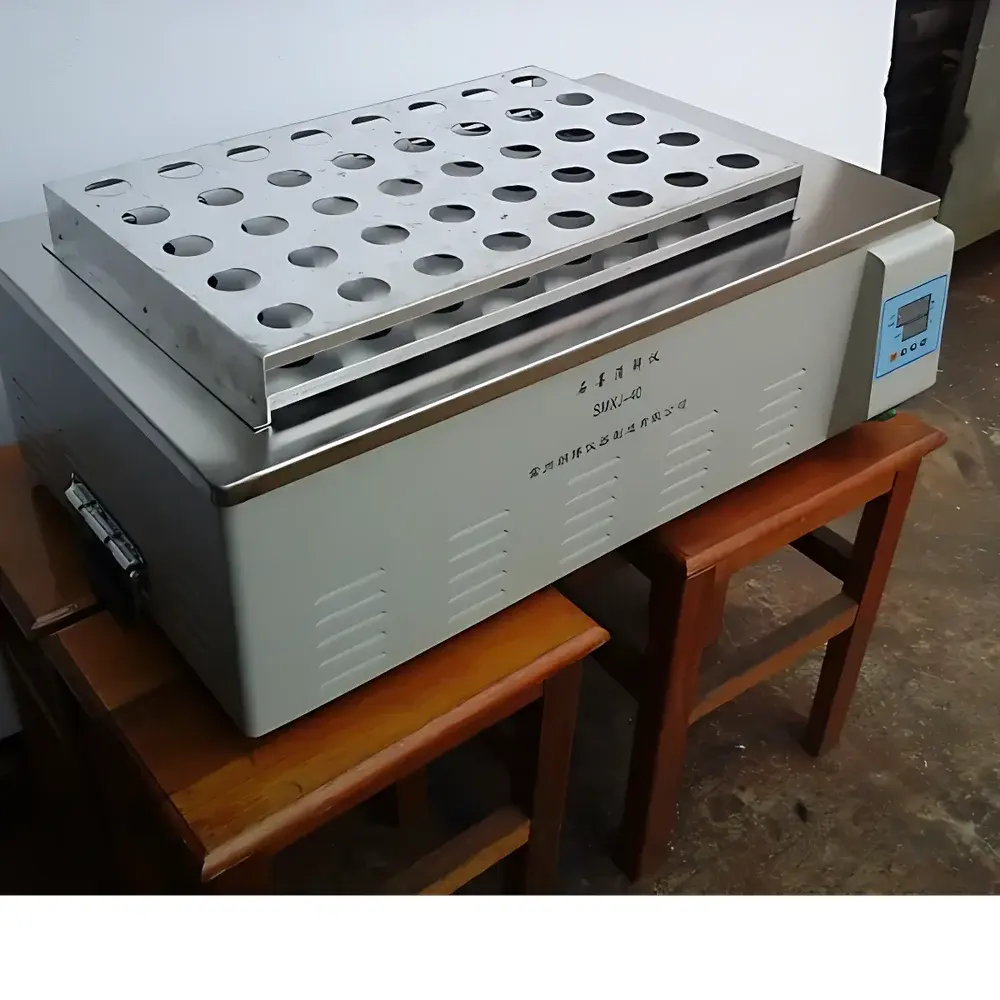
Langbo SMXJ-20 Graphite Block Digestion System
| Brand | Langbo |
|---|---|
| Origin | Jiangsu, China |
| Model | SMXJ-20 |
| Digestion Capacity | 40 positions |
| Temperature Range | Ambient to 450 °C |
| Temperature Control Accuracy | ±0.1 °C |
| Temperature Uniformity | ±1.5 °C across block |
| Heating Method | Electric resistive heating via isostatically pressed high-purity graphite block |
| Block Surface Coating | PTFE (Teflon®) impregnated |
| Insulation | Dual-layer — air gap + ceramic fiber (aluminosilicate) |
| Power Supply | 220 V, 50 Hz |
| Controller | Detachable microprocessor-based PID controller with LCD interface |
| Compliance | Designed for ISO/IEC 17025-compliant sample preparation workflows |
Overview
The Langbo SMXJ-20 Graphite Block Digestion System is a semi-automated, electrically heated sample digestion platform engineered for reproducible, high-throughput acid digestion of solid and semi-solid matrices in analytical laboratories. It operates on the principle of conductive heating through an isostatically pressed, ultra-high-purity graphite block—selected for its exceptional thermal conductivity (>150 W/m·K), low thermal mass, and chemical inertness under aggressive acidic conditions. Unlike ceramic or metal heating blocks, this graphite architecture ensures rapid thermal response and exceptional inter-well temperature homogeneity (±1.5 °C across all 40 positions), minimizing inter-sample variability—a critical requirement for trace metal analysis by ICP-OES, ICP-MS, AAS, and HG-AFS. The system supports standardized open-vessel digestion protocols, including pre-digestion conditioning prior to microwave-assisted digestion and post-microwave acid removal (‘赶酸’, or acid evaporation), making it functionally integrated into multi-stage sample preparation workflows.
Key Features
- 40-position digestion block configured for standard 33 mm × 50 mm PTFE or quartz digestion tubes, optimized for volumetric consistency and thermal coupling.
- Precision PID temperature control with auto-tuning capability; setpoint resolution of 0.1 °C and long-term stability of ±0.1 °C at steady state (measured per ASTM E220).
- Detachable microcontroller unit with backlit LCD display, enabling safe remote operation outside fume hoods while maintaining full program logic access.
- Dual-stage thermal insulation: structural air gap combined with high-efficiency aluminosilicate ceramic fiber blanket (operating limit: 1260 °C), reducing surface temperature rise and energy consumption by >35% versus single-layer designs.
- PTFE-impregnated graphite surface providing resistance to concentrated HNO₃, HCl, HF (≤5%), H₂O₂, and aqua regia—validated per ISO 15190 Annex C for laboratory equipment corrosion resistance.
- Programmable ramp-hold profiles: up to 8 segments per method, supporting gradient heating (e.g., 10 °C/min to 120 °C, hold 20 min; then ramp to 280 °C at 5 °C/min, hold 45 min), with automatic power cutoff upon cycle completion.
Sample Compatibility & Compliance
The SMXJ-20 accommodates a broad range of sample types—including biological tissues, soil, sludge, food composites, pharmaceutical excipients, and polymer ash—when processed in chemically resistant vessels. Its thermal profile fidelity and positional uniformity meet the performance criteria outlined in ISO 11097 (determination of metals in environmental samples) and EPA SW-846 Method 3050B (acid digestion of sediments, sludges, and soils). The instrument’s construction adheres to IEC 61010-1:2010 safety standards for electrical equipment for measurement, control, and laboratory use. While not inherently 21 CFR Part 11 compliant (as it lacks electronic signature and audit trail functionality), its operational logs—when exported manually—support GLP/GMP documentation requirements when paired with validated SOPs and external data recording systems.
Software & Data Management
The SMXJ-20 operates via embedded firmware without proprietary PC software dependency. All method parameters—including ramp rates, target temperatures, dwell times, and cooling delays—are stored locally in non-volatile memory (EEPROM) with battery-backed retention (>10 years). Time-stamped run records (start time, final temperature, total duration) are viewable on-device and exportable via RS-232 serial interface (optional USB-to-serial adapter) for integration into LIMS or ELN platforms. No cloud connectivity or remote monitoring is supported; data integrity is maintained through deterministic real-time control architecture and hardware watchdog timers.
Applications
- Routine digestion of environmental samples (soil, sediment, wastewater sludge) prior to elemental quantification by ICP techniques.
- Pharmaceutical raw material testing per USP heavy metals limits, using nitric–perchloric acid mixtures.
- Food safety analysis—including detection of Cd, Pb, As, and Hg in cereals, seafood, and infant formula—aligned with GB 5009.12/5009.15/5009.17.
- Pre-concentration and matrix removal steps in speciation analysis workflows (e.g., Cr(VI) stabilization prior to HPLC-ICP-MS).
- Method development and validation studies requiring precise thermal profiling and inter-batch repeatability assessment.
FAQ
What vessel types are compatible with the SMXJ-20 block geometry?
Standard 33 mm OD × 50 mm height digestion tubes made from PTFE, quartz, or borosilicate glass—provided they exhibit thermal expansion coefficients compatible with graphite’s 8.0 × 10⁻⁶ K⁻¹ linear expansion rate.
Can the SMXJ-20 be used with hydrofluoric acid (HF)?
Yes—only when using HF-rated PTFE or PFA vessels; the graphite block’s PTFE impregnation resists incidental splashes but does not permit direct HF contact with bare graphite.
Is calibration traceable to national standards?
Temperature sensor output (Pt100 RTD) is factory-calibrated against NIST-traceable reference thermometers per ISO/IEC 17025 clause 6.6; users may perform in-house verification using calibrated secondary standards.
Does the system support nitrogen gas purging during digestion?
No—no integrated gas manifold or flow control; however, the open-block design permits external purge line integration above the vessel array with user-modified fume hood ducting.
What maintenance intervals are recommended for sustained accuracy?
Biannual inspection of RTD contact integrity, annual revalidation of temperature uniformity across all 40 positions using a 40-channel thermocouple scanner, and replacement of PTFE coating every 24 months under continuous daily operation.



