
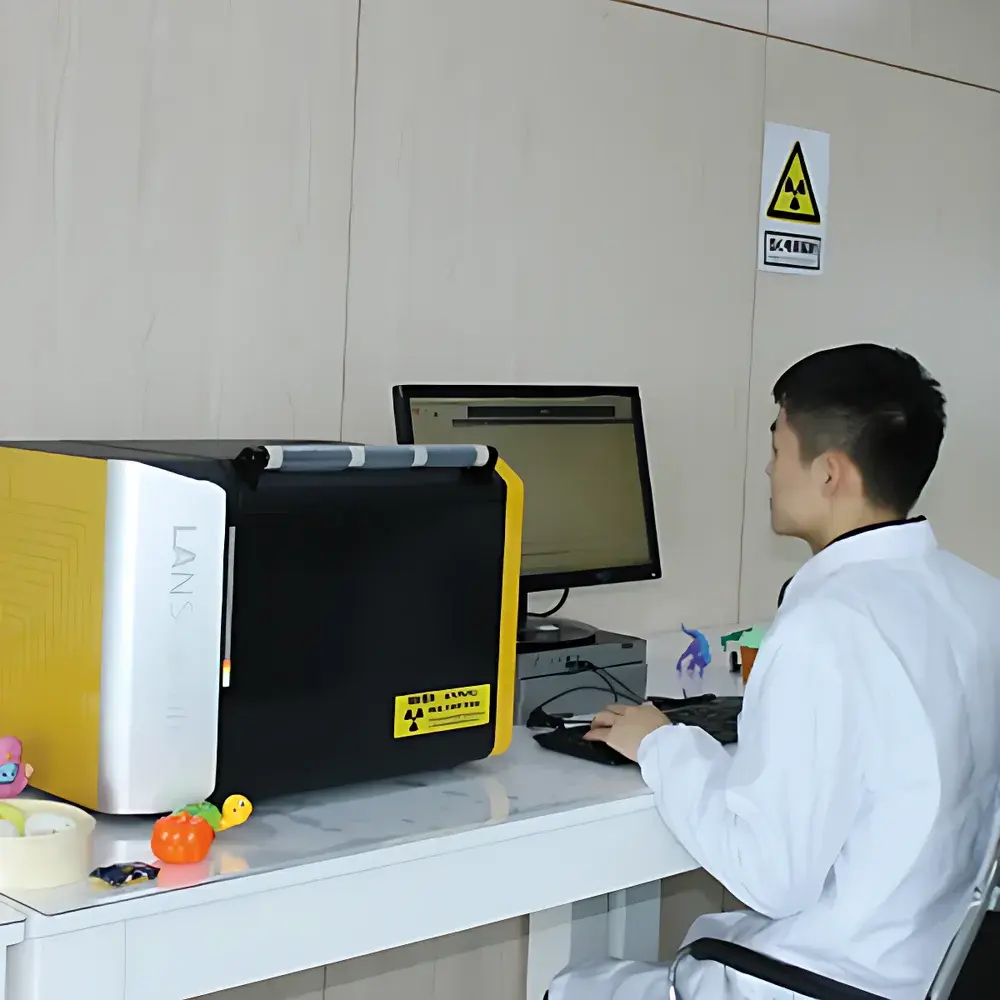
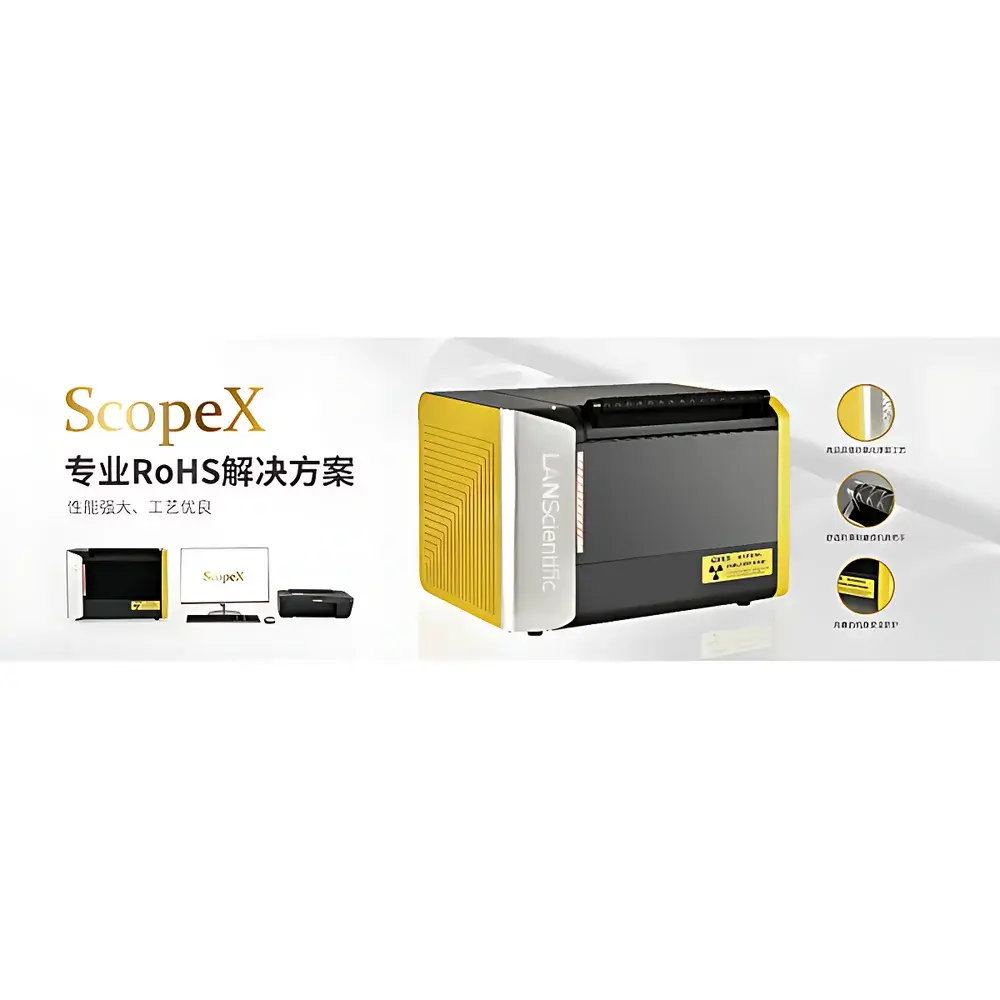
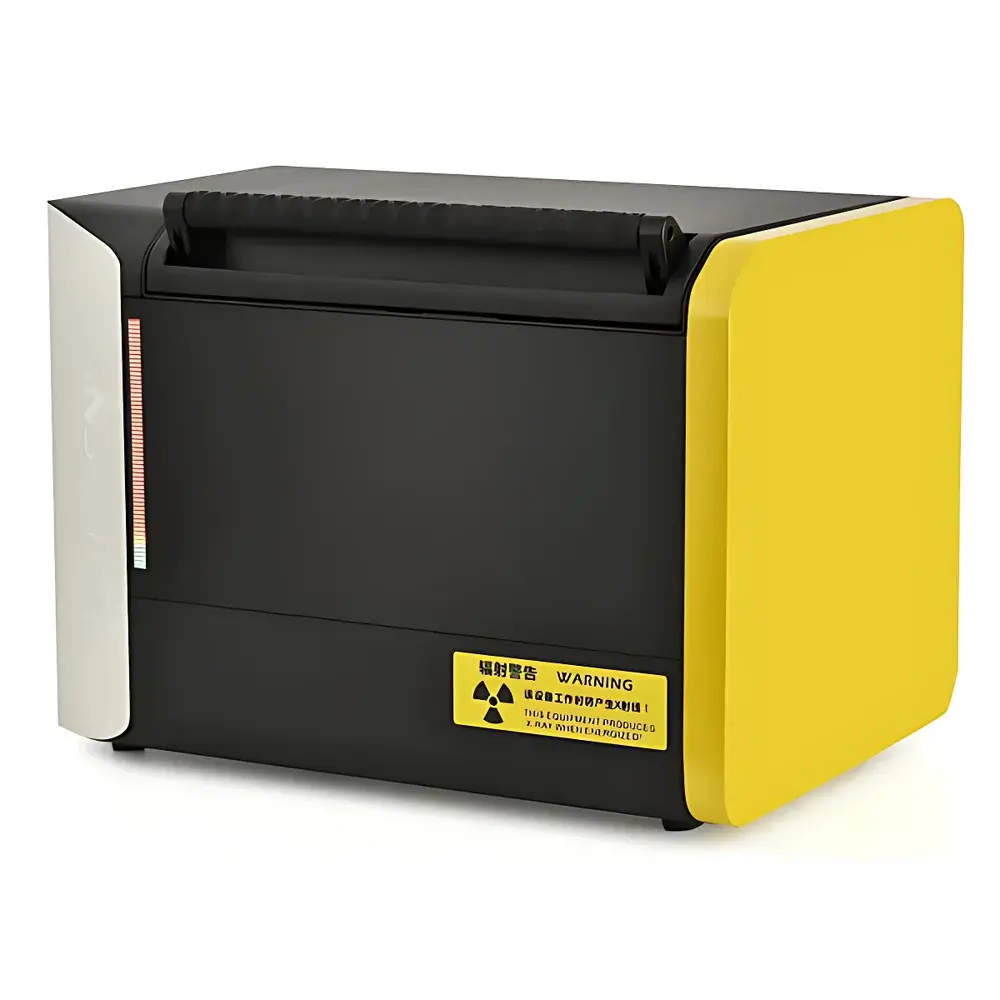
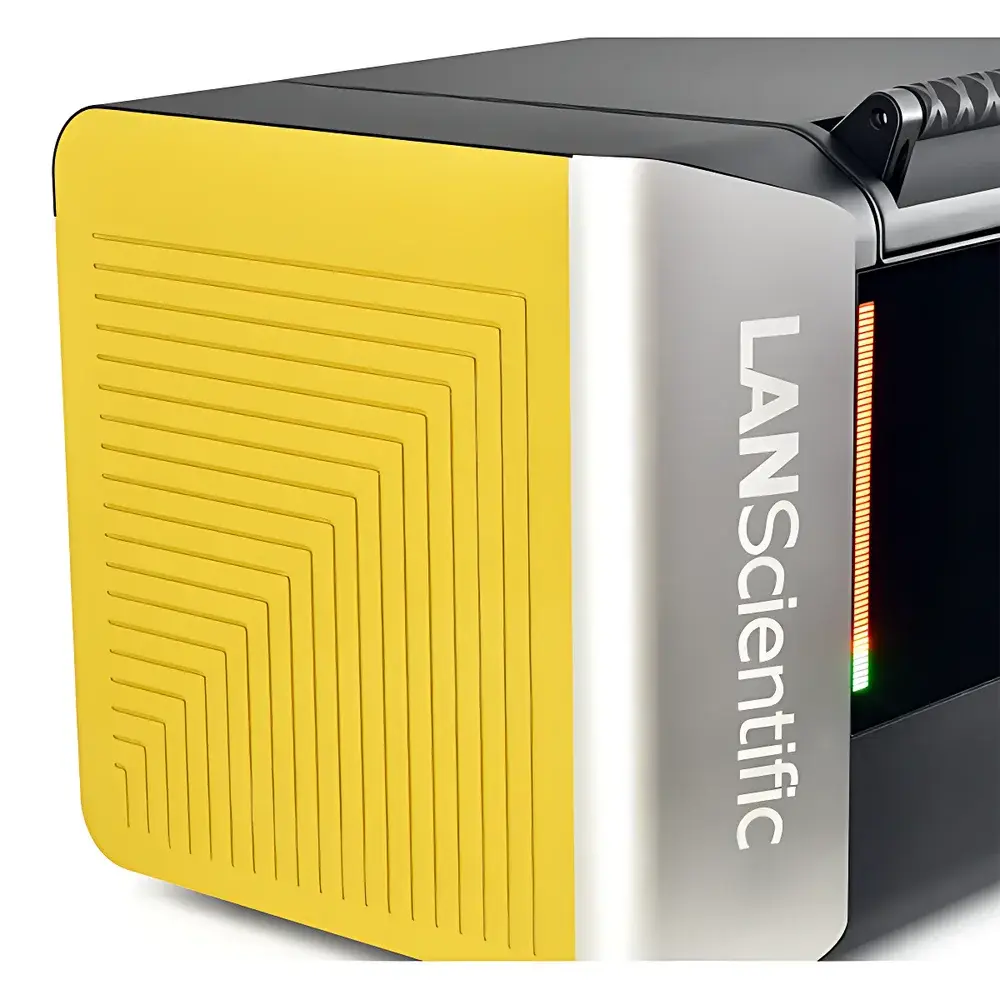
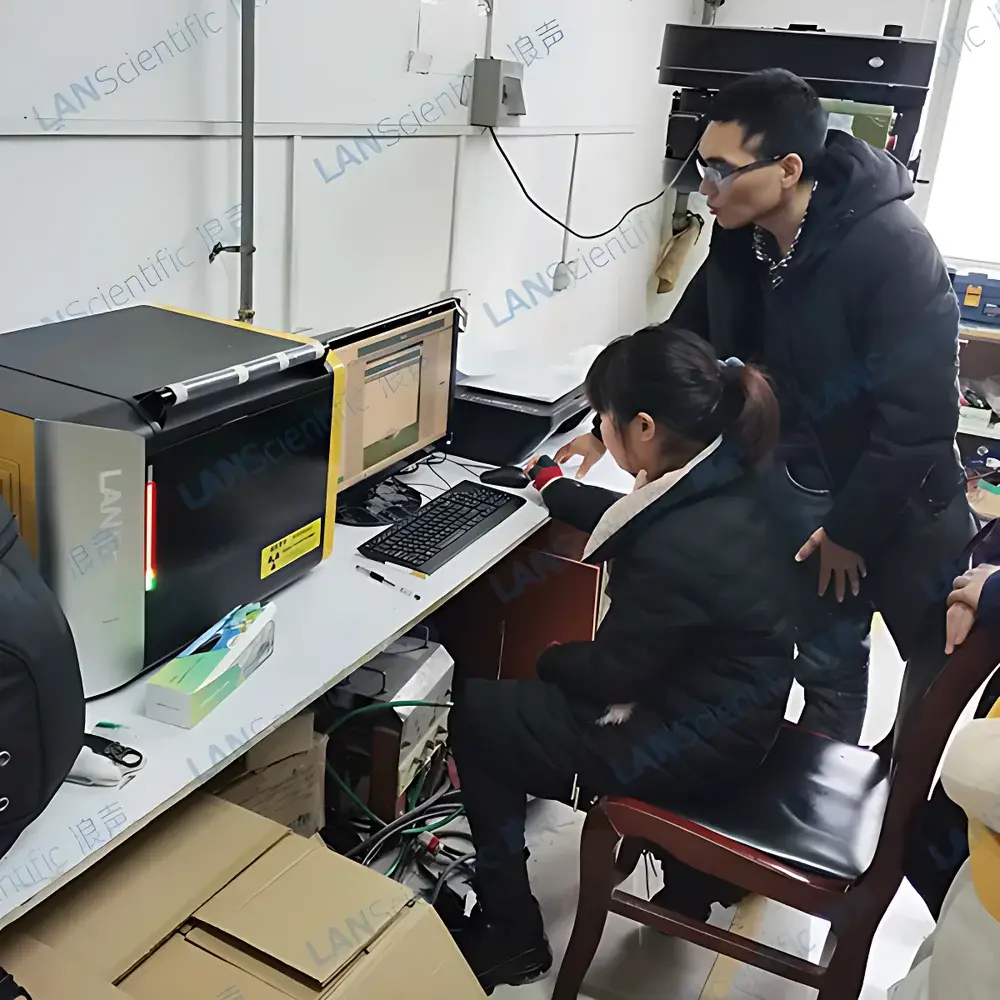
LANScientific ScopeX CSA 660F Benchtop Energy Dispersive X-Ray Fluorescence (ED-XRF) Spectrometer for RoHS and Halogen Screening
| Brand | LANScientific |
|---|---|
| Origin | Jiangsu, China |
| Manufacturer Type | Direct Manufacturer |
| Regional Classification | Domestic (China) |
| Model | ScopeX CSA 660F |
| Configuration | Benchtop / Floor-Standing |
| Instrument Type | Conventional ED-XRF |
| Application Scope | General-Purpose Elemental Analysis |
| Elemental Range | Mg (12) to U (92) |
| Detection Limit | 1 ppm (for typical matrixes) |
| Energy Resolution | <125 eV (at Mn Kα) |
| Repeatability | ≤0.1% RSD (for homogeneous standards) |
Overview
The LANScientific ScopeX CSA 660F is a benchtop energy dispersive X-ray fluorescence (ED-XRF) spectrometer engineered for regulatory compliance screening of restricted substances in electronic, electrical, and industrial products. It operates on the fundamental principle of X-ray fluorescence spectroscopy: primary X-rays from a high-power micro-focus X-ray tube excite inner-shell electrons in sample atoms; upon relaxation, characteristic secondary (fluorescent) X-rays are emitted, with energies uniquely corresponding to elemental identity and intensities proportional to concentration. The instrument integrates an optimized vacuum path and low-energy excitation capability to enhance sensitivity for light elements—including Mg, Al, Si, P, S, Cl, and Br—critical for RoHS (Directive 2011/65/EU), ELV (2000/53/EC), and halogen-free (IEC 61249-2-21) compliance testing. Its architecture supports both air and vacuum measurement modes, enabling reliable quantification across the full Mg–U range without requiring cryogenic cooling.
Key Features
- High-sensitivity detection down to 1 ppm for regulated elements (Pb, Cd, Hg, Cr, Br, Cl) under optimized conditions
- Integrated vacuum system with automatic pressure control for enhanced light-element response (Cl, Br, S, P)
- Micro-focus tungsten-target X-ray tube delivering stable, high-flux excitation for improved signal-to-noise ratio
- Silicon drift detector (SDD) with <125 eV resolution at Mn Kα (5.895 keV), ensuring precise peak separation and spectral deconvolution
- Dual-quantification methodology: Empirical coefficient calibration (for matrix-matched standards) and fundamental parameters (FP) algorithm for uncalibrated or heterogeneous samples
- Robust mechanical design with motorized sample stage, integrated camera for precise positioning, and programmable collimation
Sample Compatibility & Compliance
The ScopeX CSA 660F accommodates solid, powdered, and thin-film samples up to 300 mm × 300 mm × 100 mm (W × L × H), including PCBs, plastic housings, metal alloys, solder joints, and coated components. Sample preparation requires minimal intervention—flat, homogeneous surfaces yield optimal reproducibility. The system supports standardized test methods aligned with IEC 62321-5:2013 (ED-XRF screening), ASTM F2853-21 (detection of Pb, Cd, Hg, Cr(VI), Br), and GB/T 33352–2016 (Chinese RoHS standard). Data integrity complies with GLP principles; audit trails, user access controls, and electronic signature support are embedded in firmware to facilitate ISO/IEC 17025 and FDA 21 CFR Part 11 readiness.
Software & Data Management
Controlled by LANScientific’s proprietary XRF analysis suite, the instrument provides intuitive workflow management—from method setup and calibration to report generation and database archiving. The software includes preloaded RoHS/ELV screening templates, customizable pass/fail thresholds, and automated reporting in PDF/CSV formats compliant with corporate quality documentation requirements. Quantitative results include uncertainty estimation per ISO 11929. All raw spectra, processing parameters, operator logs, and timestamped measurement records are stored in a relational SQLite database with configurable backup intervals and role-based export permissions.
Applications
- Routine screening of Pb, Cd, Hg, Cr(VI), Br, and Cl in electronics manufacturing (PCBA, connectors, cables, enclosures)
- Verification of halogen-free status in printed wiring boards and flame-retardant polymers per IEC 61249-2-21
- Compliance auditing for automotive components under ELV Directive (e.g., trim, fasteners, gaskets)
- Quantitative analysis of plating thickness (Ni, Cu, Sn, Zn) and alloy composition in metal parts
- Quality control of recycled plastics and composite materials for hazardous element contamination
- Research-grade elemental mapping (optional add-on) for spatial heterogeneity assessment in layered structures
FAQ
Does the CSA 660F require liquid nitrogen or Peltier cooling for detector operation?
No—it employs an electrically cooled silicon drift detector (SDD) with thermoelectric stabilization, eliminating cryogen dependency and enabling continuous 24/7 operation.
Can it quantify chromium(VI) directly?
ED-XRF measures total Cr content; speciation (Cr(III) vs. Cr(VI)) requires complementary wet-chemical extraction per IEC 62321-7-2. The CSA 660F screens total Cr as a proxy indicator and flags samples exceeding 1000 ppm for confirmatory testing.
Is method validation support available for ISO/IEC 17025 accreditation?
Yes—LANScientific provides documented IQ/OQ protocols, certified reference materials (CRMs) traceable to NIST and BAM, and technical assistance for uncertainty budgeting and linearity verification.
What maintenance is required beyond routine calibration?
Annual detector resolution verification, X-ray tube output check, and vacuum pump oil replacement are recommended. No optical alignment or vacuum chamber cleaning is needed under normal use.
Can the system be integrated into a factory MES or LIMS?
Yes—via TCP/IP API and structured XML/JSON data export, supporting automated result transfer to enterprise quality systems with configurable field mapping.
Related Products




