
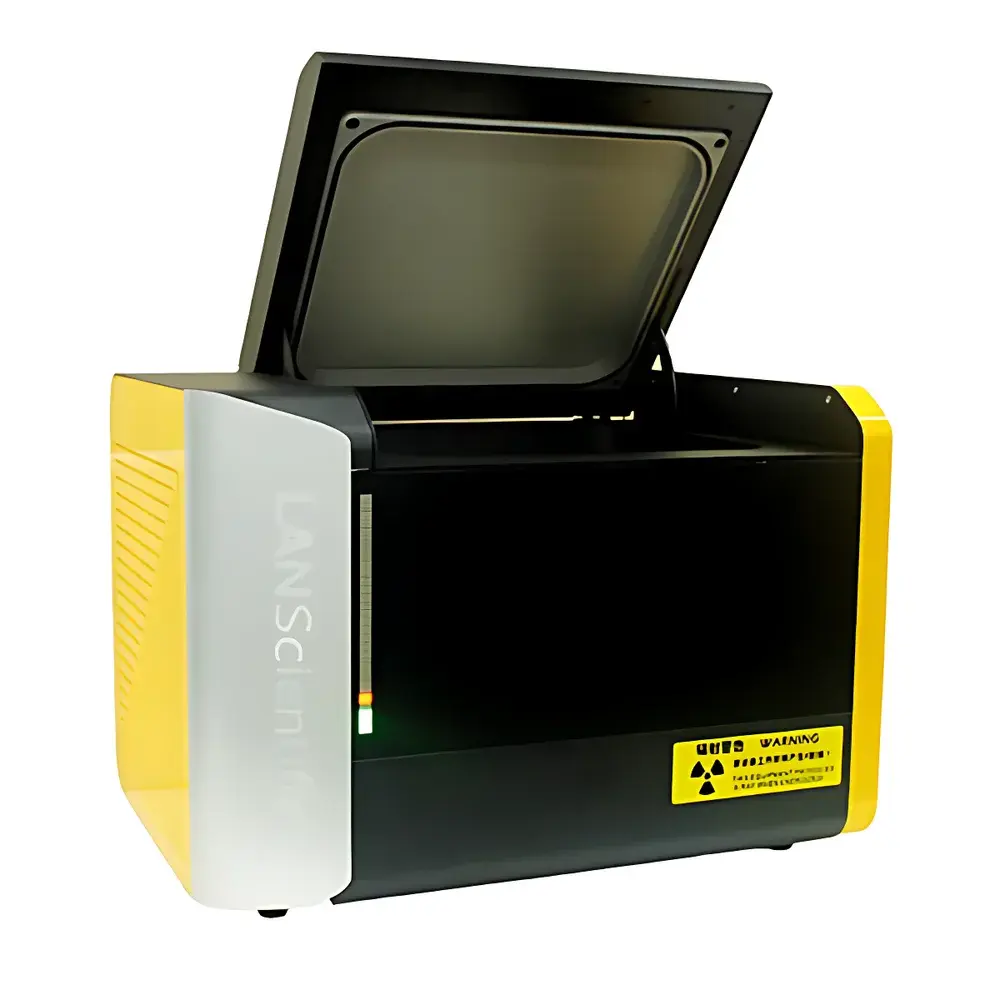
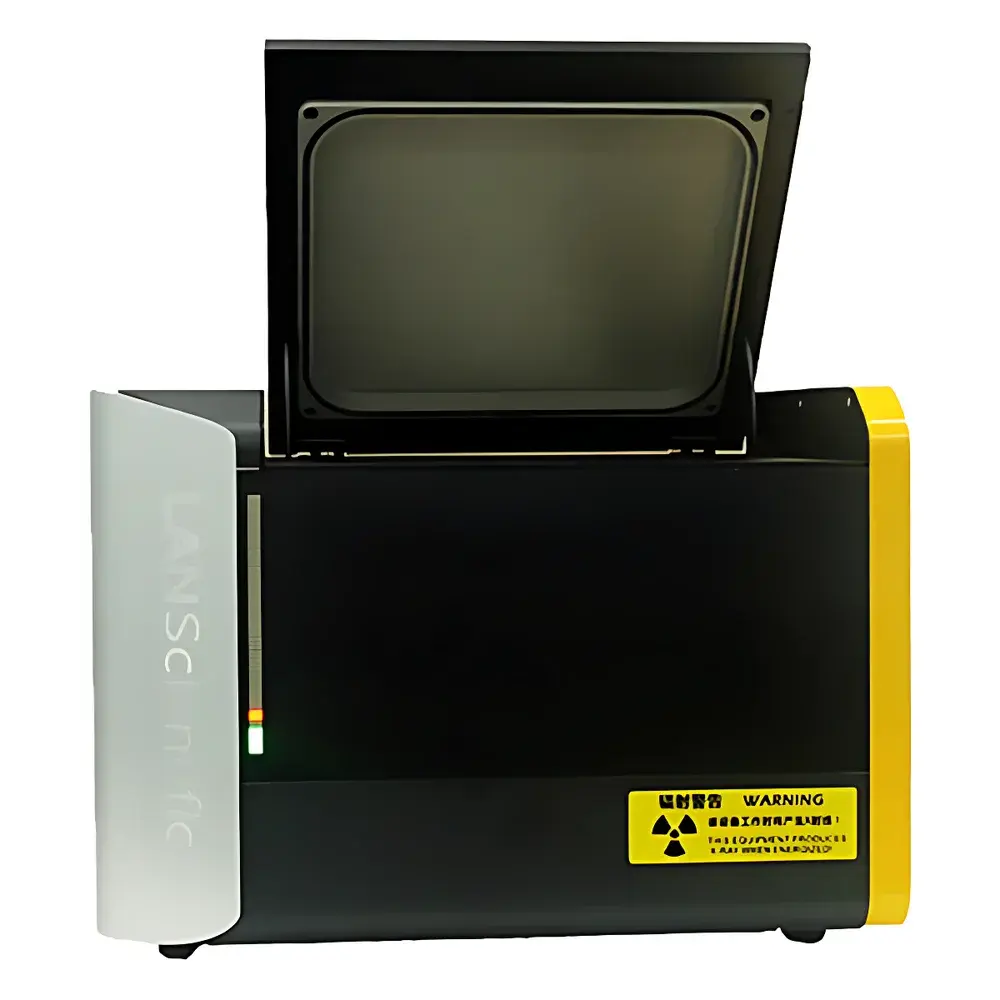
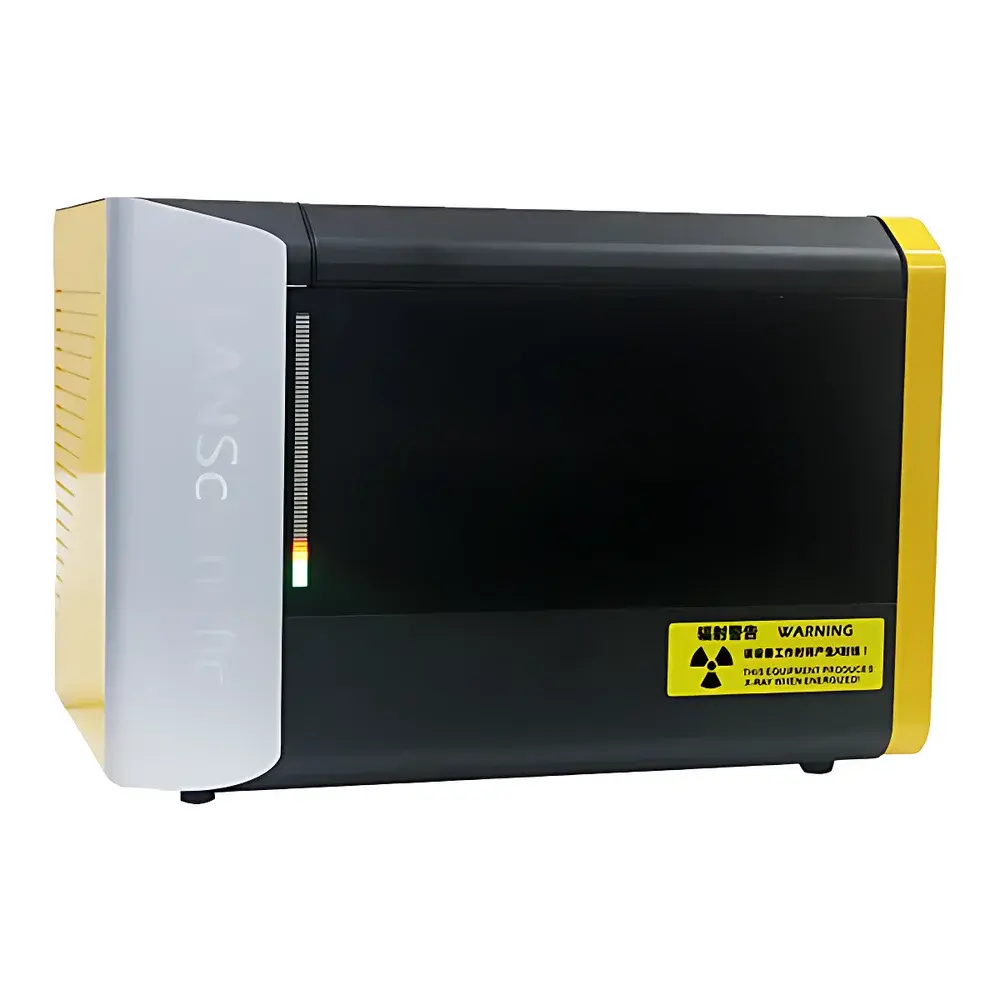
LANScientific ScopeX Desktop Energy Dispersive X-Ray Fluorescence Spectrometer for Cement Clinker Analysis
| Brand | LANScientific |
|---|---|
| Origin | Jiangsu, China |
| Manufacturer Type | Direct Manufacturer |
| Origin Category | Domestic |
| Model | ScopeX Cement Clinker Analyzer |
| Form Factor | Benchtop |
| Instrument Type | Conventional ED-XRF |
| Application Scope | General-Purpose |
| Elemental Range | Na (11) to U (92) |
| Detection Limit | 1 ppm (for matrix-dependent elements) |
| Energy Resolution | <125 eV at Mn Kα |
| Repeatability | ≤0.1% RSD (for major elements under optimized conditions) |
| Detector | Peltier-cooled Silicon Drift Detector (SDD) |
Overview
The LANScientific ScopeX Desktop Energy Dispersive X-Ray Fluorescence (ED-XRF) Spectrometer is an industrial-grade, benchtop analytical instrument engineered for rapid, non-destructive elemental quantification in cement clinker and related silicate-based materials. Operating on the fundamental principle of X-ray fluorescence—where primary X-rays eject inner-shell electrons from sample atoms, inducing characteristic secondary X-ray emission upon electron relaxation—the ScopeX delivers high-fidelity spectral data with minimal sample preparation. Its design integrates a low-power micro-focus X-ray tube, high-efficiency SDD detector, and intelligent vacuum control to optimize excitation and detection of light elements (Na–Mg–Al–Si–P–S), critical for clinker phase composition (e.g., C₃S, C₂S, C₃A, C₄AF) and alkali/sulfur balance assessment. Unlike wavelength-dispersive systems, the ED-XRF architecture enables simultaneous multi-element acquisition across the full Na–U range, supporting both routine quality assurance and compositional troubleshooting in cement manufacturing environments.
Key Features
- Optimized light-element sensitivity: Integrated vacuum chamber and low-energy X-ray excitation enable reliable detection and quantification of Na, Mg, Al, Si, P, and S—key indicators of raw mix homogeneity and kiln process stability.
- Peltier-cooled Silicon Drift Detector (SDD): Delivers <125 eV energy resolution at Mn Kα without liquid nitrogen, ensuring long-term thermal stability, reduced operational overhead, and consistent peak separation for overlapping transitions (e.g., Ca Kβ/Sr Kα, Fe Kα/Cu Kα).
- Automated collimator and filter selection: Four precision collimators (5 mm, 3 mm, 1 mm, 0.5 mm) and programmable filter set enable dynamic adaptation to sample geometry, matrix absorption, and target element sensitivity—enhancing signal-to-background ratio and minimizing interelement effects.
- Non-destructive analysis: No sample dissolution, fusion, or coating required; solids (nodules, powders, pressed pellets), liquids (slurries), and thin films are analyzed in their native state, preserving sample integrity for traceability and retesting.
- Robust radiation safety architecture: Fully shielded metal enclosure with interlocked door switch and real-time dose monitoring complies with GB18871-2002 and GBZ115-2002—certified for unrestricted use in ISO/IEC 17025-accredited laboratories and production-floor QC labs.
Sample Compatibility & Compliance
The ScopeX accommodates heterogeneous cement clinker samples—including irregular nodules (up to Ø60 mm × H40 mm), finely ground powders (≤75 µm), and pressed borosilicate glass beads—without geometric bias. Its large-volume sample chamber (Ø100 mm × 45 mm depth) supports direct analysis of unprepared clinker fragments, eliminating grinding-induced phase alteration or alkali loss. Method development follows ASTM C114 (Standard Test Methods for Chemical Analysis of Hydraulic Cement) and ISO 29581-2 (Cement — Part 2: Methods of chemical analysis), with calibration traceable to NIST SRM 2709a (San Joaquin Soil) and certified clinker reference materials (e.g., BCRC-1, ICRM-100). Data integrity meets GLP/GMP requirements through audit-trail-enabled software, supporting 21 CFR Part 11-compliant electronic signatures where configured.
Software & Data Management
The embedded ScopeX Control Suite provides intuitive method setup, spectrum acquisition, and quantitative analysis using fundamental parameter (FP) and empirical calibration algorithms. Users define custom reporting templates in Excel or PDF formats—including company logo, spectral overlays, peak identification tables, and batch metadata (operator ID, timestamp, instrument ID). Raw spectra (.spc) and processed results (.csv) export via USB 3.0, Wi-Fi 802.11ac, or Bluetooth 5.0. Built-in database management supports version-controlled method libraries, historical trend analysis (e.g., MgO drift over kiln campaign), and automated outlier flagging per user-defined control limits. All software logs retain immutable records of parameter changes, calibration events, and result revisions for regulatory review.
Applications
- Clinker phase chemistry verification: Quantitative determination of CaO, SiO₂, Al₂O₃, Fe₂O₃, MgO, SO₃, and alkalis (Na₂O/K₂O) to calculate Bogue mineralogy and assess burnability index.
- Raw meal homogeneity monitoring: Rapid screening of limestone, clay, sand, and iron correction feedstocks for elemental variance prior to precalciner feeding.
- Quality control of blended cements: Detection of adulteration (e.g., excessive fly ash substitution) via trace element fingerprinting (Sr, Zr, Rb).
- Process troubleshooting: Identification of sulfur cycling anomalies (e.g., sulfate accumulation in dust returns) or chloride ingress in kiln feed systems.
- Environmental compliance: Screening for heavy metals (Cr, Pb, Cd, As) in clinker and finished cement per EN 197-1 and EPA Method 6010D.
FAQ
Does the ScopeX require external cooling or cryogenic gases?
No. It employs a thermoelectrically cooled SDD, eliminating dependency on liquid nitrogen or compressed air chillers.
Can it analyze fused beads or pressed pellets?
Yes—both preparation methods are fully supported, with dedicated calibration modes for matrix-matched standards.
Is spectral deconvolution automated for overlapping peaks?
Yes. The software applies iterative least-squares fitting with library-based peak shape modeling to resolve complex overlaps (e.g., Ti Kβ/V Kα, Mn Kα/Fe Kβ).
How is measurement repeatability validated?
Repeatability testing follows ISO 8258 (Shewhart control charts) using certified clinker reference materials; typical RSD for major oxides is ≤0.1% (n=10, same sample position).
What regulatory documentation is provided for validation?
Factory acceptance test (FAT) report, radiation safety certification (GB18871-2002), and IQ/OQ protocols compliant with ISO/IEC 17025:2017 Annex A2 are included.




