
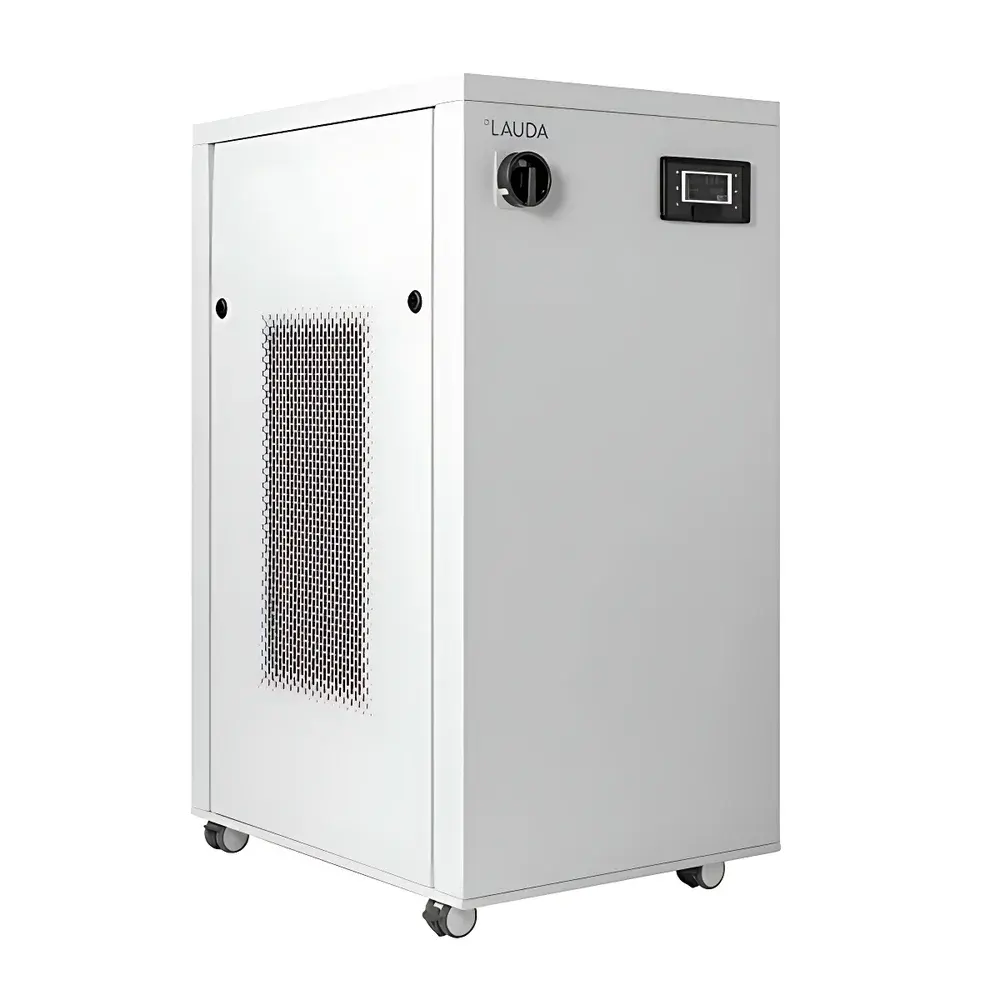
LAUDA UC 4 Ultracool Energy-Efficient Circulating Chiller
| Brand | LAUDA |
|---|---|
| Origin | Germany |
| Model | UC 4 |
| Type | Split-System Circulating Chiller |
| Cooling Method | Water-Cooled |
| Temperature Range | –10 to 35 °C |
| Refrigeration Capacity | 4.8 kW (at 10 °C outlet water temperature) |
| Temperature Stability | ±0.5 °C |
| Circulating Pump Pressure | 5.5 bar |
| Circulating Pump Flow Rate | 68 L/min |
| Reservoir Volume | 12 L |
| Operation Mode | Continuous |
Overview
The LAUDA UC 4 Ultracool Energy-Efficient Circulating Chiller is an engineered solution for precision thermal management in demanding laboratory and industrial process applications. Based on LAUDA’s proprietary thermodynamic architecture and optimized refrigerant circuit design, the UC 4 employs a variable-speed hermetic scroll compressor, electronically controlled expansion valve (EEV), and adaptive fan speed regulation—enabling dynamic load matching across wide ambient and process conditions. Unlike conventional fixed-speed chillers, this system operates under real-time thermal demand feedback, minimizing part-load inefficiencies and eliminating unnecessary cycling losses. Its core function is to maintain stable, controllable coolant temperatures within the range of –10 °C to +35 °C, with high repeatability (±0.5 °C stability) and robust flow delivery (68 L/min at 5.5 bar). Designed and manufactured in Germany, the UC 4 complies fully with EU Ecodesign Directive (EU No. 2016/2281) requirements for liquid-chilling packages, achieving Seasonal Energy Performance Ratio (SEPR) values significantly exceeding regulatory thresholds—up to 50% lower annual energy consumption compared to legacy systems operating under identical duty cycles.
Key Features
- Split-system architecture for flexible installation: condenser unit mounted remotely (e.g., outdoors or in plant room), evaporator section integrated near process equipment
- Variable-speed compressor and EC fans—enabling continuous modulation of cooling output without on/off cycling
- Integrated electronic expansion valve (EEV) for precise refrigerant metering and improved part-load efficiency
- Stainless steel reservoir (12 L capacity) with level sensor, corrosion-resistant internal wetted parts, and integrated air venting
- IP54-rated enclosure—suitable for semi-outdoor deployment in controlled industrial environments
- Pre-installed glycol-compatible circulation pump delivering up to 68 L/min at 5.5 bar maximum head pressure
- Factory-calibrated Pt100 temperature sensors with traceable NIST-equivalent calibration documentation
Sample Compatibility & Compliance
The UC 4 is compatible with standard aqueous coolants (deionized water, 20–30% ethylene glycol/water mixtures) and supports integration with external process loops requiring stable thermal sink capability. It meets EN 61000-6-2 (immunity) and EN 61000-6-4 (emission) electromagnetic compatibility standards. As a CE-marked device, it conforms to the EU Machinery Directive 2006/42/EC, Low Voltage Directive 2014/35/EU, and RoHS 2011/65/EU. For regulated environments—including pharmaceutical QC labs and medical device manufacturing—the chiller supports audit-ready operation when paired with optional data logging modules compliant with FDA 21 CFR Part 11 (electronic records/signatures) and GLP/GMP traceability requirements.
Software & Data Management
The UC 4 features embedded Ethernet connectivity (RJ45) and supports Modbus TCP/IP and BACnet MS/TP protocols for seamless integration into building management systems (BMS) or SCADA networks. Remote monitoring and configuration are enabled via LAUDA’s web-based interface or dedicated PC software (LAUDA Control Center). All operational parameters—including inlet/outlet temperatures, compressor runtime, power consumption, alarm history, and pump status—are timestamped and exportable as CSV files. When connected to LAUDA Cloud, users gain access to predictive maintenance analytics, historical trend visualization, and secure firmware updates—fully aligned with Industry 4.0 interoperability frameworks (OPC UA readiness). Audit trails include user login events, parameter modifications, and system resets—supporting ISO 9001 and ISO 13485 quality management system documentation needs.
Applications
The UC 4 serves as a stable thermal control platform for instrumentation requiring consistent heat rejection and temperature stability. Typical use cases include: laser sources (CO₂, fiber, UV) in material processing and analytical spectroscopy; high-power LED curing systems in digital printing and packaging lines; plasma generators and hydrogen electrolyzers requiring precise coolant temperature regulation; CNC machining centers with spindle and servo drive cooling demands; and analytical instruments such as ICP-MS, HPLC column ovens, and X-ray diffraction (XRD) detectors. Its compact footprint, low noise emission (<65 dB(A)), and reliable continuous-duty rating make it suitable for both cleanroom-adjacent installations and factory-floor deployment.
FAQ
What coolant types are approved for use with the UC 4?
Deionized water, 20–30% ethylene glycol/water mixtures, and other non-corrosive, low-viscosity heat transfer fluids meeting ASTM D1384 specifications are supported.
Is the UC 4 compatible with glycol-based secondary coolant loops?
Yes—its stainless steel reservoir, EPDM seals, and corrosion-resistant pump housing ensure long-term compatibility with glycol blends up to 35% concentration.
Can the UC 4 operate continuously at –10 °C outlet temperature?
Yes—rated for uninterrupted operation across its full temperature range, including sub-zero setpoints, provided ambient conditions remain within specified limits (condenser inlet water ≤ 32 °C for water-cooled configuration).
Does the UC 4 support dry-run protection and flow monitoring?
Yes—integrated flow switch and pressure differential sensors trigger automatic shutdown upon low-flow or blockage detection, preventing pump and heat exchanger damage.
Is remote firmware update capability available?
Firmware updates are delivered securely via LAUDA Cloud or local USB import, with version rollback and integrity verification functions included.



