
LECO AMH55 Automated Microhardness Testing System
| Brand | LECO |
|---|---|
| Origin | USA |
| Manufacturer | LECO Corporation |
| Product Type | Imported Instrument |
| Model | AMH55 |
| Instrument Category | Microhardness Tester |
| Measurement Range | 0–2000 HV (typical for Vickers microhardness) |
| Total Test Force | 1–60 kgf |
| Test Space (X × Y) | 260 × 150 mm |
| Automation Level | Fully Automated / Semi-Automated / Lite Configurations Available |
| Software Platform | Cornerstone® v5.0+ |
Overview
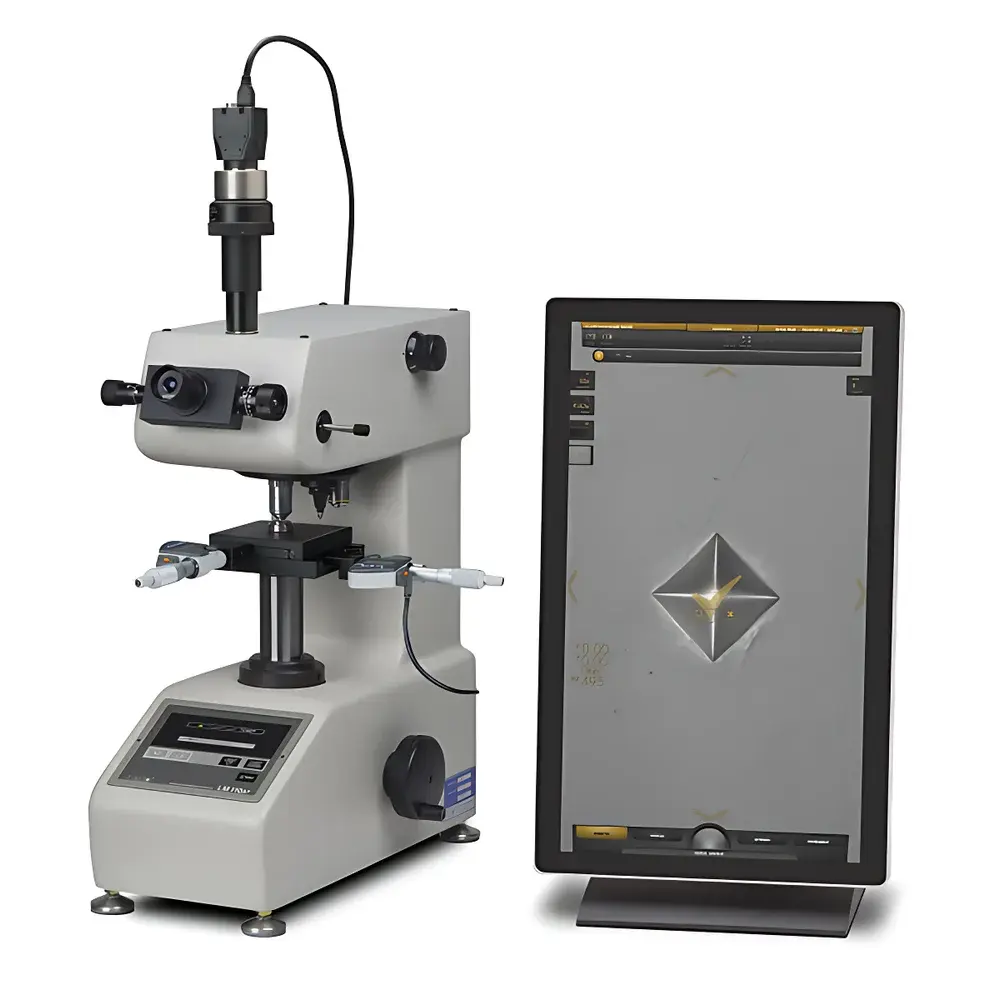
The LECO AMH55 Automated Microhardness Testing System is an engineered solution for high-precision, repeatable Vickers and Knoop hardness measurements across metallurgical, aerospace, semiconductor, and advanced materials laboratories. Based on standardized indentation mechanics—where a diamond pyramid indenter is applied under controlled load to produce a geometrically defined impression—the AMH55 delivers traceable hardness values compliant with ASTM E384, ISO 6507, and JIS Z2244. Its modular architecture supports both microhardness (1–1000 gf) and macrohardness (1–60 kgf) testing regimes within a single platform, eliminating the need for separate instruments while maintaining metrological integrity across force ranges. Designed for integration into GLP- and GMP-regulated environments, the system features hardware-level repeatability ≤ ±0.8% (per ASTM E384 Annex A1), mechanical stability via granite base construction, and thermal drift compensation in the optical path.
Key Features
- Fully automated indentation workflow: sample positioning, auto-focus, indentation, image capture, and measurement—all executed without manual intervention after initial setup.
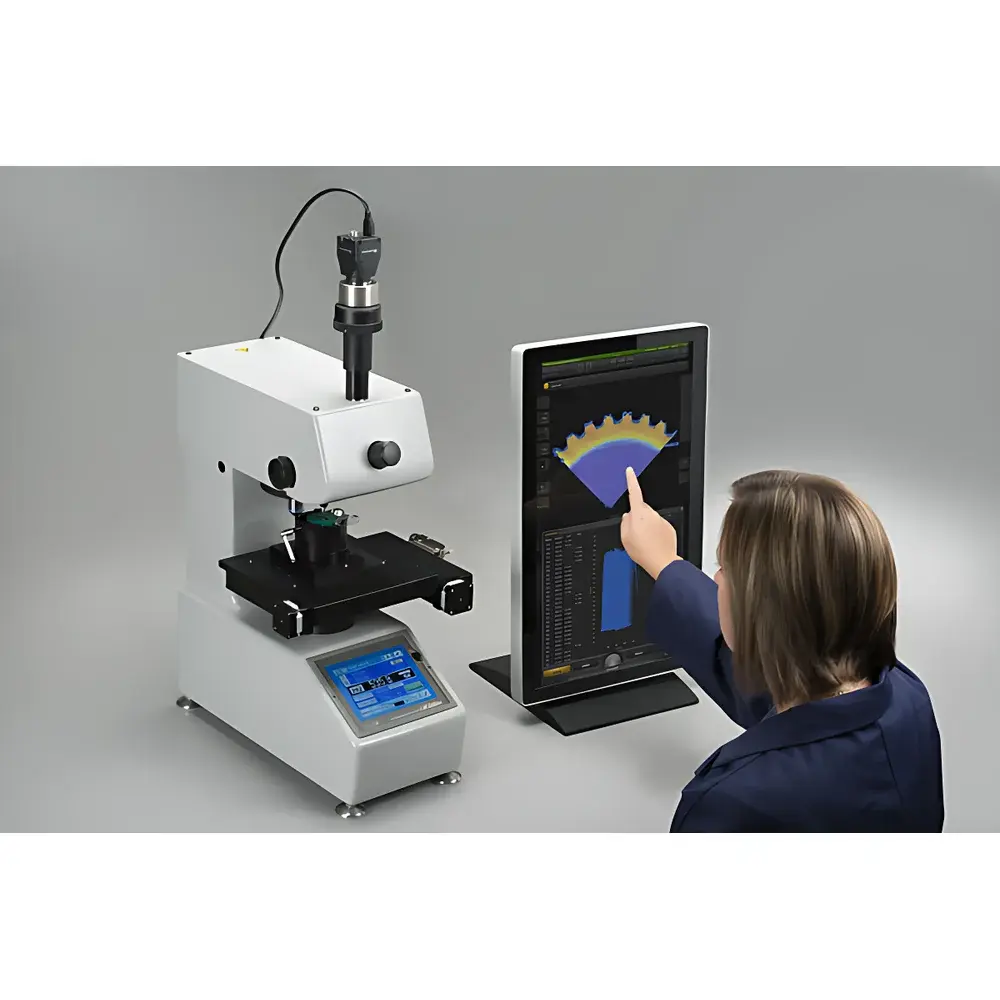
- Cornerstone® software-integrated control: intuitive touchscreen interface with preloaded test methods, customizable pass/fail criteria, and real-time statistical process monitoring (SPC).
- Advanced image analytics engine: robust pattern recognition for indentation detection—even on etched, scratched, or low-contrast surfaces—leveraging adaptive thresholding and sub-pixel edge detection.
- Multi-scale optical system: motorized objective turret (5×, 10×, 20×, 40×, 50×) with automatic magnification calibration and dynamic pixel-size mapping.
- Shadow correction & auto-alignment: real-time illumination normalization and stage-based coordinate registration ensure positional fidelity across large-area scans (up to 260 × 150 mm travel range).
- Modular automation tiers: AMH55 Full-Auto (fully autonomous), AMH55 Semi-Auto (user-initiated focus/analysis), and AMH55 Lite (manual focus + automated analysis in fixed FOV).
Sample Compatibility & Compliance
The AMH55 accommodates diverse specimen geometries—including cross-sectioned metallographic mounts, thin films, coated substrates, and brittle ceramics—via its programmable Z-axis travel (≥ 150 mm) and adjustable sample holder design. Specimen height tolerance extends up to 120 mm, supporting tall or irregularly shaped components. All hardness values are traceably linked to NIST-traceable reference blocks (e.g., LECO HBW/HV standards, certified per ISO/IEC 17025). The system complies with regulatory documentation requirements: audit trails, electronic signatures, and 21 CFR Part 11–compliant data security protocols are embedded in Cornerstone® when configured for FDA-regulated workflows. Calibration verification logs, instrument qualification reports (IQ/OQ), and uncertainty budgets are exportable in PDF and CSV formats.
Software & Data Management
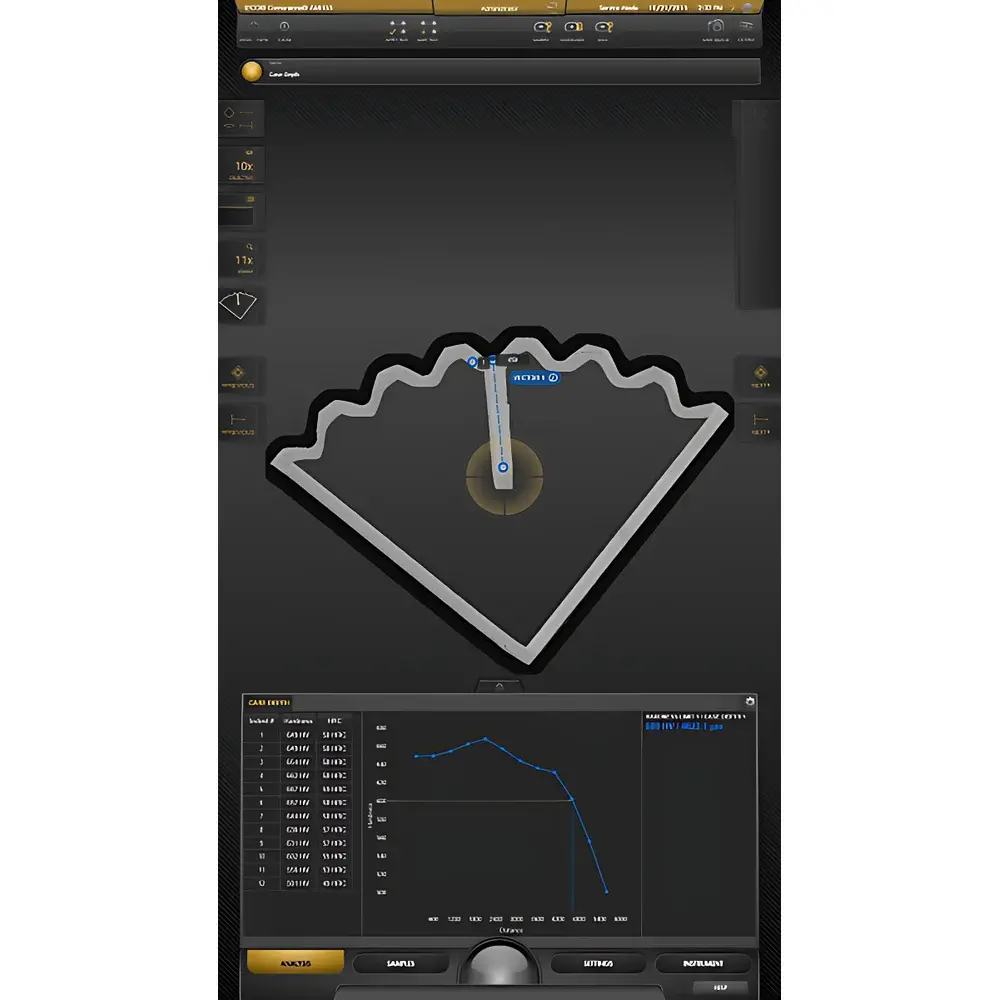
Cornerstone® v5.0 serves as the central analytical and operational hub. It provides method-driven testing—users define load dwell time, indentation spacing, grid patterns, and hardness conversion tables (HV ↔ HRC ↔ HBW) prior to execution. Data is stored in a relational SQLite database with immutable timestamps and user-specific access controls. Reporting modules generate ASTM-compliant certificates (including confidence intervals), statistical summaries (mean, SD, Cp/Cpk), and annotated hardness maps. Optional Advanced Analysis Module enables color-coded hardness contour mapping, depth-profile interpolation, and multi-layer coating hardness gradient analysis. All raw images, metadata, and measurement coordinates are archived with lossless compression (TIFF/RAW), ensuring full re-analysis capability years after acquisition.
Applications
- Heat-affected zone (HAZ) characterization in welded joints per AWS D1.1 and ASME Section IX.
- Carburized case-depth profiling in gear steels using step-load microhardness traverses.
- Thin-film adhesion assessment via Knoop hardness gradients at coating–substrate interfaces.
- Quality control of additive-manufactured (AM) metal parts, including porosity-correlated hardness anomalies.
- Failure analysis labs performing comparative hardness mapping across fracture surfaces and adjacent bulk regions.
- Research applications requiring high-resolution hardness distribution studies in intermetallics, composites, and nanocrystalline alloys.
FAQ
Does the AMH55 support both Vickers and Knoop hardness scales?
Yes—the system is calibrated for both Vickers (HV) and Knoop (HK) indentations, with automatic scale selection based on test method configuration and indenter type.
Can the AMH55 perform hardness mapping over large areas?
Yes—its 260 × 150 mm XY travel range, combined with automated stage stitching and image registration, enables seamless mosaic mapping across specimens exceeding standard microscope field-of-view limits.
Is Cornerstone® software validated for regulated environments?
When deployed with optional 21 CFR Part 11 and Annex 11 modules, Cornerstone® includes electronic signature enforcement, role-based permissions, and full audit trail generation required for pharmaceutical and medical device QA/QC.
What maintenance is required for long-term accuracy?
Annual verification using certified reference blocks and optical calibration slides is recommended; LECO offers factory-certified service plans including ISO 17025–accredited recalibration.
Can legacy hardness data be imported into Cornerstone®?
Yes—CSV and Excel-formatted datasets from prior LECO or third-party systems can be mapped to Cornerstone®’s database schema for retrospective analysis and trend reporting.



