
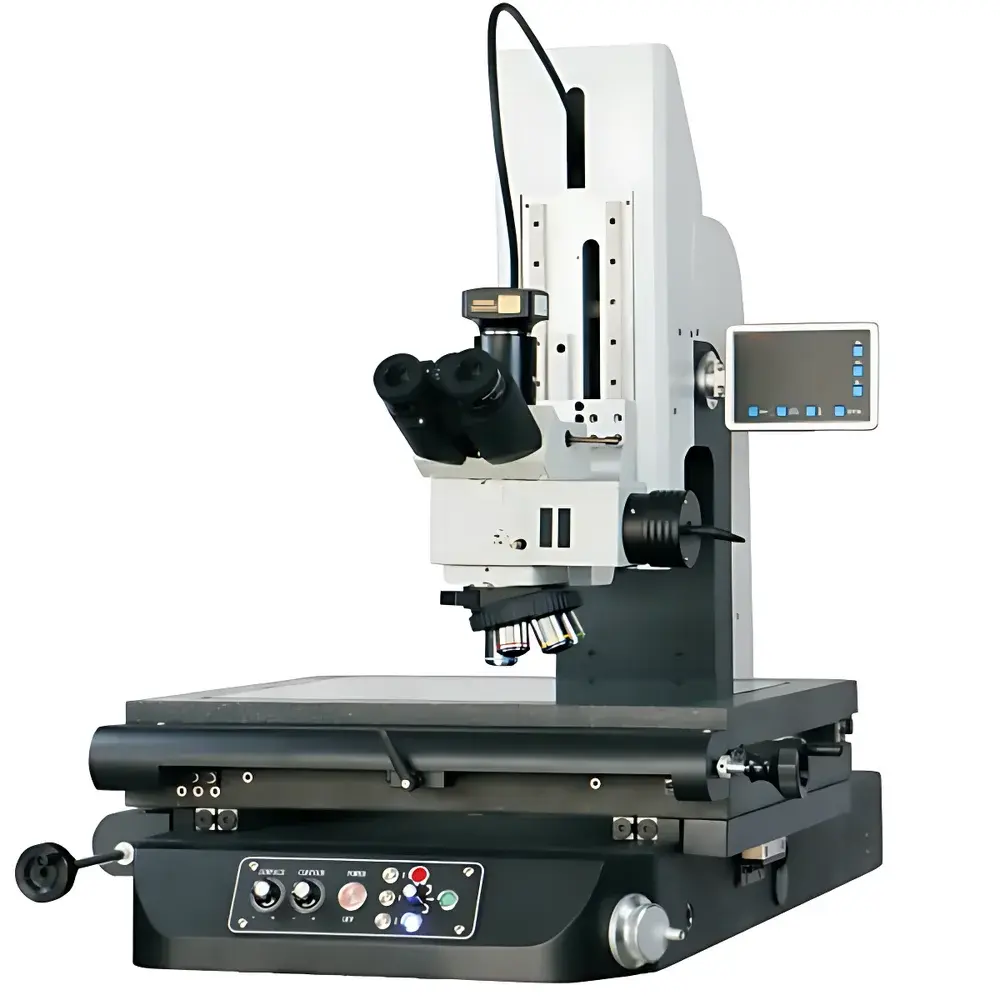
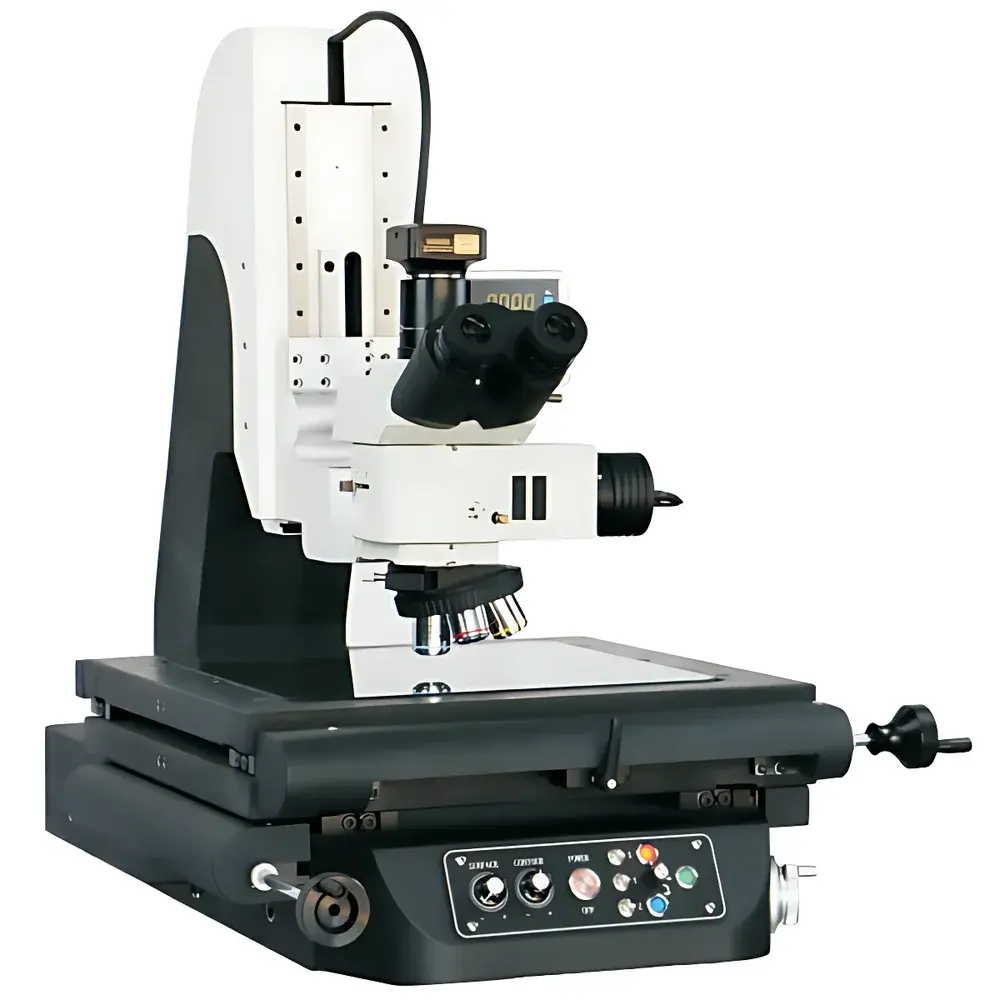
LEI-TECH LK-DLS Series Granite-Bodied Metallurgical Measuring Microscope
| Brand | LEI-TECH |
|---|---|
| Origin | Tianjin, China |
| Manufacturer Type | Direct Manufacturer |
| Product Category | Domestic |
| Configuration | Upright |
| Image Analysis System | Integrated |
| Total Magnification Range | 50×–1000× |
| Eyepiece | Trinocular |
| Objective Lenses | 5×, 10×, 20×, 50× (100× optional) |
| Base & XY Stage Material | Precision Granite (Granite Monolith Structure) |
| Measurement Axes | X, Y, Z with Motorized Fine Focus via Handwheel Encoder |
| Standard Optical Path | Infinity-Corrected Dual-Optimized (UISC) |
| Illumination | Reflected Bright/Dark Field (12V/100W Halogen + Pre-set Intensity), Transmitted LED (5W White, NA 0.5 Condenser) |
| Observation Modes | Brightfield, Darkfield, DIC, Polarized |
| Software Functions | Real-time Extended Focus Imaging (EFI), Multi-Field Image Stitching (MIA), Metrology-Grade 2D/3D Measurement |
| Compliance | Designed for ISO 9001-aligned production |
Overview
The LEI-TECH LK-DLS Series Granite-Bodied Metallurgical Measuring Microscope is an upright, high-precision hybrid instrumentation platform engineered for simultaneous high-resolution metallurgical observation and metrological-grade dimensional analysis. It integrates a rigorously optimized infinity-corrected optical path (UISC—Universal Infinity-Super-Corrected) with a thermally stable, vibration-damped granite monolith base and XY stage—eliminating structural drift under thermal load or mechanical stress. Unlike conventional aluminum or steel-frame systems, the full-granite architecture ensures sub-micron positional stability over extended acquisition periods, critical for repeatable quantitative imaging and measurement in regulated environments. The system operates on dual illumination pathways: a switchable reflected bright/dark field halogen source (12 V / 100 W) with pre-set intensity memory and a dedicated transmitted white LED (5 W, NA 0.5 condenser), enabling independent or concurrent use. This optical duality supports standardized metallurgical evaluation per ASTM E3, E407, and ISO 643, while the calibrated Z-axis motorized focus—controlled via precision handwheel encoder with 0.5 µm minimum step resolution—facilitates accurate height profiling and surface topography reconstruction.
Key Features
- Monolithic granite construction for superior thermal inertia and mechanical damping—reducing thermal drift to <0.3 µm/°C across operational temperature ranges (15–30 °C)
- UISC infinity-corrected optical system delivering high contrast, flat-field imaging across full FOV at all magnifications (50×–1000×), with minimal chromatic and spherical aberration
- Trinocular head with standard C-mount port supporting scientific CMOS/CCD cameras compliant with USB3.0 or GigE Vision protocols
- Motorized Z-axis fine focus with integrated linear encoder (standard 0.5 µm resolution; optional 0.1 µm interpolation)
- Five-position objective turret with parfocal, infinity-corrected metallurgical objectives (5×, 10×, 20×, 50×; 100× optional), each certified to ISO 10110 surface quality standards
- Modular illumination architecture: interchangeable bright/dark field reflector, polarizer/analyzer set, and DIC slider—all mounted on standardized dovetail rails
- Real-time Extended Focus Imaging (EFI): hardware-accelerated depth stacking without z-stack acquisition delay
- Multi-Field Image Acquisition (MIA): automated mosaic stitching of up to 128 fields with sub-pixel registration accuracy
Sample Compatibility & Compliance
The LK-DLS series accommodates specimens ranging from fragile semiconductor wafers (≤0.1 mm thickness) to large automotive castings (up to 500 × 400 mm footprint). Its open-stage design allows direct mounting of non-standard fixtures—including vacuum chucks, kinematic mounts, and thermal stages—without optical path obstruction. All models comply with CE safety directives (2014/35/EU, 2014/30/EU) and meet IEC 61000-6-2/6-3 EMC immunity/emission requirements. Measurement algorithms adhere to ISO 14253-1 (Geometrical Product Specifications) and support traceable calibration using NIST-traceable stage and lens calibration artifacts. The system’s firmware architecture enables audit trail logging (user ID, timestamp, parameter change) aligned with FDA 21 CFR Part 11 data integrity principles when deployed with validated software modules.
Software & Data Management
The proprietary LEI-Vision Metrology Suite provides a deterministic, deterministic image processing pipeline—from raw sensor capture to certified measurement reports. It includes ISO/IEC 17025-compliant uncertainty estimation per GUM (Guide to the Expression of Uncertainty in Measurement), automatic edge detection with Sobel/Canny hybrid thresholding, and GD&T evaluation (flatness, parallelism, circularity, position). Raw image data is stored in TIFF-6.0 format with embedded EXIF metadata (magnification, objective ID, illumination mode, focus position). Export options include PDF/A-1b reports with digital signatures, CSV/Excel for SPC integration, and STEP AP242 files for CAD-based tolerance analysis. Software licensing supports concurrent multi-seat deployment and network-based license pooling—essential for centralized QC labs managing multiple instruments.
Applications
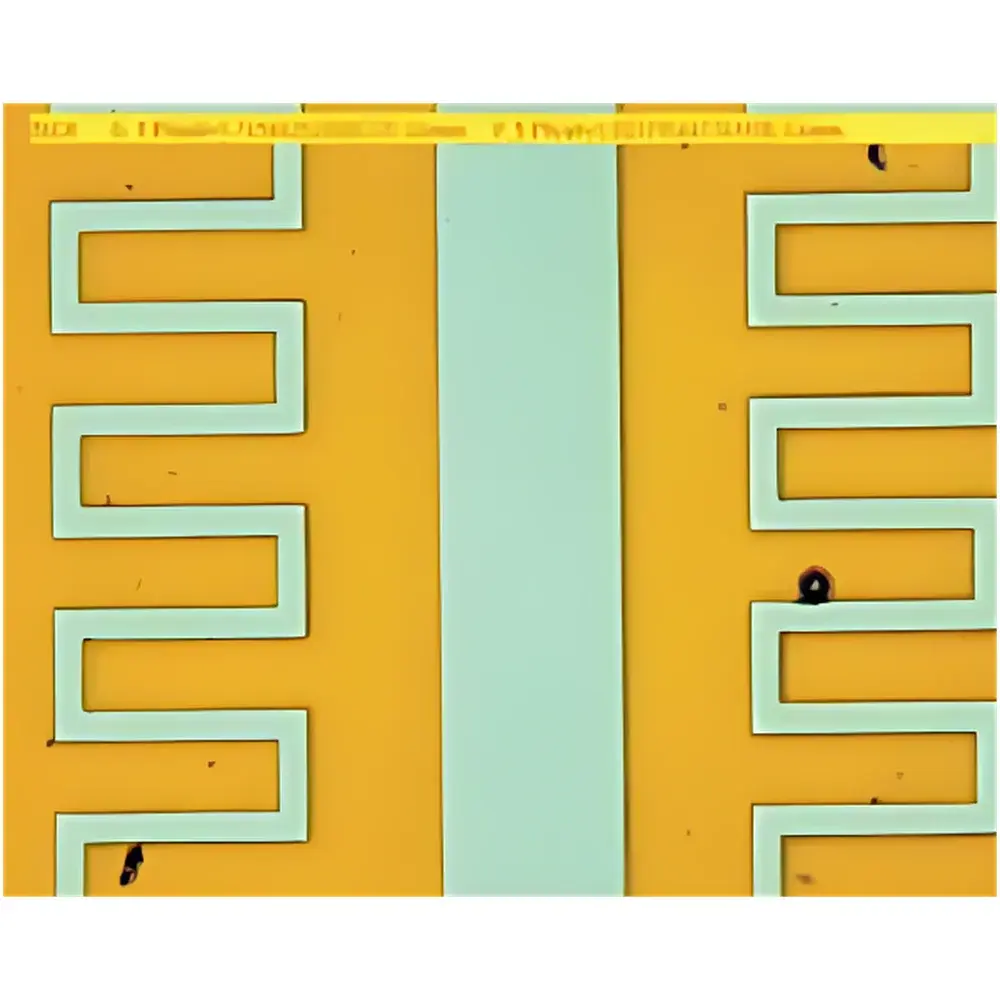
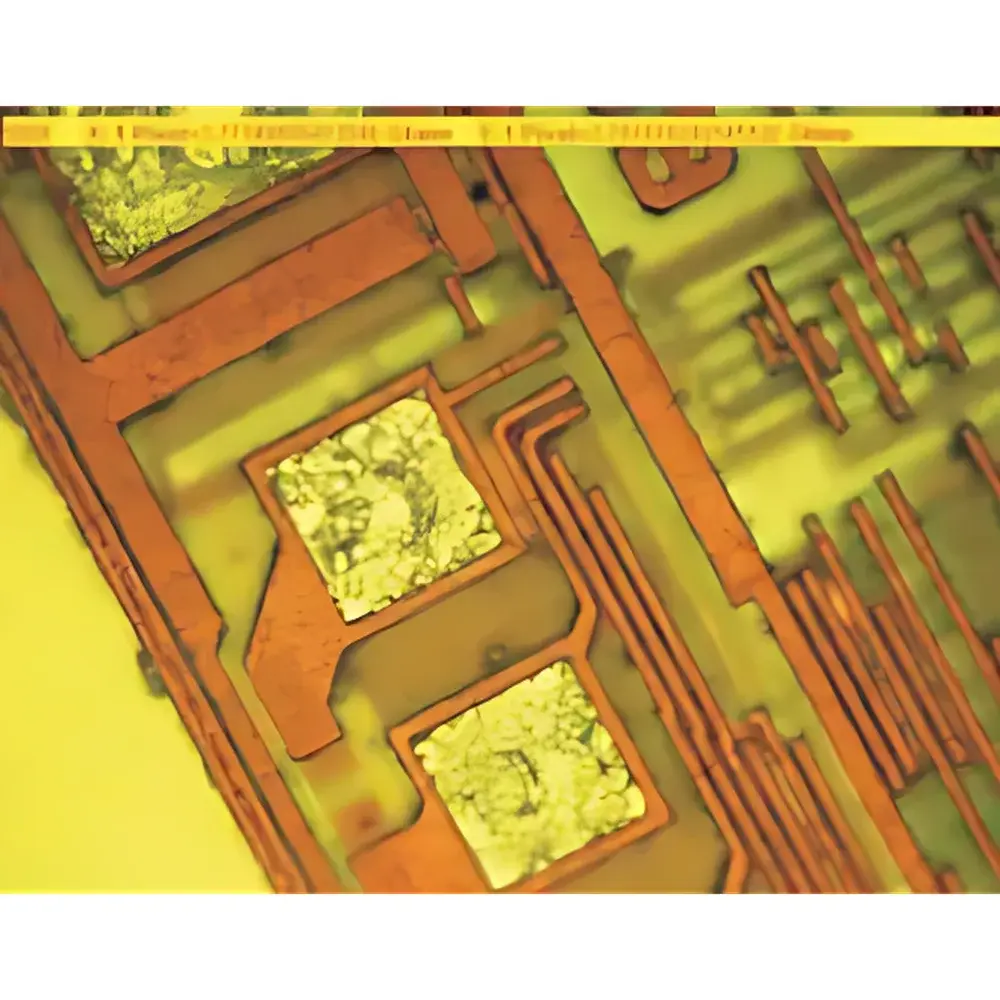
This platform serves as a primary inspection and metrology tool in industries requiring microstructural verification and dimensional validation under controlled conditions. In semiconductor packaging, it verifies solder bump coplanarity and die attach voiding at 500× with ≤3.5 µm lateral measurement uncertainty. For PCB fabrication, it measures trace width/spacing, solder mask alignment, and via plating thickness via calibrated dark-field contrast segmentation. In medical device manufacturing, it quantifies surface roughness (Ra, Rz) of laser-textured orthopedic implants per ISO 4287, and validates micro-feature geometry on MEMS pressure sensors. Automotive Tier-1 suppliers employ it for grain size analysis (ASTM E112), inclusion rating (ISO 4967), and wear scar dimensioning on transmission components. Its granite stability and EFI capability also support long-duration in-situ corrosion monitoring and thermal-cycle-induced microcrack propagation studies.
FAQ
Is the granite base certified for dimensional stability per ISO 10360?
Yes—the base material undergoes batch-certified dimensional stability testing per ISO 10360-2 Annex B, with thermal expansion coefficient verified at 6.2 ± 0.3 × 10⁻⁶ /°C.
Can the system be qualified under FDA 21 CFR Part 11 for regulated pharmaceutical manufacturing?
When configured with LEI-Vision v4.2+ and network-authenticated user management, full electronic signature, audit trail, and role-based access control are enabled—supporting IQ/OQ/PQ documentation per GAMP5.
What is the maximum specimen height clearance for Z-axis travel?
Standard Z travel is 150 mm; optional extended column kits increase clearance to 250 mm while maintaining encoder resolution and stiffness.
Does the system support third-party camera integration?
Yes—C-mount interface complies with JIS B 7110; SDKs for Basler, FLIR, and Hamamatsu cameras are provided with full trigger synchronization and metadata injection.
How is measurement uncertainty calculated and reported?
Uncertainty budgets incorporate contributions from optics (aberration, MTF), mechanics (stage encoder linearity, orthogonality error), illumination (contrast-limited edge detection), and operator input—computed per ISO/IEC 17025:2017 Clause 7.6.3.




