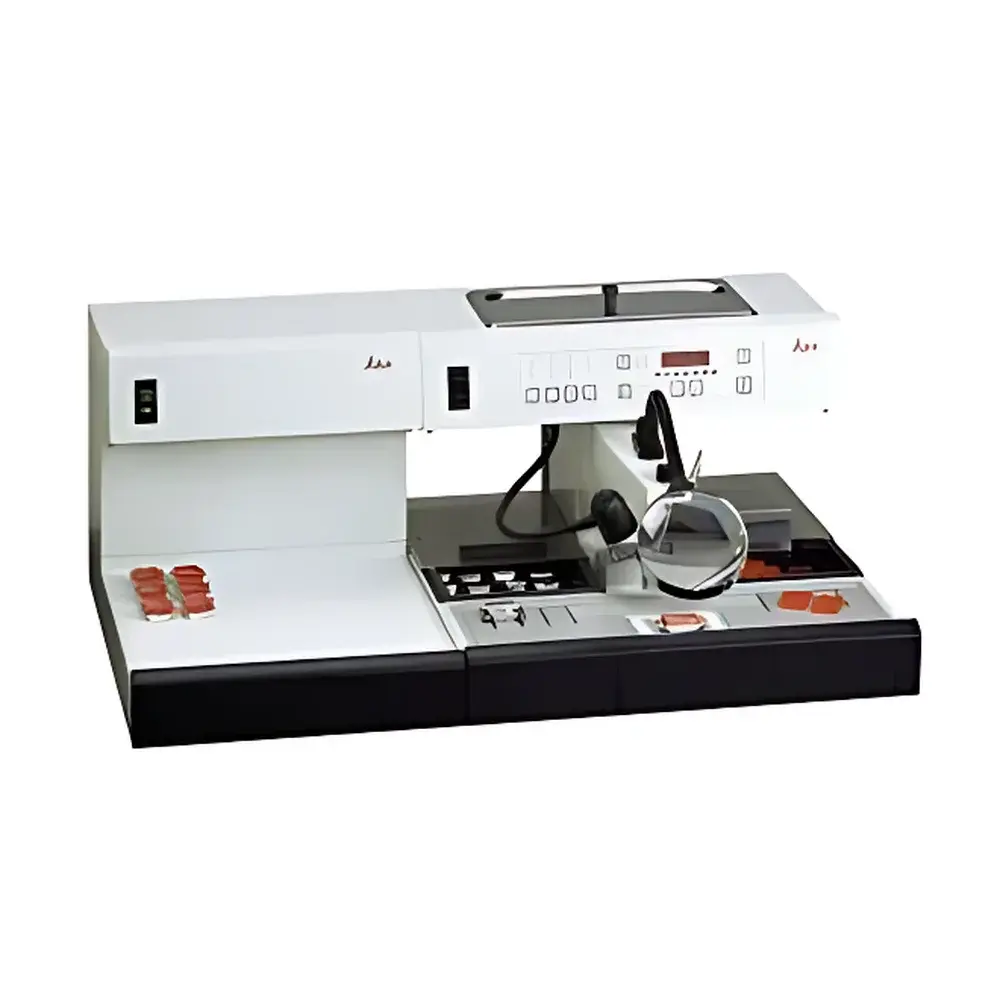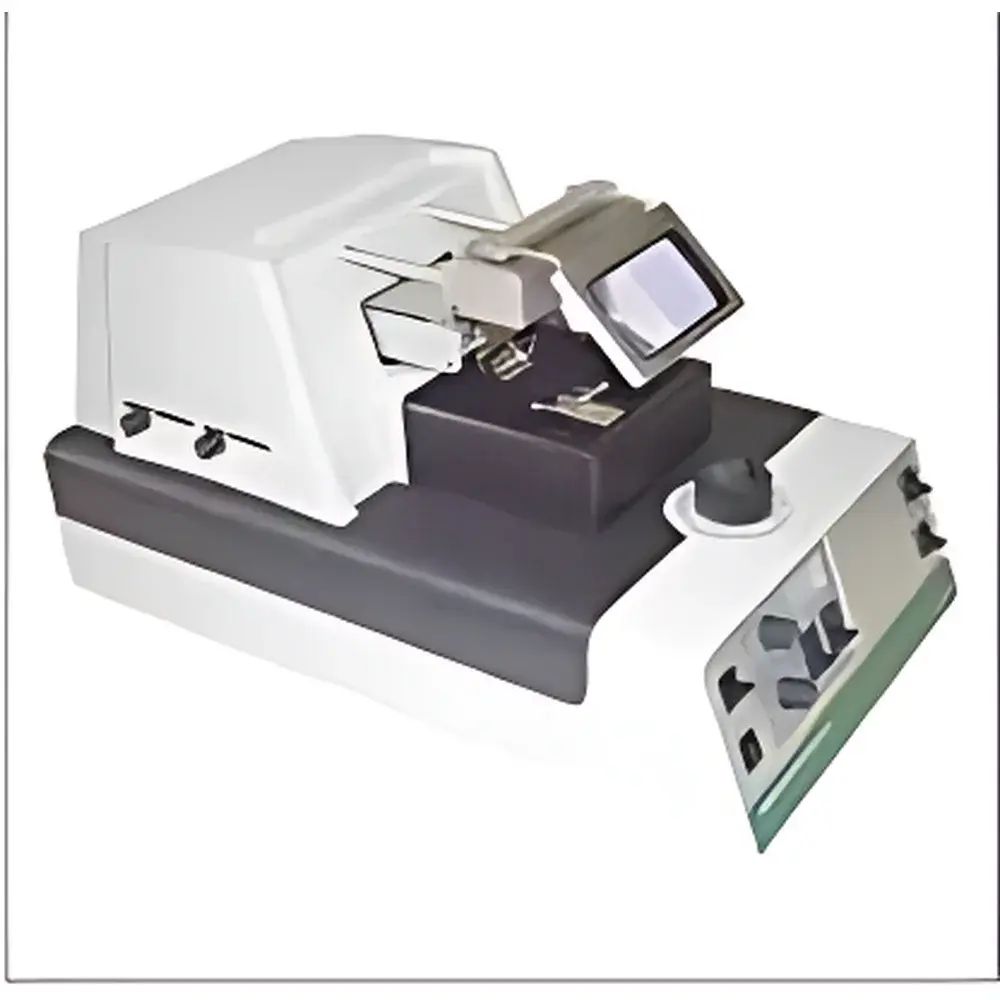
Leica Biosystems Vibratome 1500 Series Vibrating Microtome
| Origin | USA |
|---|---|
| Manufacturer Type | Authorized Distributor |
| Origin Category | Imported Instrument |
| Model | Vibratome 1500 Series |
| Pricing | Available Upon Request |
Overview
The Leica Biosystems Vibratome 1500 Series is a precision-engineered vibrating microtome designed for the preparation of live, unfixed, and non-frozen biological tissue sections—primarily for electrophysiology, immunohistochemistry, and live-cell imaging applications. Unlike cryostats or rotary microtomes, the Vibratome 1500 operates on the principle of high-frequency lateral oscillation of a disposable stainless-steel blade (typically 3–8 Hz at 0.5–2 mm amplitude), enabling sectioning of hydrated, soft, or delicate neural, cardiac, or embryonic tissues without chemical fixation, paraffin embedding, or cryopreservation. This preserves native antigenicity, enzymatic activity, membrane integrity, and ultrastructural fidelity—critical for functional assays requiring viable tissue architecture.
Key Features
- Automated sectioning workflow: Pre-programmable slice count and thickness (20 µm to 1000 µm in 1 µm increments) with real-time progress monitoring via backlit LCD interface.
- Three distinct operational modes: Manual mode for fine-tuning; Semi-automatic mode for stepwise sectioning with user-triggered advancement; Fully automatic mode for unattended batch processing.
- Patented arc-shaped vibrating blade mechanism that minimizes shear stress and compression artifacts during cutting—reducing tissue deformation and improving cross-sectional uniformity.
- Integrated specimen stage with adjustable X/Y/Z positioning and precise tilt compensation (±5°) to maintain optimal blade-to-tissue angle across heterogeneous samples.
- Robust aluminum alloy chassis with vibration-dampening feet and sealed electronics, engineered for long-term stability in shared core facilities and electrophysiology labs.
- Compliance-ready design: Supports audit trails and user-access logging when paired with Leica’s optional LabManager software suite (v3.2+), facilitating GLP/GMP-aligned documentation workflows.
Sample Compatibility & Compliance
The Vibratome 1500 accommodates fresh, perfused, or lightly fixed (e.g., 4% PFA ≤ 2 h) tissue blocks up to 25 × 25 × 15 mm (W × D × H). Compatible specimen holders include agarose-embedded brain slices, vibratome-compatible plastic molds, and custom-machined metal clamps for hippocampal or spinal cord preparations. It meets ISO 13485:2016 requirements for medical device manufacturing processes and conforms to IEC 61010-1:2010 safety standards for laboratory equipment. For regulated preclinical research, the system supports traceability per FDA 21 CFR Part 11 when used with validated electronic record systems—enabling secure user authentication, electronic signatures, and immutable session logs.
Software & Data Management
While the Vibratome 1500 operates as a standalone instrument with embedded firmware, its configuration parameters (slice thickness, count, speed, pause intervals) are stored locally with timestamped metadata. When interfaced via RS-232 or USB-to-serial adapter with Leica LabManager (Windows 10/11, 64-bit), users gain access to centralized protocol archiving, multi-instrument scheduling, and CSV-exportable operation logs—including operator ID, date/time stamps, and error codes. All software modules undergo annual validation per IQ/OQ protocols and support integration into institutional LIMS environments through standardized API endpoints.
Applications
- Acute brain slice electrophysiology: Preparation of viable hippocampal, cortical, or thalamic slices for patch-clamp recording and field potential analysis.
- Live-tissue calcium imaging: Generation of optically transparent sections retaining endogenous fluorescent protein expression and dye permeability.
- High-resolution immunolabeling: Preservation of epitope conformation for post-sectioning antibody binding—particularly advantageous for phosphorylation-state-specific targets.
- Developmental biology: Sectioning of whole-mount embryonic tissues (e.g., E12.5 mouse brain) without structural collapse or shrinkage artifacts.
- Pharmacological screening: Rapid generation of replicate tissue sections for dose-response assays under controlled oxygenated ACSF conditions.
FAQ
What is the minimum recommended section thickness for optimal viability in live-tissue electrophysiology?
20 µm is the validated lower limit for maintaining neuronal membrane integrity and synaptic functionality in acute rodent brain slices.
Can the Vibratome 1500 be used with glutaraldehyde-fixed tissue?
No—glutaraldehyde cross-linking increases tissue rigidity beyond the mechanical tolerance of the vibrating blade system; only low-concentration paraformaldehyde (≤4%) or no fixation is advised.
Is blade calibration required between runs?
No routine calibration is needed; however, blade alignment verification using the included alignment gauge is recommended after each blade replacement or every 50 hours of cumulative operation.
Does the system support third-party data acquisition synchronization?
Yes—TTL trigger output (5 V, 10 ms pulse) is provided for hardware-synchronized start/stop signals with patch-clamp amplifiers or camera acquisition systems.
What maintenance intervals are specified for regulatory compliance?
Daily cleaning of the fluid chamber and blade holder; bi-weekly inspection of drive belt tension and stage lubrication; annual full mechanical and electrical verification by Leica-certified service engineers.