
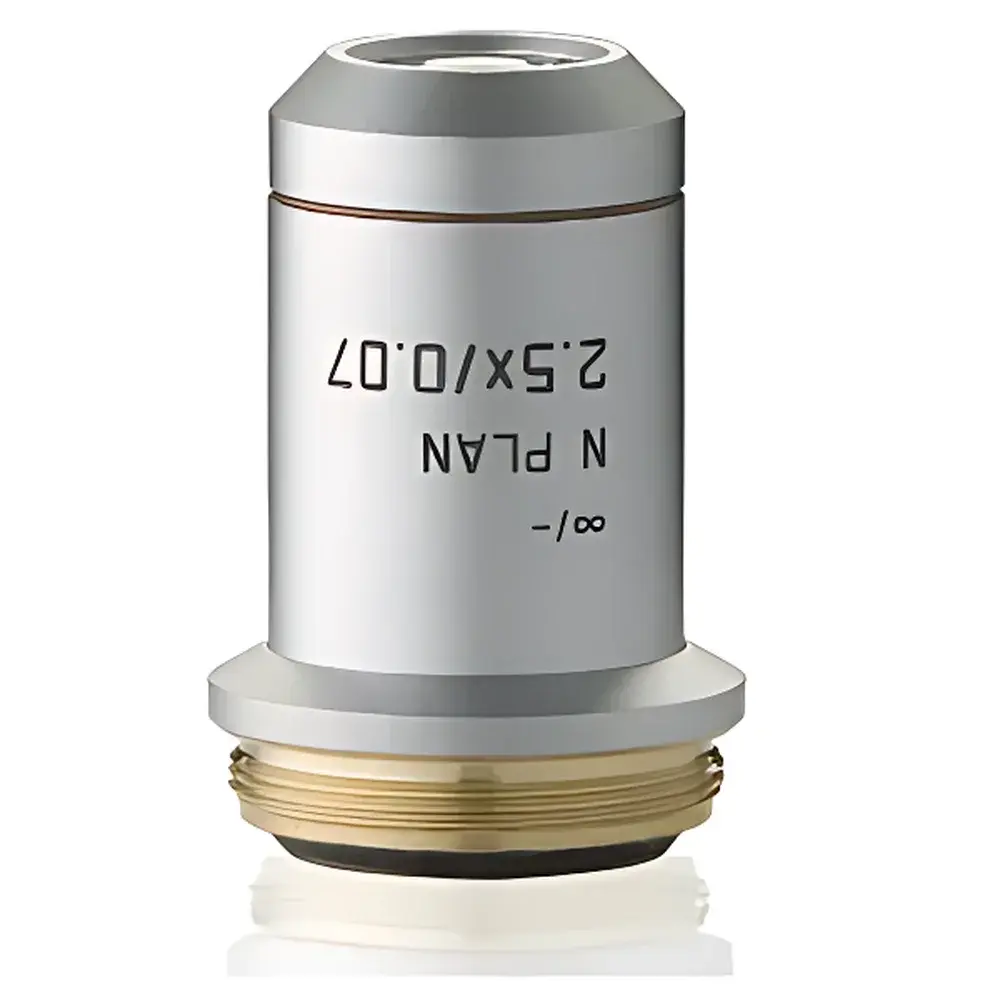
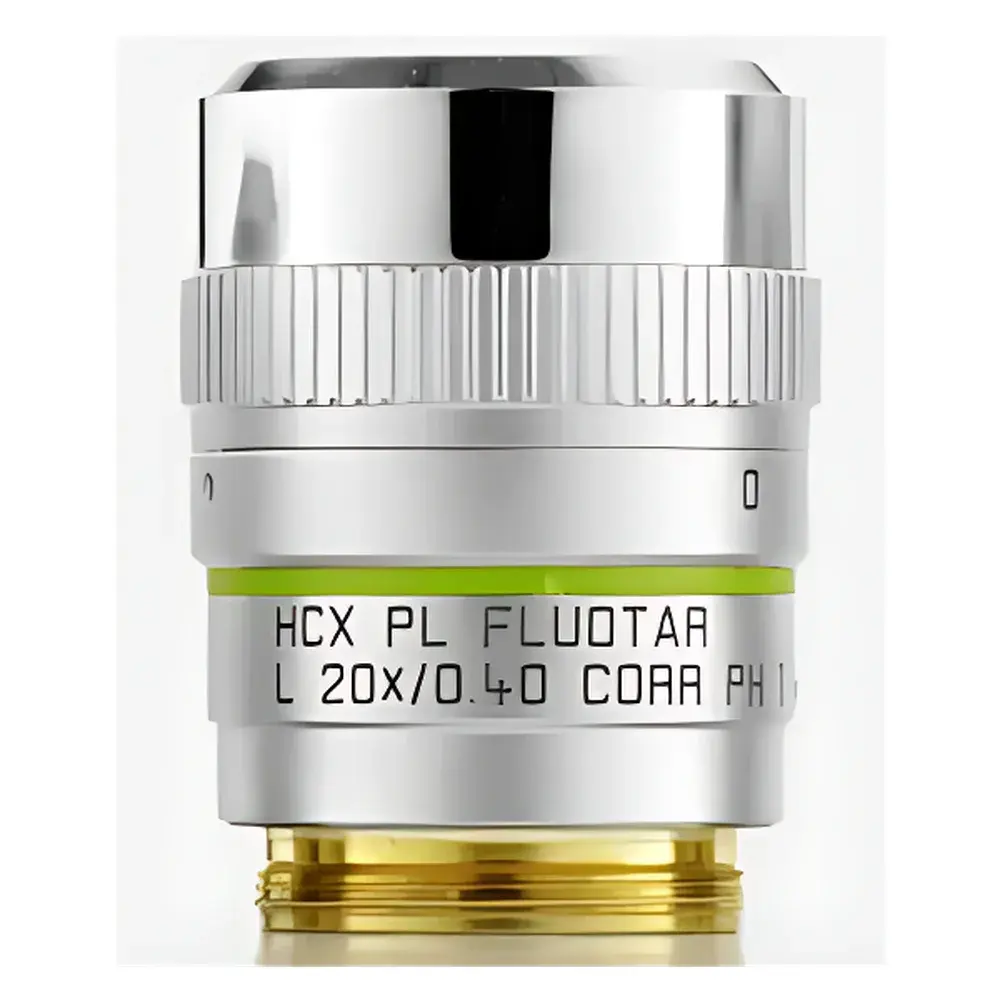
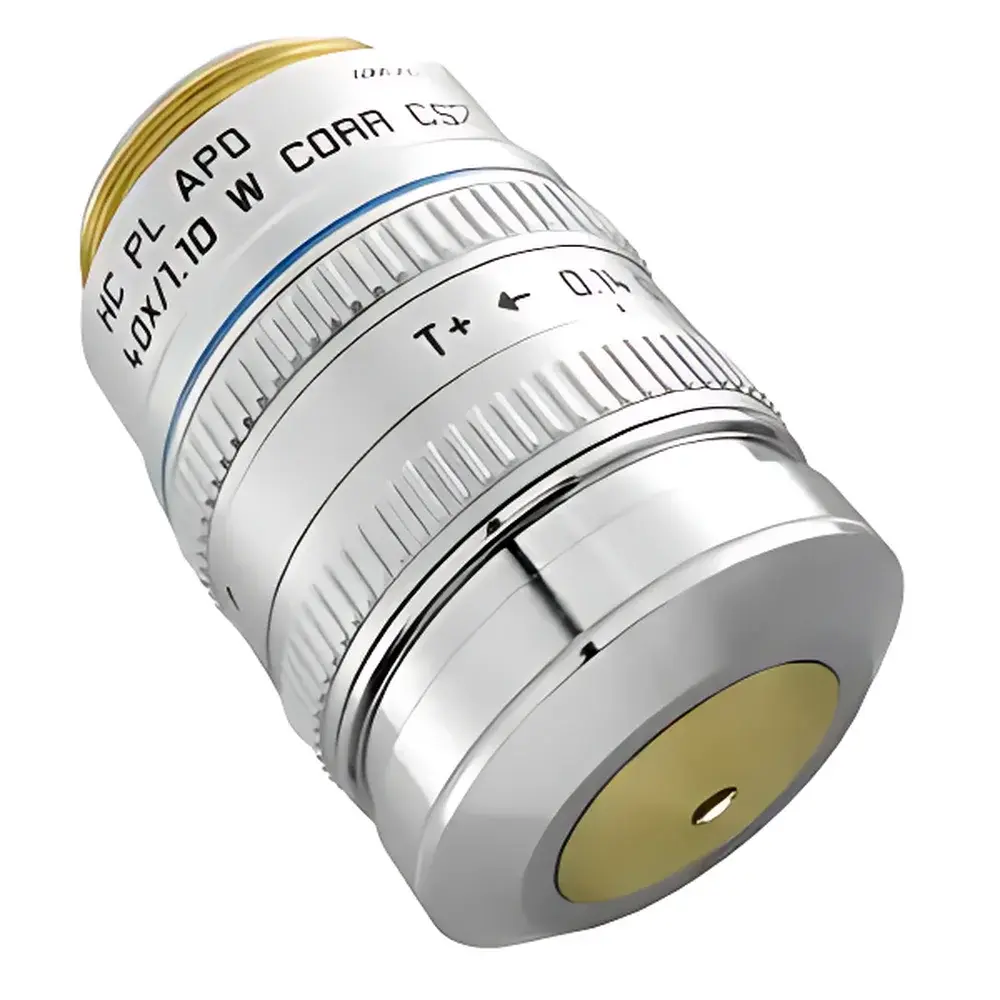
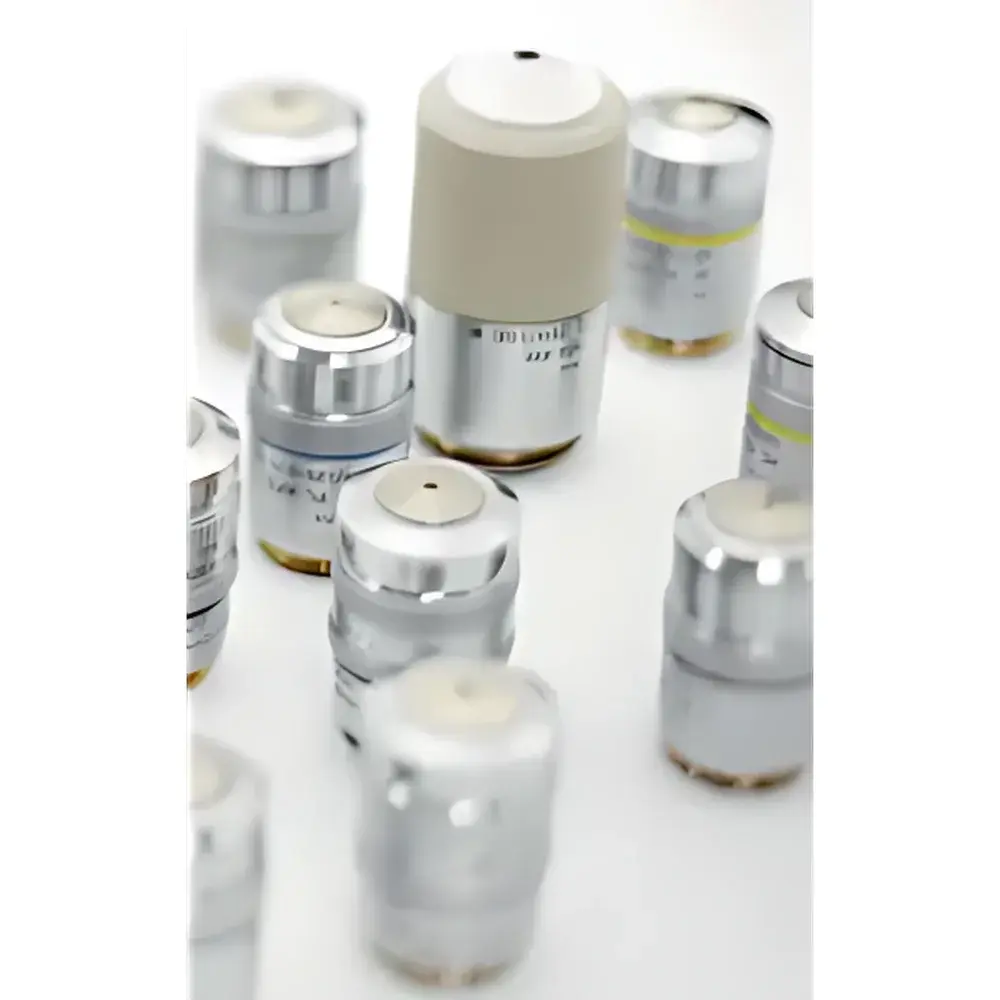
Leica Custom-Designed Microscope Objective Lenses
| Brand | Leica |
|---|---|
| Origin | Shanghai, China |
| Manufacturer Type | Authorized Distributor |
| Product Category | Optical Components |
| Model | Custom-Developed Objective Lenses |
| Application-Specific Types | Water Immersion, Oil Immersion, Multi-Photon Optimized, Clearing-Compatible, Laser Microdissection, STED/White Light, TIRF, DIC, Phase Contrast, UV-Transmissive (350 nm), IR-Corrected (700–1300 nm), DLS-Compatible |
| Optical Correction Classes | Achromat, Semi-Apochromat (FLUOTAR), Apochromat (PL APO, PL IRAPO, PL APO CS/CS2) |
| Field Flatness (OFN) | Up to 25 mm |
| Chromatic Aberration Correction | 2-color (Achro), 3-color (Semi-Apo), Full Visible + NIR (APO/IRAPO), UV–Vis–NIR (CS2, STED WHITE) |
| Working Distance Options | Standard, Long, Ultra-Long, Adjustable via motCORR™ Motorized Correction Collar |
| Immersion Media Support | Air, Oil (Type F/N), Water, Glycerol, Multi-Index |
| Compliance | ISO 8578 (Microscope Objectives), DIN EN 61000-6-3 (EMC), RoHS, CE |
Overview
Leica custom-designed microscope objective lenses represent a precision-engineered extension of Leica Microsystems’ optical platform—tailored not for generic use, but for mission-critical imaging workflows where standard off-the-shelf optics fall short. These objectives are developed in close collaboration with research laboratories, core facilities, and industrial R&D teams to meet stringent requirements in resolution, chromatic fidelity, transmission efficiency, and environmental adaptability. Built upon Leica’s decades of expertise in high-NA optical design and advanced coating technologies—including multi-layer anti-reflection (AR) coatings optimized for UV–Vis–NIR bands—they operate across fundamental physical principles: diffraction-limited imaging governed by the Abbe criterion, axial and lateral chromatic correction based on multi-glass element balancing, and immersion-dependent numerical aperture (NA) maximization. Their primary deployment spans live-cell multimodal microscopy, super-resolution techniques (STED, SIM, PALM), multiphoton deep-tissue imaging, laser microdissection, electrophysiology (e.g., patch-clamp on brain slices), and light-sheet (DLS) volumetric acquisition—each demanding bespoke optical alignment, thermal stability, and mechanical robustness.
Key Features
- Motorized correction collar (motCORR™) integration for real-time compensation of cover-slip thickness variation (0.13–0.22 mm), temperature drift (±0.1°C sensitivity), and refractive index mismatch in aqueous or clearing media—enabling stable focus without manual intervention.
- Multi-immersion capability: seamless switching between water, glycerol, oil (Type F/N), and air—supported by dedicated sealing and thermal expansion compensation in lens barrel design.
- UV-transmissive optics rated for ≥85% transmission at 350 nm; IR-corrected variants maintain ≤1× depth-of-field chromatic shift from 470 nm to 1200 nm—validated per ISO 10110-7 surface quality and ISO 9022-3 thermal shock testing.
- Apochromatic correction across ≥3 wavelengths (488/561/640 nm typical), with PL APO CS2 series delivering <0.1 µm lateral chromatic shift across full 25 mm field number (OFN), essential for multi-fluorophore co-localization in confocal and STED.
- Optimized working distances: from 0.15 mm (high-NA TIRF objectives) to 8.5 mm (long-working-distance infrared objectives), all engineered to minimize spherical aberration under physiological conditions.
Sample Compatibility & Compliance
Leica custom objectives are validated for use with biologically relevant sample environments—including aqueous buffers, CLARITY/iDISCO+ cleared tissues, hydrogel-embedded specimens, and live organotypic slices. All immersion-compatible models comply with ISO 8578:2017 (Microscope Objectives — Nomenclature and Performance Requirements) and undergo batch-certified wavefront error mapping using interferometric metrology (Zygo Verifire). For regulated environments, documentation packages support GLP/GMP traceability, including lens serial-number-linked calibration reports, coating spectral transmission curves (200–1600 nm), and mechanical tolerance certifications per DIN ISO 2768-mK. UV-grade fused silica elements meet USP Class VI biocompatibility requirements where direct contact with cell culture media is required.
Software & Data Management
Custom objectives are natively integrated into Leica LAS X software (v3.7+), enabling automatic recognition via embedded RFID tags or barcode scanning—triggering pre-configured acquisition parameters (e.g., optimal pinhole size, z-step, laser power ramping). motCORR™ actuators interface with LAS X via EtherCAT, allowing closed-loop focus stabilization synchronized to stage motion or environmental sensors. Metadata embedding includes objective-specific PSF models (measured point-spread functions), chromatic shift matrices, and immersion medium lookup tables—ensuring reproducible quantitation across instruments and timepoints. Audit trails comply with FDA 21 CFR Part 11 when used in conjunction with Leica’s validated software suite and networked server architecture.
Applications
- Live-cell multiphoton imaging: PL IRAPO objectives correct chromatic dispersion from 700–1300 nm, enabling simultaneous excitation of GFP, tdTomato, and IR dyes with <100 nm axial registration error.
- STED nanoscopy: STED WHITE objectives deliver matched excitation and depletion PSFs across 488–775 nm, achieving <30 nm resolution in fixed and live samples without iterative tuning.
- Laser microdissection: UV-optimized objectives (350 nm AR-coated) maximize laser coupling efficiency while minimizing thermal lensing—critical for precise subcellular ablation in LMD systems.
- Digital light-sheet (DLS) microscopy: DLS TwinFlect-compatible objectives maintain >92% reflectance uniformity across 25 mm FOV, ensuring artifact-free orthogonal illumination and detection geometry.
- Electrophysiology: Inert-material-immersed objectives (e.g., sapphire front lens) enable stable patch-clamp recordings through thick brain slices without electrical interference or thermal drift.
FAQ
Are Leica custom objectives compatible with non-Leica microscope platforms?
Yes—mechanical interfaces adhere to ISO 8039 (RMS thread) and JIS B 7151 (M25×0.75), with optional C-mount or Nikon Ni adapters available. Optical performance remains consistent when paired with third-party scanners or detectors meeting Leica’s specified back focal plane and telecentricity tolerances.
What documentation is provided with custom-developed objectives?
Each unit ships with a Certificate of Conformance, measured MTF curves at three wavelengths, wavefront error maps (RMS < λ/20 @ 633 nm), and a full spectral transmission report (200–1600 nm). Digital copies are archived in Leica’s secure customer portal for audit-ready retrieval.
Can motCORR™ be retrofitted to existing Leica objectives?
No—motorized correction is an intrinsic design feature requiring structural reinforcement, sealed actuator housing, and embedded position encoders. It is only available on newly manufactured custom objectives designated “motCORR™-enabled.”
How is thermal stability validated for long-term live imaging?
Objectives undergo 72-hour thermal cycling (20–37°C, ±0.1°C ramp rate) while monitoring focus drift (<0.5 µm/h) and transmission stability (<±0.8% over full spectrum)—per ISO 9022-3 Clause 12.
Do custom objectives support automated refocusing during time-lapse experiments?
Yes—when used with Leica’s Adaptive Focus Control (AFC) module and LAS X software, motCORR™-enabled objectives perform continuous aberration correction at up to 10 Hz, maintaining diffraction-limited focus throughout multi-hour acquisitions.





