
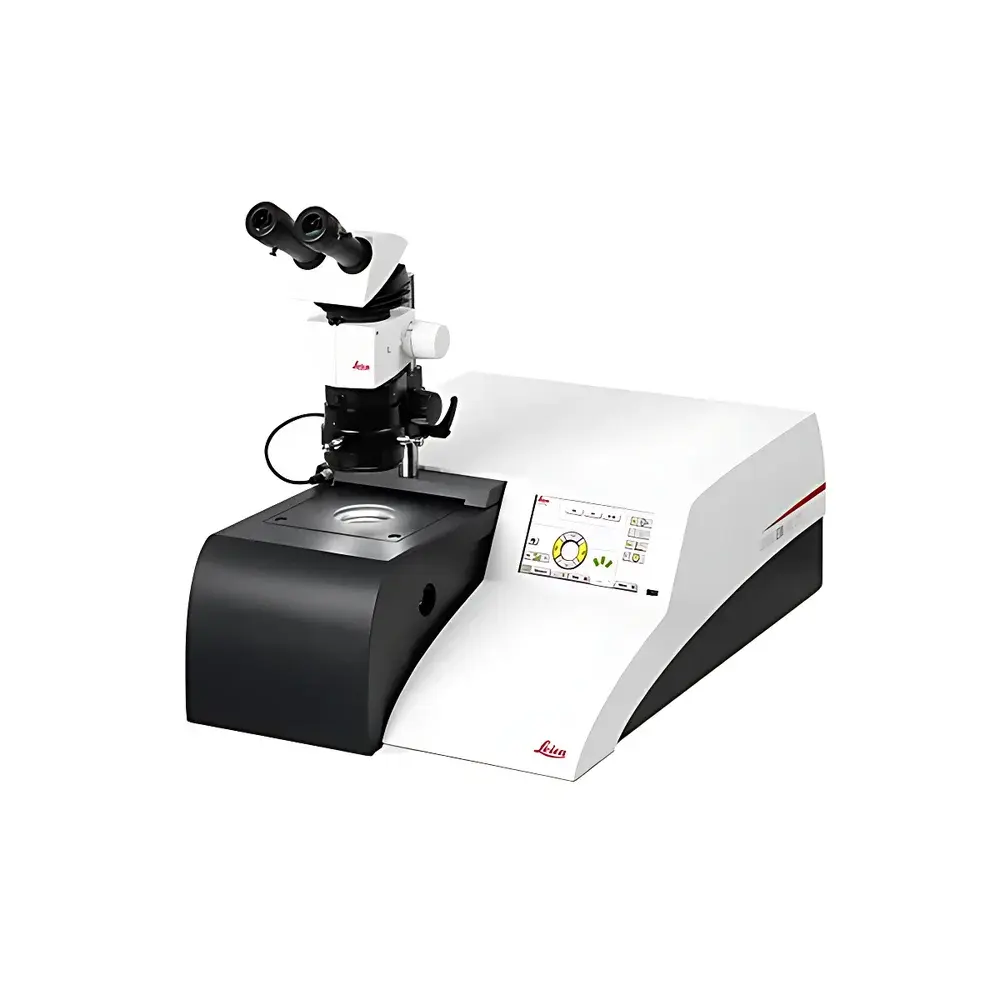
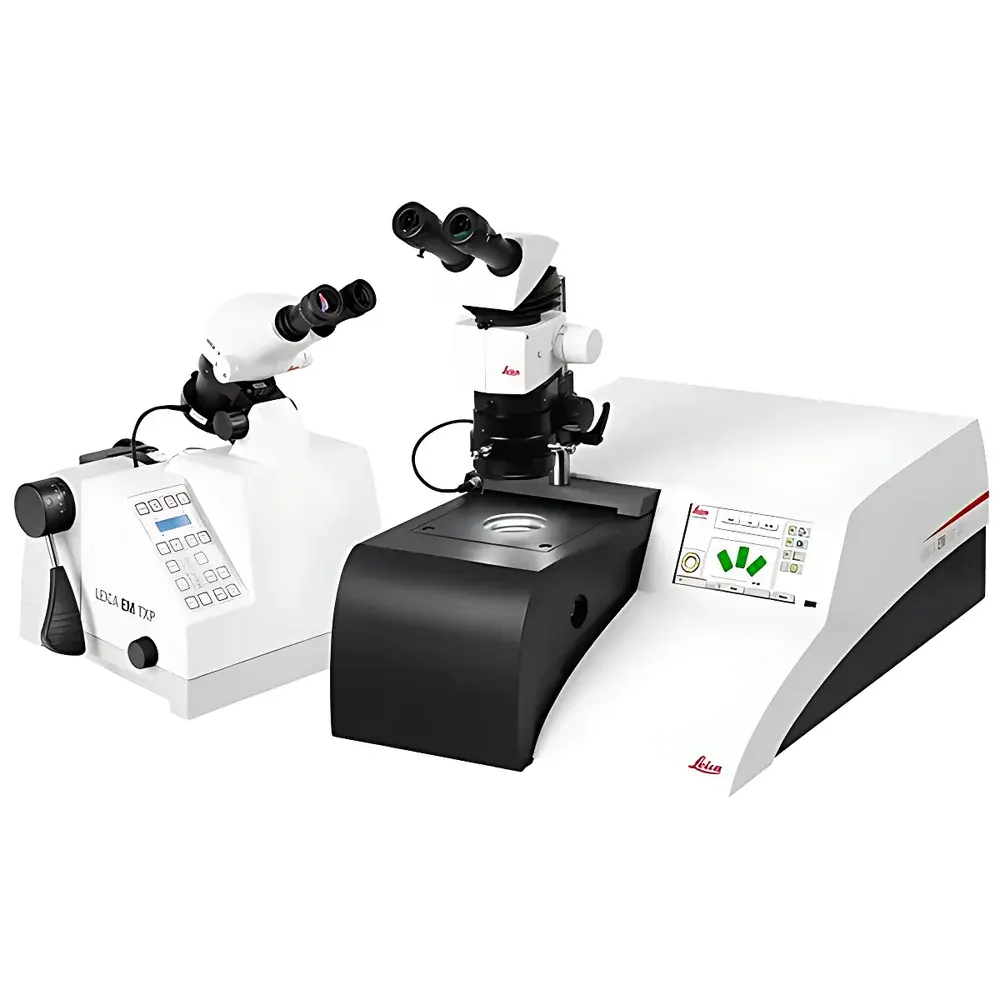
Leica EM TIC 3X Triple-Beam Ion Milling System
| Brand | Leica |
|---|---|
| Origin | Germany |
| Model | Leica EM TIC 3X |
| Application | Research Use Only |
| Sample Throughput | Up to 3 specimens simultaneously |
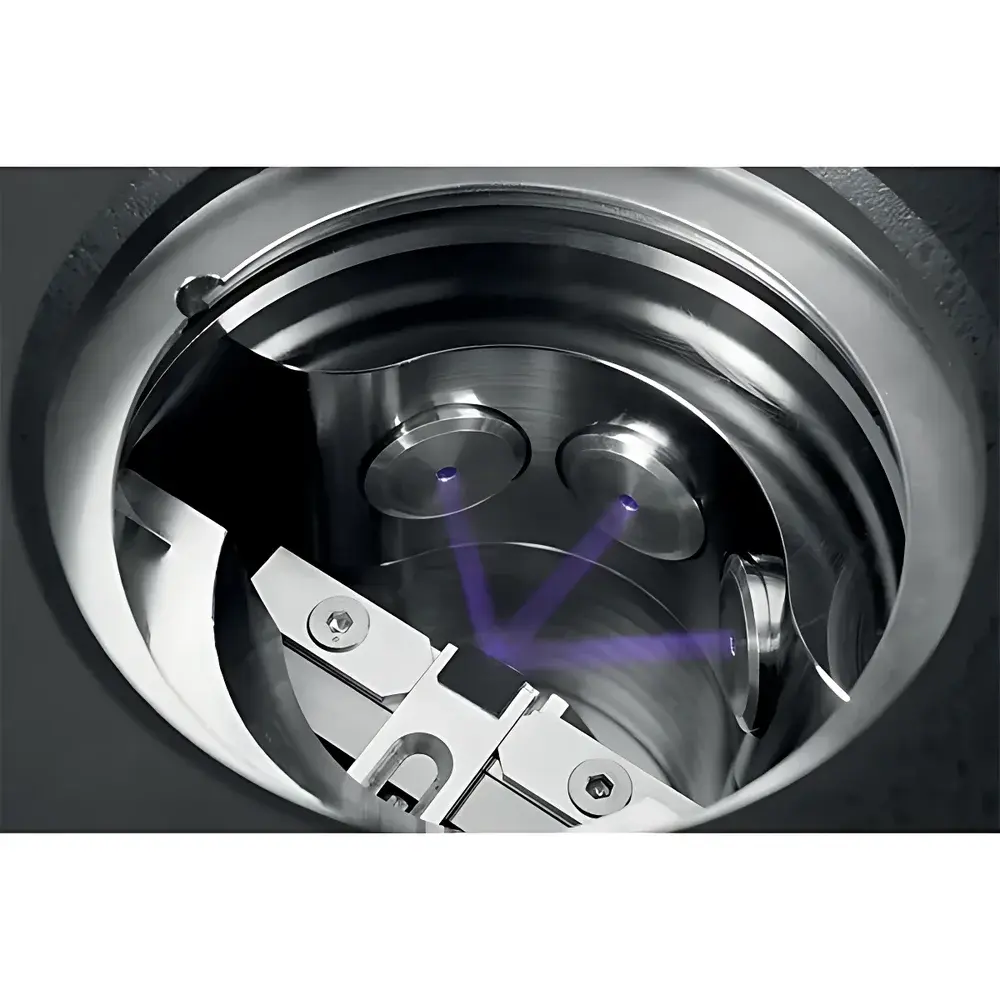
| Beam Configuration | Three independently adjustable argon ion beams |
| Operating Temperature Range | Ambient to –120 °C (with optional cryo stage) |
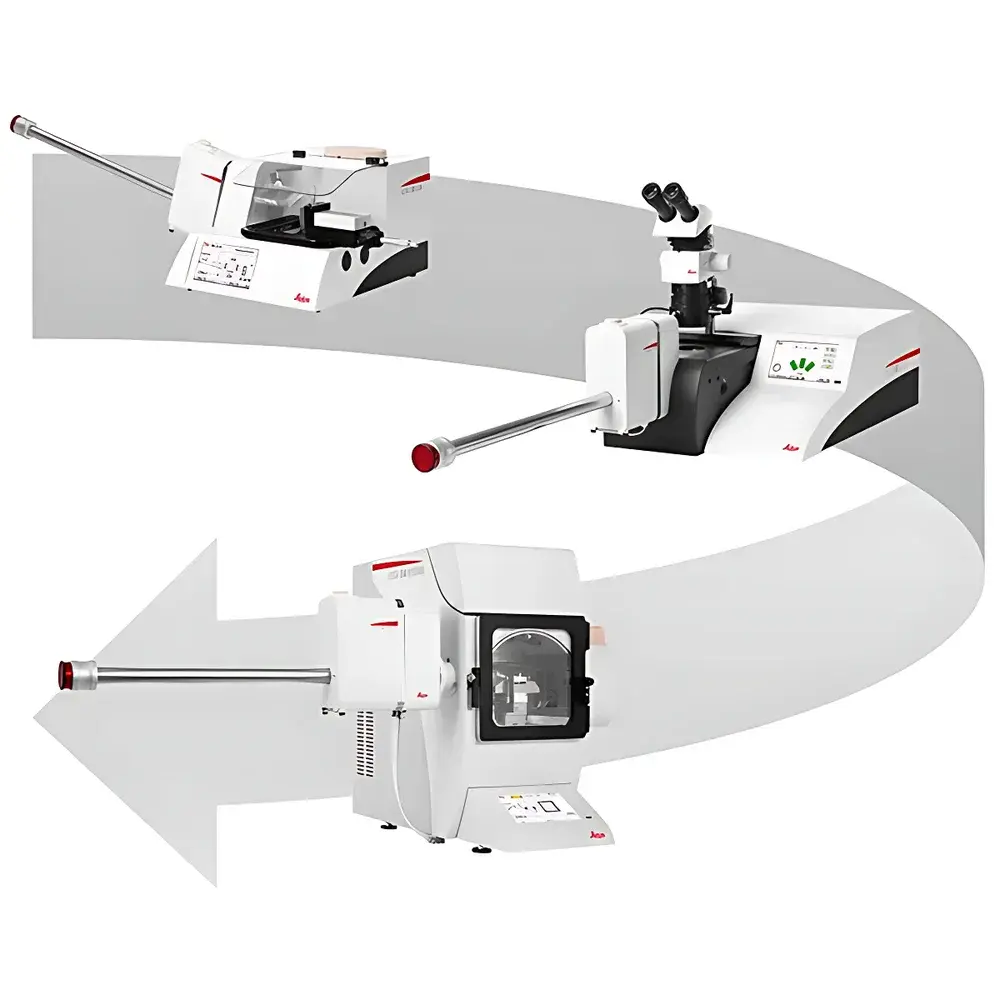
| Compatible Interfaces | VCT vacuum transfer docking station for cryo-SEM and coating systems (e.g., EM ACE600/ACE900) |
| Mounting Flexibility | Interchangeable stages — Standard, Multi-Sample, Rotating, Cryo-Cooling, and VCT Docking |
Overview
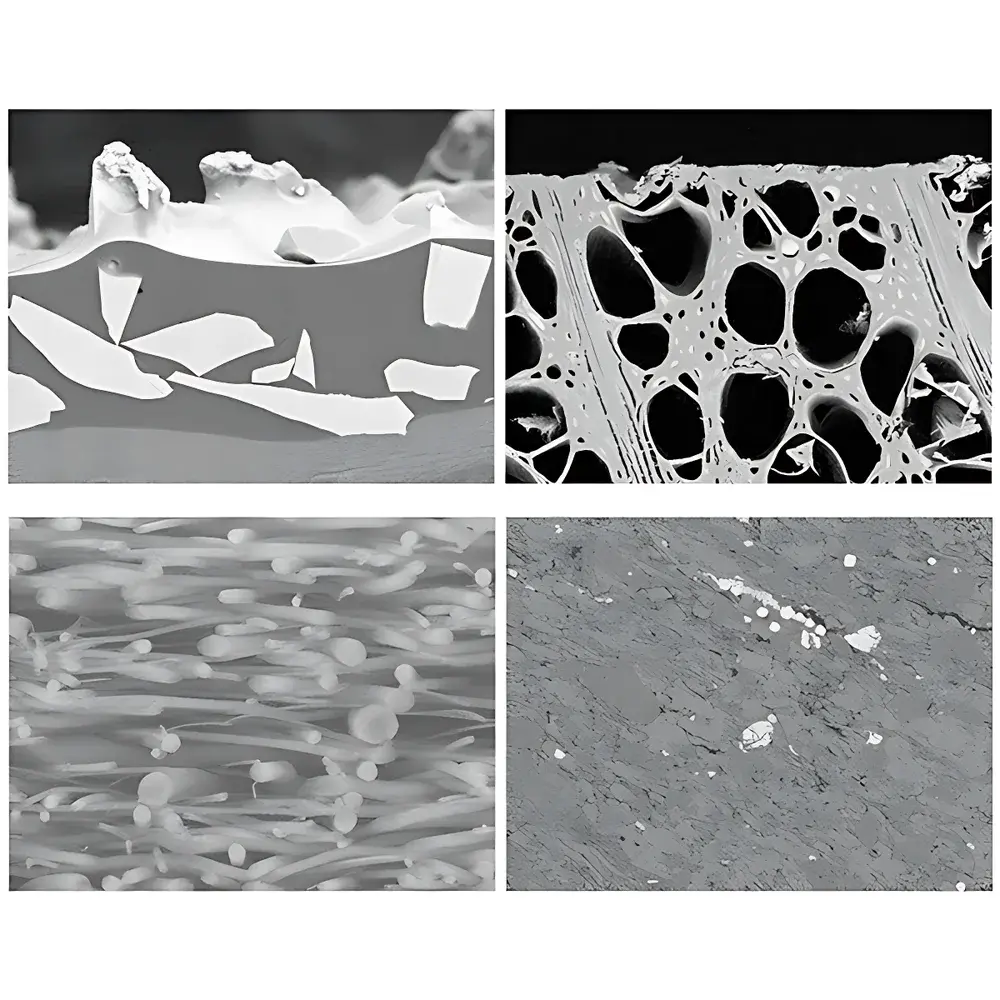
The Leica EM TIC 3X is a high-precision triple-beam ion milling system engineered for reproducible, artifact-minimized cross-sectioning and surface polishing of diverse solid-state materials. Unlike conventional single- or dual-beam ion mills, the EM TIC 3X employs three independently collimated argon ion beams—two symmetrically angled side beams and one central beam—enabling simultaneous material removal from multiple angles. This configuration significantly reduces topography-induced shadowing, minimizes ion channeling artifacts, and delivers superior flatness and edge fidelity over large-area (up to 25 mm diameter) sample surfaces. Designed specifically for electron microscopy sample preparation, the system supports both room-temperature and cryogenic operation (down to –120 °C), making it suitable for beam-sensitive polymers, hydrated biological tissues, soft composites, and nanostructured geological specimens. Its architecture adheres to the principles of controlled sputtering kinetics, where ion energy (typically 1–10 keV), incidence angle, and beam current density are optimized to balance removal rate with surface integrity—critical for subsequent EDS, WDS, EBSD, Auger, and AFM characterization.
Key Features
- Triple-beam argon ion source with independent angular and current control for uniform, low-damage milling across heterogeneous samples
- Doubled milling throughput versus prior-generation systems—achievable via enhanced beam efficiency and optimized chamber gas dynamics
- Modular stage system: five interchangeable platforms (Standard, Multi-Sample, Rotating, Cryo-Cooling, and VCT Docking) enabling workflow-specific configuration without hardware modification
- Cryogenic capability integrated via liquid nitrogen-cooled stage and thermal shielding—preserves native morphology of temperature-labile materials including hydrogels, lipid bilayers, and thermoplastic elastomers
- Vacuum-compatible docking interface (VCT) for direct, contamination-free transfer to Leica EM ACE600/ACE900 sputter coaters or SEM chambers under inert gas or high vacuum
- Integrated process monitoring: real-time pressure stabilization, beam current logging, and endpoint detection support via secondary electron yield observation
Sample Compatibility & Compliance
The Leica EM TIC 3X accommodates a broad spectrum of inorganic, organic, and hybrid materials—including ceramics, metals, semiconductors, composites, geological thin sections, polymer blends, frozen-hydrated tissues, and battery electrode architectures. Its low-energy, multi-angle ion bombardment avoids preferential sputtering and thermal buildup, preserving phase contrast and interfacial integrity essential for quantitative microstructural analysis. The system complies with ISO 14644-1 Class 5 cleanroom handling protocols when operated within controlled environments and meets mechanical safety requirements per EN 61000-6-2 (EMC) and EN 61000-6-4. While not intended for clinical diagnostics, its design supports GLP-compliant documentation workflows when paired with Leica’s EM Workflow Manager software and audit-trail-enabled PC interfaces.
Software & Data Management
Operation is managed through Leica’s intuitive EM Control Suite—a Windows-based GUI supporting parameter presets, stepwise protocol sequencing, and time-stamped log export (CSV/XML). All beam settings, stage positions, vacuum status, and cooling parameters are recorded with UTC timestamps and user ID tagging—enabling full traceability for method validation and regulatory review. When integrated into a broader Leica EM ecosystem (e.g., with EM TXP pre-milling or EM ACE900 coating), the software facilitates automated handoff via standardized SECS/GEM communication protocols. Data exports conform to FAIR principles (Findable, Accessible, Interoperable, Reusable), and raw logs are compatible with third-party LIMS platforms compliant with FDA 21 CFR Part 11 for electronic records and signatures.
Applications
- Preparation of artifact-free cross-sections for failure analysis in microelectronics packaging and solder joint interfaces
- Nanopore imaging in shale and carbonate rock cores—enabling accurate pore-throat network quantification for reservoir modeling
- Interface-resolved EBSD mapping of grain boundaries in additively manufactured alloys and functionally graded materials
- Cryo-polishing of vitrified biological sections for correlative light and electron microscopy (CLEM)
- Surface planarization of multilayer polymer films prior to ToF-SIMS depth profiling
- Edge preparation of TEM lamellae candidates following FIB lift-out, reducing amorphous layer thickness
FAQ
What types of materials can be processed in the Leica EM TIC 3X?
It handles conductive and non-conductive solids—including metals, ceramics, polymers, composites, geological specimens, and frozen biological tissues—without requiring conductive coating prior to milling.
Can the EM TIC 3X be integrated into an existing cryo-SEM workflow?
Yes—via the VCT (Vacuum Cryo Transfer) docking station, samples milled at –120 °C remain under vacuum and inert atmosphere during transfer to Leica EM ACE900 or compatible SEM systems.
Is the system compatible with automated batch processing?
With the Multi-Sample and Rotating stages, up to three specimens can be processed sequentially or concurrently under identical beam conditions, supporting reproducible high-throughput lab service operations.
How does the triple-beam geometry improve surface quality compared to single-beam systems?
Independent adjustment of incidence angles mitigates shadowing, reduces redeposition, and ensures isotropic removal—particularly critical for rough or topographically complex surfaces such as fractured composites or porous media.
Does Leica provide application support for method development?
Yes—Leica Microsystems offers application notes, webinars, and on-site technical consultation aligned with ASTM E1558 (ion beam milling for SEM) and ISO/IEC 17025-accredited laboratory practices.





