
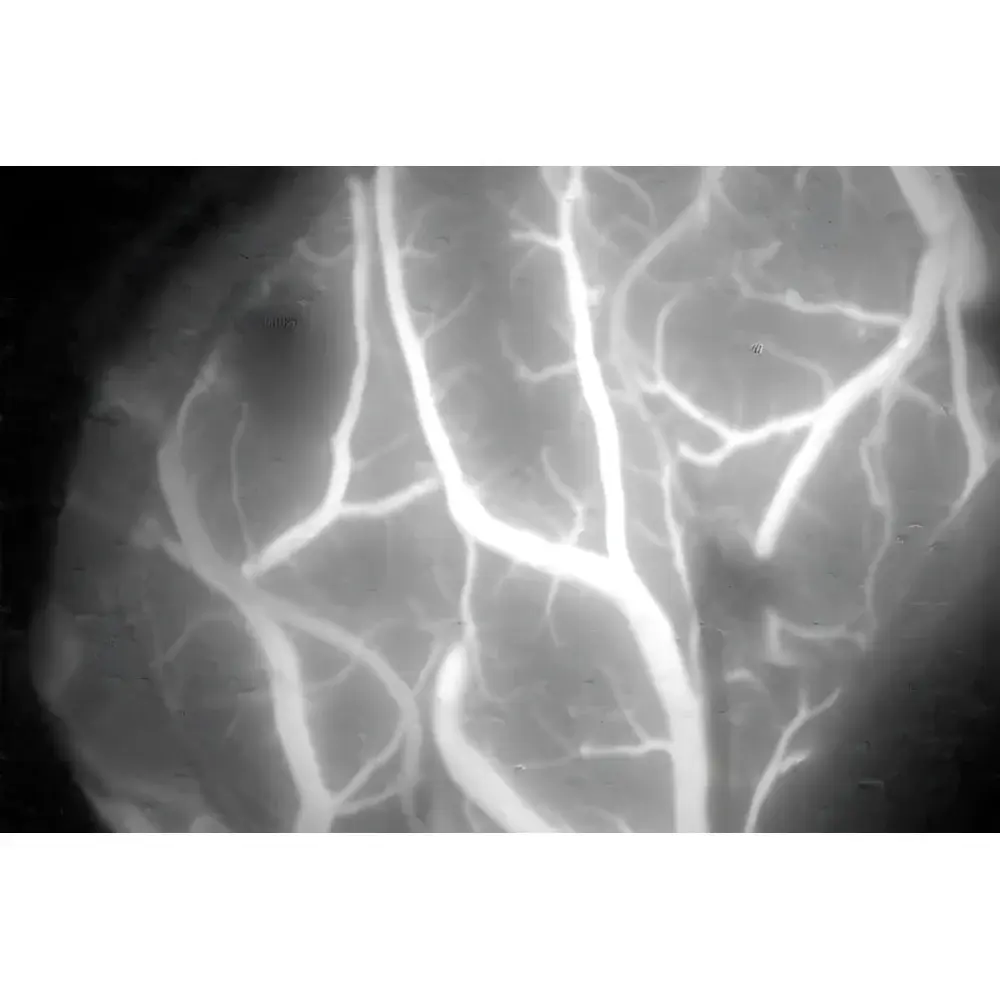
Leica FL800 Near-Infrared Fluorescence Module with 820 nm Excitation
| Brand | Leica |
|---|---|
| Origin | Germany |
| Model | FL800 |
| Excitation Wavelength | 820 nm |
| Application | Intraoperative Fluorescence Angiography (ICG-based) |
| Regulatory Clearance | FDA 510(k) cleared for cardiac, neurosurgical, and orthopedic procedures |
| Compatibility | Leica M520, M525, M720 OH5 surgical microscopes |
| Imaging Integration | Compatible with Leica DI C500 and DI C700 color imaging modules |
| Operating Mode | Toggleable via microscope handle switch (white light ↔ NIR fluorescence) |
Overview
The Leica FL800 is a CE-marked and FDA 510(k)-cleared near-infrared (NIR) fluorescence imaging module engineered for integration into Leica surgical microscopes—including the M520, M525, and M720 OH5 platforms. It delivers precise 820 nm excitation light optimized for indocyanine green (ICG) fluorophore excitation, enabling real-time intraoperative fluorescence angiography (FA) with high signal-to-noise ratio and minimal tissue autofluorescence interference. Unlike broad-spectrum NIR systems, the FL800 employs narrowband 820 nm illumination coupled with matched emission filtering to maximize ICG-specific contrast, supporting quantitative assessment of vascular perfusion dynamics during open and minimally invasive procedures. Its optical architecture is aligned with the Köhler illumination principle and maintains parfocal alignment across white-light and NIR modes—ensuring seamless transition without refocusing or recalibration.
Key Features
- 820 nm laser-diode–based excitation source with stable output power and thermal regulation for consistent ICG excitation across extended operative durations
- Dual-mode operation: Instant toggle between standard white-light microscopy and NIR fluorescence visualization via ergonomic handle-mounted switch—no interruption to surgical workflow
- Integrated spectral filtering: Optimized long-pass emission filter (≥840 nm) paired with bandpass excitation filter (±10 nm bandwidth) to suppress background and enhance ICG signal fidelity
- Native compatibility with Leica DI C500 (for M520/M525) and DI C700 (for M720 OH5) digital imaging modules—enabling simultaneous high-resolution color documentation and synchronized NIR video capture
- Optical path design preserves native magnification, depth of field, and resolution of the host microscope; no compromise on optical performance in fluorescence mode
- FDA 510(k) clearance (K193026) for use in neurosurgery, cardiovascular surgery, and orthopedic reconstructive procedures—validated per ISO 13485 quality management system requirements
Sample Compatibility & Compliance
The FL800 is validated exclusively for use with intravenously administered ICG (e.g., IC-Green™), which exhibits peak absorption at ~805 nm and emission at ~835 nm—making 820 nm excitation optimal for clinical sensitivity. It is not designed for alternative fluorophores (e.g., fluorescein, 5-ALA, or quantum dots) due to spectral mismatch. The module complies with IEC 60601-1 (3rd ed.) for medical electrical equipment safety and IEC 62304 for software lifecycle management. All firmware updates are traceable and version-controlled in accordance with FDA 21 CFR Part 11 requirements for audit trails and electronic records integrity. System validation documentation supports GLP-compliant operating procedures and hospital-based GMP-aligned QA protocols.
Software & Data Management
Fluorescence image acquisition, annotation, and playback are managed through Leica’s LAS X Core software platform (v3.7+), which provides DICOM-SR compliant structured reporting, time-stamped frame logging, and synchronized dual-channel overlay (white light + fluorescence). Video exports support MP4 (H.264) and AVI (uncompressed) formats with embedded metadata—including exposure time, gain, ICG bolus timing, and microscope configuration parameters. Data storage adheres to HIPAA-compliant encryption standards when deployed on Leica-certified workstations or PACS-integrated environments. Audit logs record all user actions—including mode switching, brightness adjustments, and export events—for regulatory review and internal quality audits.
Applications
- Neurosurgery: Real-time cortical and deep vessel perfusion mapping during aneurysm clipping, AVM resection, and tumor resection—supporting identification of collateral flow and ischemic margins
- Cardiovascular surgery: Assessment of bypass graft patency (e.g., LIMA-LAD anastomoses), free flap viability in microvascular reconstruction, and coronary artery bypass graft (CABG) flow confirmation
- Orthopedic surgery: Evaluation of soft-tissue perfusion in complex limb salvage procedures, free fibula flap monitoring, and pedicle screw placement verification via adjacent tissue vascularity
- Plastic & reconstructive surgery: Quantitative perfusion analysis in DIEP, TRAM, and ALT flaps—reducing postoperative partial or total flap loss through objective intraoperative decision support
FAQ
Is the FL800 compatible with non-Leica surgical microscopes?
No. The FL800 is optically and electronically engineered for native integration with Leica M520, M525, and M720 OH5 platforms only. Third-party adaptation is not supported or validated.
Does the FL800 require external cooling or dedicated power conditioning?
No. The module operates within the existing Leica microscope power and thermal management infrastructure; no auxiliary chillers, UPS units, or voltage regulators are required.
Can fluorescence intensity be quantified for longitudinal comparison?
Yes. LAS X Core supports region-of-interest (ROI) intensity profiling with background subtraction, enabling semi-quantitative relative perfusion analysis across timepoints—though absolute concentration calibration is not performed per ICG pharmacokinetic variability.
What is the typical service life of the 820 nm excitation source?
The laser diode is rated for ≥10,000 hours of operational lifetime under standard clinical usage patterns, with automatic power compensation to maintain consistent irradiance over time.
Is training provided for clinical staff and biomedical engineers?
Yes. Leica offers certified on-site installation qualification (IQ), operational qualification (OQ), and user competency training aligned with ISO/IEC 17025 competency assessment criteria.



