
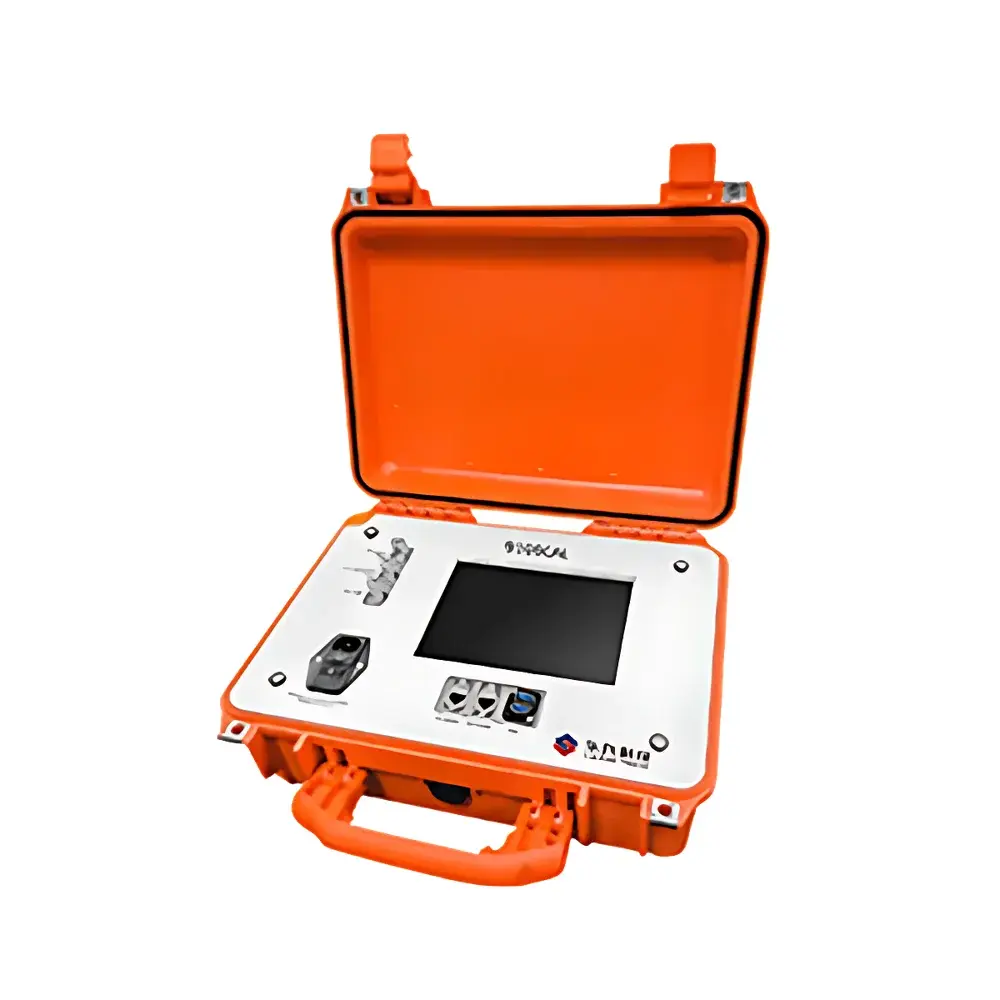
LESHI 9100CAL Portable High-Precision Multi-Channel Gas Dilution Calibrator
| Brand | Leshi |
|---|---|
| Origin | Beijing, China |
| Model | 9100CAL |
| Flow Accuracy | ±0.5% of reading, ±0.1% of full scale |
| Max Total Output Flow | 10 L/min |
| Standard Configuration | 2 MFCs (Zero Air + Calibration Gas) |
| Gas Compensation | Pre-loaded thermal mass flow compensation factors for common gases |
| Communication Interfaces | Analog (4–20 mA / 0–10 V), Modbus RTU (RS-485), Modbus TCP/IP |
| Software Features | Audit-trail-capable calibration logging, certificate ID tagging, traceable session records |
| Compliance | Designed for ISO/IEC 17025, EPA PS-1/PS-2, EN 15267, and QAL1/QAL2 validation workflows |
Overview
The LESHI 9100CAL Portable High-Precision Multi-Channel Gas Dilution Calibrator is an engineered solution for traceable, quantitative gas standard generation in field and laboratory environments. It operates on the principle of dynamic dilution using thermal mass flow control (MFC), enabling precise, real-time blending of high-concentration calibration gases with certified zero air to produce stable, low-level reference standards across multiple concentration ranges. Unlike static gas cylinders, the 9100CAL delivers continuously adjustable output concentrations—typically from sub-ppb to low % v/v—with reproducible accuracy critical for instrument verification, method validation, and regulatory compliance. Its compact, ruggedized chassis supports deployment in mobile labs, stack testing sites, and ISO/IEC 17025-accredited facilities where portability, operational integrity, and metrological traceability are non-negotiable.
Key Features
- Thermal Mass Flow Control Architecture: Dual- or multi-channel MFC configuration (standard 2, expandable to 8) enables independent, simultaneous control of zero air and up to seven calibration gases—including single-component standards and pre-mixed blends.
- High Metrological Fidelity: Each MFC delivers ±0.5% of reading and ±0.1% of full-scale accuracy; system-level calibration includes integrated secondary verification routines to ensure end-to-end traceability beyond individual sensor specifications.
- Gas-Specific Thermal Compensation: Embedded firmware incorporates pre-validated thermal conductivity and specific heat correction factors for >30 common gases (e.g., CO, NO, SO₂, CH₄, NH₃, O₂, VOCs), eliminating manual recalibration when switching analytes.
- Real-Time Instrument Integration: Native support for analog (4–20 mA / 0–10 V), Modbus RTU (RS-485), and Modbus TCP/IP protocols allows bidirectional communication with connected gas analyzers—enabling synchronized data capture during calibration runs.
- Automated Zero-Gas Purge Sequence: Electromechanical valves isolate each MFC post-run; programmable zero-air purge cycles clean internal pathways, minimizing cross-contamination and extending MFC service life under repeated low-concentration operation.
- Embedded Audit-Ready Software: All calibration sessions log timestamp, operator ID, certificate numbers, gas cylinder lot IDs, target concentrations, actual flows, and analyzer response values—structured for GLP/GMP-compliant reporting and 21 CFR Part 11-ready electronic signatures (when deployed with validated IT infrastructure).
Sample Compatibility & Compliance
The 9100CAL accommodates a wide range of compressed gas sources—including lecture bottles, aluminum cylinders, and high-pressure steel vessels—via standardized CGA or DIN fittings. It supports both inert and reactive gases, provided compatible wetted materials (316L stainless steel, EPDM/Viton seals) are selected per application. The system conforms to foundational requirements of ISO/IEC 17025:2017 (Clause 6.4.10 on reference material traceability), EPA Performance Specification 1 (PS-1) and PS-2 for CEMS calibration, EN 15267-3 for automated monitoring systems, and EU Directive 2010/75/EU (IED) QAL1/QAL2 procedures. While not itself a certified reference material producer, it functions as a primary dilution platform within accredited calibration hierarchies when used with NIST-traceable or ISO 6142-certified parent gases.
Software & Data Management
The embedded Windows IoT-based interface provides intuitive touchscreen control for defining dilution ratios, setting flow profiles, scheduling purge sequences, and initiating calibration logs. All session data exports natively to CSV or XML formats with embedded metadata (e.g., ISO/IEC 17025 clause references, uncertainty budgets per ISO/IEC GUIDE 98-3). Optional API integration supports ingestion into LIMS or ELN platforms via RESTful endpoints. Audit trails record user actions, parameter changes, and system events with immutable timestamps—fully aligned with ALCOA+ principles (Attributable, Legible, Contemporaneous, Original, Accurate, Complete, Consistent, Enduring, Available) for regulated environments.
Applications
- QAL1/QAL2 certification of Continuous Emission Monitoring Systems (CEMS) per EN 14181 and EPA 40 CFR Part 60.
- Field verification of portable multi-gas analyzers (e.g., FTIR, NDIR, FID, electrochemical sensors) used in industrial hygiene, landfill monitoring, and fugitive emission surveys.
- Method validation and linearity assessment for environmental laboratories operating under ISO/IEC 17025 accreditation.
- Dynamic span and zero checks for fire safety test chambers requiring repeatable, low-concentration hydrocarbon or toxic gas challenges.
- Supporting R&D workflows involving gas-phase reaction kinetics, catalyst testing, and sensor development where controlled, variable-stoichiometry gas mixtures are essential.
FAQ
What gas standards can the 9100CAL generate?
It produces dynamically diluted standards from any certified calibration gas (single or multi-component) mixed with zero air—covering concentration ranges from sub-ppb to ~5% v/v depending on MFC selection and dilution ratio.
Does the 9100CAL require periodic recalibration of its MFCs?
Yes—annual traceable recalibration against NIST-traceable flow standards is recommended; the embedded software supports secondary adjustment routines to maintain system-level accuracy between formal calibrations.
Can it be used with corrosive or condensable gases?
Only with optional chemically resistant wetted-path configurations (e.g., Hastelloy C-276, Kalrez seals); standard units are rated for non-corrosive, non-condensing gases at ambient dew point.
Is remote operation supported?
Yes—via Modbus TCP/IP or secure VPN-connected web interface; full control and real-time data streaming are available without local physical access.
How is measurement uncertainty quantified for generated standards?
Uncertainty budgets follow ISO/IEC GUIDE 98-3 and incorporate contributions from MFC accuracy, gas purity, temperature/pressure drift, and mixing homogeneity—automatically calculated and logged per session.







