
Protea ProMass Online Quadrupole Mass Spectrometer
| Brand | Protea |
|---|---|
| Origin | United Kingdom |
| Model | ProMass |
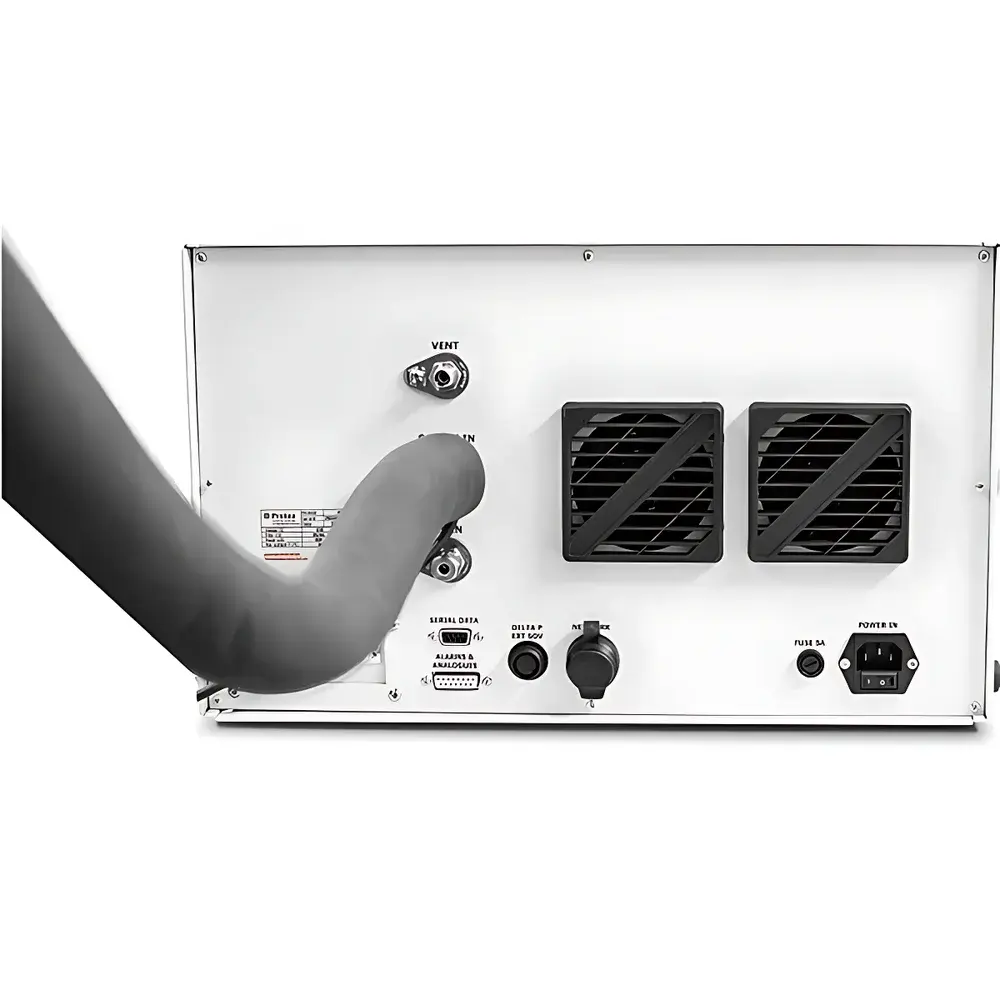
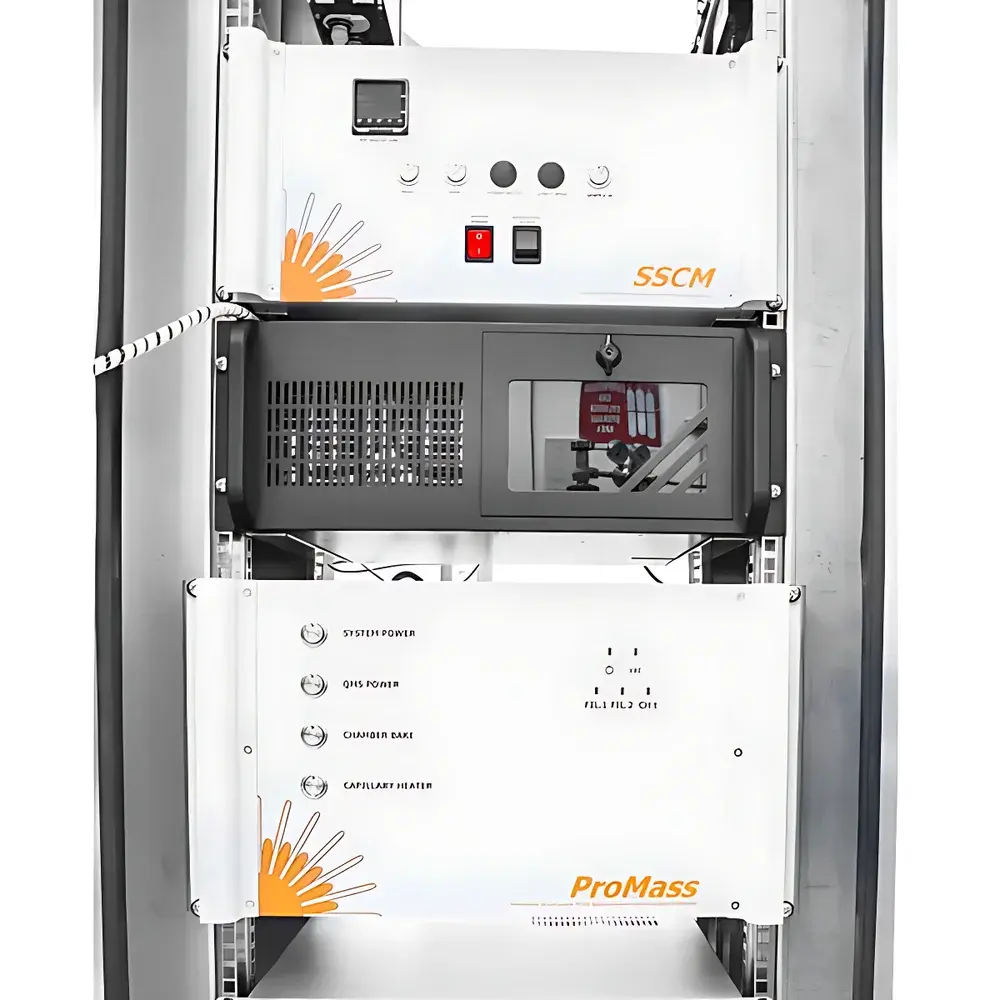
| Form Factor | Semi-portable (carrying case or 6U 19″ rack-mount) |
| Detection Principle | Quadrupole Mass Spectrometry (QMS) |
| Mass Range | Adjustable (typical range 1–100 u or 1–300 u, configurable per application) |
| Detection Limit | Sub-ppb to low-ppb level (dependent on gas species and integration time) |
| Response Time | < 100 ms for single-ion monitoring |
| Ion Source | Electron Impact (EI), 70 eV standard |
| Detector | Dual-mode — Faraday Cup + Secondary Electron Multiplier (SEM) |
| Vacuum System | Integrated turbomolecular pump with backing pump |
| Compliance | CE-marked, RoHS-compliant, designed for industrial environments per IEC 61000-6-2/6-4 |
Overview
The Protea ProMass Online Quadrupole Mass Spectrometer is an engineered solution for real-time, high-fidelity gas-phase compositional analysis in demanding industrial and environmental process settings. Based on robust quadrupole mass spectrometry (QMS) technology, the ProMass operates by ionizing gaseous samples via electron impact (EI), separating ions according to their mass-to-charge ratio (m/z) using a radiofrequency (RF) and direct current (DC) stabilized quadrupole mass filter, and detecting resultant ion currents with dual-mode detection—Faraday cup for high-abundance stability and secondary electron multiplier (SEM) for trace-level sensitivity. Its compact, vibration-resistant mechanical architecture supports both continuous online operation and semi-portable deployment, enabling rapid installation at process taps, stack monitors, or mobile laboratory platforms without requiring external vacuum infrastructure.
Key Features
- Semi-portable form factor: Available in ruggedized carry-case configuration or as a 6U 19″ rack-mount module, supporting flexible integration into control rooms, mobile labs, or field-deployed skids.
- Dual-mode ion detection: Simultaneous Faraday cup and SEM operation ensures linear dynamic range spanning eight orders of magnitude—enabling quantitative measurement from major components (e.g., N₂, O₂, CH₄) down to sub-ppb contaminants (e.g., NH₃, H₂S, siloxanes).
- Direct capillary inlet: Eliminates need for gas chromatography pre-separation or complex sample conditioning; enables millisecond-scale response for transient event capture (e.g., leak surges, reactor upsets).
- Configurable mass range: Factory-set or user-adjustable m/z range (e.g., 1–100 u for H₂/He/O₂/N₂/CO/CO₂ applications; extended to 1–300 u for VOCs, BTEX, or halogenated compounds).
- Integrated vacuum system: Self-contained turbomolecular pumping package with oil-free backing pump ensures stable base pressure (<5×10⁻⁷ mbar) and long-term operational reliability under variable ambient conditions.
- Pre-loaded spectral libraries: Application-specific mass spectral databases (e.g., semiconductor etch gases, refinery off-gases, biogas impurities) reduce method development time and support automated peak identification and quantification.
Sample Compatibility & Compliance
The ProMass accepts raw, unfiltered process streams across a wide temperature (−20 °C to +60 °C) and pressure (50–150 kPa abs) envelope. It is compatible with corrosive, condensable, and reactive gases—including H₂, Cl₂, HF, NH₃, and silanes—when paired with chemically resistant inlet tubing (e.g., SilcoNert®-treated stainless steel) and optional heated transfer lines. The instrument meets CE marking requirements under the EU Electromagnetic Compatibility Directive (2014/30/EU) and Low Voltage Directive (2014/35/EU). Its hardware and firmware architecture supports audit-ready data integrity per FDA 21 CFR Part 11 when used with validated software configurations, and it is routinely deployed in GLP-compliant environmental monitoring programs aligned with ISO 17025 and EPA Method TO-15/TO-17 frameworks.
Software & Data Management
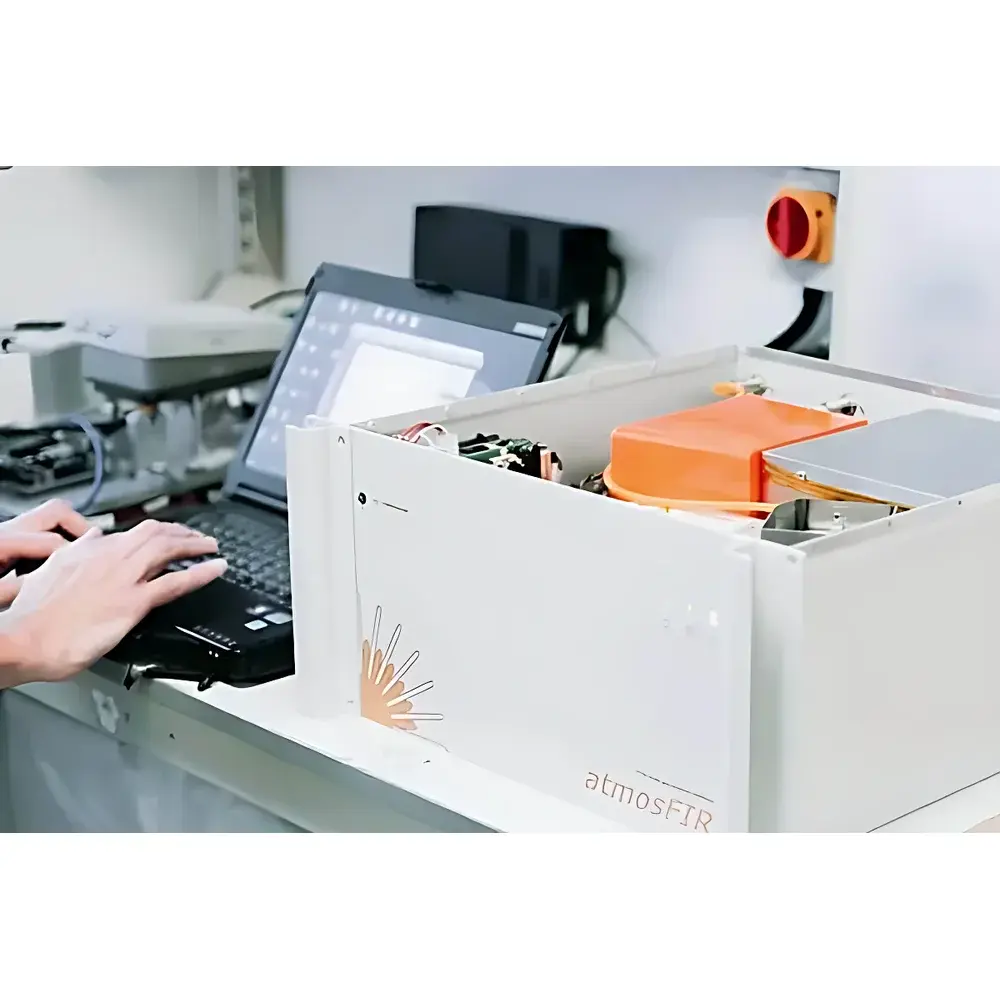
The ProMass is operated via Protea’s proprietary MassSpec Control Suite—a Windows-based application delivering full instrument control, real-time spectral visualization, multi-point calibration management, and automated report generation. The software supports OPC UA and Modbus TCP protocols for seamless integration into DCS/SCADA systems, enabling live transmission of concentration values (ppm/ppb), partial pressures, and diagnostic flags (e.g., filament status, vacuum integrity). All raw spectra and processed results are timestamped, digitally signed, and stored in a structured SQLite database with configurable retention policies. Audit trails record user actions, parameter changes, and calibration events—fully traceable for regulatory review.
Applications
- Semiconductor manufacturing: Real-time monitoring of etch and chamber purge gases (NF₃, SF₆, C₂F₆, Cl₂) for endpoint detection and contamination control.
- Hydrogen production & fuel quality: Quantification of CO, CO₂, CH₄, O₂, and H₂O in PEM electrolyzer output and refueling station streams per ISO 8573-8 and SAE J2719.
- Environmental emissions monitoring: Continuous measurement of BTEX, VOCs, NOₓ precursors, and greenhouse gases (CH₄, N₂O) from stacks, landfills, and biogas upgrading units.
- Chemical process safety: Leak detection and composition verification in ethylene oxide, propylene oxide, and chlorine derivative synthesis lines.
- Food packaging & modified atmosphere analysis: Verification of residual O₂ and CO₂ levels in sealed packages to ensure shelf-life compliance.
- Medical breath research: High-temporal-resolution profiling of exhaled volatile organic compounds (VOCs) in clinical trials under IRB-approved protocols.
FAQ
What mass range options are available for the ProMass?
Standard configurations support 1–100 u or 1–300 u; custom ranges can be factory-configured based on target analytes and regulatory requirements.
Can the ProMass operate continuously in harsh industrial environments?
Yes—the instrument is rated IP54, features shock-mounted internal components, and maintains stable performance across ambient temperatures from −20 °C to +50 °C and relative humidity up to 90% non-condensing.
Is method validation support provided for regulated applications?
Protea supplies IQ/OQ documentation templates, calibration certificates traceable to NIST standards, and application notes aligned with ASTM D6348, ISO 13864, and USP <1225> guidelines.
How is data security and user access managed?
Role-based login, encrypted local storage, and optional LDAP/Active Directory integration ensure secure, compliant access control and data handling.
Does the ProMass require carrier gas or consumables during routine operation?
No—unlike GC-MS systems, the ProMass uses direct electron ionization and requires no helium, hydrogen, or nitrogen carrier gas; only periodic filament replacement (typically every 12–24 months under normal use).



