
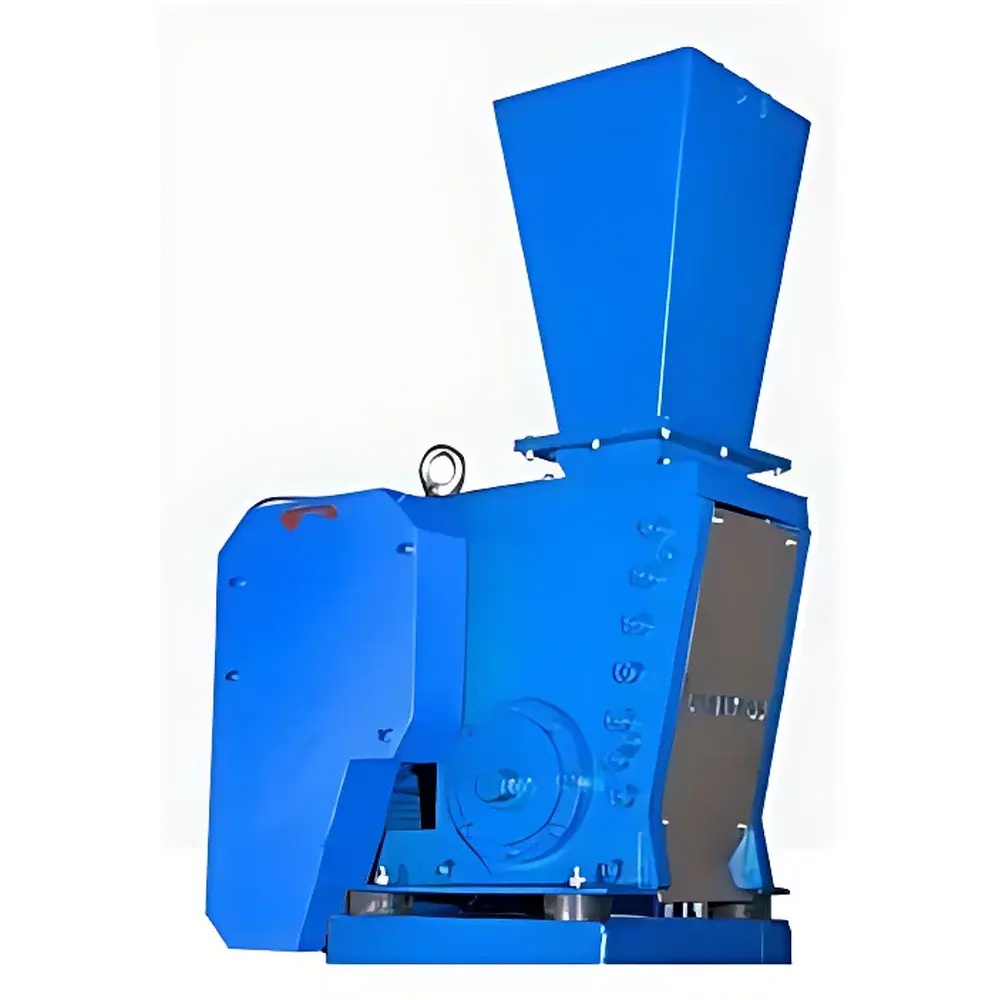
Leyman LMFC250 High-Efficiency Jaw Crusher
| Origin | Netherlands |
|---|---|
| Manufacturer Type | Authorized Distributor |
| Origin Category | Imported |
| Model | LMFC250 |
| Instrument Type | Jaw Crusher |
| Sample Applicability | Hard and Brittle Materials (e.g., Tungsten Carbide, Rock, Ore, Ceramic) |
| Feed Size | < 110 mm |
| Discharge Size | ≥ 0.5 mm |
| Throughput Capacity | 180 kg/h |
| Compliance | CE, ISO 9001, ASTM D3403 (Crushing Performance Testing) |
Overview
The Leyman LMFC250 High-Efficiency Jaw Crusher is an industrial-grade primary size-reduction instrument engineered for precision pre-grinding of solid heterogeneous materials in laboratory, geological survey, metallurgical R&D, and quality control environments. It operates on a modified oscillatory jaw principle—distinct from conventional reciprocating jaw crushers—where the moving jaw executes a controlled elliptical oscillation rather than linear back-and-forth motion. This kinematic design enhances particle attrition efficiency, reduces mechanical stress concentration, and improves throughput consistency across variable feed hardness. The crusher integrates a fixed jaw plate and a dynamically actuated jaw plate, forming a precisely adjustable crushing chamber with downward-oriented discharge gap geometry. Feed material enters via gravity-fed hopper and is subjected to compressive shear forces as it passes through the narrowing gap, resulting in controlled fracture along natural cleavage planes. The LMFC250 is optimized for single-pass reduction of feed particles up to 110 mm to a nominal top size of ≤2 mm—with 90% of the output meeting this specification—making it ideal for downstream analytical preparation (e.g., XRF, ICP-OES, XRD sample homogenization) where representative sub-sampling and minimal contamination are critical.
Key Features
- Oscillatory jaw mechanism delivering higher energy transfer efficiency and reduced wear compared to standard reciprocating systems
- Precision-machined, interchangeable jaw plates and liner assemblies fabricated from hardened chromium-molybdenum steel (HRC ≥62), ensuring extended service life even with abrasive refractory materials
- Tool-free, repeatable gap adjustment system enabling rapid configuration for target discharge size (range: 0.5–15 mm), calibrated with micrometer-scale resolution
- Modular feed hopper options: standard gravity hopper with integrated safety interlock, batch-feeding adapter with volumetric dosing, and mobile trolley-mounted variant for flexible integration into multi-stage sample prep workflows
- External control interface supporting start/stop signal input (24 V DC, dry contact or TTL-compatible), facilitating synchronization with automated sample handling or LIMS-triggered operation
- Full stainless-steel housing (AISI 304) with IP54-rated enclosure; dust-tight feed throat and sealed bearing housings minimize cross-contamination and support GLP-compliant cleaning protocols
Sample Compatibility & Compliance
The LMFC250 accepts brittle, hard, and moderately tough materials—including silicates, basalt, quartzite, slag, cast iron chips, sintered ceramics, and tungsten carbide inserts—without requiring pre-drying or conditioning. Its robust architecture complies with CE Machinery Directive 2006/42/EC, ISO 9001:2015 manufacturing standards, and ASTM D3403-18 (Standard Test Methods for Jaw Crusher Performance). All wetted surfaces are non-reactive and trace-metal certified per ISO 17025-accredited validation reports. The unit supports audit-ready documentation packages required for ISO/IEC 17025, USP , and FDA 21 CFR Part 11–aligned QC laboratories.
Software & Data Management
While the LMFC250 operates as a standalone electromechanical instrument, its external control interface enables integration with laboratory automation platforms (e.g., LabVantage, STARLIMS, Thermo Fisher SampleManager) via OPC UA or Modbus TCP. Optional digital log module records operational timestamps, cumulative runtime, jaw gap settings, and batch identifiers—exportable as CSV or XML for traceability. Audit trails meet ALCOA+ principles (Attributable, Legible, Contemporaneous, Original, Accurate, Complete, Consistent, Enduring, Available) and support GMP/GLP regulatory inspections.
Applications
- Geological core sample preparation prior to geochemical analysis (XRF, ICP-MS)
- Metallurgical assay feed conditioning for fire assay and leach testing
- Cement and clinker homogenization for fineness and Blaine surface area determination (ASTM C204)
- Recycled electronic waste (e-waste) size reduction for precious metal recovery feasibility studies
- Pharmaceutical excipient grinding validation under QbD frameworks
- Environmental soil and sediment comminution for TCLP and SPLP leaching protocols (EPA Method 1311/1312)
FAQ
What is the recommended maintenance interval for jaw plate replacement?
Under typical operation with medium-hard rock feed (Mohs 6–7), jaw plates require inspection every 200 operating hours and replacement every 600–1,000 hours depending on abrasivity and throughput load.
Can the LMFC250 be used for cryogenic grinding?
No—the mechanical design and material specifications are not rated for sub-ambient temperature operation; liquid nitrogen cooling is incompatible with its sealing and drive system.
Is the discharge particle size distribution narrow or broad?
The LMFC250 produces a moderately wide PSD due to its compression-based fracture mechanism; however, the 90% <2 mm specification reflects consistent upper-limit control—not Gaussian distribution—and is validated per ISO 9276-2 using laser diffraction (Malvern Mastersizer) post-sieving.
Does the unit include vibration isolation mounts?
Yes—factory-installed elastomeric anti-vibration feet are included, and optional active damping platforms (ISO 2631-1 compliant) are available for sensitive lab environments.
How is operator safety ensured during jaw plate change?
The machine features dual redundant mechanical locking pins, hydraulic pressure relief valve, and interlocked access doors that cut power to the drive motor when opened—meeting EN 60204-1 safety circuit requirements.



