
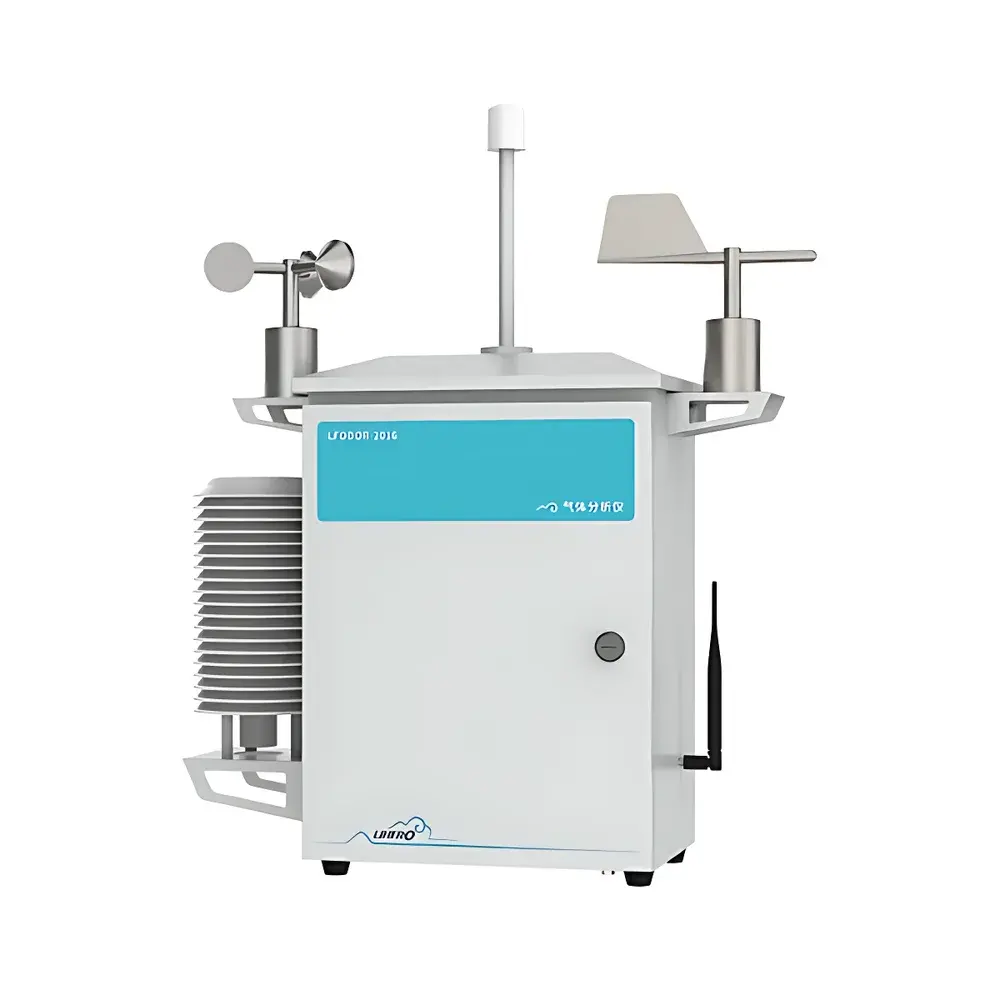
Lihero LFODOR-2016 Multicomponent Online Gas Analyzer
| Brand | Lihero |
|---|---|
| Model | LFODOR-2016 |
| Detection Principle | Electrochemical, Semiconductor, and PID Sensing |
| Configuration | Fixed Online Installation |
| Sensor Types | NH₃, H₂S, TVOC, Odor Concentration (OUₑ), with Optional Expansion for CH₃SH, CH₃SCH₃, CH₃SSCH₃, CS₂, C₈H₈, (CH₃)₃N |
Overview
The Lihero LFODOR-2016 Multicomponent Online Gas Analyzer is an engineered solution for continuous, real-time monitoring of odor-causing and hazardous gaseous pollutants in ambient air, wastewater treatment facilities, composting plants, landfills, and industrial emission stacks. It operates on a multi-sensor architecture integrating electrochemical cells for selective detection of reactive gases (e.g., NH₃ and H₂S), metal-oxide semiconductor (MOS) elements for broad-spectrum volatile organic compound (VOC) response, and photoionization detection (PID) for quantification of total volatile organic compounds (TVOC) and low-ionization-potential compounds. The instrument delivers standardized odor concentration (OUₑ) estimation per EN 13725:2022 methodology by correlating sensor outputs with reference olfactometry data. Designed for unattended operation in demanding environmental conditions, the LFODOR-2016 features active sampling via an integrated diaphragm pump, temperature-stabilized sensor chambers, and adaptive zero-point compensation—ensuring long-term baseline stability without manual intervention.
Key Features
- Multi-principle sensing platform: Simultaneous deployment of electrochemical, MOS, and PID technologies enables reliable discrimination and quantification across diverse chemical classes.
- Online fixed installation architecture: Engineered for permanent mounting in outdoor enclosures or process ducts, compliant with IP65-rated environmental protection.
- Automatic zero calibration cycle: Scheduled or event-triggered zero-point adjustment using clean air purge, minimizing drift and reducing field maintenance frequency.
- Integrated thermal management system: Precision-controlled sensor housing maintains optimal operating temperature (±0.5 °C), mitigating thermal cross-sensitivity and improving measurement reproducibility.
- Modular sensor expansion capability: Standardized sensor bays support hot-swappable modules; additional analytes—including methyl mercaptan (CH₃SH), dimethyl sulfide (CH₃SCH₃), carbon disulfide (CS₂), styrene (C₈H₈), and trimethylamine ((CH₃)₃N)—can be added without hardware redesign.
- Rapid system response: T₉₀ < 60 seconds for most target gases under standard flow conditions (0.5–1.0 L/min), enabling dynamic emission tracking and compliance reporting.
Sample Compatibility & Compliance
The LFODOR-2016 is validated for use with ambient air, ducted exhaust streams, and biofilter outlet gases. Sample conditioning includes particulate filtration (≤1 µm), moisture removal via Nafion™ membrane dryer (optional), and flow regulation to maintain laminar, pressure-compensated aspiration. Data output complies with EN 13725:2022 for odor concentration reporting and supports alignment with ISO 16000-29 (indoor air VOC monitoring) and EPA Method TO-15 (for PID-quantified VOCs). The analyzer meets CE marking requirements (EMC Directive 2014/30/EU and Low Voltage Directive 2014/35/EU) and is designed to operate within GLP-compliant monitoring frameworks where audit-ready calibration logs and sensor lifetime tracking are required.
Software & Data Management
The embedded firmware provides configurable alarm thresholds (pre-set and user-defined), real-time trend visualization, and dual-channel analog outputs (4–20 mA) for integration into SCADA or DCS systems. Local data logging stores ≥30 days of 1-minute averaged readings (NH₃, H₂S, TVOC, OUₑ, temperature, humidity, flow rate). Remote access is supported via Modbus RTU (RS-485) and optional Ethernet/Wi-Fi connectivity. Software tools include Lihero GasConfig Suite for sensor configuration, calibration certificate generation, and export of CSV/Excel-compatible reports traceable to internal timestamps and operator IDs—facilitating adherence to FDA 21 CFR Part 11 requirements when deployed in regulated environments.
Applications
- Odor impact assessment at municipal wastewater treatment plants and anaerobic digesters.
- Real-time emission monitoring at landfill gas collection systems and leachate treatment units.
- Process control and leak detection in chemical manufacturing, food processing, and rendering facilities.
- Indoor air quality (IAQ) surveillance in pharmaceutical cleanrooms and biotech laboratories where amine or sulfur-based contaminants pose contamination risks.
- Regulatory compliance reporting for local environmental agencies requiring continuous odor concentration (OUₑ) and H₂S/NH₃ data per national emission standards.
FAQ
What gas species are natively supported without hardware modification?
NH₃, H₂S, TVOC, and odor concentration (OUₑ) are measured using the standard sensor array. All other listed compounds require optional sensor module installation.
Is the instrument suitable for high-humidity environments?
Yes—when equipped with the optional Nafion™ membrane dryer and temperature-controlled sample path, it maintains accuracy at relative humidity up to 95% RH (non-condensing).
How frequently must calibration be performed?
Zero calibration occurs automatically every 24 hours; span calibration is recommended quarterly or after sensor replacement, following ISO 6141 traceable gas standards.
Can raw sensor signals be accessed for custom modeling?
Yes—digital RS-485 output provides access to individual sensor voltage outputs, temperature-compensated raw values, and diagnostic flags for advanced data fusion applications.
Does the system support remote firmware updates?
Firmware upgrades are supported via secure HTTPS interface through the web-based configuration portal, with version rollback capability and SHA-256 integrity verification.
Related Products







