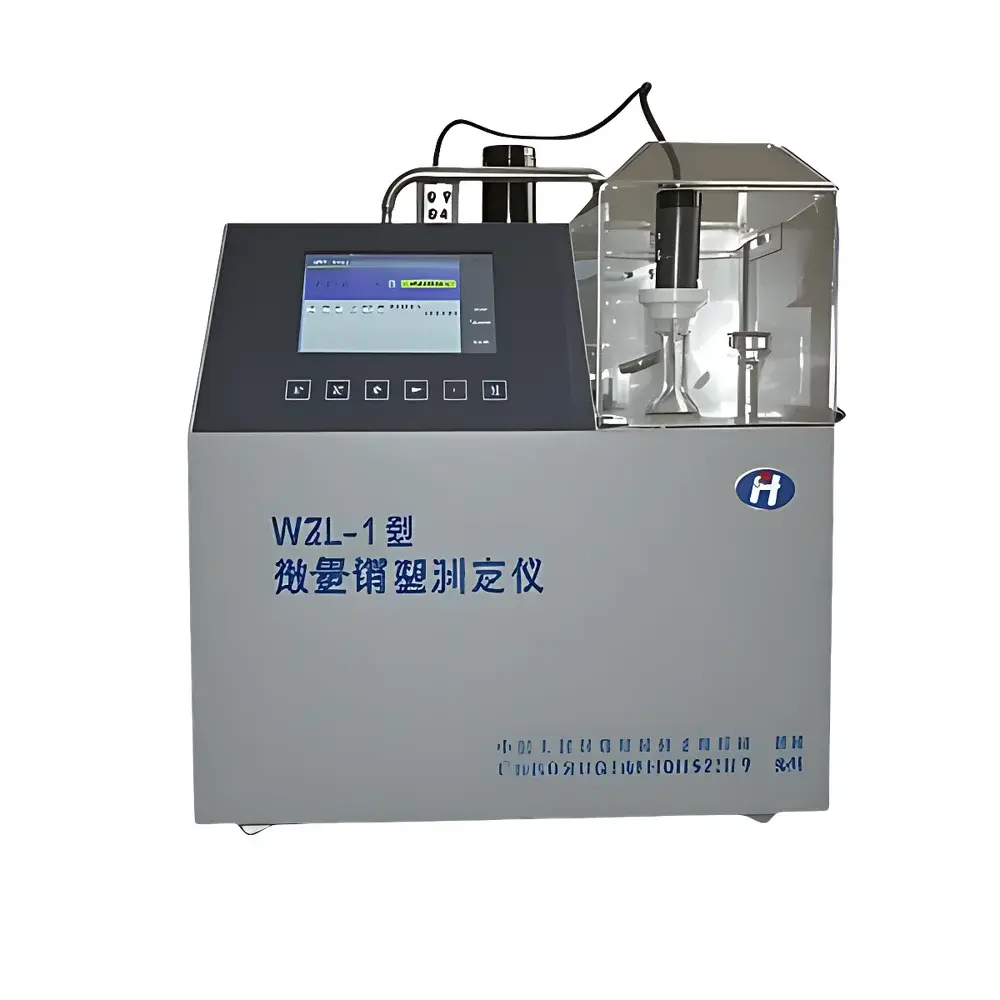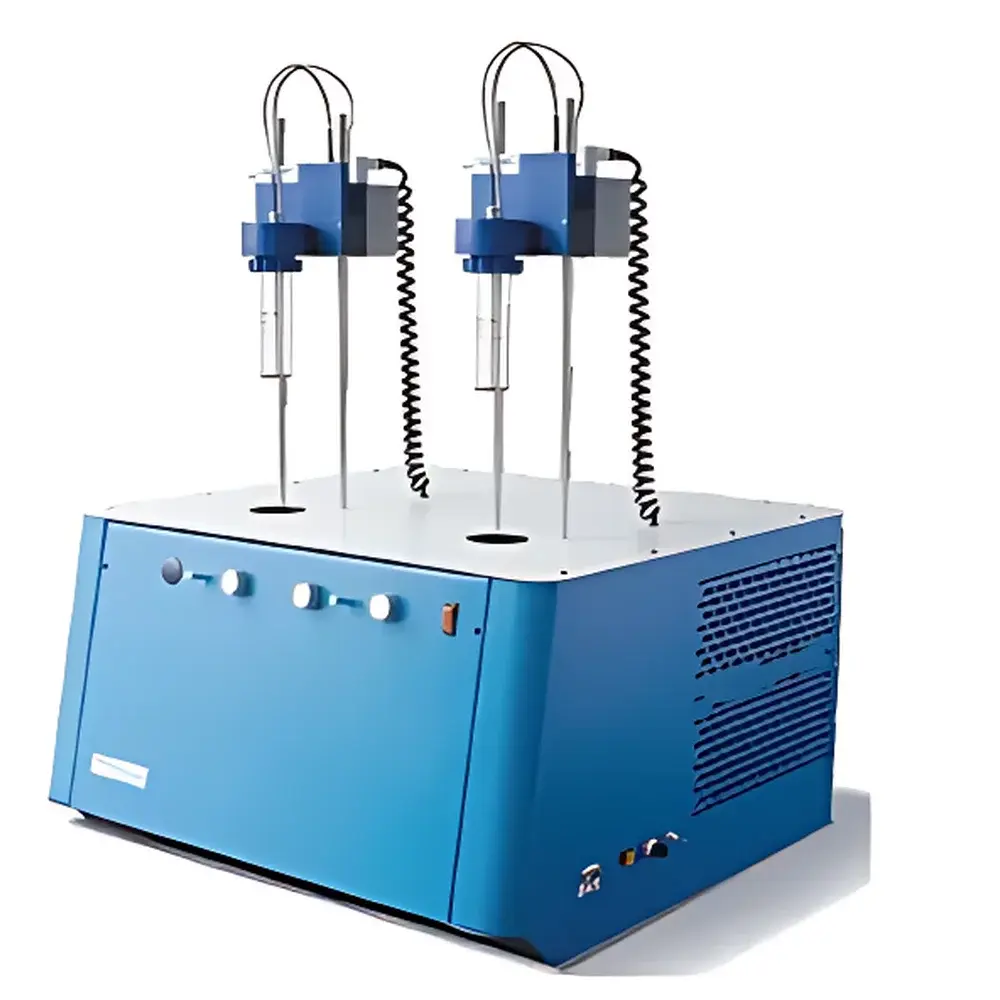
Linetechnic NewLab 100 Automated Cloud Point Analyzer (ASTM D2500/D5771 Compliant)
| Brand | Linetechnic |
|---|---|
| Origin | Switzerland |
| Model | NewLab 100 / D2500 |
| Temperature Range | +80 °C to –80 °C |
| Cooling System | Single-stage or dual-stage compressor |
| Temperature Sensor | Pt100 Class A |
| Optical Detection | Pulsed IR fiber-optic probe with silver-coated sample tube bottom |
| Temp. Resolution | 0.06 °C |
| Temp. Accuracy | ±0.1 °C |
| Compliance | ASTM D2500, D5771, D5772, D5773 |
| Software | LabLink (Windows-compatible, multi-head control up to 10 units) |
| Data Storage | >60,000 assays, Excel-exportable, LIMS-integrated |
| Dimensions (1-head) | 66 × 60 × 80 cm |
| Weight (1-head, single-stage) | 70 kg |
Overview
The Linetechnic NewLab 100 Automated Cloud Point Analyzer is a precision-engineered instrument designed for fully automated, optically based cloud point determination in petroleum-based and bio-derived fuels and lubricants. It operates on the principle of optical turbidity detection: as a sample cools under controlled conditions, wax crystals begin forming at the cloud point—causing light scattering at the silver-coated bottom of the standardized test tube. A pulsed infrared fiber-optic probe detects this change in reflectance with high signal-to-noise ratio, independent of sample color or opacity. The system conforms strictly to international standard methodologies—including ASTM D2500 (petroleum products), ASTM D5771 (diesel fuels), ASTM D5772/D5773 (biodiesel), IP 219/444–446, DIN 51597, and ISO 3015—ensuring regulatory acceptability in global refinery, fuel specification, and quality assurance laboratories.
Key Features
- Optical detection architecture using a coaxial IR fiber-optic probe, eliminating subjectivity and operator dependency in endpoint identification
- Pt100 Class A temperature sensor in direct contact with the sample tube base, enabling traceable, high-fidelity thermal measurement
- Modular cooling system: single-stage compressor (–40 °C minimum) or dual-stage compressor (–85 °C minimum), both fluorocarbon-free and compliant with EU F-Gas Regulation (EU No 517/2014)
- Standardized test tubes with precisely dimensioned silver-coated bottoms and anti-scratch protective film, calibrated per ASTM D2500 geometry requirements
- Thermal resolution of 0.06 °C and accuracy of ±0.1 °C across the full operating range (+80 °C to –80 °C), verified per ISO/IEC 17025 calibration protocols
- Multi-head capability: LabLink software supports simultaneous control of up to 10 analysis heads, enabling parallel testing for high-throughput QC environments
Sample Compatibility & Compliance
The NewLab 100 accommodates a broad spectrum of hydrocarbon-based and oxygenated fuels—including conventional diesel, jet fuel (Jet A-1, JP-8), biodiesel (B100, B5), crude oil fractions, engine oils, transmission fluids, and additive packages. Its optical detection method ensures reliable performance regardless of inherent sample coloration or fluorescence, unlike visual or video-based systems. All measurement routines are preconfigured to match exact procedural sequences defined in referenced standards, including mandatory pre-conditioning steps (e.g., sample homogenization, specified cooling ramp rates, dwell times, and endpoint confirmation criteria). The instrument’s firmware and software architecture support audit-ready operation under GLP and GMP frameworks, with full electronic record retention, user authentication, and 21 CFR Part 11–compliant data integrity controls when deployed with validated LabLink configurations.
Software & Data Management
LabLink is a Windows-native application (compatible with Windows 10/11, 64-bit) engineered for analytical traceability and laboratory integration. It provides three functional modules: Analysis, Diagnostics, and Calibration. The Analysis menu includes certified standard methods (ASTM, IP, ISO, EN, DIN), customizable rapid-cool protocols for R&D applications, and ΔT-controlled bath–sample differential modes. Diagnostic tools allow real-time monitoring of analog/digital I/O states and sensor voltage outputs. Calibration routines support automatic Pt100 verification, date-stamped calibration history export, and user-defined offset compensation. All results are stored in a relational database with timestamped metadata (operator ID, sample ID, method version, environmental logs). Data exports are natively compatible with Microsoft Excel (.csv), and the system supports bidirectional communication with LIMS via ASTM E1384 or HL7-compliant interfaces. Storage capacity exceeds 60,000 complete assay records, each retaining raw sensor traces, thermal profiles, and decision logic timestamps.
Applications
- Refinery quality control: Monitoring cloud point stability of finished diesel and heating oils against seasonal specifications (e.g., EN 590, ASTM D975)
- Biodiesel certification: Verifying compliance with ASTM D6751 and EN 14214 low-temperature operability limits
- Fuel formulation R&D: Evaluating cold-flow improver (CFI) efficacy via comparative cooling-rate studies
- Crude assay laboratories: Screening paraffin content impact on downstream distillate cloud behavior
- Lubricant OEM testing: Assessing base oil and additive interactions affecting low-temperature clarity
- Third-party certification labs: Supporting ISO/IEC 17025-accredited testing with full digital chain-of-custody
FAQ
Does the NewLab 100 require manual endpoint confirmation?
No. Endpoint detection is fully automated via optical reflectance threshold crossing, eliminating observer bias and inter-laboratory variability.
Can it measure both cloud point and pour point?
The NewLab 100 is optimized for cloud point per ASTM D2500/D5771. For pour point (ASTM D97), Linetechnic offers the complementary NewLab Pour Point series—designed with mechanical tilt detection and distinct thermal profiling.
Is external pre-heating required?
Pre-heating is integrated into standard methods where mandated (e.g., ASTM D2500 specifies 45 °C hold); the instrument includes a built-in heater module. External pre-heaters are optional for non-standard conditioning protocols.
How is temperature calibration maintained over time?
Each Pt100 sensor undergoes automatic self-calibration before every run. Full calibration history—including date, deviation, and correction factors—is logged, printable, and exportable for internal QA audits.
What LIMS interfaces are supported?
LabLink supports ODBC, ASTM E1384 (standard for lab instruments), and custom REST API integration. Validation documentation for 21 CFR Part 11 and Annex 11 compliance is available upon request for regulated environments.