Liquid Instruments Moku:Pro Boxcar Averager
| Brand | Liquid Instruments |
|---|---|
| Origin | Australia |
| Model | Moku:Pro Boxcar Averager |
| Type | Digital Boxcar Averager with Integrated Lock-in Demodulation and PID Control |
| Compliance | CE, RoHS, FCC Class A |
| Software Platform | Moku Cloud Compile (MCC) |
| Deployment | FPGA-based real-time signal processing |
| Output Modes | Digital (USB/Ethernet), Analog (BNC, ±10 V, 16-bit DAC) |
| Triggering | External TTL, Internal clock, or event-driven |
| Time Window Resolution | Sub-nanosecond timing precision |
| Integration Period Range | 1 ns to 10 s |
| SNR Improvement | Up to 60 dB for low-duty-cycle pulsed signals |
| Supported Platforms | Moku:Pro, Moku:Lab, Moku:Go |
Overview
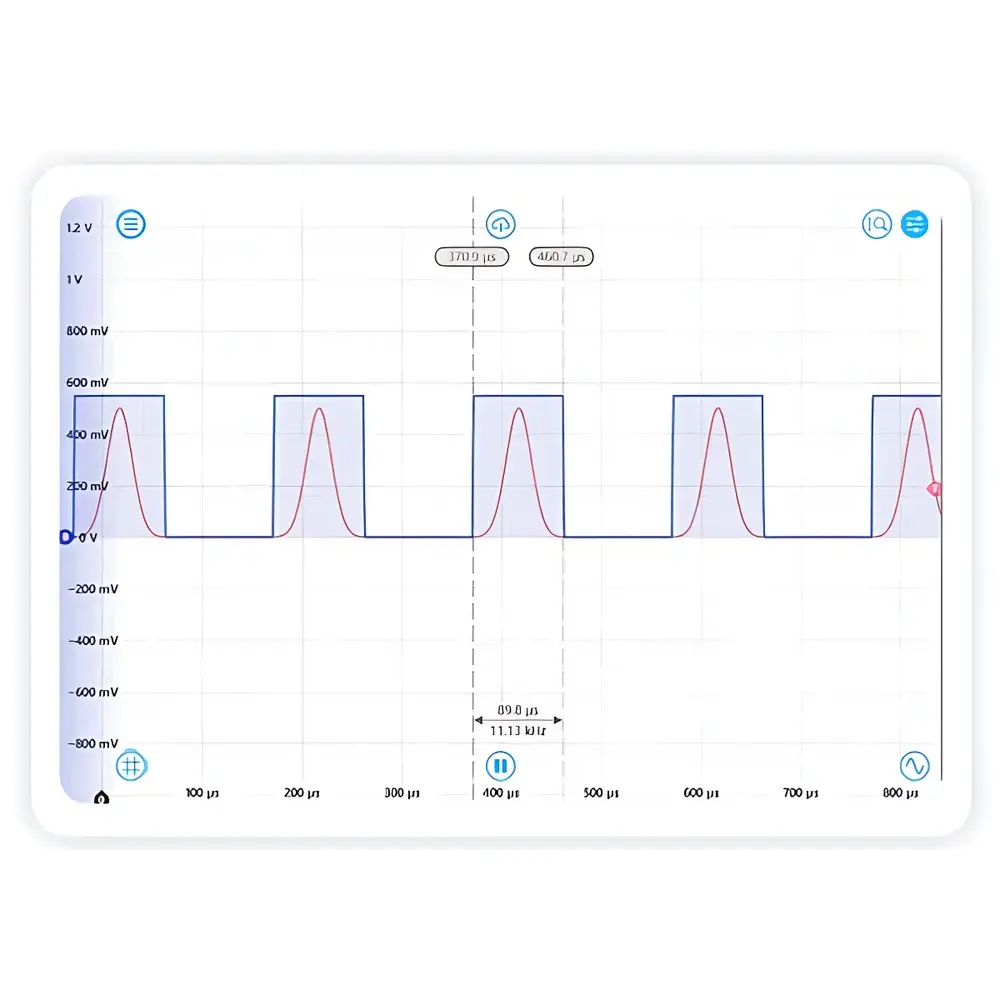
The Liquid Instruments Moku:Pro Boxcar Averager is a high-performance, FPGA-accelerated digital signal conditioning instrument engineered for ultra-low-duty-cycle signal acquisition in time-domain metrology. Unlike conventional digitizers or oscilloscopes—which sample continuously and discard unused data—this boxcar averager operates on the principle of *gated integration*: it selectively integrates only within user-defined time windows synchronized to a periodic trigger (e.g., laser pulse, mechanical modulation, or RF burst). This architecture delivers exceptional signal-to-noise ratio (SNR) enhancement—up to 60 dB—for signals where information resides in narrow temporal windows (< 0.1% duty cycle), such as time-resolved photoluminescence decay, pump-probe spectroscopy, single-photon avalanche diode (SPAD) readout, or scanning tunneling microscopy (STM) current transients. The instrument implements true real-time averaging at hardware level, eliminating post-processing latency and enabling closed-loop control at microsecond timescales.
Key Features
- FPGA-based gated integration with sub-nanosecond time window placement accuracy and adjustable width (1 ns – 10 s)
- Integrated dual-channel lock-in demodulator for secondary phase-sensitive analysis of modulated boxcar outputs
- On-board PID controller with configurable gain, integral time, and derivative action—directly actuating analog outputs or digital triggers
- Real-time digital output via USB 3.0 or Gigabit Ethernet (up to 1 MS/s streaming); analog output via 16-bit DAC (±10 V, 100 kS/s)
- Full support for Moku Cloud Compile (MCC): users can deploy custom bitstreams or extend functionality via Python-compiled HDL workflows
- Multi-platform compatibility: pre-verified operation on Moku:Pro (8-channel, 500 MHz bandwidth), Moku:Lab (4-channel, 125 MHz), and Moku:Go (2-channel, 60 MHz)
- Hardware-triggered acquisition with jitter < 50 ps; supports external TTL, internal clock, or edge/event-based triggering
Sample Compatibility & Compliance
The Boxcar Averager interfaces seamlessly with pulsed optical sources (e.g., Ti:sapphire lasers, OPOs, picosecond diodes), quantum sensors (NV centers, superconducting nanowires), scanning probe systems (AFM, STM, SPM), and RF/microwave transient detectors. It accepts differential or single-ended inputs (±10 V full scale, 50 Ω/1 MΩ selectable), features anti-aliasing filtering, and maintains traceable linearity (< 0.05% FS) across its dynamic range. The device complies with IEC/EN 61326-1 (EMC for laboratory equipment), IEC/EN 61010-1 (safety), CE marking, RoHS 2011/65/EU, and FCC Part 15 Class A emissions standards. Its deterministic timing architecture supports GLP/GMP-aligned validation protocols when paired with Moku’s audit-trail-enabled software logging.
Software & Data Management
Operation is managed through Liquid Instruments’ cross-platform Moku app (Windows/macOS/Linux), providing intuitive GUI configuration of gate position, width, number of averages, scaling factors, and offset calibration. All settings are saved as human-readable JSON configurations with versioned metadata. Raw and averaged datasets export in HDF5 format—including timestamps, trigger metadata, and FPGA runtime parameters—to ensure FAIR (Findable, Accessible, Interoperable, Reusable) data principles. For regulated environments, optional 21 CFR Part 11-compliant electronic signature and audit trail modules are available via enterprise licensing. Remote monitoring and scripting are supported via Python API (moku-python), enabling integration into LabVIEW, MATLAB, or custom CI/CD pipelines.
Applications
- Time-resolved fluorescence lifetime imaging (FLIM) and phosphorescence decay analysis
- Pump-probe reflectivity/absorption measurements in ultrafast spectroscopy
- Quantum state readout in spin qubit experiments (e.g., NV center optical detection of magnetic resonance)
- Noise-immune current/voltage measurement in scanning probe microscopy feedback loops
- Low-light photodetection with SPAD or APD arrays under gated illumination
- Phase-stable RF envelope extraction in pulsed radar or lidar receiver chains
- In-situ process monitoring of pulsed laser material ablation or thin-film deposition
FAQ
How does boxcar averaging differ from conventional lock-in amplification?
Boxcar averaging excels for non-sinusoidal, transient, or sparse-event signals where frequency-domain assumptions break down; lock-in amplifiers assume continuous periodic waveforms. The Moku implementation combines both—enabling sequential time-gating followed by harmonic demodulation.
Can the gate timing be dynamically adjusted during acquisition?
Yes—via real-time parameter updates over Ethernet or USB, with latency < 10 µs. Dynamic sweeping of gate position (e.g., for time-delay scans) is natively supported.
Is firmware upgrade required to use the Boxcar Averager on legacy Moku devices?
No—precompiled bitstreams are backward-compatible with all Moku:Pro units running firmware v4.3+, Moku:Lab v3.8+, and Moku:Go v2.5+. Bitstream deployment requires no FPGA expertise.
What is the maximum sustained averaging rate for real-time feedback control?
Up to 100 kS/s for digital output streams; analog output updates at 100 kS/s with < 1 µs group delay, enabling stable PID loops with bandwidths up to 20 kHz.
Does the instrument support external clock synchronization to femtosecond-laser oscillators?
Yes—via low-jitter 10 MHz reference input with phase-lock capability; optional optical sync input (1550 nm, FC/APC) available for direct laser oscillator locking.