
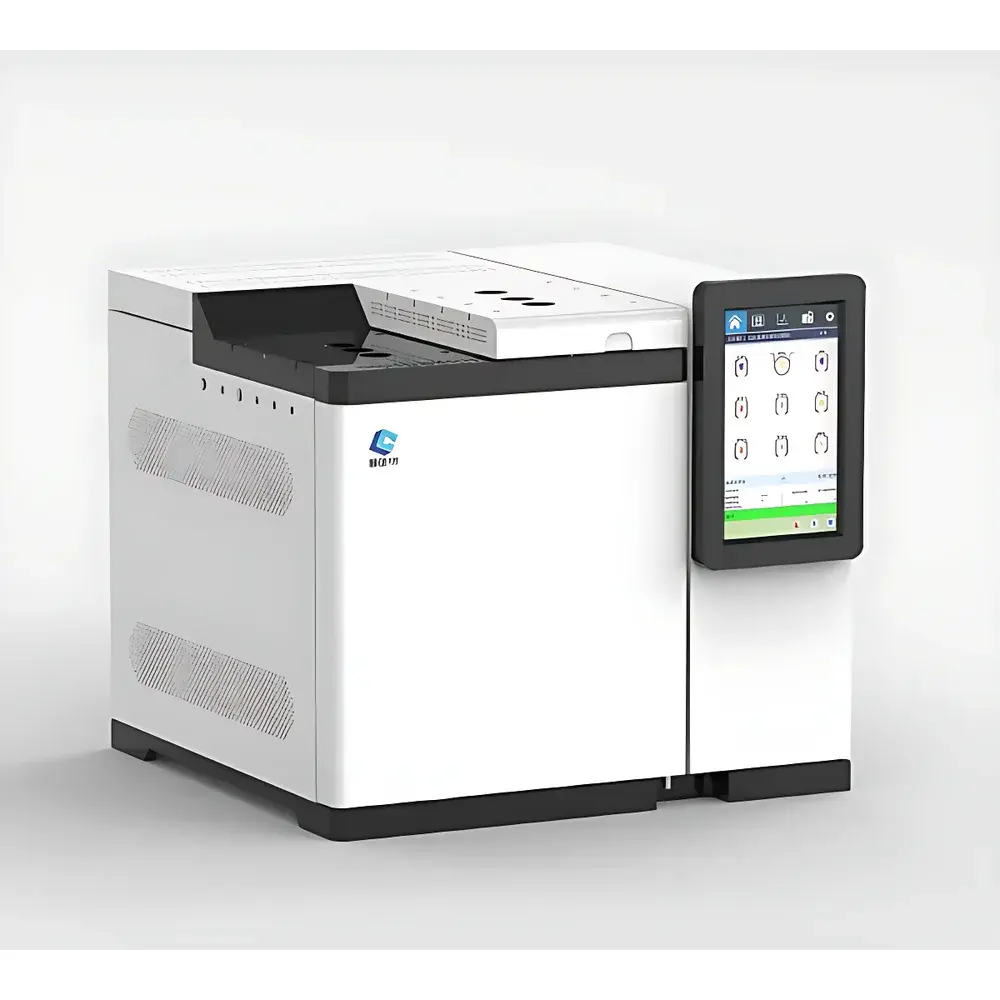
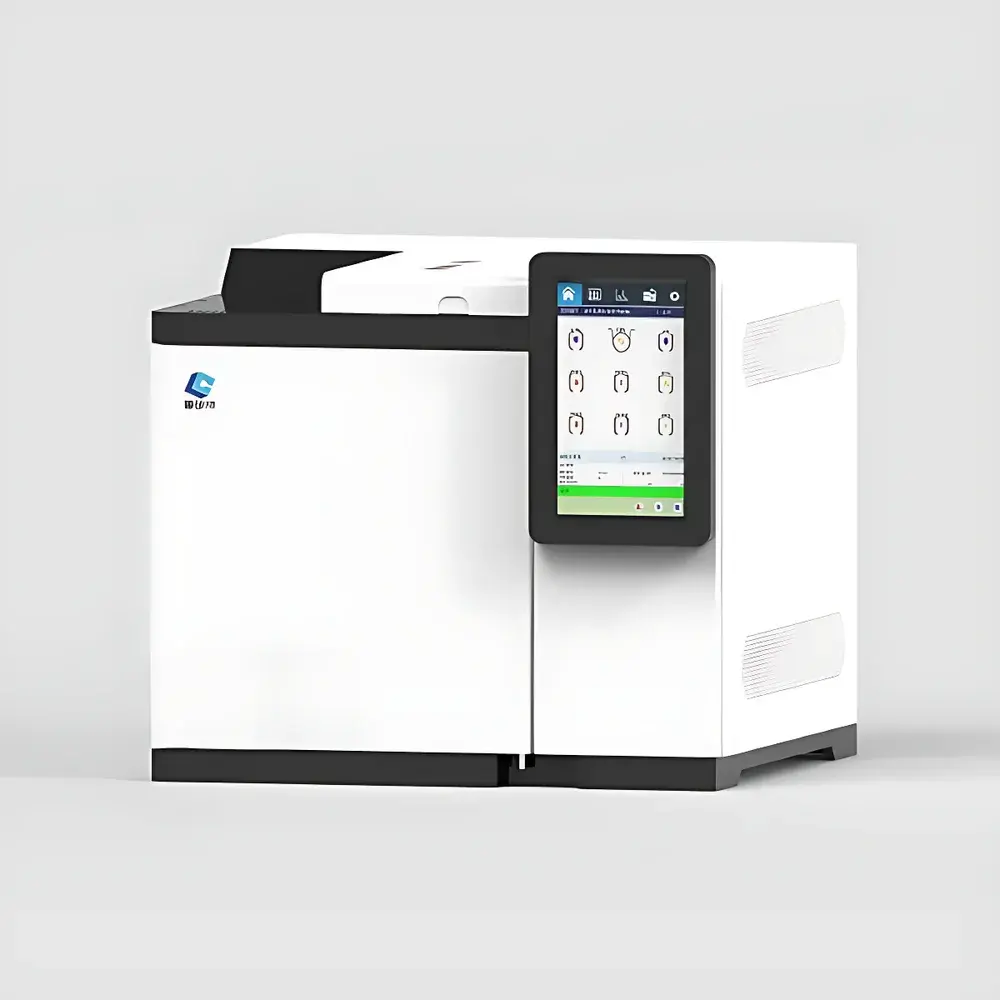
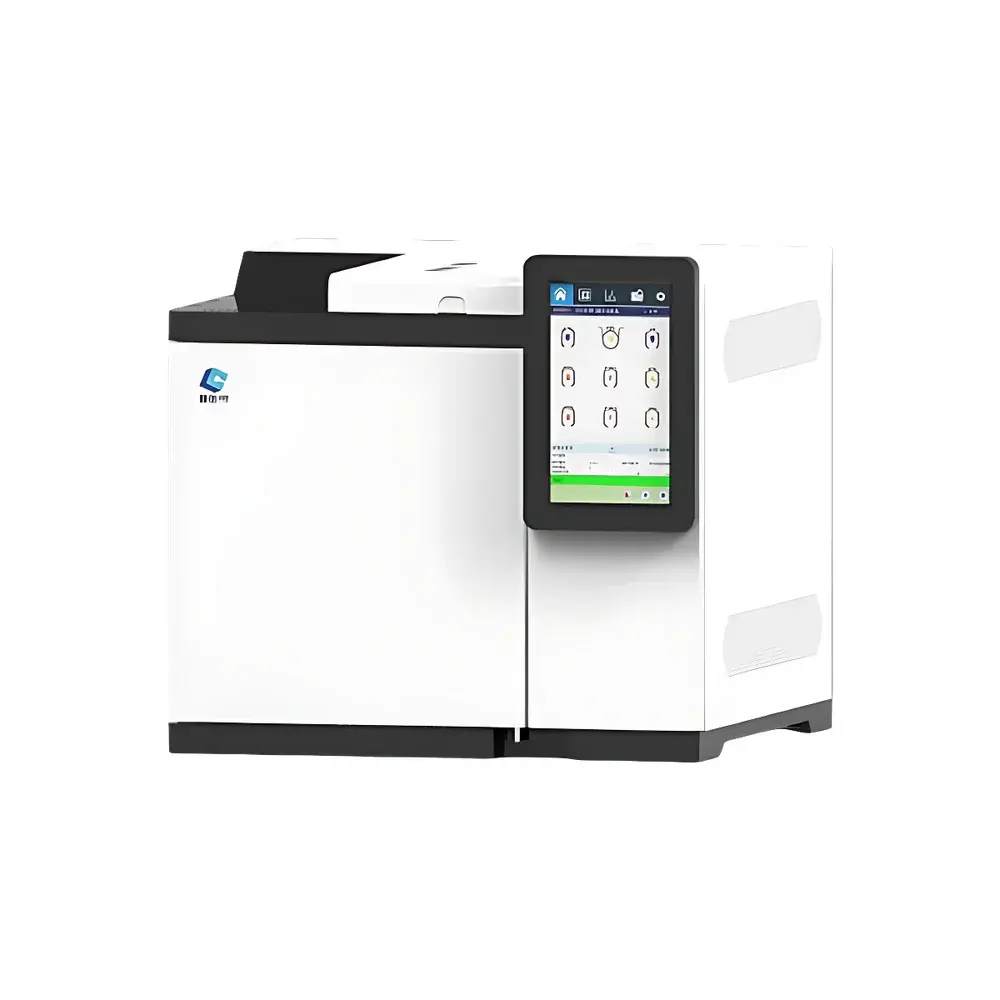
Luchuang GC-9870A Advanced Laboratory Gas Chromatograph
| Brand | Luchuang |
|---|---|
| Origin | Shandong, China |
| Manufacturer Type | Direct Manufacturer |
| Instrument Type | Benchtop Laboratory Gas Chromatograph |
| Temperature Control Range | Ambient + 6 °C to 399 °C |
| Temperature Ramp Rate | 0.1–40 °C/min |
| Cooling Rate | 300 °C to 50 °C in ~6 min |
| Carrier Gas Flow Range | 0–600 mL/min |
| Carrier Gas Pressure Range | 0–0.4 MPa |
| Injector Maximum Temperature | 400 °C |
| Injector Pressure Setting Range | 0–0.4 MPa |
| Total Injector Flow Setting Range | 0–600 mL/min |
| Column Oven Dimensions | 260 × 250 × 150 mm (L×H×D) |
| Weight | 50 kg |
| Power Consumption | 2500 W |
| Display | 5.7″ LCD (320 × 240), Bilingual (English/Chinese) |
Overview
The Luchuang GC-9870A is a high-performance benchtop gas chromatograph engineered for precision separation and quantitative analysis of volatile and semi-volatile organic compounds. Based on robust capillary and packed column chromatography principles, it employs temperature-programmed elution with precise thermal control to resolve complex mixtures across diverse sample matrices. Its modular detector architecture supports simultaneous operation of up to three independent detection systems—enabling concurrent FID, TCD, ECD, FPD, or NPD configurations without hardware reconfiguration. Designed for routine QC, environmental monitoring, pharmaceutical impurity profiling, and academic research, the GC-9870A delivers analytical reproducibility aligned with ISO 17025-compliant laboratory practices and supports method validation under USP , ASTM D3606, and EPA Method 8021B frameworks.
Key Features
- Eight-stage linear programmable temperature ramping with ±0.1 °C oven temperature stability and ≤1% thermal gradient (100–350 °C), enabling high-resolution separation of co-eluting analytes.
- Intelligent dual rear-door design facilitates rapid cooling from 300 °C to 50 °C in approximately six minutes—reducing cycle time between runs without compromising column integrity.
- Dual independent carrier gas control channels with digital pressure and flow regulation (0–0.4 MPa / 0–600 mL/min), ensuring consistent retention time reproducibility across multi-day sequences.
- Integrated flame ignition control for FID, automatic baseline compensation for TCD, and real-time diagnostic alerts with Chinese/English bilingual interface (5.7″ LCD, 20 customizable display screens).
- Flash-based non-volatile memory stores up to 20 complete chromatographic methods and associated calibration curves—eliminating battery-dependent data retention risks.
- Multi-detector compatibility: simultaneous installation and operation of up to four detectors (e.g., dual FID + dual TCD); configurable serial/parallel detector routing via timed event control.
- Universal inlet system supporting split/splitless, on-column, and PTV injection; compatible with 6-inch standard column mounts (3–5 mm OD packed columns; capillary columns up to 0.53 mm ID).
- Comprehensive safety architecture including carrier gas failure protection, overtemperature cutoff, platinum RTD open/short circuit detection, and active thermal shielding for detector compartments.
Sample Compatibility & Compliance
The GC-9870A accommodates a broad range of sample types—including hydrocarbons, pesticides, residual solvents, fatty acid methyl esters (FAMEs), volatile organic compounds (VOCs), and halogenated contaminants—across liquid, gaseous, and solid (via headspace or thermal desorption) introduction formats. It integrates seamlessly with optional accessories such as auto-samplers, purge-and-trap modules, thermal desorbers, pyrolyzers, and catalytic methanizers. Regulatory alignment includes support for GLP/GMP audit trails when paired with validated chromatography data systems (CDS), compliance with FDA 21 CFR Part 11 requirements for electronic records, and adherence to ICH Q2(R2) guidelines for analytical method verification.
Software & Data Management
Instrument control, sequence definition, peak integration, and report generation are managed through Luchuang’s proprietary GC Navigator software—compatible with Windows 10/11 and compliant with IEEE 1394 and USB 2.0 communication protocols. Raw data files adhere to ANDI/NetCDF format standards for cross-platform interoperability with third-party CDS platforms (e.g., OpenLab CDS, Chromeleon). All acquisition parameters—including temperature ramps, valve events, detector settings, and calibration coefficients—are stored with timestamps and user IDs. Audit trail functionality logs all method modifications, data reprocessing actions, and instrument status changes—ensuring full traceability required for ISO/IEC 17025 accreditation.
Applications
- Petroleum refining: hydrocarbon group-type analysis (PIONA), benzene/toluene/xylenes (BTX), and sulfur compound profiling per ASTM D5504.
- Environmental testing: chlorinated pesticides (EPA 8081), PCB congeners (EPA 8082), and VOCs in soil/water per EPA TO-17 and Method 624.
- Pharmaceutical quality control: residual solvent quantification (ICH Q3C), extractables/leachables screening, and assay purity determination.
- Food & beverage safety: mycotoxin screening, flavor compound profiling, and ethanol/methanol verification in alcoholic beverages.
- Public health: blood alcohol concentration (BAC) analysis, toxicology screening (e.g., amphetamines, opioids), and indoor air quality monitoring.
FAQ
What detector configurations does the GC-9870A support simultaneously?
It supports up to four detectors installed concurrently, with flexible operational modes—such as dual FID, dual TCD, or mixed combinations (e.g., FID + ECD + NPD)—managed via programmable valve and signal routing events.
Is the instrument compatible with third-party chromatography data systems?
Yes—raw data export follows ANDI/NetCDF standards, and the GC Navigator software provides OLE/COM interfaces for integration with major CDS platforms including Thermo Fisher Chromeleon and Agilent OpenLab.
Does the GC-9870A meet regulatory requirements for auditable electronic records?
When operated with validated software and configured with user access controls, audit logging, and electronic signatures, it satisfies core elements of FDA 21 CFR Part 11 and EU Annex 11 for regulated environments.
Can the column oven achieve true ambient-temperature operation?
The dual rear-door cooling system enables stable operation down to ambient + 6 °C, making it suitable for low-temperature separations of highly volatile compounds without cryogenic accessories.
What maintenance protocols are recommended for long-term detector stability?
Routine checks include FID jet cleaning every 200 injections, TCD filament resistance verification quarterly, and ECD ⁶³Ni source activity monitoring per manufacturer-recommended intervals—documented in the included GLP-aligned maintenance log template.





