
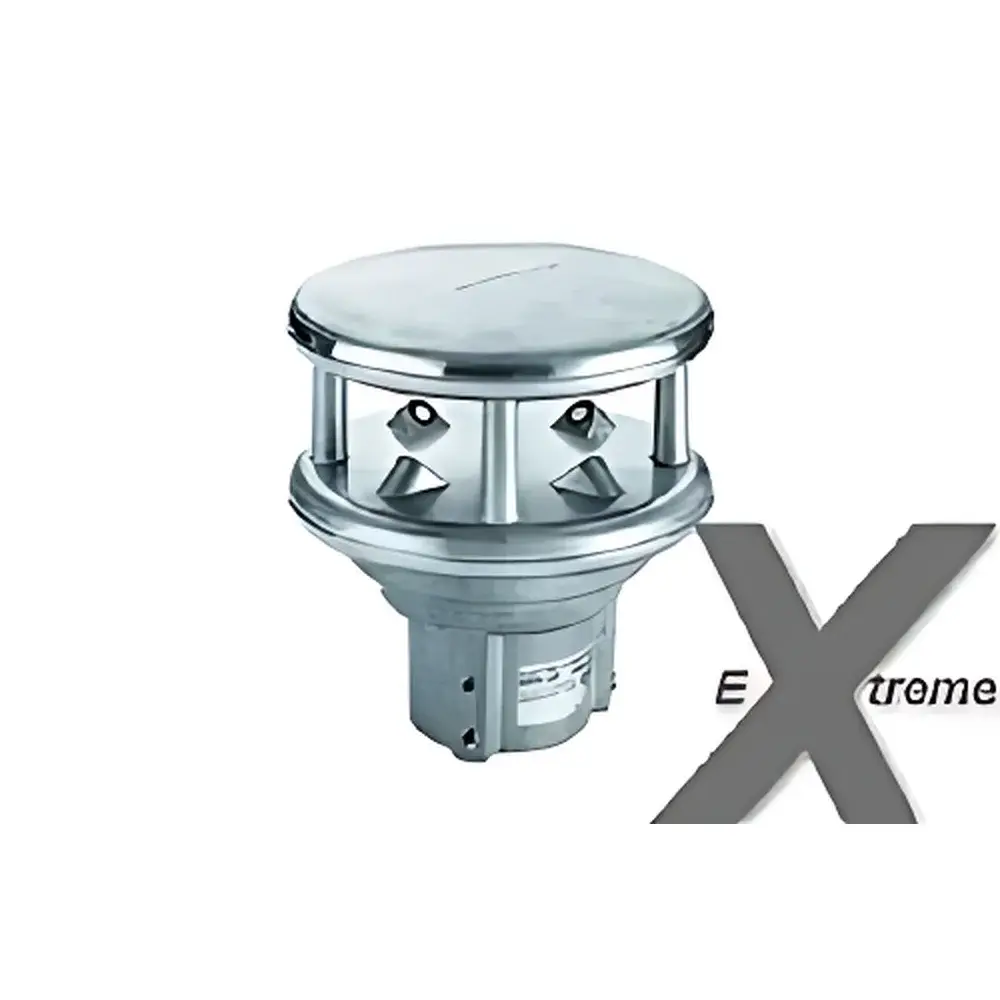

Lufft VENTUS-X-UMB Heated Ultrasonic Wind Sensor
| Brand | Lufft |
|---|---|
| Origin | Germany |
| Model | VENTUS-X-UMB |
| Heating Function | Integrated PTC-based anti-icing system |
| Measurement Principle | Time-of-flight ultrasonic anemometry |
| Output Protocols | SDI-12, Modbus RTU, ASCII, CAN bus (configurable) |
| Environmental Certification | IP66, EN 60950-1, EN 61000-6-2/-6-3, IEC 60068-2-30 (damp heat), IEC 60068-2-14 (thermal cycling), IEC 60068-2-6 (vibration), IEC 60068-2-52 (salt mist), IEC 60068-2-31 (ice accretion test) |
| Operating Temperature Range | –40 °C to +70 °C (with active heating) |
| Wind Speed Range | 0–60 m/s |
| Wind Direction Range | 0–360° |
| Resolution | 0.1 m/s (wind speed), 1° (wind direction) |
| Accuracy | ±0.2 m/s (wind speed), ±2° (wind direction) |
| Power Supply | 12–30 V DC |
| Power Consumption | <1.5 W (standby), <4.5 W (heating active) |
Overview
The Lufft VENTUS-X-UMB is a high-reliability, heated ultrasonic wind sensor engineered for continuous, maintenance-free operation in harsh meteorological and industrial environments. It employs time-of-flight ultrasonic anemometry—measuring the transit time difference of acoustic pulses between opposing transducer pairs—to determine both wind speed and wind direction with no moving parts. This principle eliminates mechanical wear, bearing degradation, or recalibration drift associated with cup-and-vane or propeller-based sensors. Designed and manufactured in Germany, the VENTUS-X-UMB integrates a precision PTC (Positive Temperature Coefficient) heating system directly into its transducer housing, enabling reliable performance under icing, frost, snow accumulation, and sub-zero ambient conditions down to –40 °C. Its robust aluminum alloy housing, marine-grade corrosion protection, and vibration-damped internal structure ensure long-term stability in coastal, mountainous, offshore, and transportation infrastructure deployments.
Key Features
- Integrated anti-icing heating system with intelligent thermal management—activates automatically based on temperature and humidity thresholds to prevent ice formation on transducers without overheating or power waste
- True 3D ultrasonic measurement architecture delivering simultaneous wind speed and direction output with high temporal resolution (1 Hz standard, configurable up to 4 Hz)
- Wide operational envelope: certified for continuous operation from –40 °C to +70 °C, including validated performance under cyclic freeze-thaw, salt fog exposure (IEC 60068-2-52), and mechanical vibration (IEC 60068-2-6)
- Multi-protocol digital interface support: SDI-12, Modbus RTU (RS-485), ASCII serial, and CAN bus—enabling seamless integration with OTT, Campbell Scientific, Delta-T, and other third-party data loggers and SCADA systems
- Low-power design optimized for solar-powered remote stations: standby consumption <1.5 W; peak heating load <4.5 W, compatible with standard 12 V or 24 V DC field power architectures
- IP66-rated enclosure with UV-stabilized polymer components and electropolished stainless-steel fasteners—engineered for longevity in high-humidity, saline, and UV-intensive environments
Sample Compatibility & Compliance
The VENTUS-X-UMB is designed for direct deployment across diverse environmental monitoring platforms without external conditioning hardware. It meets stringent international standards for environmental instrumentation, including EN 60950-1 (safety), EN 61000-6-2 (immunity) and EN 61000-6-3 (emissions), and has undergone full qualification per IEC 60068-2 series for climatic and mechanical stress testing. Its output protocols are compliant with WMO No. 8 (Guide to Meteorological Instruments and Methods of Observation) recommendations for automated weather station interoperability. While not intrinsically certified for hazardous areas, its low-voltage DC operation and non-sparking architecture make it suitable for Class I, Division 2 environments when installed per local electrical codes. No calibration traceability certificate is shipped by default; however, factory calibration reports (traceable to PTB or NIST standards upon request) and optional on-site verification procedures are available through authorized Lufft service partners.
Software & Data Management
The sensor operates autonomously without embedded firmware requiring user configuration—parameterization is performed externally via command-line ASCII or register-mapped Modbus instructions. Raw measurements are pre-processed internally (e.g., spike filtering, vector averaging, temperature-compensated sound speed correction), minimizing computational load on host data loggers. When integrated with compatible OTT or third-party hydro-meteorological data acquisition systems, the VENTUS-X-UMB supports automated metadata tagging, timestamp synchronization (via NTP or GPS pulse-per-second input), and audit-trail logging per ISO/IEC 17025 and GLP-compliant workflows. Firmware updates—delivered as signed binary packages—are applied via serial interface using Lufft’s standardized update utility, ensuring version control and integrity verification. No cloud dependency or proprietary software runtime is required for basic operation.
Applications
- Automated Weather Stations (AWS) for aviation meteorology (ICAO Annex 3 compliance), port authority operations, and runway condition monitoring
- Wind resource assessment and turbine control feedback loops in onshore and near-shore wind farms
- Real-time road weather information systems (RWIS) supporting dynamic speed advisories and de-icing dispatch decisions
- Alpine and glacial monitoring networks for avalanche forecasting and flood early-warning systems
- Hydrological observatories integrating precipitation, soil moisture, and wind-driven evaporation modeling
- Solar-powered micro-meteorological nodes deployed in remote ecological research sites and border surveillance infrastructure
FAQ
Does the VENTUS-X-UMB require periodic recalibration?
No. Due to its solid-state ultrasonic measurement principle and absence of mechanical wear, the sensor maintains factory calibration over its operational lifetime. Annual verification against reference standards is recommended for metrological traceability in regulated applications.
Can the heating function be manually controlled?
Yes—via Modbus register or ASCII command, users may override automatic thermal control to enable forced heating during scheduled maintenance windows or diagnostic procedures.
Is the sensor compatible with Campbell Scientific CR1000X data loggers?
Yes. Native SDI-12 and Modbus RTU support enables plug-and-play integration; Lufft provides publicly available CRBasic code examples and SDI-12 timing profiles for seamless implementation.
What is the expected service life under continuous coastal exposure?
Field data from multi-year deployments in North Sea and Baltic Sea installations indicate >10 years of functional service life with no degradation in measurement accuracy or structural integrity, provided routine visual inspection and cleaning intervals are observed every 6–12 months.
Does the device meet FDA 21 CFR Part 11 requirements?
As a field sensor without electronic record generation or user-accessible audit trails, the VENTUS-X-UMB itself does not fall under Part 11 scope. However, when integrated into validated data acquisition systems with electronic signature and change-control capabilities, it contributes to compliant environmental monitoring infrastructures per 21 CFR Part 11 Annex A guidance.







