
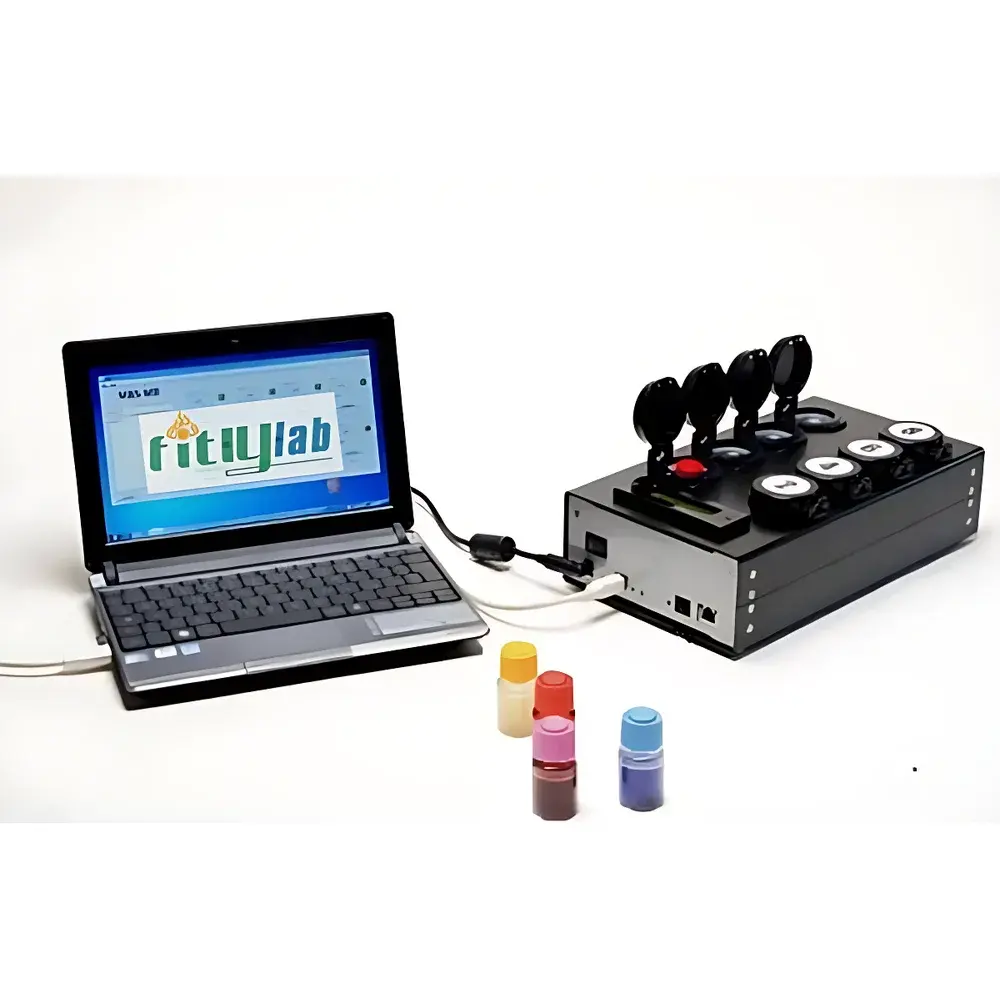


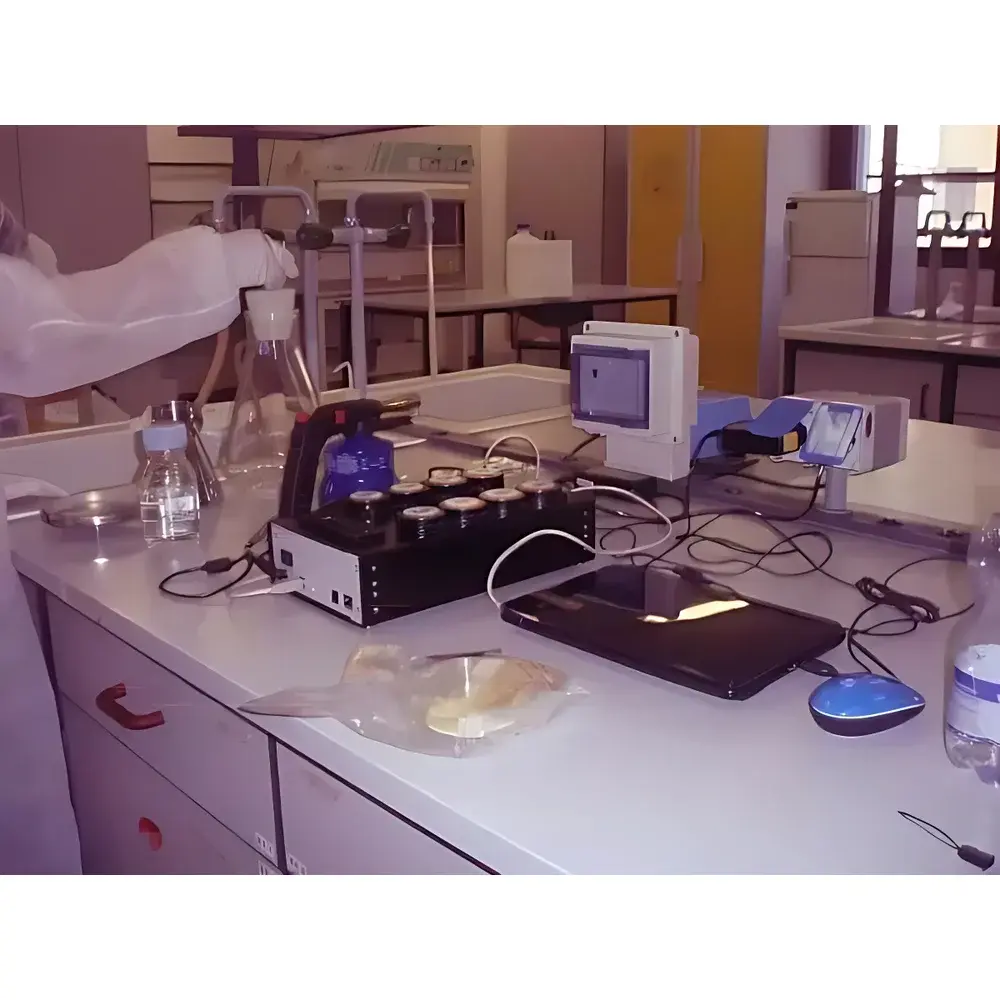
MBS.SRL Fitlylab-L22 Escherichia coli & Total Coliform Detection System
| Brand | MBS.SRL |
|---|---|
| Origin | Italy |
| Manufacturer Type | Authorized Distributor |
| Import Status | Imported |
| Model | Fitlylab-L22 |
| Detection Range | Sample-dependent (validated per ISO 16140:2003) |
| Detection Time | 2–10 hours |
| Detection Throughput | 1 CFU per assay |
| Sampling Frequency | Single-point measurement per vial |
Overview
The MBS.SRL Fitlylab-L22 Escherichia coli & Total Coliform Detection System is a fully integrated, portable microbiological rapid detection platform engineered for quantitative enumeration of viable Escherichia coli, total coliforms, and other priority food- and waterborne pathogens—including Salmonella, Listeria monocytogenes, Staphylococcus aureus, Pseudomonas aeruginosa, Enterococcus faecalis, and yeasts. Unlike conventional culture-based methods requiring 24–72 hours, the Fitlylab-L22 leverages a patented multi-modal detection principle combining selective respirometric metabolism, enzymatic substrate cleavage (e.g., β-glucuronidase for E. coli), immuno-capture, and nucleic acid target recognition within a single sealed detection vial (VL vial). The system measures real-time redox kinetics via triple-wavelength photometric monitoring (450 nm, 540 nm, 630 nm) of chromogenic dye reduction in response to microbial metabolic activity. This enables precise determination of time-to-threshold (TTT), which correlates linearly with initial viable cell concentration across a dynamic range spanning 1–10⁶ CFU/mL or CFU/g—validated per ISO 16140:2003 as an alternative method for food and animal feed microbiology.
Key Features
- Eight independent, thermally regulated detection wells—each programmable for distinct temperature profiles (25–45 °C) and incubation durations to optimize growth and signal kinetics for different target organisms.
- Triple-wavelength optical detection (blue/green/red channels) eliminates interference from turbidity, particulates, or heterogeneous sample matrices—critical for raw milk, minced meat, surface swabs, and filter-concentrated water samples.
- Quantitative sensitivity down to 1 CFU per assay with analytical specificity ≥99.999% against non-target flora, verified by inter-laboratory ring trials and certified reference materials.
- Zero-preprocessing workflow: direct inoculation of 1 g solid, 1 mL liquid, or swab eluate into VL vials; no enrichment, centrifugation, filtration, or DNA extraction required.
- Self-contained biosafety design: VL vials feature integrated sterilization post-assay (UV-C + chemical inactivation), enabling safe disposal as non-hazardous laboratory waste under standard biosafety level 2 (BSL-2) protocols.
- Automated reporting engine compliant with ISO/IEC 17025:2017 requirements—generates timestamped, audit-trail-enabled PDF reports with full traceability of instrument ID, operator, calibration status, and raw kinetic curves.
Sample Compatibility & Compliance
The Fitlylab-L22 accommodates diverse sample types without modification: potable and wastewater, pasteurized and raw milk, ground beef and poultry, ready-to-eat foods, environmental swabs (stainless steel, plastic, ceramic), pharmaceutical excipients, cosmetic emulsions, and air sampling filters. All detection protocols are validated per ISO 16140:2003 for equivalence to reference methods (ISO 16649-2 for E. coli, ISO 9308-1 for total coliforms). Internal validation documentation meets ISO/IEC 17025:2017 clause 7.2.2 (method validation) and supports GLP/GMP-aligned quality systems. The system architecture allows configuration for FDA 21 CFR Part 11-compliant electronic records when paired with networked deployment and role-based user authentication.
Software & Data Management
Fitlylab Control Software (v5.x, English/Chinese bilingual interface) provides intuitive assay setup, real-time kinetic visualization, automated TTT calculation, and customizable pass/fail thresholds based on regulatory limits (e.g., EU Regulation (EC) No 2073/2005, US EPA Method 1603). Raw absorbance data (A450, A540, A630) and derivative curves are stored in encrypted SQLite databases with immutable timestamps. Export options include CSV (for LIMS integration), PDF (with digital signature), and XML (for ELN synchronization). Firmware and software updates are delivered remotely via secure HTTPS channel—free of charge for the product lifetime.
Applications
- HACCP monitoring in food processing lines (dairy, meat, produce, beverages)
- Environmental surveillance in cleanrooms, kitchens, and food contact surfaces
- Drinking water safety verification per WHO guidelines and national standards (e.g., EPA 1603, ISO 9308)
- Import/export quarantine testing at border control laboratories
- Rapid screening in field-deployable mobile labs for outbreak response
- Quality assurance in pharmaceutical excipient and cosmetic ingredient manufacturing
- Consumer protection agency investigations and routine market surveillance
FAQ
What regulatory standards does the Fitlylab-L22 comply with?
The system is certified per ISO 16140:2003 as an alternative method for E. coli and coliform detection in food and feed. Its validation framework satisfies ISO/IEC 17025:2017 requirements for method verification and supports compliance with FDA 21 CFR Part 11, EU Annex 11, and GLP/GMP data integrity principles.
Can the system detect multiple organisms simultaneously in one run?
No—each VL vial is pre-formulated for a specific target or group (e.g., E. coli-specific, total coliform-selective, Salmonella-enrichment). However, up to eight different assays can be run in parallel using independent wells, enabling cross-contamination assessment or multi-pathogen screening across samples.
Is external calibration required before each use?
The system performs automatic optical self-calibration at startup using built-in reference LEDs and dark-current compensation. No user-performed calibration is needed; only periodic verification with certified control vials (provided quarterly) is recommended per ISO/IEC 17025.
How is data integrity ensured during remote operation?
All measurements are cryptographically signed and time-stamped using onboard hardware security modules (HSM). Audit trails record operator login, assay initiation, parameter changes, and report generation—retained for ≥10 years per configurable retention policy.
What maintenance is required for long-term reliability?
The MBS-MR host requires only annual optical path cleaning (provided in maintenance kit) and biannual firmware validation. VL vials are single-use, sterile, and shelf-stable for 18 months at 4–25 °C—no refrigeration needed.





