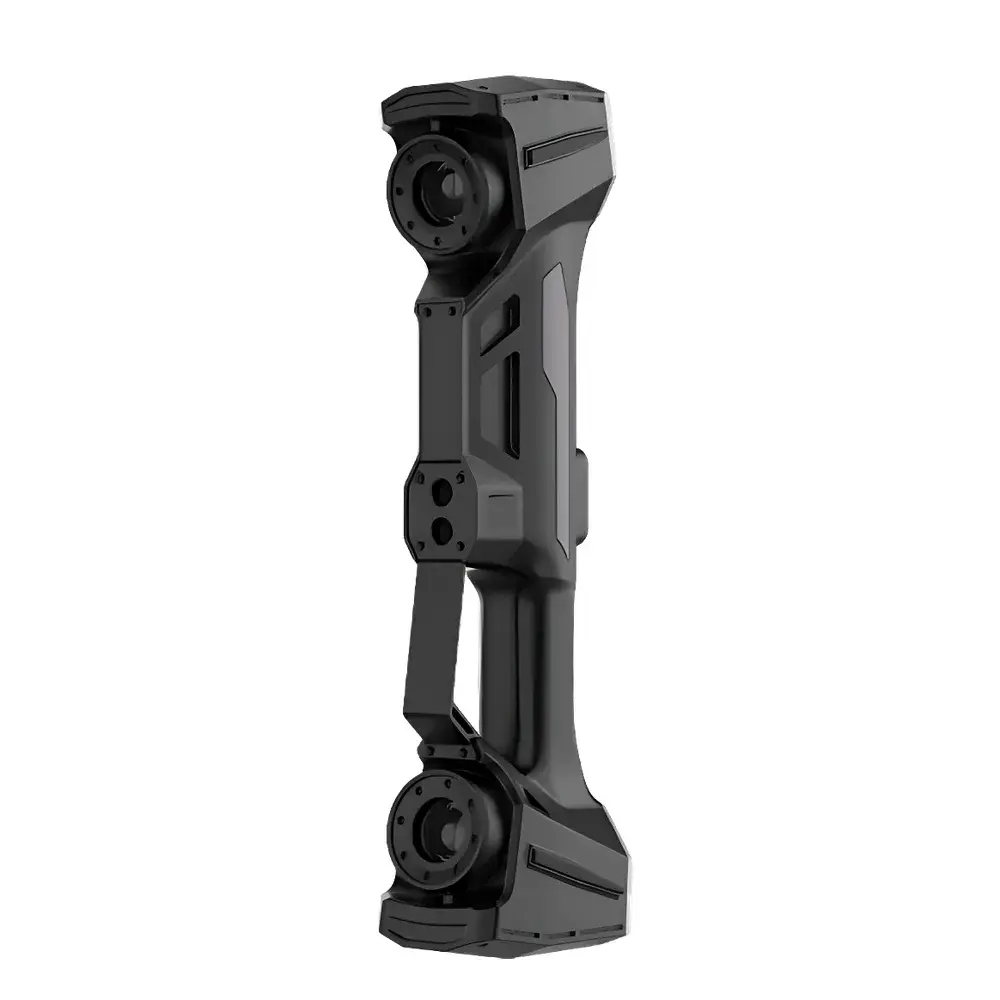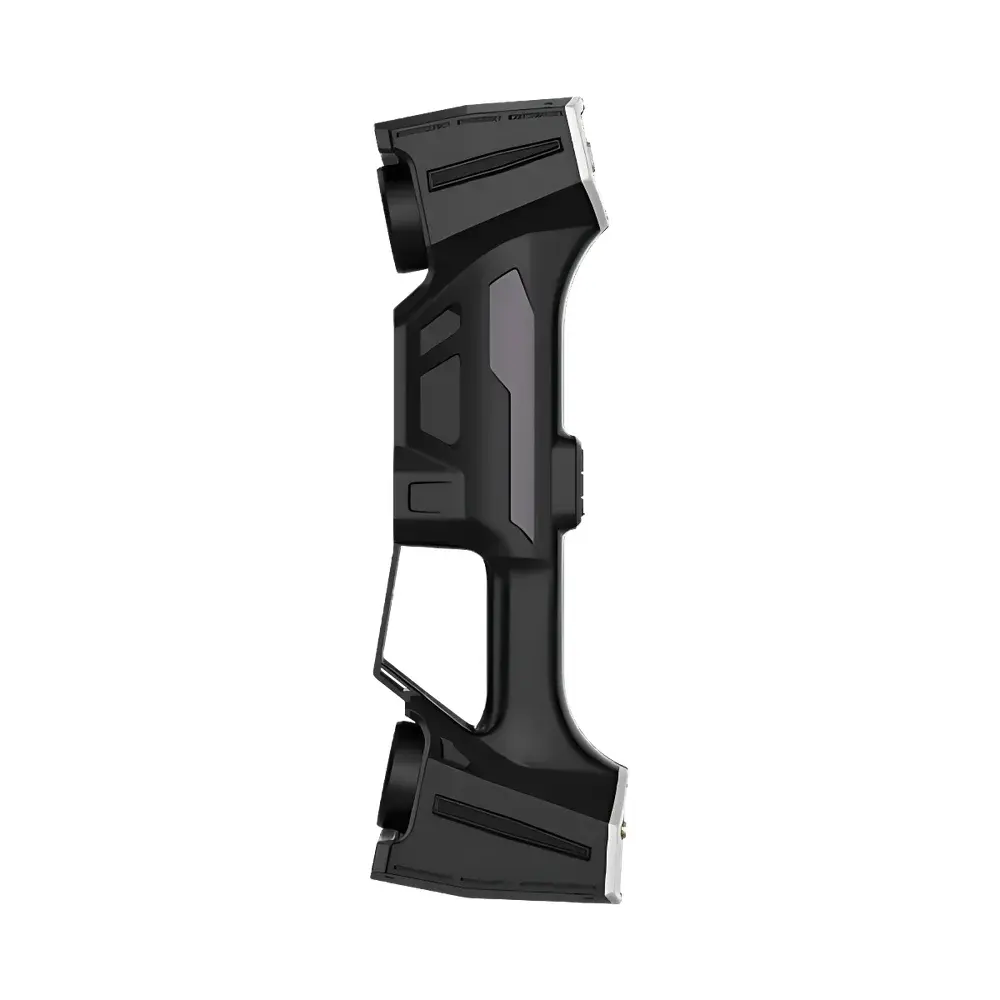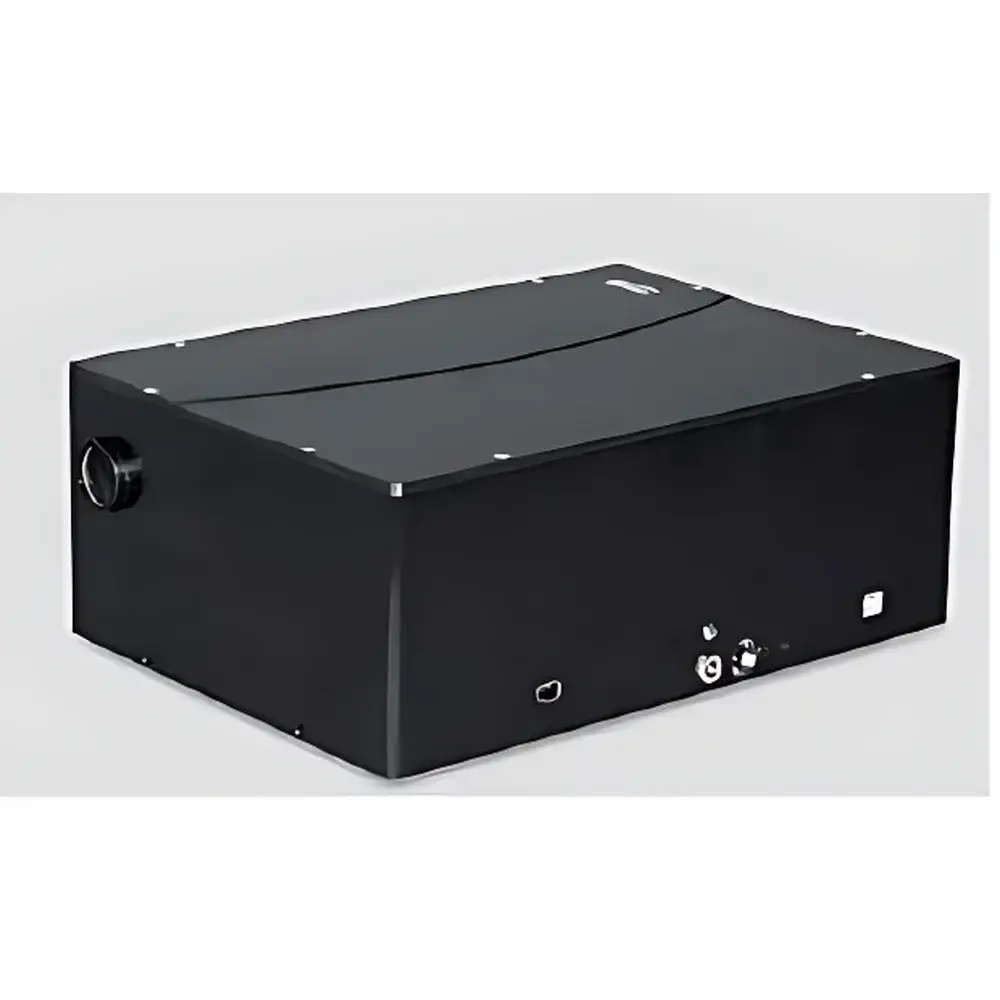
Metrolux ML4515 Laser M² Analyzer
| Brand | Metrolux |
|---|---|
| Origin | Germany |
| Model | ML4515 |
| Wavelength Range | 400–700 nm / 700–1100 nm (custom options available) |
| Max. Beam Diameter | <6 mm (custom options available) |
| Max. Energy Density | <5 J/cm² (with optional attenuator) |
| Max. Power Density | <1000 W/cm² (with optional attenuator) |
| Single-Pulse Detection Rate | up to 1000 Hz |
| M² Measurement Range | 1.0–20.0 |
| M² Accuracy | ±3% |
| Measurement Frequency | 5 Hz |
| Dimensions | 210 × 310 × 155 mm³ |
| Weight | 5.7 kg |
| Software | BeamLux II & SquareLux |
| Camera Interface | IEEE 1394 (FireWire) |
| Optical Attenuation Range | 1:1 to 1:1,000,000 (motorized, automatic) |
Overview
The Metrolux ML4515 Laser M² Analyzer is a precision-engineered instrument designed for the quantitative characterization of laser beam quality in accordance with ISO 11146-1 and ISO 11146-2 standards. It employs the established scanning-slit and camera-based caustic measurement methodology to determine the beam propagation parameter M² — a dimensionless figure of merit that quantifies how closely a real laser beam approaches the diffraction-limited performance of an ideal Gaussian beam. The system integrates a high-dynamic-range SquareLux CMOS camera with motorized, calibrated attenuation (1:1 to 1:1,000,000), enabling reliable M² evaluation across pulsed and CW laser sources operating from visible (400–700 nm) through near-infrared (700–1100 nm) spectral bands. Its compact benchtop architecture (210 × 310 × 155 mm³, 5.7 kg) supports integration into R&D labs, laser manufacturing QA environments, and metrology calibration facilities where traceable, repeatable beam diagnostics are required.
Key Features
- Compliant M² measurement per ISO 11146-1/2: full caustic reconstruction with automated beam waist and divergence analysis
- Simultaneous M²x and M²y determination using orthogonal axis evaluation
- Single-pulse capture capability at rates up to 1000 Hz — essential for Q-switched and ultrafast laser characterization
- Real-time background subtraction and frame averaging algorithms to enhance signal-to-noise ratio and measurement reproducibility
- Motorized, software-controlled attenuation with 6-decade dynamic range (1:1 to 1:1,000,000), eliminating manual filter changes and minimizing alignment drift
- Dual-mode operation: fully automated measurement sequences or manual step-by-step control for troubleshooting and validation
- Integrated BeamLux II software platform supporting data export in CSV, XML, and industry-standard HDF5 formats
Sample Compatibility & Compliance
The ML4515 accommodates free-space laser beams with diameters under 6 mm at the input aperture; custom collimation and relay optics are available upon request for larger or divergent beams. It supports both continuous-wave and pulsed lasers, provided pulse energy does not exceed 5 J/cm² (with attenuator) and average power density remains below 1000 W/cm². All M² calculations adhere strictly to ISO 11146 definitions, including second-moment (D4σ) beam diameter computation and Rayleigh range derivation. The instrument’s firmware and software comply with GLP-relevant audit trail requirements, and BeamLux II optionally supports FDA 21 CFR Part 11-compliant electronic signatures and user access controls when deployed in regulated QC environments.
Software & Data Management
BeamLux II provides a unified interface for acquisition, visualization, and reporting. It features synchronized multi-position caustic scanning, real-time beam profile overlays, and interactive caustic curve fitting with residual error display. The software enables batch processing of multiple measurements, statistical trend analysis over time, and customizable report generation (PDF/HTML) including ISO-conformant pass/fail flags. Raw image data and metadata (wavelength, attenuation factor, exposure time, timestamp) are stored in structured HDF5 containers, ensuring long-term archival integrity and interoperability with MATLAB, Python (h5py), and LabVIEW environments. Export modules support direct integration into LIMS and MES platforms via RESTful API extensions.
Applications
- Verification of beam quality for industrial fiber and solid-state lasers prior to system integration
- Root-cause analysis of mode instability in DPSS and diode-pumped lasers during development
- Acceptance testing of OEM laser modules against contractual M² specifications
- Calibration support for national metrology institutes performing inter-laboratory comparisons
- Education and training in laser physics laboratories requiring hands-on ISO-compliant beam diagnostics
- Validation of beam delivery optics (e.g., focusing heads, galvanometric scanners) by quantifying M² degradation induced by thermal lensing or misalignment
FAQ
What wavelength ranges does the ML4515 support natively?
The standard configuration covers 400–700 nm (visible) and 700–1100 nm (NIR); extended ranges (e.g., UV or mid-IR) require optical upgrades and are available on request.
Can the ML4515 measure M² for ultrashort pulses (e.g., femtosecond lasers)?
Yes — provided pulse energy is within the detector’s damage threshold and temporal contrast allows single-shot capture; users must verify compatibility with their specific pulse duration and repetition rate.
Is ISO 11146 compliance verified by third-party certification?
The ML4515’s measurement algorithm and uncertainty budget have been validated against PTB (Physikalisch-Technische Bundesanstalt) reference methods; full calibration certificates traceable to DKD/DAkkS are available as an optional service.
Does the system support automated pass/fail evaluation against user-defined M² limits?
Yes — BeamLux II includes configurable tolerance thresholds and generates color-coded results with automated annotation in exported reports.
How is data security ensured in regulated environments?
With optional BeamLux II GxP Edition, the software implements role-based access control, electronic signature workflows, and immutable audit logs compliant with FDA 21 CFR Part 11 and EU Annex 11 requirements.