
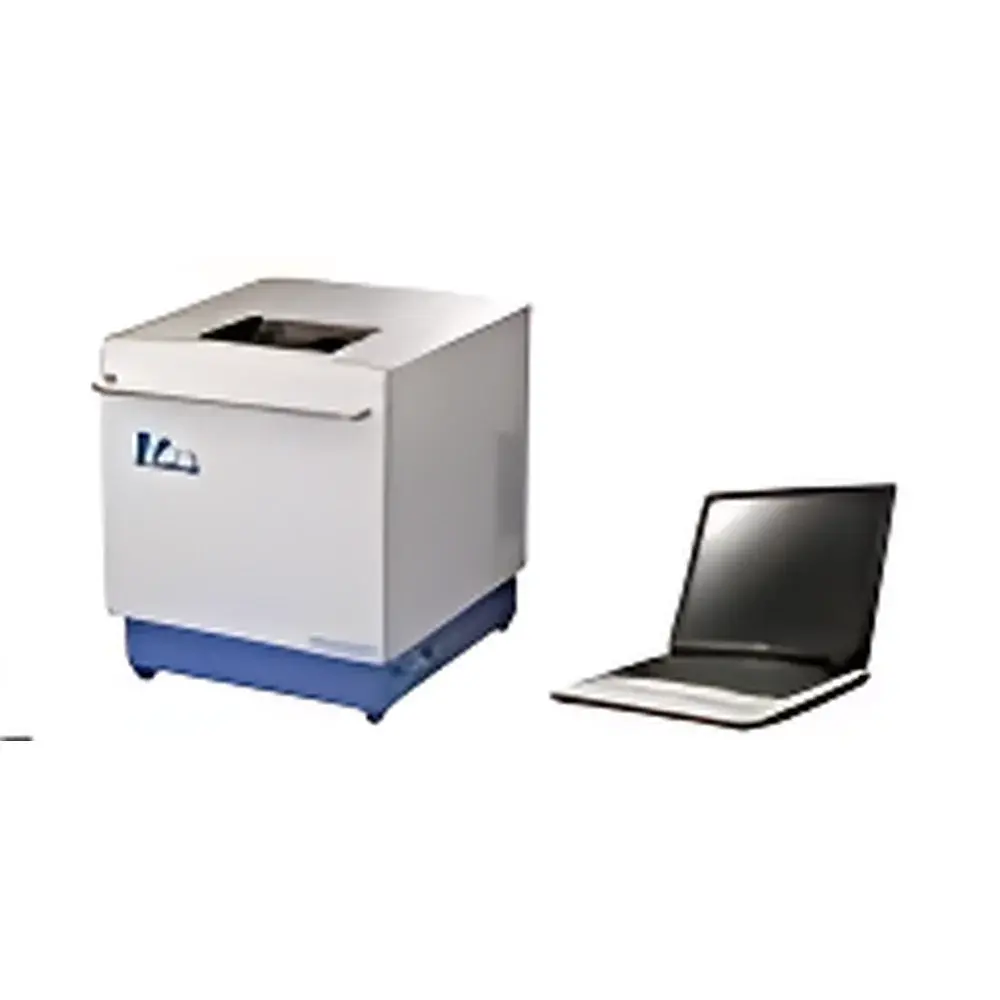
MICHEM MD6 Series Industrial-Grade Microwave Digestion System
| Brand | MICHEM |
|---|---|
| Origin | Beijing, China |
| Model | MD6 Series |
| Sample Capacity | 10 vessels |
| Microwave Source | Single Magnetron |
| Max Temperature | 200 °C |
| Max Pressure | 1500 psi (10.34 MPa) |
| Cavity Volume | 45 L |
| Power Output | 1200 W |
| Frequency | 2450 ±13 MHz |
| Temperature Control Range | 0–300 °C |
| Temp Accuracy | ±0.5 °C |
| Pressure Control Range | 0–6 MPa |
| Pressure Accuracy | ±0.01 MPa |
| Cavity Coating | PFA (DuPont™) |
| Outer Vessel Material | Reinforced PEEK (10 MPa burst rating) |
| Inner Vessel Material | TFM™ (perfluoroalkoxy alkane) |
| Microwave Leakage | ≤0.3 mW/cm² |
| Cooling Airflow | 3 m³/min |
| Safety Features | Dual-stage pressure relief, auto-locking sliding safety door (Patent ZL 200420032536), rupture disc (200/400 psi), real-time Pt100 temperature monitoring, direct-contact pressure transducer, PID-controlled variable-frequency power modulation |
Overview
The MICHEM MD6 Series Industrial-Grade Microwave Digestion System is a high-performance, CE-compliant sample preparation platform engineered for rapid, reproducible, and trace-metal-clean acid digestion of solid and semi-solid matrices under controlled high-temperature and high-pressure conditions. Operating on the principle of microwave-assisted closed-vessel thermobaric decomposition, the system delivers precise energy coupling to reaction mixtures via 2450 MHz monomode irradiation, enabling accelerated oxidative breakdown of organic matter and refractory inorganic lattices—particularly silicates, alloys, and biological tissues—without volatilization loss of analytes such as As, Hg, Se, or Pb. Designed for routine use in accredited environmental, geochemical, clinical, and food testing laboratories, the MD6 meets core operational requirements of ISO/IEC 17025, ASTM D5511, EPA Method 3052, and USP , supporting full traceability and method validation compliance.
Key Features
- Industrial-grade 45 L cavity with DuPont™ PFA interior coating—chemically inert to concentrated HNO₃, HF, HCl, and aqua regia at temperatures up to 300 °C
- Single 1200 W magnetron with PID-regulated variable-frequency output (2450 ±13 MHz), enabling stable power delivery across 0–100% range and reducing standby consumption by >20% versus fixed-frequency systems
- Real-time dual-parameter monitoring: Pt100 platinum resistance thermometer (±0.5 °C accuracy, 0–300 °C) and direct-contact piezoresistive pressure sensor (±0.01 MPa, 0–6 MPa)
- 10-position rotating carousel with bidirectional 360° motion and optional magnetic/mechanical stirring (0–5000 rpm), ensuring uniform field distribution and thermal homogeneity across all vessels
- Integrated safety architecture: six-layer protection including rupture discs (200/400 psi), auto-locking sliding safety door with secondary mechanical release (Patent ZL 200420032536), overpressure cut-off, and continuous microwave leakage monitoring (≤0.3 mW/cm²)
- Robust consumables: TFM™ inner vessels (resistant to acids, bases, and organics) housed in reinforced PEEK outer vessels rated to 10 MPa (1450 psi), with thermal stability to 300 °C
Sample Compatibility & Compliance
The MD6 accommodates standard digestion vessels ranging from 10 mL to 1500 mL, supporting both batch and sequential processing of diverse sample types—including soils, sediments, plant tissues, animal organs, polymers, catalysts, and electronic waste. Its sealed-vessel configuration complies with GLP/GMP documentation standards and enables full audit trails when paired with A-type computer control software. The system satisfies regulatory prerequisites for ICP-MS, ICP-OES, AAS, and AFS sample introduction protocols, minimizing blank contributions through low-reagent consumption (<8 mL per vessel) and eliminating open-acid fuming. All materials contacting samples conform to USP Class VI biocompatibility and FDA 21 CFR Part 11 data integrity guidelines when used with validated software configurations.
Software & Data Management
The MD6-A configuration includes dedicated Windows-based acquisition software running on an integrated laptop, providing real-time graphical display of temperature/pressure profiles, programmable multi-step ramp-hold-cool sequences (up to 8 segments per method), and unlimited storage of validated digestion methods. Each run generates timestamped, user-annotated datasets with digital signatures, automatic calibration logs, and electronic audit trails compliant with 21 CFR Part 11 requirements. The software supports export to CSV, PDF, and LIMS-compatible XML formats, and integrates seamlessly with laboratory information management systems (LIMS) via ODBC drivers. For environments requiring minimal IT dependency, the MD6-C variant features embedded microcontroller firmware with 15 preloaded methods and LED-based status feedback.
Applications
This system is routinely deployed in applications demanding quantitative elemental recovery and minimal procedural contamination: heavy metal analysis in EPA-regulated wastewater sludge; rare earth element quantification in geological survey samples; nutrient profiling in agricultural feedstuffs; residual catalyst detection in pharmaceutical intermediates; and speciation-ready digestion for arsenic/bromine in seafood per EU Commission Regulation (EC) No 1881/2006. It also serves as a preparatory module for hyphenated techniques—such as HPLC-ICP-MS for metalloprotein characterization—and supports method development for microwave-assisted extraction (MAE) and hydrothermal synthesis when equipped with optional atmospheric vessels.
FAQ
What safety certifications does the MD6 hold for international laboratory use?
The MD6 conforms to IEC 61000-6-3 (EMC), IEC 61000-6-4 (emissions), and EN 61010-1:2010 (safety for electrical equipment). While not UL-listed, its design exceeds EN 61000-3-2 harmonic current limits and maintains microwave leakage below 0.3 mW/cm²—well under the ICNIRP occupational exposure limit of 5 mW/cm².
Can the MD6 be validated for ISO 17025 accreditation?
Yes—its documented measurement uncertainty (±0.5 °C temp, ±0.01 MPa pressure), traceable calibration certificates for Pt100 and pressure sensors, and electronic record retention capability support full method validation per ISO/IEC 17025 Clause 7.7.
Is HF acid digestion supported, and what material compatibility data exists?
TFM™ inner vessels and PFA-coated cavities are certified for extended exposure to 49% hydrofluoric acid at ≤200 °C. Full compatibility matrices—including exposure duration vs. etch rate—are available in the Materials Compatibility Handbook (Rev. 4.2, MICHEM Technical Library).
How is inter-vessel temperature uniformity verified during operation?
Uniformity is confirmed via NIST-traceable IR thermography mapping across loaded cavities at 180 °C/800 psi, demonstrating ≤±1.2 °C deviation between positions—within ASTM E2500-17 acceptance criteria for thermal process equivalence.
Does the system support remote monitoring or integration with building management systems (BMS)?
The MD6-A model offers Ethernet and RS-232 interfaces for SNMP-based network alerts and Modbus TCP integration with facility SCADA platforms, enabling centralized alarm logging and HVAC interlock for fume hood synchronization.



