
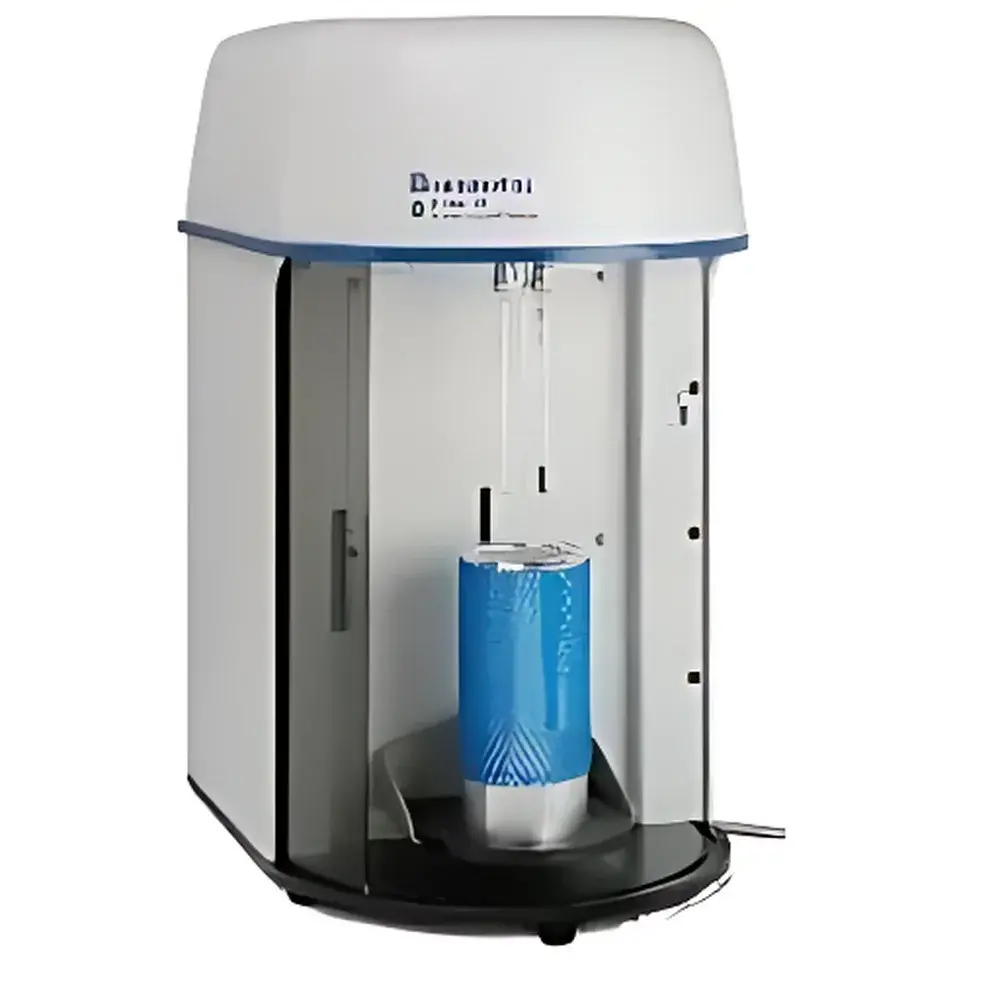
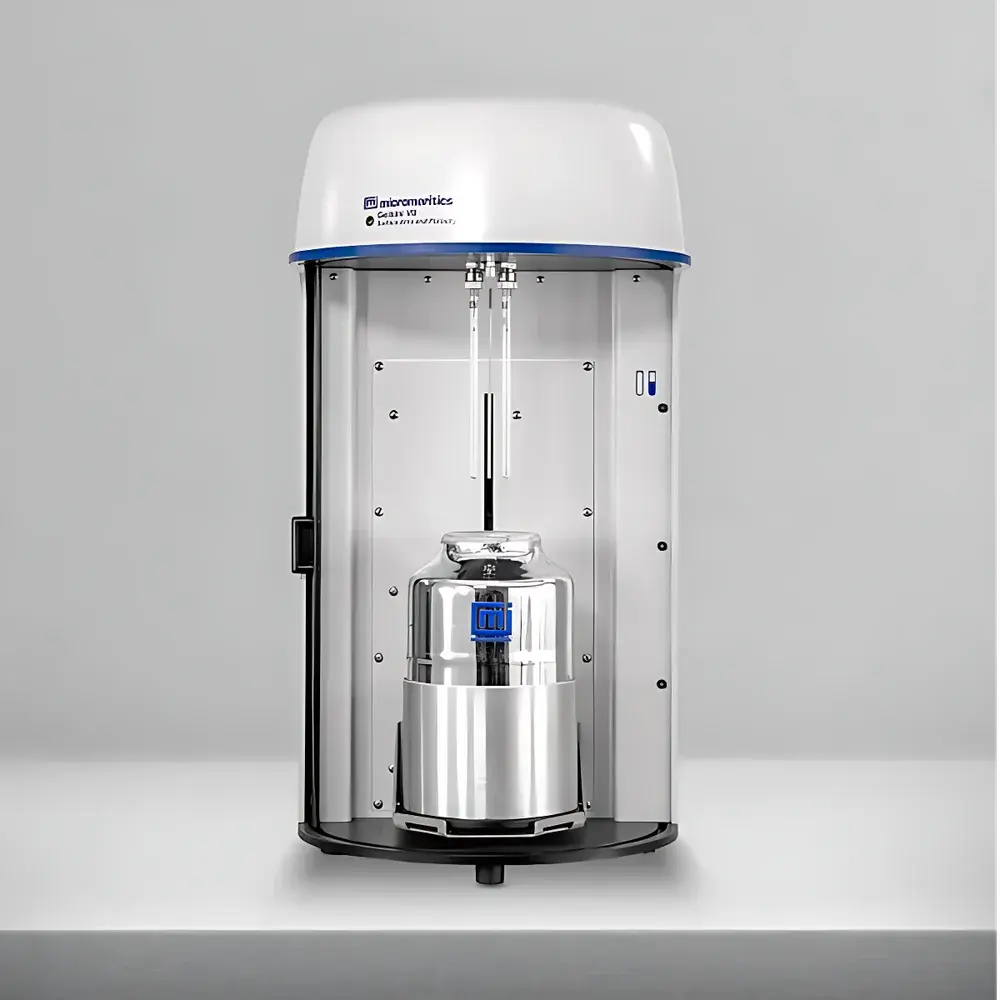
Micromeritics Gemini VII 2390 Series Automated Rapid Specific Surface Area and Pore Size Analyzer
| Brand | Micromeritics |
|---|---|
| Origin | USA |
| Model | Gemini VII 2390 Series |
| Analysis Principle | Static Volumetric Gas Adsorption |
| Number of Analysis Stations | 1 |
| Specific Surface Area Range | 0.01 m²/g to unlimited |
| Pressure Range | 0–1000 mmHg |
| Measurement Theory | Gas Adsorption (BET, Langmuir, t-Plot, HK, BJH) |
| Software Options | Keypad Embedded Firmware, Gemini Windows Software, FDA 21 CFR Part 11-Compliant Confirm Software |
| Dual-Mode Operation | Standalone Keypad or PC-Controlled |
| Compliance | ASTM D3663, ISO 9277, USP <846>, GLP/GMP-ready audit trail (Confirm version) |
Overview
The Micromeritics Gemini VII 2390 Series is an automated rapid specific surface area and pore size analyzer engineered for precision, reproducibility, and operational efficiency in academic, industrial, and regulatory environments. It employs the static volumetric gas adsorption method—based on rigorous thermodynamic principles—to quantify specific surface area (SSA), total pore volume, micropore volume, and mesopore size distribution. The instrument operates under controlled nitrogen (or other inert gas) adsorption/desorption isotherms at liquid nitrogen temperature (77 K), adhering to internationally recognized standards including ASTM D3663 (Standard Test Method for Surface Area of Catalysts), ISO 9277 (Determination of Specific Surface Area by Gas Adsorption Using the BET Method), and USP (Specific Surface Area). Its core architecture integrates a high-stability pressure transducer system, calibrated reference volume manifold, and thermally isolated equilibrium tube design—enabling accurate measurement of materials with surface areas as low as 0.01 m²/g without requiring krypton gas enhancement.
Key Features
- Single-station fully automated operation with zero manual valve actuation—entire analysis sequence initiated via keypad or PC interface
- Equilibrium tube technology delivering exceptional BET surface area repeatability (RSD < 1.5% across replicate runs on standard reference materials)
- High-resolution pressure measurement (0–1000 mmHg range) with digital capacitance manometers traceable to NIST standards
- No krypton dependency for low-surface-area measurements (< 0.5 m²/g), reducing consumable cost and safety overhead
- Optional stainless-steel Dewar flask for enhanced durability and thermal stability over extended operational cycles
- Scalable control architecture supporting up to four Gemini VII units from a single PC workstation
- Dual-mode software deployment: embedded keypad firmware for routine QA/QC, Windows-based Gemini software for advanced data modeling, and Confirm—a validated, 21 CFR Part 11-compliant platform for regulated laboratories
Sample Compatibility & Compliance
The Gemini VII 2390 accommodates solid powders, granules, monoliths, and thin-film substrates across diverse material classes—including catalysts, battery electrode materials, pharmaceutical excipients, activated carbons, metal–organic frameworks (MOFs), zeolites, ceramics, and geological samples. Sample holders accept standard 6-mm or 9-mm glass sample tubes; optional high-throughput trays enable batch processing. All analytical protocols comply with Good Laboratory Practice (GLP) and Good Manufacturing Practice (GMP) requirements when operated with Confirm software, which provides full electronic signature support, user access controls, change audit trails, and secure data archiving. Instrument validation documentation aligns with IQ/OQ/PQ protocols per ASTM E2500 and ISO/IEC 17025 guidelines.
Software & Data Management
Three software tiers ensure adaptability across laboratory maturity levels. The embedded keypad firmware delivers rapid one-click analysis for BET, Langmuir, and total pore volume—ideal for teaching labs and production QC. The Gemini Windows software extends functionality with customizable isotherm acquisition (up to 1000 data points per adsorption/desorption branch), t-plot micropore analysis, Horvath–Kawazoe (HK) micropore size distribution, and BJH mesopore diameter distribution (available on 2390p and 2390t variants). Confirm software meets stringent regulatory demands: it enforces role-based permissions, generates ALCOA+ compliant raw data files (.gda), logs all user actions with timestamps, and supports electronic records retention per FDA 21 CFR Part 11 and EU Annex 11.
Applications
This analyzer serves critical characterization workflows in catalysis R&D (e.g., quantifying active site density on Pt/Al₂O₃), battery material development (e.g., SSA correlation with Li-ion diffusion kinetics in Si anodes), pharmaceutical formulation (e.g., excipient surface area impact on tablet compressibility and dissolution rate), environmental science (e.g., pore structure–adsorption capacity relationships in biochar), and nanomaterial certification (e.g., ISO/IEC 17025 accredited SSA reporting for graphene oxide batches). Its speed and robustness make it suitable for incoming raw material screening, in-process monitoring, and final product release testing.
FAQ
What gases are supported for surface area analysis?
Nitrogen is the standard adsorbate at 77 K; argon (87 K) and krypton (for ultra-low surface area verification) are optionally supported with appropriate calibration.
Can the Gemini VII perform both adsorption and desorption isotherms?
Yes—the 2390t model acquires up to 1000 points each for adsorption and desorption branches, enabling rigorous hysteresis loop analysis and BJH pore size distribution modeling.
Is hardware validation included with purchase?
Each unit ships with a NIST-traceable pressure calibration certificate and certified reference material (CRM) test report using SRM 1990 (silica gel) or SRM 2973 (graphitized carbon black).
How is data integrity ensured in regulated environments?
Confirm software implements full 21 CFR Part 11 compliance: electronic signatures, immutable audit trails, automatic backup, and encrypted database storage with role-based access control.
What maintenance is required for long-term reliability?
Annual recalibration of pressure transducers and leak testing are recommended; no routine vacuum pump oil changes are needed due to the integrated dry scroll pump design.



