
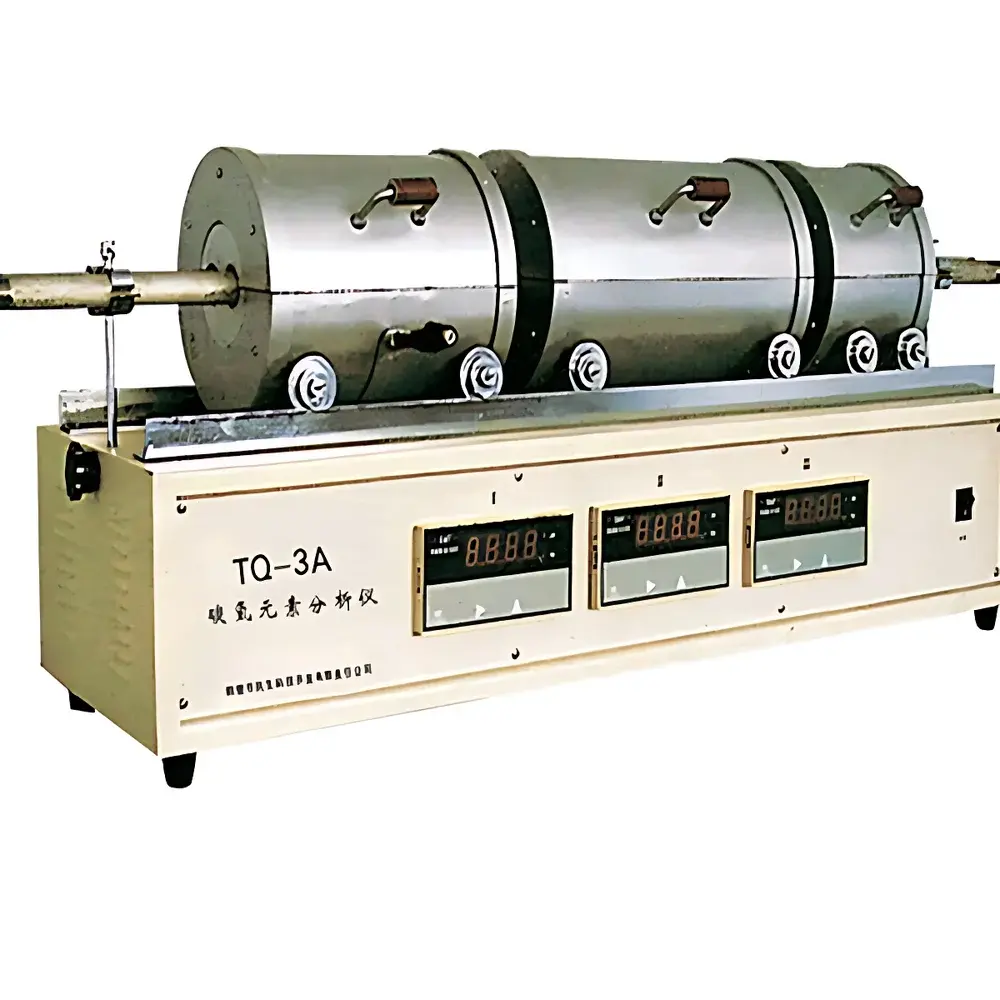
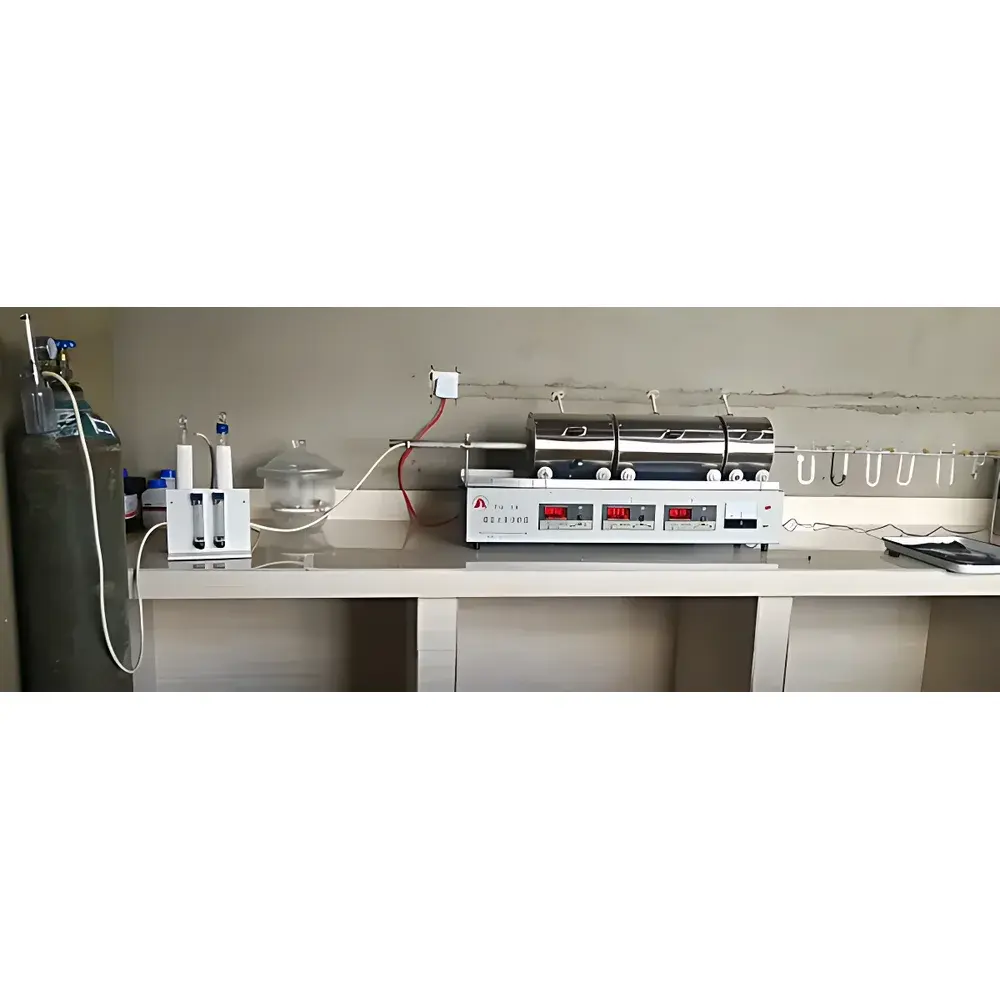
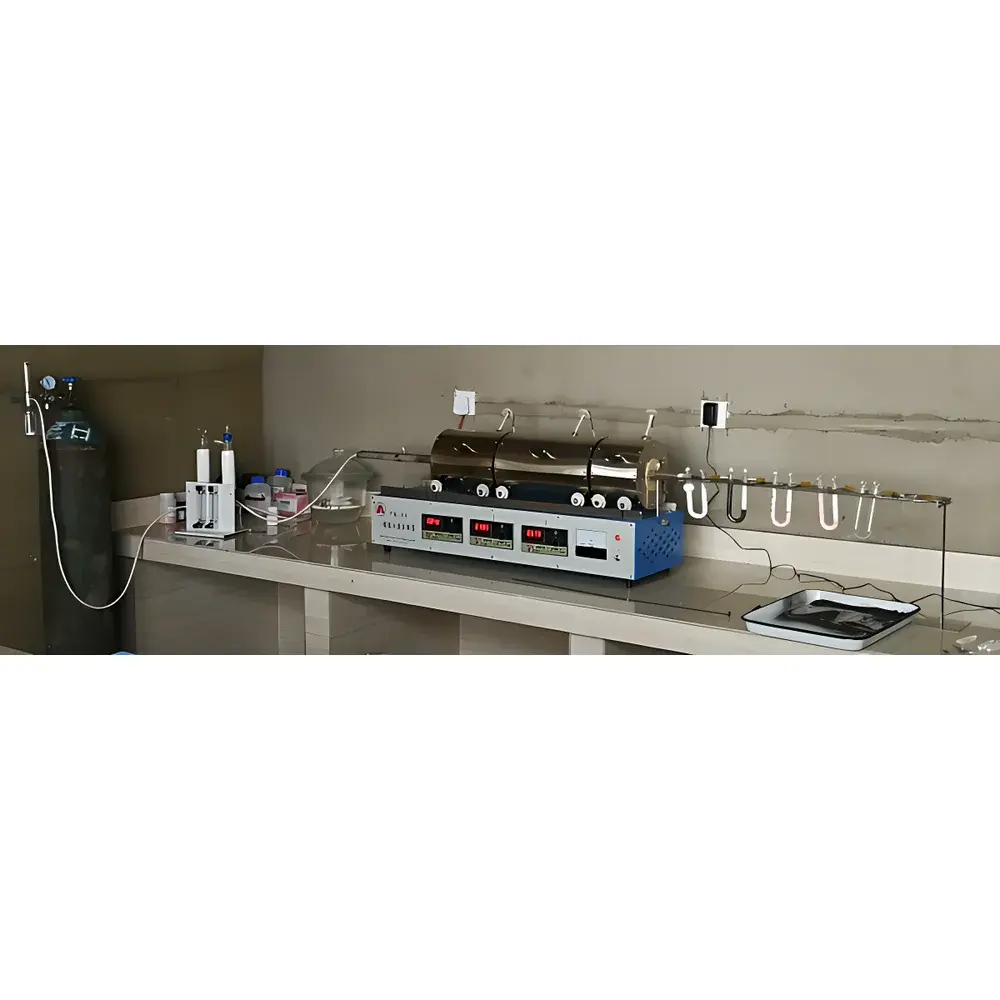
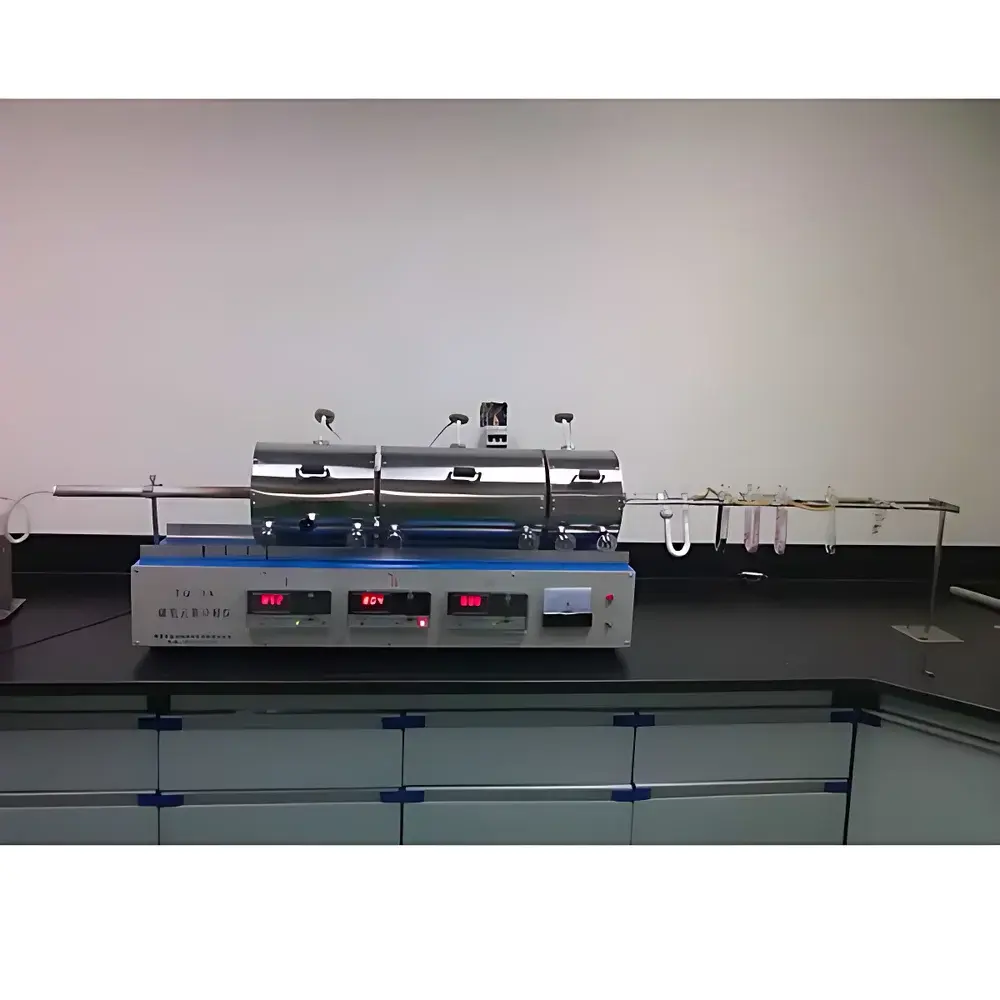
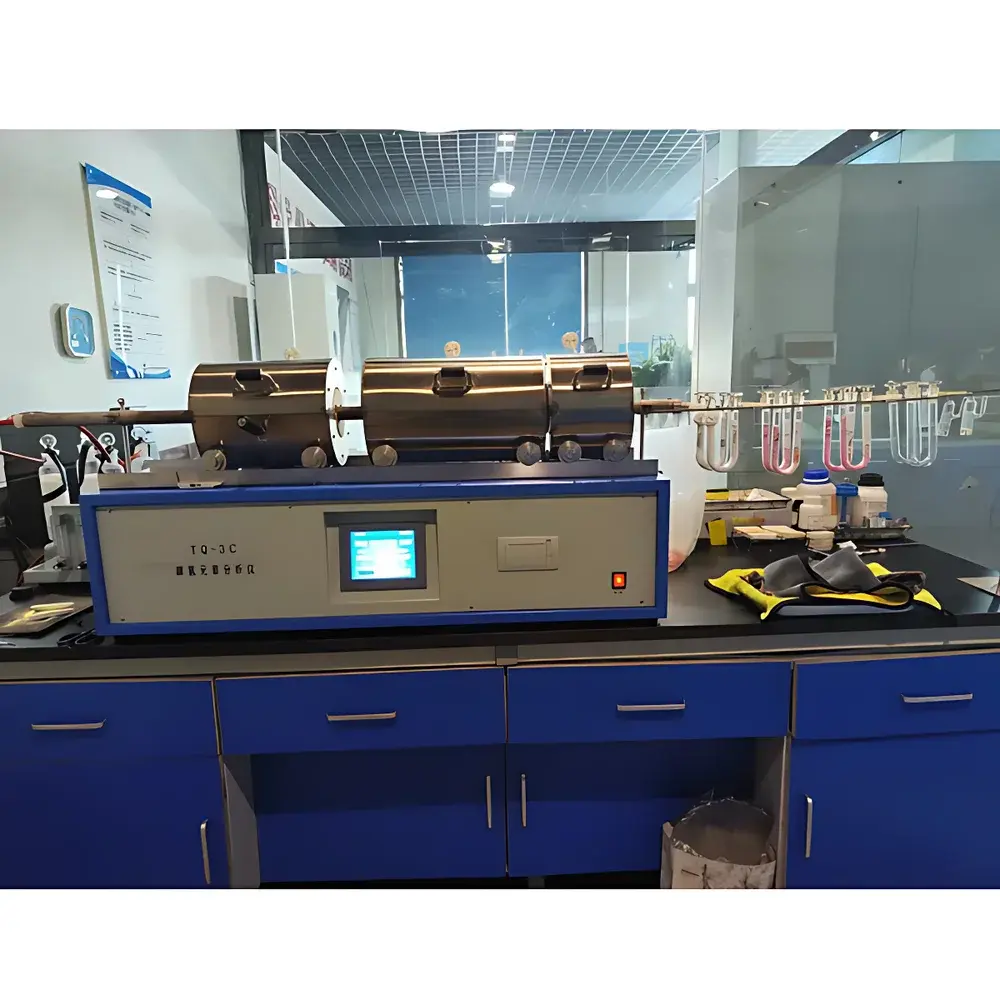
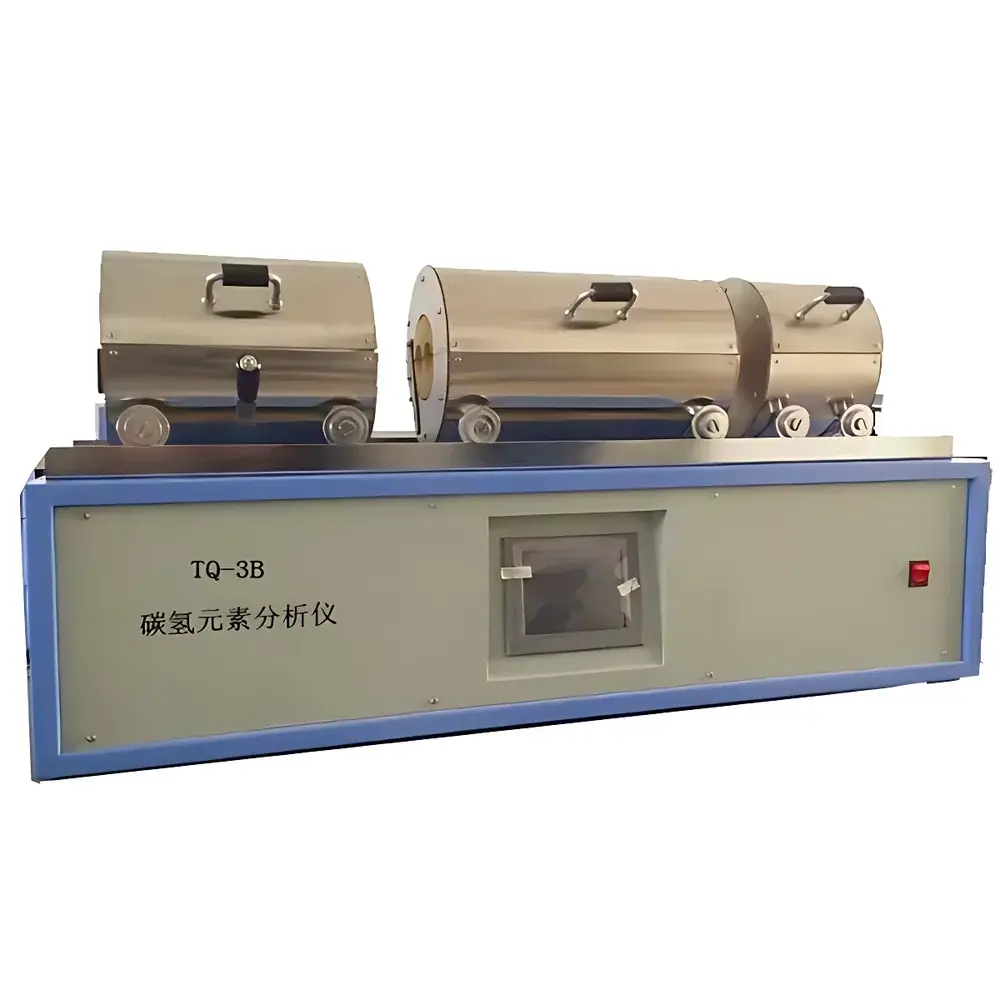
MingShen Science TQ-3A Carbon Hydrogen Analyzer
| Brand | MingShen Science |
|---|---|
| Origin | Henan, China |
| Model | TQ-3A |
| Measurement Principle | Coulometric–Gravimetric Method |
| Carbon Range | 1–100 wt% |
| Hydrogen Range | 0–20 wt% |
| Temperature Control Accuracy | ±10 °C |
| Temperature Display Resolution | 0.1 °C |
| Temperature Stability Class | 0.2 |
| Max Furnace Temp | 1100 °C |
| Three-Zone Furnace | Zone 1 (850 °C, 1200 W, 60 mm uniform zone), Zone 2 (800 °C, 1500 W, 80 mm uniform zone), Zone 3 (600 °C, 800 W) |
| Power Supply | AC 220 V |
| Dimensions (L×W×H) | 1200 × 350 × 450 mm |
| Weight | 53 kg |
| Compliance | GB/T 476–2001 |
| Sample Throughput | 2 samples per run |
| Data Storage Capacity | 100 test records |
Overview
The MingShen Science TQ-3A Carbon Hydrogen Analyzer is a dedicated laboratory instrument engineered for precise quantitative determination of carbon and hydrogen mass fractions in solid organic materials—primarily coal, coke, biomass, and related energy feedstocks. It operates on the established coulometric–gravimetric principle: samples are combusted quantitatively in a controlled, multi-zone furnace under purified oxygen flow; evolved CO₂ and H₂O vapors are selectively absorbed in pre-weighed, standardized absorbents (e.g., sodium hydroxide for CO₂ and magnesium perchlorate for H₂O); the mass gain of each absorber is measured gravimetrically, and carbon/hydrogen content is calculated stoichiometrically using calibration-derived conversion factors. This method delivers traceable, reproducible results aligned with classical elemental analysis protocols used in coal quality assurance, power plant fuel specification, and academic research.
Key Features
- Three independent, digitally regulated heating zones enabling simultaneous yet distinct temperature setpoints—850 °C (first furnace), 800 °C (second furnace), and 600 °C (third furnace)—optimized for sequential oxidation, reduction, and water trapping stages.
- Dual-sample capability with synchronized thermal treatment, improving laboratory throughput without compromising analytical integrity.
- Digital temperature display with 0.1 °C resolution and 0.2-class accuracy, integrated into a robust analog-digital hybrid control architecture ensuring long-term thermal stability.
- Thermally insulated furnace assembly with defined uniform temperature zones (60 mm and 80 mm lengths respectively), minimizing axial thermal gradients and supporting consistent combustion kinetics across replicate runs.
- Stainless-steel reaction train with high-purity quartz combustion tubes, gas-tight fittings, and calibrated oxygen flow regulation to ensure complete oxidation and prevent cross-contamination.
- Pre-calibrated, desiccated absorbent cartridges with certified mass stability, compliant with GB/T 476–2001 procedural requirements for weighing precision and handling protocols.
Sample Compatibility & Compliance
The TQ-3A is validated for use with pulverized coal samples (≤0.2 mm particle size), char, lignite, anthracite, and other carbonaceous solids meeting ASTM D3178 and ISO 625 specifications for proximate and ultimate analysis preparation. It satisfies mandatory performance criteria outlined in GB/T 476–2001 “Method for Determination of Carbon and Hydrogen in Coal”, including repeatability limits (R ≤ 0.15% for C, R ≤ 0.05% for H) and reproducibility thresholds. While not inherently 21 CFR Part 11–compliant due to its standalone analog-digital architecture, the instrument supports GLP-aligned documentation via external lab notebooks and manual audit trails. All consumables—including U-shaped absorbent tubes, copper oxide catalyst, and oxygen purification reagents—are compatible with standard coal testing supply chains.
Software & Data Management
The TQ-3A operates as a hardware-controlled benchtop system without embedded microprocessor-based software. Data acquisition relies on external analytical balances (0.0001 g resolution recommended) and manual entry into laboratory information management systems (LIMS) or spreadsheet-based QA/QC logs. Test records—including date/time stamp, sample ID, initial/absorber final masses, calculated C/H values, and operator signature—can be archived per internal SOPs. The instrument’s design permits integration with optional RS-232–enabled digital balances for semi-automated data capture; however, no proprietary firmware, cloud connectivity, or electronic signature functionality is included. All calibration certificates, maintenance logs, and GB/T 476–2001 conformance reports must be retained manually for regulatory audits.
Applications
- Coal quality control in thermal power plants and coking facilities, supporting calorific value estimation and emissions modeling (e.g., CO₂ yield prediction).
- Research laboratories investigating coal rank classification, pyrolysis behavior, and alternative fuel characterization (e.g., torrefied biomass, refuse-derived fuel).
- University teaching labs demonstrating fundamental principles of combustion chemistry, stoichiometry, and gravimetric analysis.
- Third-party testing institutes performing contract analyses for ISO/IEC 17025-accredited coal certification programs.
- Manufacturing QA of activated carbons and carbon black precursors where fixed carbon and volatile matter ratios inform process optimization.
FAQ
What standards does the TQ-3A comply with?
It is designed and verified to meet the procedural and performance requirements of GB/T 476–2001 for carbon and hydrogen determination in coal.
Is the instrument suitable for non-coal samples?
Yes—provided the material is combustible, low in heteroatoms (N, S, Cl), and yields only CO₂ and H₂O upon oxidation; validation per ASTM D3178 is recommended for novel matrices.
Does the system require carrier gas calibration?
Oxygen flow rate must be verified using a calibrated rotameter prior to each analytical session to ensure stoichiometric combustion completeness.
How often must absorbents be replaced?
Absorbent cartridges should be replaced after every 10–15 determinations or immediately if color change (e.g., pink indicator in Mg(ClO₄)₂) or mass drift exceeds ±0.5 mg between blank runs.
Can results be exported electronically?
No native export function exists; data transfer requires manual transcription or integration with external balance output via serial interface.




