
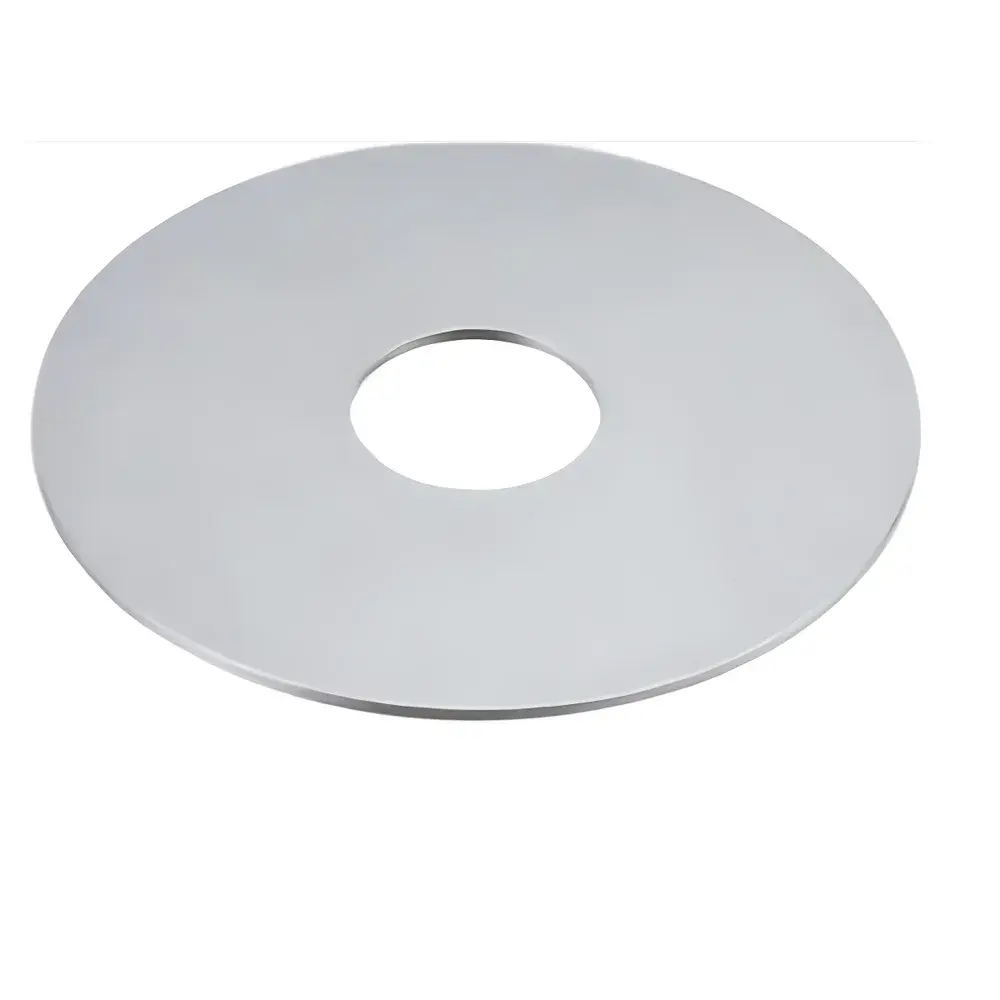
NARISHIGE CK-1B Nikon Microscope Adapter Plate
| Brand | NARISHIGE |
|---|---|
| Origin | Japan |
| Model | CK-1B |
| Outer Diameter | Ø110 mm |
| Inner Diameter | Ø108 mm (for stage insertion) / Ø30.5 mm (central aperture) |
| Thickness | 2 mm |
| Weight | 130 g |
Overview
The NARISHIGE CK-1B is a precision-engineered adapter plate designed exclusively for integrating the NARISHIGE CK-1 micromanipulator system with Nikon inverted and upright microscopes. Unlike generic mounting solutions, the CK-1B serves as a mechanical and spatial interface that maintains strict alignment fidelity between the manipulator’s kinematic axis and the microscope’s optical axis—critical for high-resolution intracellular microinjection, patch-clamp electrode positioning, and single-cell manipulation workflows. Its function is purely mechanical and passive: it provides a rigid, zero-backlash platform that secures the CK-1 base while accommodating Nikon’s standardized stage geometry (including the Ø108 mm stage opening common to Nikon Ti-series and Eclipse Ci-L platforms). The adapter does not contain electronics, sensors, or signal conditioning circuitry; instead, it ensures mechanical stability, repeatable positioning, and long-term thermal and vibrational decoupling—foundational requirements for sub-micron positional reproducibility in live-cell electrophysiology and microsurgery applications.
Key Features
- Precision-machined aluminum alloy construction with anodized surface finish for dimensional stability, corrosion resistance, and low thermal expansion coefficient.
- Dual-diameter concentric aperture design: outer Ø110 mm for secure peripheral clamping onto Nikon microscope stages; inner Ø108 mm clearance for unobstructed stage rotation or motorized XY translation; central Ø30.5 mm bore for unimpeded objective lens access and condenser light path.
- 2 mm uniform thickness optimized for rigidity-to-mass ratio—minimizing flexure under lateral load from CK-1 manipulator arms during coarse/fine positioning.
- Integrated ferromagnetic mounting surface enabling direct attachment of NARISHIGE CAT-1 magnetic tube clamps without adhesives or mechanical fasteners—facilitating rapid reconfiguration of pipette holders and capillary carriers.
- Compatible with both manual and motorized Nikon stages, including those equipped with encoded position feedback (e.g., Nikon NIS-Elements-compatible motorized stages), provided stage travel limits accommodate the CK-1B’s footprint.
Sample Compatibility & Compliance
The CK-1B itself imposes no sample-related constraints—it is a passive mechanical interface and therefore compatible with all specimen types supported by the underlying Nikon microscope platform (e.g., glass-bottom dishes, chambered coverslips, perfusion chambers, and slice-holding systems). Its use aligns with standard laboratory practices for GLP-compliant electrophysiology and developmental biology workflows. While the adapter plate carries no intrinsic regulatory certification, its deployment within validated microscope-manipulator setups supports compliance with ISO/IEC 17025 (for testing laboratories) and FDA 21 CFR Part 11 when paired with audit-trail-enabled acquisition software (e.g., NIS-Elements AR, pCLAMP + Digidata, or PatchMaster). No electrical safety certifications (e.g., IEC 61010-1) apply, as the CK-1B contains no powered components.
Software & Data Management
As a purely mechanical adapter, the CK-1B requires no drivers, firmware, or software integration. It functions transparently within existing microscope control ecosystems—including Nikon NIS-Elements, MetaMorph, and third-party Python- or LabVIEW-based automation frameworks—provided the CK-1 manipulator’s own controller (e.g., MN-4 or MMO-202ND) is properly interfaced via RS-232 or USB. Positional metadata generated by the CK-1 (e.g., X/Y/Z coordinates, pipette angle, and approach depth) remains fully exportable in CSV or HDF5 format through standard NARISHIGE communication protocols. Users may correlate these coordinates with time-synchronized image stacks or electrophysiological traces using timestamp-aligned acquisition triggers—a workflow routinely implemented in publications indexed in Journal of Neuroscience, Biophysical Journal, and Nature Methods.
Applications
- High-precision microinjection into zebrafish embryos, mouse oocytes, or cultured neurons on Nikon TE2000/Eclipse Ti platforms.
- Simultaneous dual-patch clamp recordings where independent CK-1 manipulators are mounted side-by-side using matched CK-1B plates for symmetrical stage loading.
- Long-duration time-lapse imaging of CRISPR-Cas9 editing events, requiring stable manipulator positioning over 12–72 hour acquisitions.
- Integration with Nikon’s Perfect Focus System (PFS) to maintain focal plane stability during micropipette penetration—leveraging the CK-1B’s minimal vertical profile to avoid PFS sensor occlusion.
- Custom multi-modal rigs combining Nikon fluorescence microscopy with NARISHIGE hydraulic microinjectors (e.g., MO-10) or vibration-isolated optical tweezers stages.
FAQ
Is the CK-1B compatible with Nikon Eclipse Ci series upright microscopes?
Yes—the CK-1B fits Eclipse Ci-L and Ci-S models when used with optional stage adapters that provide a Ø108 mm opening; verify stage model number before installation.
Does the CK-1B include mounting screws or hardware?
No—mechanical fastening relies on Nikon’s native stage clamping mechanism or optional M4 × 0.7 threaded inserts; users must supply stage-specific retention hardware.
Can the CK-1B be used with non-Nikon microscopes?
Only if the target microscope features identical stage geometry (Ø108 mm opening, flat mounting surface, and ≤2 mm stage lip height); dimensional verification with calipers is strongly recommended prior to purchase.
What is the maximum load capacity supported by the CK-1B?
The plate is rated for static loads up to 1.2 kg—sufficient for full CK-1 configuration with MN-4 controller, two MM-88 micromanipulator arms, and standard glass micropipettes.
Is thermal drift compensation built into the CK-1B?
No—thermal stability is achieved through material selection (6061-T6 aluminum) and mechanical design; active drift correction must be implemented at the microscope or software level (e.g., via NIS-Elements PFS or hardware autofocus modules).



