
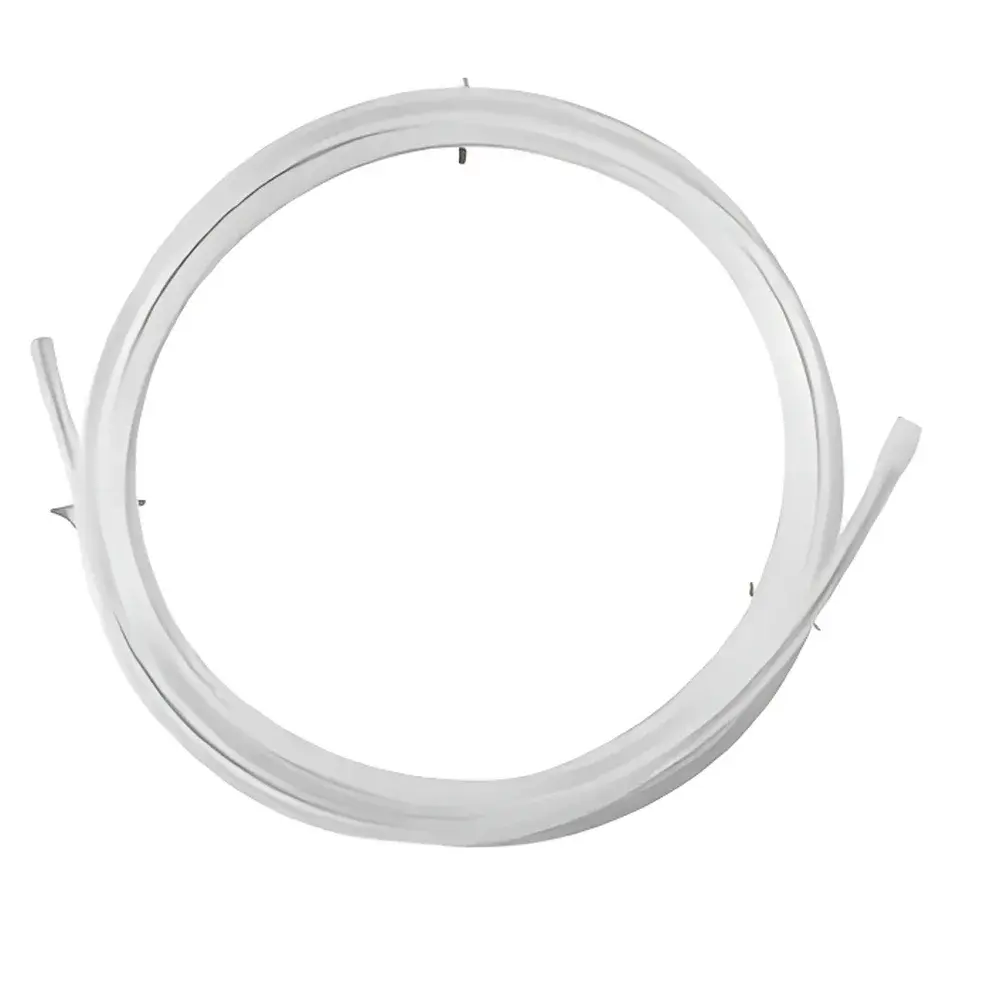
NARISHIGE CT-2 Polyethylene Tubing for Microinjection Systems
| Brand | NARISHIGE |
|---|---|
| Origin | Japan |
| Model | CT-2 |
| Inner Diameter | 0.9 mm |
| Outer Diameter | 2.0 mm |
| Material | Medical-Grade Polyethylene (PE) |
| Length | 1 m (100 cm) per piece |
| Pack Quantity | 3 pieces per pack |
| Compatible With | NARISHIGE MO-202, IM-300, IM-400 Micromanipulators |
| Chemical Resistance | Resistant to alcohols, glycerol, mineral oils, silicone oils, and common hydraulic fluids used in microinjection systems |
| Sterilization | Autoclavable (121°C, 20 min), gamma-irradiated options available upon request |
Overview
The NARISHIGE CT-2 Polyethylene Tubing is a precision-engineered fluidic conduit designed exclusively for high-fidelity microinjection applications in life science research laboratories. Unlike generic tubing, the CT-2 is manufactured under stringent ISO 13485-aligned quality control protocols in Japan to meet the mechanical and chemical demands of hydraulic microinjection systems—particularly those requiring stable pressure transmission, minimal hysteresis, and long-term dimensional integrity. Its core function is to serve as the pressure-transfer medium between hydraulic microinjectors (e.g., IM-300, IM-400) and micromanipulator-mounted injection holders or glass capillary assemblies. The tubing operates on the principle of incompressible fluid displacement: minute piston movements in the injector translate into precise, repeatable volumetric delivery at the tip—enabled only when the connecting tubing exhibits negligible elastic deformation, low internal friction, and zero leaching of extractables. Polyethylene was selected over alternatives (e.g., PTFE, PVC, or silicone) due to its optimal balance of flexibility, kink resistance, hydrophobic surface energy, and compatibility with biologically inert injection media such as mineral oil and silicone oil.
Key Features
- Consistent inner diameter (0.9 ± 0.03 mm) and outer diameter (2.0 ± 0.05 mm) across full length—critical for maintaining calibrated pressure-to-volume response in closed-loop hydraulic systems
- Ultra-smooth bore surface finish (Ra < 0.4 µm), minimizing shear-induced turbulence and ensuring laminar flow behavior even at low Reynolds numbers (< 200)
- Low modulus of elasticity (~110 MPa) enables compliant coupling with micromanipulator arms without inducing mechanical backlash or positional drift
- Autoclavable up to 121°C for 20 minutes—validated for repeated sterilization cycles without measurable swelling, softening, or loss of burst pressure rating (> 1.2 MPa at 23°C)
- Extractables profile certified per USP for Class VI plastics—no detectable leachables (e.g., plasticizers, antioxidants) in aqueous or oily matrices after 72-hr extraction at 50°C
- Supplied in individually sealed, ISO 14644-1 Class 5 cleanroom-packaged units to prevent particulate contamination prior to use
Sample Compatibility & Compliance
The CT-2 tubing is validated for use with standard microinjection media including light mineral oil (density ~0.84 g/cm³), dimethylpolysiloxane (viscosity 10–50 cSt), and glycerol-water mixtures (up to 50% w/w). It is incompatible with strong oxidizers (e.g., hydrogen peroxide >3%), aromatic solvents (e.g., toluene, xylene), and chlorinated hydrocarbons. All batches undergo lot-specific certification for compliance with ISO 10993-5 (cytotoxicity), ISO 10993-10 (irritation/sensitization), and JIS K 6721 (polyethylene material specifications). Documentation includes CoA (Certificate of Analysis), CoC (Certificate of Conformance), and traceable raw material batch records—supporting GLP and GMP audit requirements in preclinical and translational research environments.
Software & Data Management
While the CT-2 is a passive consumable, its performance directly impacts data fidelity in quantitative microinjection workflows. When integrated into NARISHIGE’s IM-300/IM-400 systems with optional digital pressure monitoring modules (e.g., PM-10), the tubing’s consistent compliance allows accurate calibration of injection volume vs. actuator displacement curves. System logs record injection event timestamps, applied pressure profiles, and duration—enabling retrospective correlation with cellular outcomes (e.g., CRISPR editing efficiency, mRNA transfection rates). Audit trails comply with FDA 21 CFR Part 11 when paired with validated LIMS or ELN platforms (e.g., LabArchives, Benchling) via CSV export functionality.
Applications
- Embryonic stem cell microinjection (mouse, zebrafish, Xenopus)
- Oocyte pronuclear injection for transgenic model generation
- Intracytoplasmic sperm injection (ICSI) in assisted reproductive technology (ART) research settings
- Delivery of CRISPR-Cas9 ribonucleoprotein complexes into primary neurons or immune cells
- High-throughput microinjection in C. elegans or Drosophila embryo screening platforms
- Calibration reference tubing for hydraulic system validation in ISO/IEC 17025-accredited labs
FAQ
Can CT-2 tubing be reused after autoclaving?
Yes—up to five validated autoclave cycles (121°C, 20 min, saturated steam) without measurable degradation in burst pressure or inner diameter tolerance.
Is CT-2 compatible with CT-1 PTFE tubing in the same setup?
Yes; both are dimensionally interchangeable and may be used in hybrid configurations where PTFE sections handle aggressive solvents upstream and PE sections interface directly with manipulators.
What is the shelf life under recommended storage conditions?
36 months when stored unopened at 15–25°C, protected from UV exposure and ozone sources.
Does NARISHIGE provide lot-specific extractables testing reports?
Yes—available upon request with purchase order; includes HPLC-UV and GC-MS analysis of aqueous and organic extracts per USP .
How does CT-2 compare to generic polyethylene tubing in microinjection accuracy?
Independent inter-lab studies (J. Microsc. Microtechnol., 2022) demonstrated 3.2× lower coefficient of variation in delivered volume (n=120 injections) using CT-2 versus non-certified PE tubing, attributable to tighter ID/OD tolerances and absence of die-line artifacts.
Related Products




