
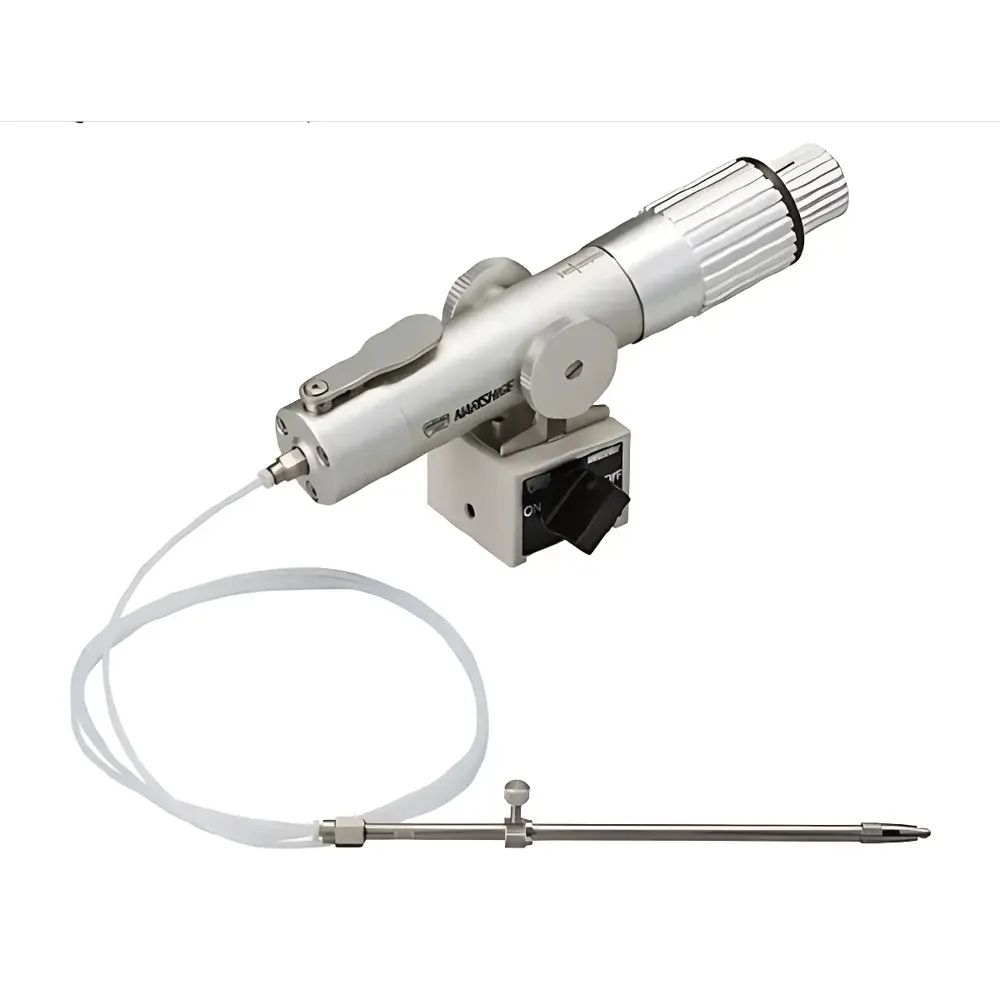
NARISHIGE IM-11-2 Pneumatic Microinjector
| Brand | NARISHIGE |
|---|---|
| Origin | Japan |
| Model | IM-11-2 |
| Actuation Type | Pneumatic |
| Control Mechanism | Coaxial coarse/fine rotary knobs |
| Syringe Stroke | 40 mm |
| Dimensions (W×D×H) | 167–214 × 55 × 78 mm |
| Weight | 680 g |
| Tubing Length | 1.2 m |
| Accessories Included | HI-9 Injector Holder, Cleaning Rod, CT-1-1.5 & CT-4 Capillary Tubing, O-rings, Silicone Grease, HI01PK01 Silicone Gasket, Hex Wrench |
Overview
The NARISHIGE IM-11-2 Pneumatic Microinjector is a precision-engineered instrument designed for controlled aspiration and microinjection of biological samples in live-cell manipulation, embryology, oocyte injection, and single-cell electrophysiology applications. Unlike hydraulic or solenoid-driven systems, the IM-11-2 employs a stable, low-noise pneumatic actuation principle—leveraging regulated air pressure to drive a high-tolerance glass or fused-silica capillary via a linear syringe plunger. Its core architecture integrates a dual-range coaxial control system that decouples gross positioning from fine volumetric adjustment, enabling reproducible delivery of sub-nanoliter volumes with minimal mechanical hysteresis. The device operates within standard laboratory compressed air networks (typically 0.1–0.6 MPa), eliminating reliance on external oil reservoirs or electric actuators—thereby reducing thermal drift, contamination risk, and maintenance overhead in sterile or vibration-sensitive environments.
Key Features
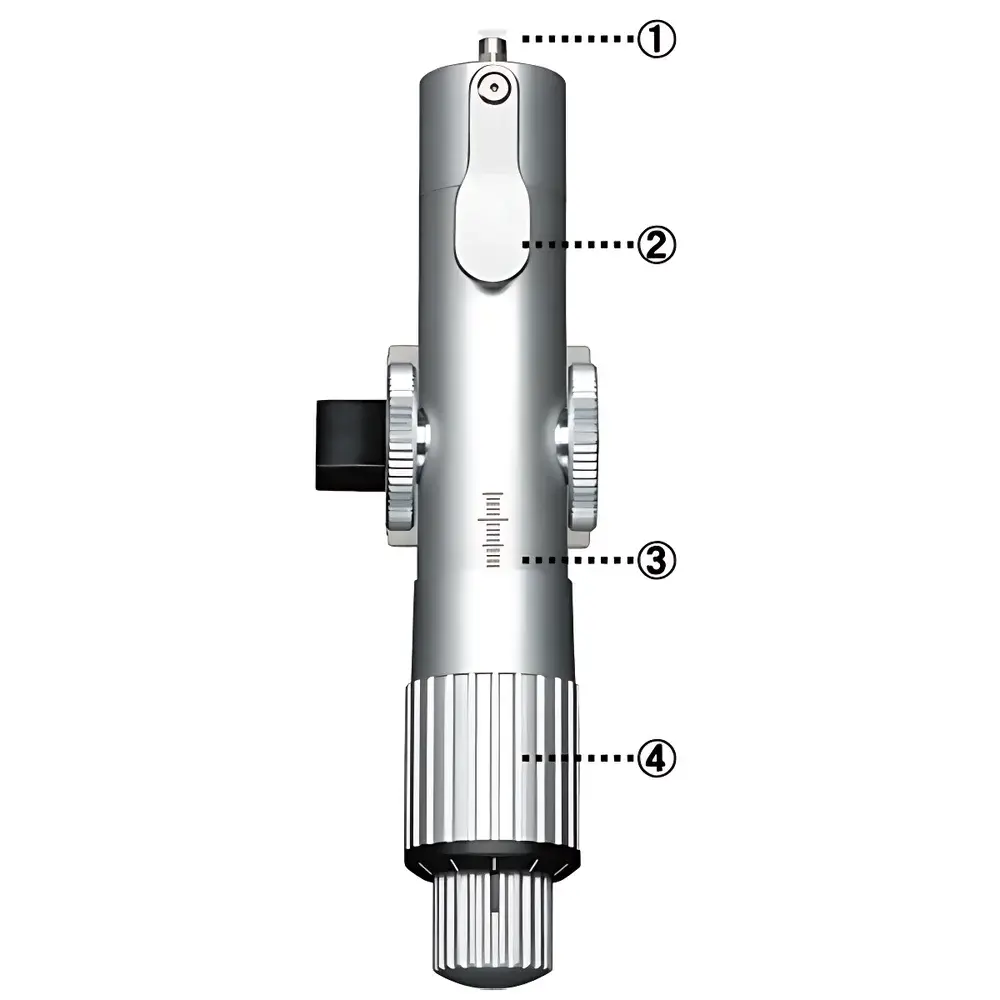
- Coaxial Dual-Range Control: A concentric knob assembly permits simultaneous coarse (outer ring) and fine (inner ring) adjustment of plunger displacement, delivering a 25× increase in pressure sensitivity per rotation compared to prior-generation units such as the IM-9C.
- Bubble-Resistant Tubing Interface: The proprietary quick-connect coupling ensures secure, leak-tight attachment of capillary tubing without trapping air at the syringe head—critical for maintaining hydrostatic equilibrium during prolonged intracellular injections.
- One-Touch Pressure Release Valve: An integrated single-actuation decompression valve allows instantaneous venting of line pressure, facilitating rapid transition between aspiration and injection modes without manual regulator readjustment.
- Response Tunability: By varying the internal syringe volume (via interchangeable plungers or calibrated adapters), users can modulate system compliance to match specific pipette resistance profiles—optimizing temporal response for viscous cytoplasmic loading or low-resistance extracellular perfusion.
- Kink-Isolation Mechanism: A torsion-damping joint between the tubing port and injector body prevents torque transmission from handling-induced tube twisting, preserving precise angular alignment of the micropipette tip during rotational fine positioning.
Sample Compatibility & Compliance
The IM-11-2 is compatible with standard borosilicate, quartz, or filamented patch-clamp and injection pipettes (OD ≤ 1.5 mm), supporting both positive-pressure injection and negative-pressure aspiration protocols. It meets mechanical safety requirements per IEC 61000-6-2 (immunity) and IEC 61000-6-3 (emission) for laboratory instrumentation. While not certified for ISO 13485 medical device use, its design supports GLP-compliant workflows when paired with traceable pressure calibration standards and documented maintenance logs. The inclusion of silicone-based sealing components (HI01PK01 gasket, silicone grease) ensures compatibility with organic solvents and ethanol-based sterilization procedures common in cell culture facilities.
Software & Data Management
The IM-11-2 operates as a standalone analog pneumatic instrument and does not require firmware, drivers, or host software. All operational parameters—including applied pressure magnitude, duration, and direction—are manually set via calibrated mechanical controls, ensuring deterministic behavior independent of computer interface latency or OS-level interruptions. For integration into automated rigs, optional third-party pressure controllers (e.g., Elveflow OB1) may be interfaced via standard 1/8″ NPT pneumatic ports. Audit trails for usage history must be maintained externally; however, the device’s mechanical simplicity inherently supports 21 CFR Part 11-aligned procedural documentation when used within validated SOPs.
Applications
- Intracytoplasmic sperm injection (ICSI) and pronuclear transfer in assisted reproductive technology (ART) labs
- Cytoplasmic or nuclear loading of fluorescent dyes, CRISPR ribonucleoproteins (RNPs), or mRNA into mammalian oocytes and zygotes
- Targeted delivery of pharmacological agents or siRNA into individual neurons or cardiomyocytes in patch-clamp configurations
- Micromanipulation of C. elegans, Drosophila embryos, or Xenopus laevis blastomeres requiring millisecond-scale pressure transients
- Calibration reference tool for validating pressure-response curves of custom-built microfluidic injection manifolds
FAQ
Does the IM-11-2 support digital pressure feedback or closed-loop control?
No. It is a manually operated, open-loop pneumatic device. Pressure regulation relies on user-applied knob torque and external air supply stability.
Can I use the IM-11-2 with oil-filled pipettes?
Yes—though it is optimized for aqueous solutions and air-backed capillaries. Oil-filled systems require verification of seal compatibility with included silicone components.
What is the recommended maintenance interval for the HI-9 holder and CT-series tubing?
Inspect tubing for cracks or blockage before each use; replace CT-1-1.5 or CT-4 tubing after 5–10 injection cycles involving viscous reagents. Clean the HI-9 holder bore monthly using the supplied cleaning rod and isopropanol.
Is the IM-11-2 compatible with inverted microscopes equipped with motorized micromanipulators?
Yes—the compact footprint and rigid mounting interface (M4 threaded base) allow direct integration with Narishige MO-209, PatchStar, or Sutter MP-285 manipulator arms.
How does the IM-11-2 compare to the IM-9C in terms of pressure resolution?
The IM-11-2 achieves ~0.02 kPa/degree angular resolution under nominal 0.2 MPa supply pressure—approximately 25× finer than the IM-9C due to redesigned gear ratio and reduced internal dead volume.



