
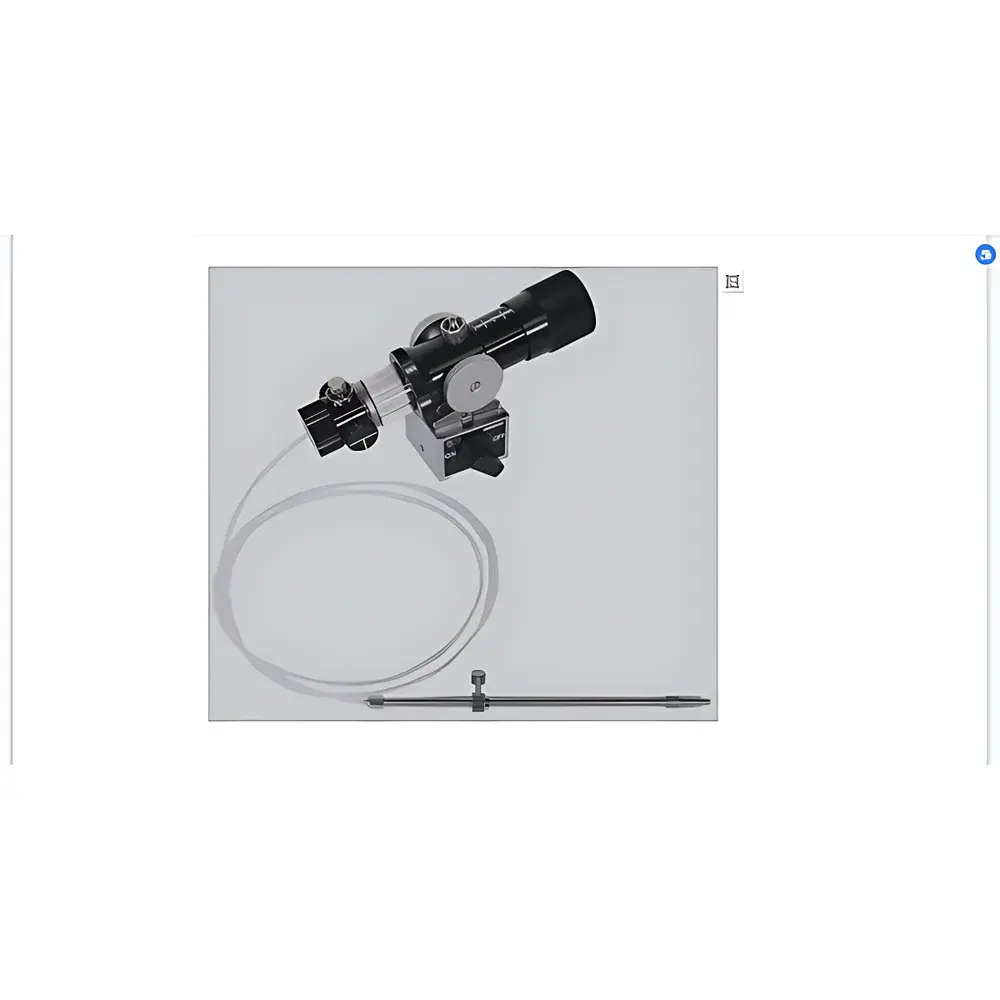
NARISHIGE IM-21 Microinjector Pump
| Brand | NARISHIGE |
|---|---|
| Origin | Japan |
| Model | IM-21 |
| Instrument Type | Microsyringe Pump |
| Plunger Stroke | 20 mm |
| Full-Rotation Knob Resolution | 500 µm per revolution |
| Volume Displacement per Full Rotation | 10 µL |
| Repeatability | ±0.1 µL (typical, under controlled conditions) |
| Dimensions (W × D × H) | 127–147 mm × 56 mm × 78 mm |
| Weight | 620 g |
| Tubing Length | 1 m |
| Accessories Included | IM-H3 Syringe Holder, O-rings (IMO4), Silicone Gasket (HIO1PK01), Cleaning Rod, Silicone Grease |
Overview
The NARISHIGE IM-21 Microinjector Pump is a precision-engineered manual microinjection device designed for high-fidelity intracellular and extracellular delivery in micromanipulation workflows. Unlike motorized syringe pumps, the IM-21 operates via a calibrated mechanical drive system based on fine-pitch lead-screw translation—enabling deterministic, stepwise plunger advancement without electronic feedback or power dependency. Its core mechanism leverages a dual-stage motion architecture: coarse positioning via linear plunger travel (20 mm total stroke) and ultrafine volumetric control via a full-rotation knob with 500 µm axial displacement per revolution—corresponding to ~10 µL volume displacement when used with standard 10 µL glass capillaries (e.g., Drummond Nanoject II-compatible barrels). This mechanical design ensures intrinsic stability, zero drift, and immunity to electromagnetic interference—critical attributes for long-duration injection sessions in electrophysiology rigs, inverted microscope stages, or laminar-flow hoods.
Key Features
- Compact footprint (127–147 × 56 × 78 mm) and lightweight construction (620 g) enable seamless integration into confined micromanipulation setups, including multi-axis patch-clamp rigs and stereo-microscope-mounted injection stations.
- Manual, gear-driven actuation eliminates reliance on batteries or external power supplies—ensuring uninterrupted operation during extended protocols such as pronuclear injection in mouse zygotes or blastomere aspiration in preimplantation embryos.
- High-resolution mechanical control: 500 µm per full knob rotation translates to sub-microliter dosing resolution; typical repeatability is ±0.1 µL when operated under consistent ambient temperature and syringe calibration.
- Dedicated accessory ecosystem includes IM-H3 syringe holder (optimized for vertical alignment with Narishige MO-202 or MN-4 manipulators), silicone O-rings (IMO4) for vacuum-tight sealing, HIO1PK01 silicone gasket for pressure-stable mounting, cleaning rod for capillary bore maintenance, and medical-grade silicone grease for smooth plunger travel.
- Universal compatibility with borosilicate glass capillaries (1.0–1.2 mm OD) and standard Luer-lock syringes—supporting both positive-pressure injection and gentle aspiration modes via reversible plunger direction.
Sample Compatibility & Compliance
The IM-21 is routinely deployed in GLP-aligned developmental biology and reproductive technology labs where traceability and procedural consistency are mandated. While the device itself carries no embedded software or digital audit trail, its mechanical determinism supports compliance with ISO 13485 (for in vitro diagnostic device manufacturing support workflows) and aligns with FDA-recommended practices for manual instrumentation used in cell therapy process development (e.g., ESC/iPSC microinjection prior to banking). It meets CE marking requirements for laboratory equipment (2014/30/EU EMC Directive and 2014/35/EU Low Voltage Directive) and conforms to JIS B 7021:2019 standards for dimensional accuracy and functional reliability of precision micromanipulation tools. No electrical safety certification (e.g., UL/CSA) applies, as the unit contains no powered components.
Software & Data Management
The IM-21 is a purely mechanical instrument with no onboard electronics, firmware, or connectivity interfaces. Consequently, it does not generate digital logs, require calibration certificates with electronic signatures, or support 21 CFR Part 11-compliant audit trails. All operational parameters—including plunger position, rotation count, and estimated delivered volume—are recorded manually by the user in bound lab notebooks or LIMS-integrated electronic records. This analog architecture simplifies validation protocols in regulated environments where software qualification overhead must be minimized. Users are advised to maintain a master log documenting syringe type, inner diameter, fluid viscosity, and ambient temperature for post-hoc volume recalibration using standard gravimetric or fluorometric verification methods.
Applications
- Intracytoplasmic sperm injection (ICSI) in human and murine oocytes, leveraging precise 10 µL-per-rotation control to avoid cytoplasmic lysis.
- Genetic material delivery: microinjection of plasmid DNA, CRISPR-Cas9 ribonucleoprotein complexes, or morpholino antisense oligonucleotides into zebrafish embryos (1–4 cell stage) and Xenopus laevis oocytes.
- Nuclear transfer procedures, including somatic cell nuclear transfer (SCNT) and enucleation-assisted reprogramming, where bidirectional plunger control enables simultaneous aspiration and injection.
- Stem cell manipulation: targeted delivery of differentiation factors into embryoid bodies or extraction of single-cell lysates from iPSC colonies cultured on Matrigel-coated substrates.
- Neuroscience applications: localized pressure ejection of neurotracers (e.g., biotinylated dextran amines) into defined brain regions of acute tissue slices mounted on perfusion chambers.
FAQ
Is the IM-21 compatible with Narishige’s MN-4 or MO-202 micromanipulators?
Yes—the IM-H3 mounting bracket is specifically engineered for rigid, vibration-damped coupling to these manipulator models.
Can the IM-21 be used for reverse-mode aspiration (withdrawal)?
Yes—plunger direction is fully reversible via manual knob rotation, enabling controlled aspiration of cytoplasm or blastomeres without switching hardware configurations.
What is the recommended maintenance interval for the silicone grease and O-rings?
NARISHIGE recommends inspecting and reapplying silicone grease every 50 hours of cumulative use; O-rings should be replaced after 200 full rotations or upon visible compression set or cracking.
Does the IM-21 support pressure-based injection (e.g., via compressed air or nitrogen)?
No—it is strictly a displacement-based mechanical pump; pressure-driven injection requires separate pneumatic controllers such as the Narishige IM-300 or FemtoJet systems.
How is volumetric accuracy verified without electronic calibration?
Users perform periodic gravimetric validation using an analytical balance (0.1 µg resolution) and water or glycerol standards, referencing NIST-traceable syringe inner diameter measurements and published fluid density tables at operating temperature.



