
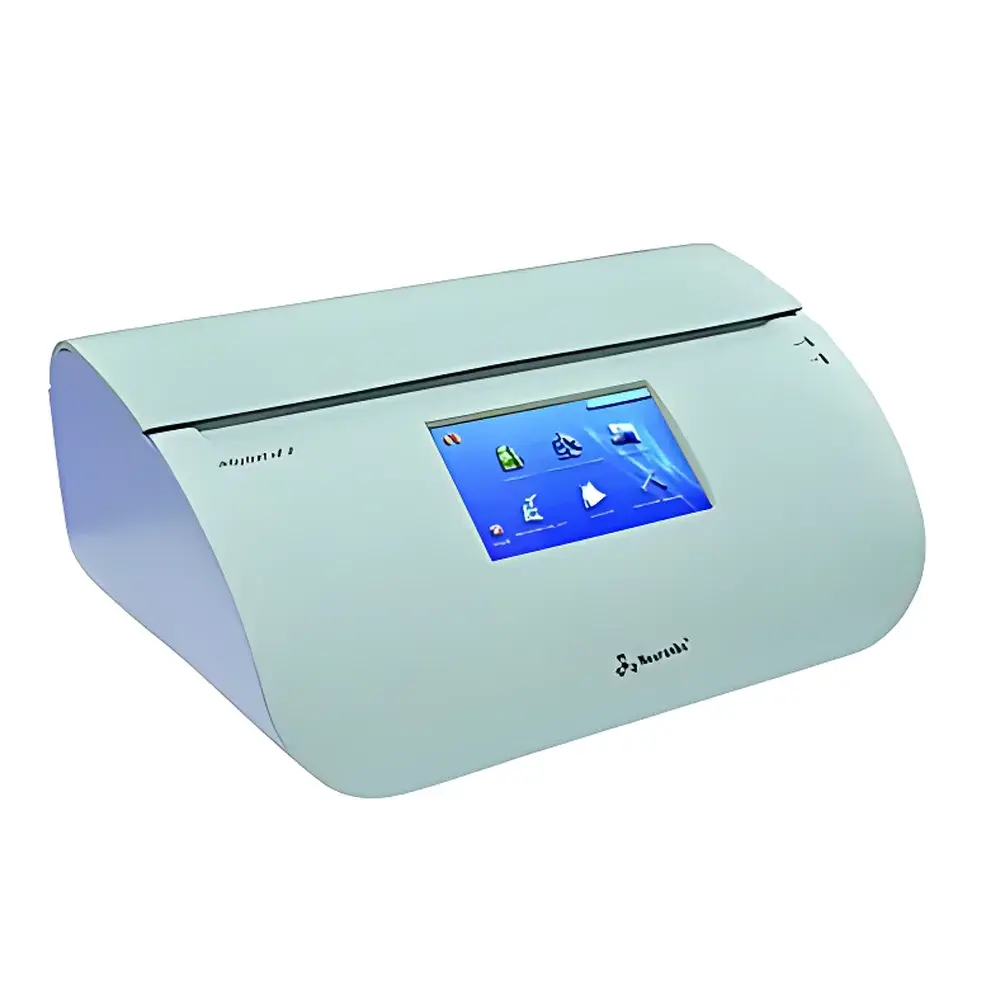
NeuronBC IntegTest 6.0 Filter Integrity Tester
| Brand | NeuronBC |
|---|---|
| Origin | Beijing, China |
| Model | IntegTest 6.0 |
| Power Supply | 100–240 VAC, 50 Hz, 120 W (optional backup battery) |
| Operating Pressure Range | 100–10,000 mbar (145 psi) |
| Environmental Operating Conditions | 5–40 °C, 10–80% RH |
| Dimensions (mm) | 400 (D) × 240 (W) × 270/220 (H1/H2) |
| Weight | 8 kg |
| Bubble Point Range | 100–8,000 mbar |
| Diffusion Flow Range | 1–600 mL/min |
| Water Intrusion Range | 0.01–100 mL/min |
| Test Accuracy | Net Volume ±4% |
| Supported Configurations | Symmetric & asymmetric membranes, syringe filters, capsule filters, flat-sheet filters, cartridge filters (up to 9-core, 20-inch), ultrafiltration cassettes & columns, irregular-format filters |
| Pre-stored Protocols | 80 |
| Audit Trail Events | ≥16 logged parameters (user, timestamp, method, result, etc.) |
| Data Storage | >5,000 test records (unlimited with USB backup) |
| Display | 7" high-resolution color touchscreen |
| Interface | RS232, USB |
| Language | English / Chinese |
| Compliance | Fully aligned with USP <1207>, EP 5.1.1, ISO 13408-2, and FDA 21 CFR Part 11 (electronic signatures, role-based access, audit trail) |
Overview
The NeuronBC IntegTest 6.0 Filter Integrity Tester is an engineered solution for deterministic, regulatory-compliant integrity verification of sterilizing-grade and process-grade filtration systems used in biopharmaceutical manufacturing, aseptic processing, and parenteral drug production. It operates on established physical principles—capillary flow analysis for bubble point and diffusion testing, pressure decay modeling for hold-time validation, and hydrostatic intrusion kinetics for hydrophilic/hydrophobic membrane characterization. Designed explicitly for GMP environments, the instrument implements first-principles measurement protocols defined in USP , European Pharmacopoeia Chapter 5.1.1, ISO 13408-2, and ASTM F838-22. Its architecture supports both offline benchtop validation and online integration into automated sterilization-in-place (SIP) and clean-in-place (CIP) sequences, ensuring traceability from filter qualification through routine release testing.
Key Features
- Multi-method integrity validation: bubble point (standard & enhanced), diffusion flow, pressure hold (decay), water intrusion (for hydrophobic membranes), and ultrafiltration cassette-specific protocols
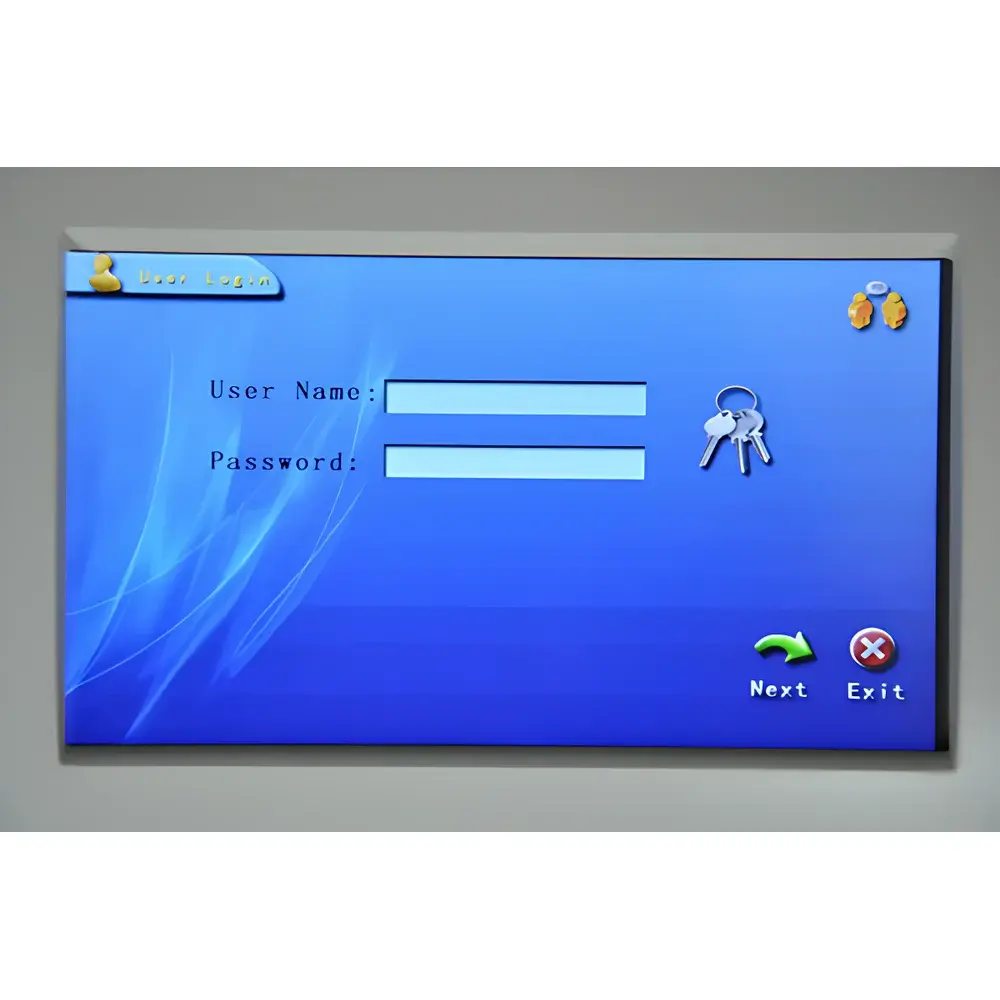
- FDA 21 CFR Part 11–compliant software architecture: four-tier user permission levels, encrypted password authentication, electronic signatures for critical actions, and immutable audit trail logging of ≥16 event types—including operator ID, timestamp, test method selection, parameter modification, pass/fail determination, and data export events
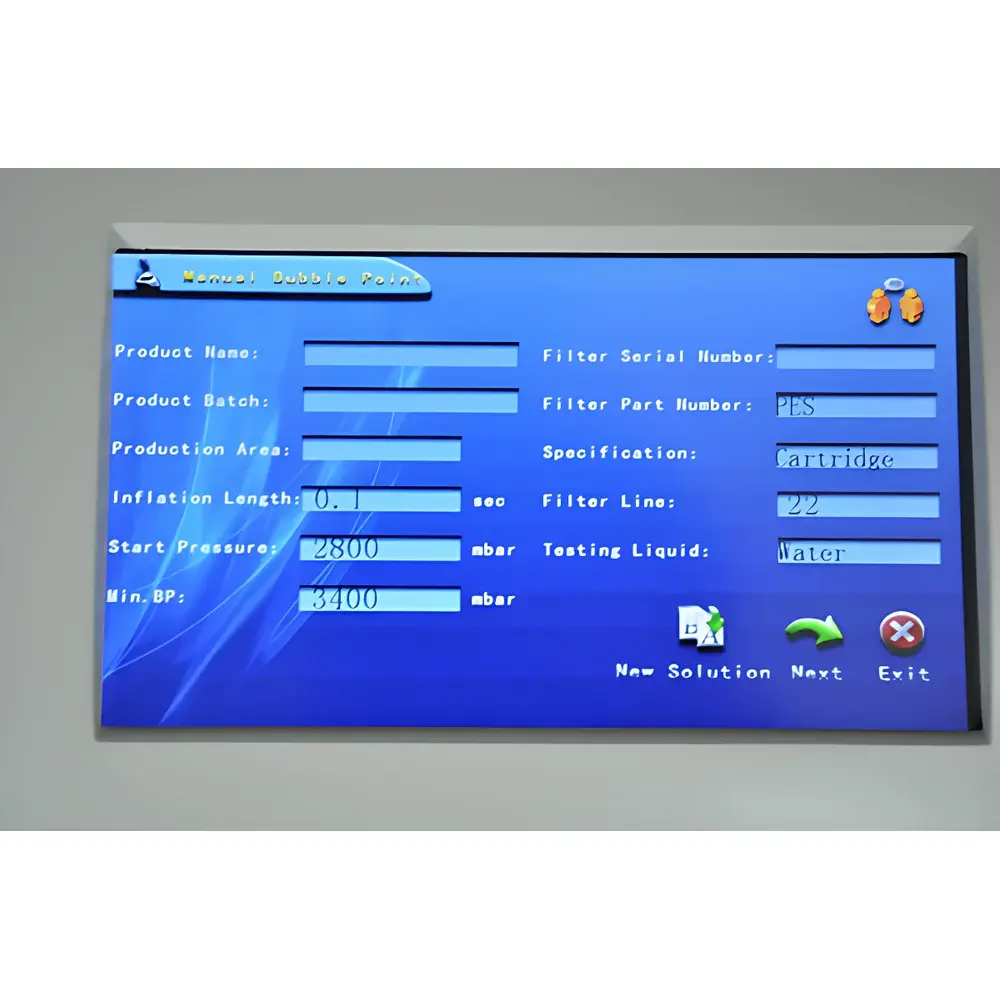
- High-capacity protocol management: up to 80 preconfigured test methods with customizable pressure ramps, equilibration times, stabilization thresholds, and acceptance criteria
- Scalable hardware interface: standard RS232 and USB connectivity; optional field-configurable analog I/O (0–10 V, 4–20 mA) and industrial bus support (Modbus RTU/TCP, Profibus DP) for PLC synchronization and closed-loop SIP control integration
- Robust mechanical design: compact footprint (400 × 240 × 270 mm), lightweight aluminum chassis (8 kg), and dual-height configuration accommodating tall filter housings up to 20-inch length with 9-core capacity
- Full-cycle data governance: local storage of >5,000 test records with graphical curve retention; USB-based backup of raw data, metadata, and annotated reports compliant with ALCOA+ principles
Sample Compatibility & Compliance
The IntegTest 6.0 accommodates a comprehensive range of filtration formats per ISO 13408-2 Annex A and USP Table 1. Validated configurations include disc membranes (Φ25–300 mm), standard cartridges (2.5–40 inch, 1–15 core), capsule filters, mini-cartridges, flat-sheet modules, and ultrafiltration cassettes/columns. It supports both symmetric and asymmetric membrane structures across hydrophilic (e.g., PVDF, PES, nylon) and hydrophobic (e.g., PTFE, PP) chemistries. All test algorithms adhere to pharmacopeial definitions of “pass” criteria—e.g., diffusion flow limits derived from membrane area and pore size distribution, bubble point tolerances referenced to manufacturer specifications, and water intrusion thresholds calibrated against certified reference standards. The system undergoes periodic verification using NIST-traceable pressure transducers and volumetric flow calibrators.
Software & Data Management
Firmware v6.0 embeds a real-time operating system with deterministic timing control for pressure ramping and flow sampling at ≤100 ms intervals. The embedded database enforces referential integrity between test records, user logs, and protocol versions. Audit trail entries are cryptographically hashed and timestamped via internal RTC synchronized to UTC. Data exports comply with CDISC SDTM and CSV-A format requirements for regulatory submissions. Optional PC-based software (IntegSoft Pro) enables advanced statistical process control (SPC), trend analysis across multiple instruments, and automated report generation aligned with Annex 1 and ICH Q5A expectations. All electronic records meet ALCOA+ criteria: Attributable, Legible, Contemporaneous, Original, Accurate—and extendable to Complete, Consistent, Enduring, and Available per data lifecycle policies.
Applications
- Final filter release testing prior to sterile filling campaigns
- Pre-use post-sterilization integrity confirmation for single-use bioreactors and TFF skids
- Validation of filter compatibility with process fluids (e.g., protein solutions, buffers, solvents)
- Troubleshooting filter wetting failures or unexpected diffusion drift during campaign execution
- Supporting regulatory inspections under FDA, EMA, PMDA, and NMPA GMP audits
- Integration into digital batch records and MES platforms via OPC UA or RESTful API (custom development available)
FAQ
Does the IntegTest 6.0 support automated retest logic based on initial failure?
Yes—users may configure conditional retest workflows within stored protocols, including automatic pressure recalibration, extended equilibration, or alternate method fallback (e.g., diffusion → bubble point) upon primary test failure.
Can audit trail data be exported in machine-readable format for third-party eDMS ingestion?
Yes—CSV and XML exports include all audit trail fields with ISO 8601 timestamps, SHA-256 hash signatures, and hierarchical metadata linking tests to operators, equipment IDs, and protocol versions.
Is calibration verification traceable to national metrology institutes?
Pressure sensors are factory-calibrated against Fluke 754 Documenting Process Calibrators (NIST-traceable); users receive calibration certificates with uncertainty budgets per ISO/IEC 17025.
What is the maximum allowable test duration for diffusion flow measurements?
The system supports configurable test durations up to 180 minutes, with real-time flow compensation for ambient temperature drift and barometric pressure variation.
How does the instrument handle multi-cartridge housings with divergent flow paths?
The IntegTest 6.0 allows sequential or parallel testing modes; for multi-core housings, it applies individualized flow compensation factors per cartridge position based on validated flow-path resistance models.





