
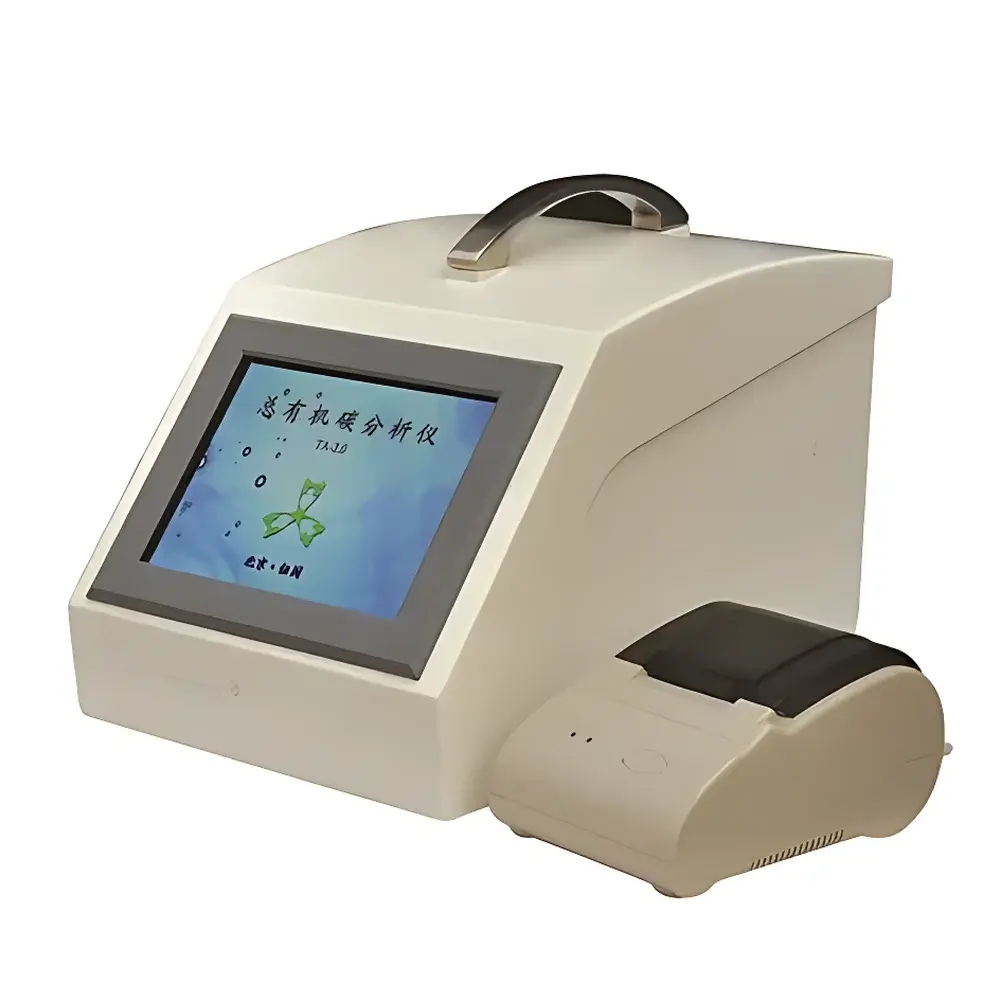
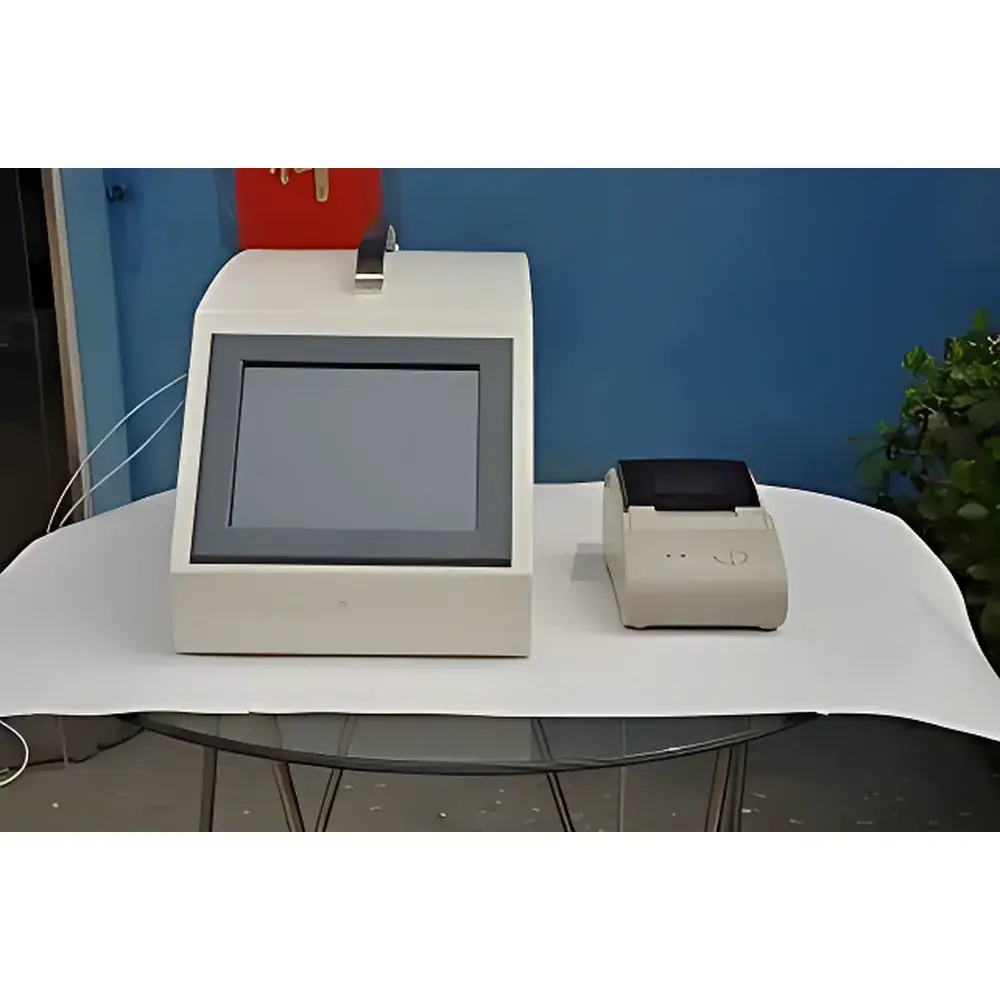
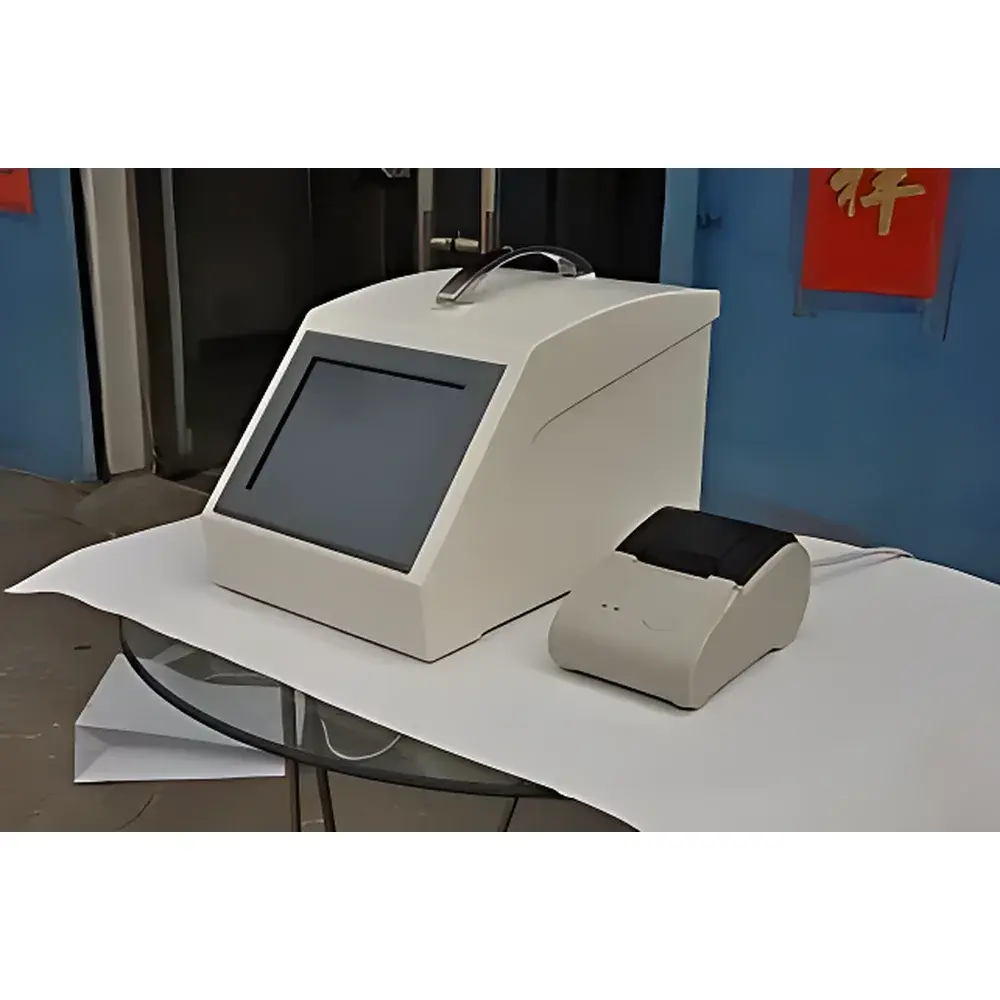
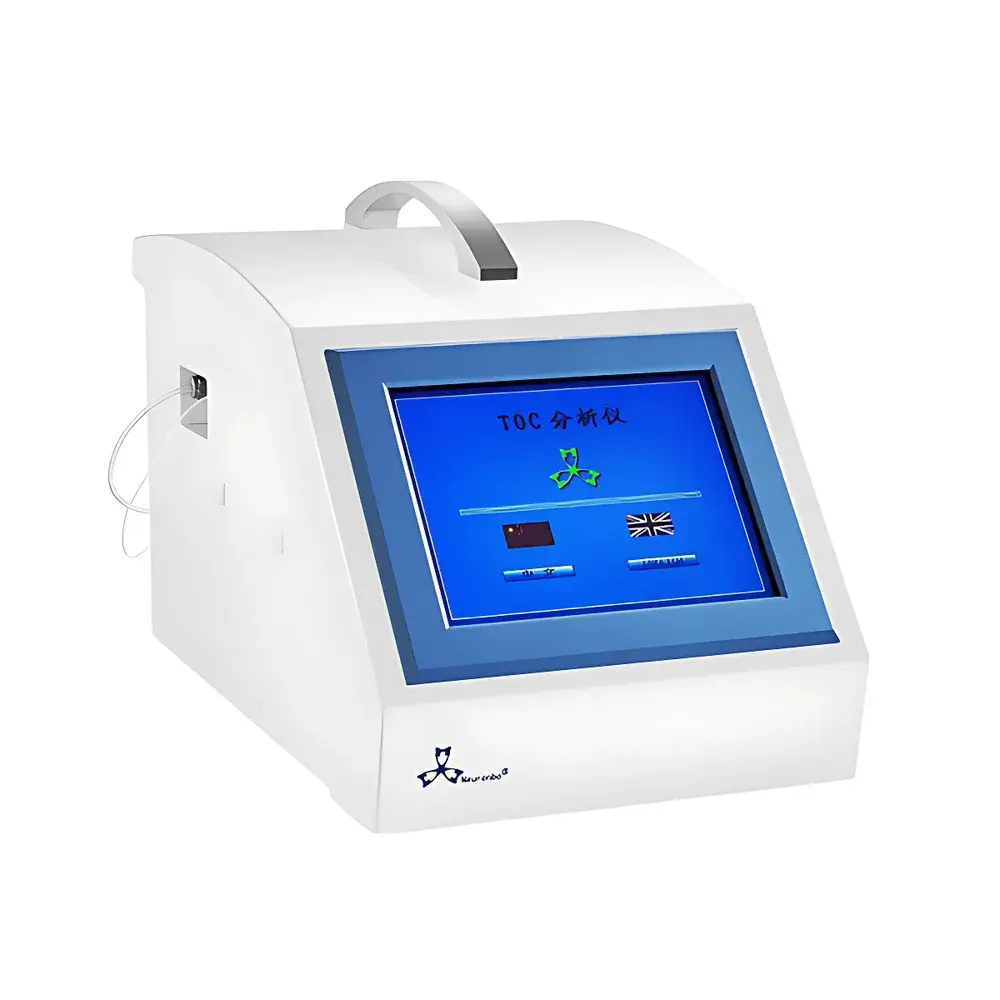
NeuronBC TA-2.0 Integrated Online/Offline Total Organic Carbon (TOC) Analyzer
| Brand | NeuronBC |
|---|---|
| Origin | Beijing, China |
| Model | TA-2.0 |
| Instrument Type | Online/Offline TOC Analyzer |
| Detection Principle | Direct Conductivity Measurement |
| Oxidation Method | UV Photolysis (185/254 nm) |
| Measurement Range | 0.001–1.0 mg/L (1–1000 ppb) |
| Accuracy | ±3% of reading |
| Resolution | 0.001 mg/L |
| Detection Limit | 0.001 mg/L |
| Repeatability | Continuous analysis mode |
| Sample Temperature Range | 1–95 °C |
| Ambient Operating Temperature | 5–65 °C |
| Power Supply | 100–240 VAC, 50 Hz, 120 W |
| Conductivity Detection Range | 0.055–8.000 µS/cm |
| Response Time | ≤5 minutes |
| Data Storage Capacity | >5000 records |
| Audit Trail | 16-event log with timestamped entries |
| User Access Control | 4-tier role-based authentication (username/password), compliant with FDA 21 CFR Part 11 |
| Display | Color touchscreen interface |
| Connectivity | Ethernet port, RS-232 serial port, digital power output port |
| Dimensions (L×W×H) | 400 × 240 × 270 mm |
| Weight | 8.5 kg |
Overview
The NeuronBC TA-2.0 Integrated Online/Offline Total Organic Carbon (TOC) Analyzer is engineered for high-fidelity carbon quantification in ultrapure water systems across regulated and industrial environments. It employs direct conductivity detection following UV photolysis oxidation—a method standardized in ASTM D5907 and USP <643>—to convert non-purgeable organic carbon (NPOC) into CO2, which is then measured as a change in solution conductivity. Unlike combustion-based analyzers, this approach eliminates catalyst degradation, carrier gas dependency, and thermal drift, delivering stable baseline performance over extended unattended operation. The TA-2.0 uniquely bridges laboratory-grade precision with field-deployable robustness: its dual-mode architecture supports both continuous online monitoring (up to three parallel sample streams via optional manifold integration) and discrete offline analysis—enabling seamless transition between process validation, routine QC testing, and cleaning verification protocols without instrument duplication.
Key Features
- Pump-free fluidic design: Eliminates peristaltic tubing, pressure regulators, and associated maintenance—reducing consumables, minimizing flow pulsation, and enhancing long-term calibration stability.
- Dual-mode operational flexibility: Switch between online real-time monitoring and offline batch analysis via intuitive touchscreen interface; no hardware reconfiguration required.
- UV photolysis oxidation: Dual-wavelength (185 nm + 254 nm) low-pressure mercury lamp ensures complete oxidation of recalcitrant organics—including acetic acid and ethanol—without chemical oxidants or elevated temperatures.
- High-precision conductivity detection: Temperature-compensated micro-conductivity cell (range: 0.055–8.000 µS/cm) coupled with 24-bit ADC resolution enables sub-ppb-level TOC sensitivity and <±3% measurement accuracy across the full 0.001–1.0 mg/L range.
- FDA 21 CFR Part 11 compliance: Role-based 4-tier user authentication, electronic signatures, tamper-evident audit trail (16 configurable event types with timestamps), and secure data export via USB ensure alignment with GMP/GLP documentation requirements.
- Embedded data infrastructure: Onboard storage for >5000 measurement records; real-time query by date/time/station ID; exportable CSV files compatible with LIMS and ELN platforms.
Sample Compatibility & Compliance
The TA-2.0 is validated for use with pharmaceutical-grade water matrices including Purified Water (PW), Water for Injection (WFI), and Clean-in-Place (CIP) rinse solutions per USP <643>, EP 2.2.44, and JP 17. It accommodates sample temperatures from 1 °C to 95 °C—supporting both ambient distribution loops and hot-water sanitization cycles. All wetted materials comply with USP Class VI biocompatibility standards. The analyzer meets electromagnetic compatibility (EMC) requirements per IEC 61326-1 and safety specifications per IEC 61010-1. Its design facilitates IQ/OQ/PQ execution and satisfies regulatory expectations for computerized system validation under Annex 11 and FDA Guidance for Industry on Process Validation.
Software & Data Management
Control and data handling are managed through an embedded Linux-based OS with a 7-inch capacitive color touchscreen. The interface supports multilingual operation (English, Simplified Chinese) and provides real-time trend visualization, alarm thresholds (configurable high/low limits), and automatic zero/sensitivity checks. All raw conductivity signals, TOC calculations, and system diagnostics are time-stamped and stored locally. Data export is supported via USB 2.0 port (FAT32-formatted drives only); no proprietary software installation is required for review. Remote access is available via Ethernet using standard Modbus TCP or HTTP API endpoints—enabling integration with SCADA, MES, or cloud-based analytics platforms while preserving audit integrity.
Applications
- Continuous TOC monitoring of PW/WFI distribution loops in pharmaceutical manufacturing facilities
- Offline verification of water system sanitization efficacy and post-CIP rinse acceptance
- Cleaning validation studies for multi-product equipment (e.g., bioreactors, filling lines)
- Environmental compliance testing of effluent and influent streams in municipal and industrial wastewater treatment
- Ultrapure water quality assurance in semiconductor fab ultrapure water (UPW) subsystems
- Process water monitoring in food & beverage production where organic contamination impacts shelf life or sensory properties
FAQ
Does the TA-2.0 require external calibration gases or chemical reagents?
No. The system operates exclusively on UV photolysis and conductivity detection—no carrier gases, persulfate, or acid reagents are needed.
Can the analyzer be integrated into an existing DCS or SCADA system?
Yes. Native Modbus TCP and HTTP RESTful API support enable bidirectional communication with industry-standard control systems without third-party gateways.
How is compliance with 21 CFR Part 11 maintained during firmware updates?
Firmware upgrades are digitally signed and logged in the audit trail; all prior configurations and historical data remain intact and immutable post-update.
What is the recommended maintenance interval for the UV lamp and conductivity cell?
The UV lamp has a rated lifetime of ≥12,000 hours; the conductivity cell requires only periodic verification against NIST-traceable standards—no routine replacement is specified.
Is the TA-2.0 suitable for measuring TOC in seawater or high-salinity samples?
No. It is optimized for low-conductivity matrices (<50 µS/cm). High ionic strength interferes with direct conductivity detection and exceeds the specified operating range.







