
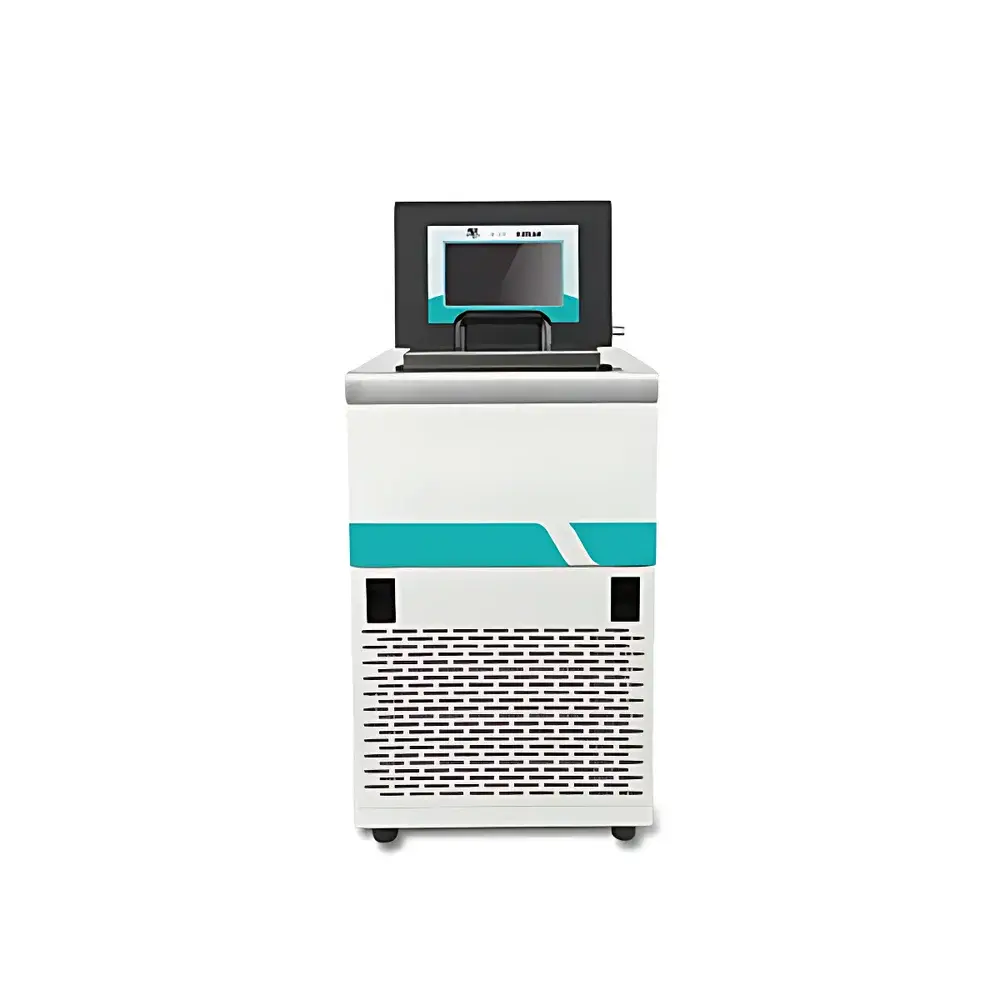
Ningbo Scientz DC-4010 Low-Temperature Circulating Bath (Heating & Cooling)
| Brand | Ningbo Scientz |
|---|---|
| Origin | Zhejiang, China |
| Manufacturer Type | Direct Manufacturer |
| Country of Origin | China |
| Model | DC-4010 |
| Instrument Type | Circulating Temperature Bath |
| Circulation Mode | Internal & External Loop |
| Temperature Control | Dual-mode (Heating & Refrigeration) |
| Bath Chamber Dimensions | 260 × 200 × 200 mm (L × W × H) |
| Temperature Range | −40 °C to +100 °C |
| Temperature Stability | ±0.1 °C |
Overview
The Ningbo Scientz DC-4010 Low-Temperature Circulating Bath is a precision-engineered thermal management system designed for laboratory environments requiring stable, programmable temperature control across an extended range from −40 °C to +100 °C. It operates on the principle of forced convection using a closed-loop liquid circulation system—typically employing water, water–glycol mixtures, or silicone oil—to deliver uniform thermal energy transfer to internal samples or external devices. Unlike passive baths, the DC-4010 integrates dual-mode thermoregulation (compressor-based refrigeration and electric resistance heating), enabling seamless transition between cooling and heating without manual intervention. Its architecture supports both internal bath temperature stabilization and external load conditioning via adjustable flow-rate circulation, making it suitable for applications demanding high thermal fidelity and long-term operational reliability under varying ambient conditions.
Key Features
- High-Stability Thermal Regulation: PID-controlled microprocessor system ensures ±0.1 °C temperature stability over time, with real-time feedback from high-accuracy Pt100 sensor(s) immersed in the bath medium.
- Dual-Mode Circulation Architecture: Selectable internal recirculation (for bath homogeneity) or external circulation (for remote device cooling/heating), with continuously adjustable pump flow rate to match thermal load requirements.
- Low-Noise Refrigeration System: Equipped with a sealed, imported Secop (Danfoss) compressor and eco-friendly R-134a or R-513A refrigerant, minimizing acoustic emissions (<55 dB(A)) while maintaining efficiency across the full operating range.
- Intuitive Human–Machine Interface: 7-inch angled capacitive touchscreen display provides at-a-glance monitoring of setpoint, actual temperature, elapsed time, pump status, and alarm history; supports multi-language UI configuration.
- Intelligent Power Management: Auto-restart function preserves user-defined parameters after power interruption; configurable “on-power-up” behavior (standby or resume operation) enhances experimental continuity and safety compliance.
- Comprehensive Safety Protections: Integrated safeguards include compressor overheat/overload cut-off, low-level fluid detection, dry-run prevention, and overtemperature lockout—all logged with timestamped event records in non-volatile memory.
Sample Compatibility & Compliance
The DC-4010 accommodates standard laboratory vessels (e.g., round-bottom flasks, jacketed reactors, condenser coils) within its 260 × 200 × 200 mm stainless-steel bath chamber. Its external circulation port (G1/4″ BSP) supports connection to rotary evaporator condensers, ultrasonic probe systems, jacketed bioreactors, and semiconductor test fixtures. The unit complies with IEC 61010-1:2010 for electrical safety in laboratory equipment and meets CE marking requirements for electromagnetic compatibility (EMC Directive 2014/30/EU). While not certified for GMP production environments, its deterministic control logic, parameter retention, and alarm logging support GLP-aligned workflows—including traceable temperature validation per ASTM E2879 and ISO/IEC 17025 calibration practices.
Software & Data Management
The DC-4010 includes RS485 communication interface (Modbus RTU protocol) for integration into centralized lab automation platforms. Optional Scientz LabControl software enables remote monitoring, scheduled ramp/soak profiles, data logging at user-defined intervals (down to 1-second resolution), and export to CSV or Excel formats. All temperature logs include embedded timestamps, setpoint history, and system status flags—supporting audit-ready documentation for FDA 21 CFR Part 11–aligned environments when paired with appropriate IT infrastructure and electronic signature protocols.
Applications
- Condenser cooling for rotary evaporation systems requiring sub-ambient temperatures
- Temperature control of non-contact ultrasonic disruptors during cell lysis or nanoparticle synthesis
- Thermal conditioning of chemical reaction mixtures in jacketed glass reactors
- Stabilization of biological samples (e.g., enzyme assays, protein crystallization trays) under defined thermal gradients
- Calibration and performance verification of temperature-sensitive sensors and metrology tools
- Thermal testing of electronic components and semiconductor packages under controlled thermal stress
FAQ
What fluids are compatible with the DC-4010 bath chamber?
Deionized water, 30–50% aqueous ethylene glycol solutions, and low-viscosity silicone oils (up to 50 cSt at 25 °C) are recommended. Avoid halogenated solvents, strong acids/bases, or flammable liquids.
Can the DC-4010 maintain temperature stability during external circulation?
Yes—when configured for external loop operation, the unit dynamically adjusts heater/refrigeration output and pump speed to compensate for heat exchange losses, sustaining ±0.1 °C stability at the bath sensor location under typical load conditions.
Is the DC-4010 suitable for use in cleanroom or ISO Class 5 environments?
While the unit itself is not classified for cleanroom use, its sealed refrigeration circuit, absence of oil mist emission, and smooth stainless-steel interior facilitate integration into controlled environments when installed outside the critical zone with insulated tubing.
Does the system support programmable temperature ramps?
Yes—via the touchscreen interface or LabControl software, users can define multi-step programs with ramp rates from 0.1 to 10 °C/min, soak durations up to 999 hours, and conditional triggers (e.g., start next step upon reaching setpoint).
How often does the unit require preventive maintenance?
Annual inspection of refrigerant charge, condenser coil cleaning, and verification of sensor calibration is recommended. Pump seals and fluid should be evaluated every 12–18 months depending on usage intensity and fluid type.
Related Products



