
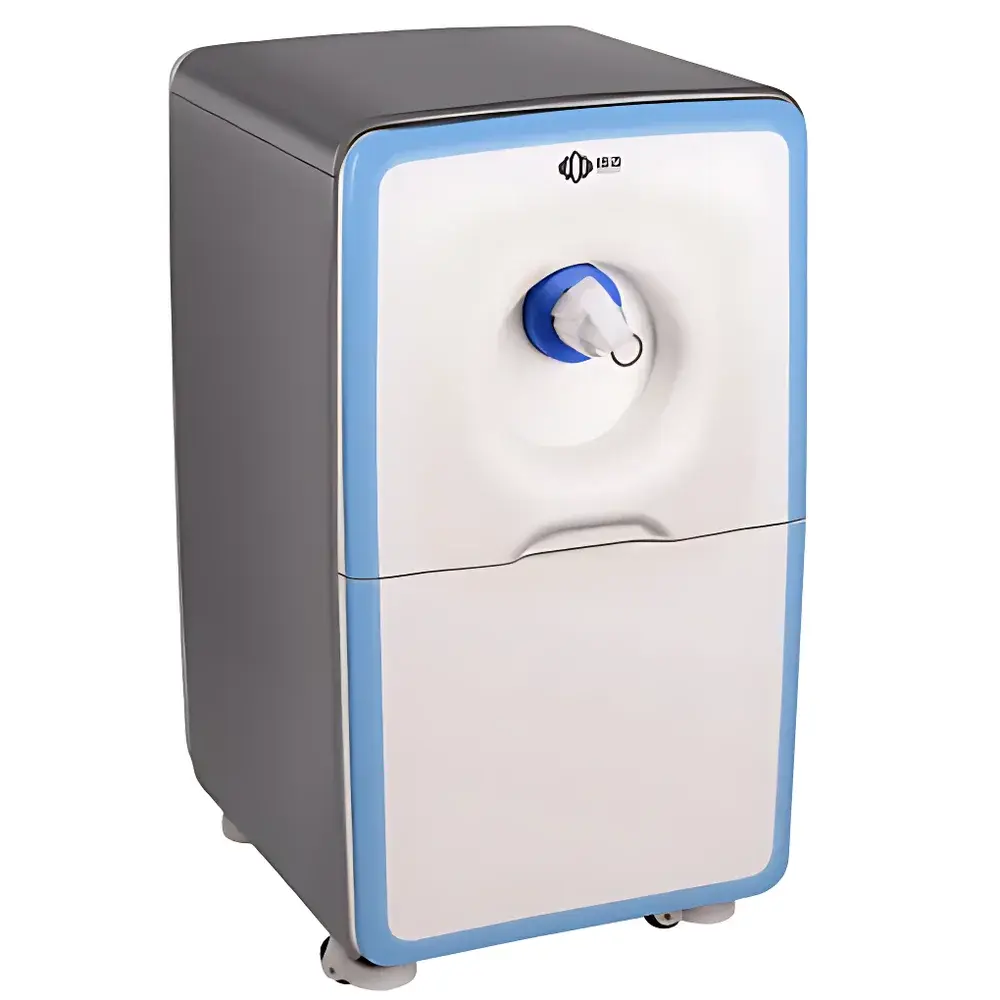
NIUMAG QMR06 Series Low-Field NMR Body Composition Analyzer for Live 750 Wild-Derived Mice
| Brand | NIUMAG |
|---|---|
| Origin | Jiangsu, China |
| Manufacturer Type | Authorized Distributor |
| Product Category | Domestic Instrument |
| Model | QMR06 Series |
| Pricing | Upon Request |
Overview
The NIUMAG QMR06 Series Low-Field NMR Body Composition Analyzer is a dedicated preclinical instrument engineered for non-invasive, quantitative assessment of fat mass, lean body mass, and total body water in live rodents—specifically optimized for the metabolically sensitive 750 wild-derived mouse strain (C57BL/6J background with introgressed Chromosome 1 from wild mice captured in Yangpu District). Unlike terminal methods such as carcass dissection or ex vivo biochemical assays, this system leverages the intrinsic differences in transverse relaxation times (T₂) between adipose tissue, skeletal muscle, and free water protons under low-field magnetic resonance conditions (~0.05–0.1 T). By applying calibrated pulse sequences and proprietary signal decomposition algorithms, the QMR06 quantifies tissue composition in real time without ionizing radiation, anesthesia, or physical restraint beyond gentle manual positioning. Its operational principle conforms to the physical basis of quantitative magnetic resonance (QMR), a methodology widely accepted in metabolic phenotyping studies and referenced in ASTM E3282–22 (Standard Guide for Quantitative Magnetic Resonance in Small Animal Research).
Key Features
- Non-destructive, longitudinal monitoring: Enables repeated measurements on the same animal across days or weeks—critical for pharmacokinetic/pharmacodynamic (PK/PD) studies and chronic intervention trials.
- Live-animal operation: No anesthesia, sedation, or surgical preparation required; animals remain fully conscious and recover immediately post-scan.
- Dedicated small-animal hardware: Permanent magnet architecture ensures field stability and minimal maintenance; custom-built RF coil optimized for murine thoracoabdominal geometry (diameter: 45 mm, length: 120 mm).
- Rapid acquisition: Full-body composition scan completed in ≤90 seconds per subject, supporting high-throughput screening (up to 30–40 mice per 8-hour workday).
- Multi-parameter output: Simultaneous quantification of fat mass (g), lean mass (g), and total body water (g), with automatic normalization to body weight (%FM, %LM, %TBW).
- Robust thermal management: Passive cooling system maintains magnet homogeneity within ±0.02% over 8 h, ensuring inter-day reproducibility (CV < 2.1% for fat mass in C57BL/6J controls, n = 12).
Sample Compatibility & Compliance
The QMR06 accommodates live mice (including 750 wild-derived, db/db, ob/ob, DIO models), rats (up to 500 g), and rabbits (≤2.5 kg) without modification. All measurement protocols comply with NIH Guide for the Care and Use of Laboratory Animals and AAALAC International standards. Data acquisition and storage support GLP-compliant workflows: audit trails, user authentication, electronic signatures, and immutable raw FID export are embedded in the NIUMAG MouseBody v3.2 software. The system meets electromagnetic compatibility requirements per IEC 61326-1:2013 and is CE-marked for research use only (RUO) in the EU.
Software & Data Management
NIUMAG MouseBody v3.2 is a Windows-based application designed for preclinical metabolic research. It provides automated calibration using reference phantoms (tri-chloroethylene/water emulsions), batch processing for cohort-level analysis, and export of ASCII-compatible .csv files for integration with R, Python (SciPy), or commercial statistical platforms (SAS, GraphPad Prism). Raw time-domain data (FID) and processed parameter tables are stored with timestamped metadata (operator ID, animal ID, cage number, ambient temperature/humidity). Software validation documentation—including IQ/OQ/PQ templates—is available upon request to support FDA 21 CFR Part 11 compliance in regulated environments.
Applications
- Evaluation of anti-obesity therapeutics: Tracking dynamic changes in fat/lean partitioning during compound dosing regimens.
- Metabolic disease modeling: Characterizing progressive adiposity, sarcopenia, or edema in genetically modified or diet-induced models.
- Nutritional intervention studies: Assessing macronutrient-specific effects on tissue composition over time.
- Toxicology endpoints: Detecting early shifts in lean mass or fluid retention preceding histopathological changes.
- Translational biomarker development: Correlating QMR-derived metrics with serum metabolomics, insulin tolerance tests (ITT), or indirect calorimetry.
FAQ
Is anesthesia required for scanning?
No. The QMR06 operates without sedation; animals are gently restrained in a molded cradle and remain alert throughout the 60–90 s acquisition.
Can the system distinguish visceral from subcutaneous fat?
No. As a whole-body low-field QMR platform, it reports total fat mass. Regional fat distribution requires MRI or micro-CT with contrast agents.
What is the minimum recommended sample size per group for statistical power?
Based on empirical variance data from 750 wild-derived cohorts, ≥8 animals per group is advised for detecting ≥15% treatment-induced fat mass change at α = 0.05, β = 0.2.
Does the system require external RF shielding?
No. The permanent magnet design and integrated Faraday cage eliminate the need for dedicated shielded rooms.
How often does the system require recalibration?
Calibration is performed daily using supplied reference phantoms; full system verification (field homogeneity, SNR, T₂ accuracy) is recommended every 6 months by certified service engineers.



