
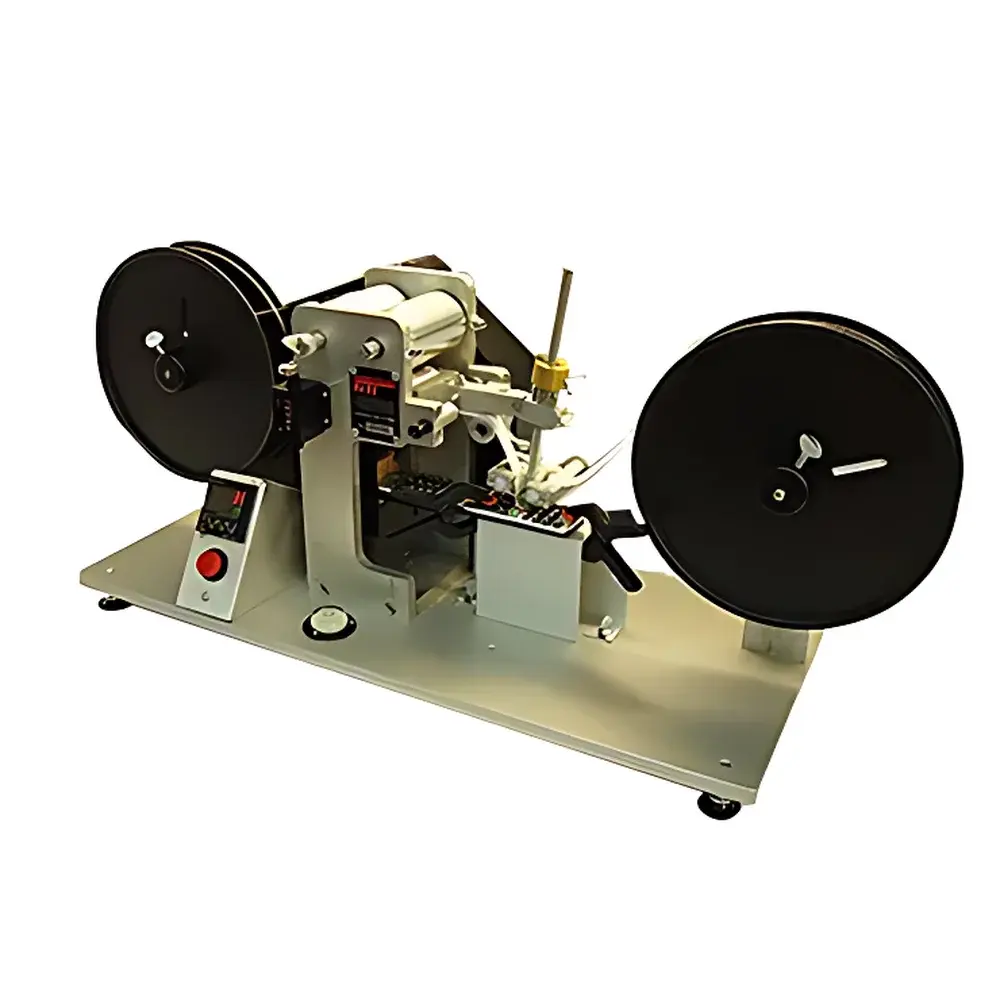
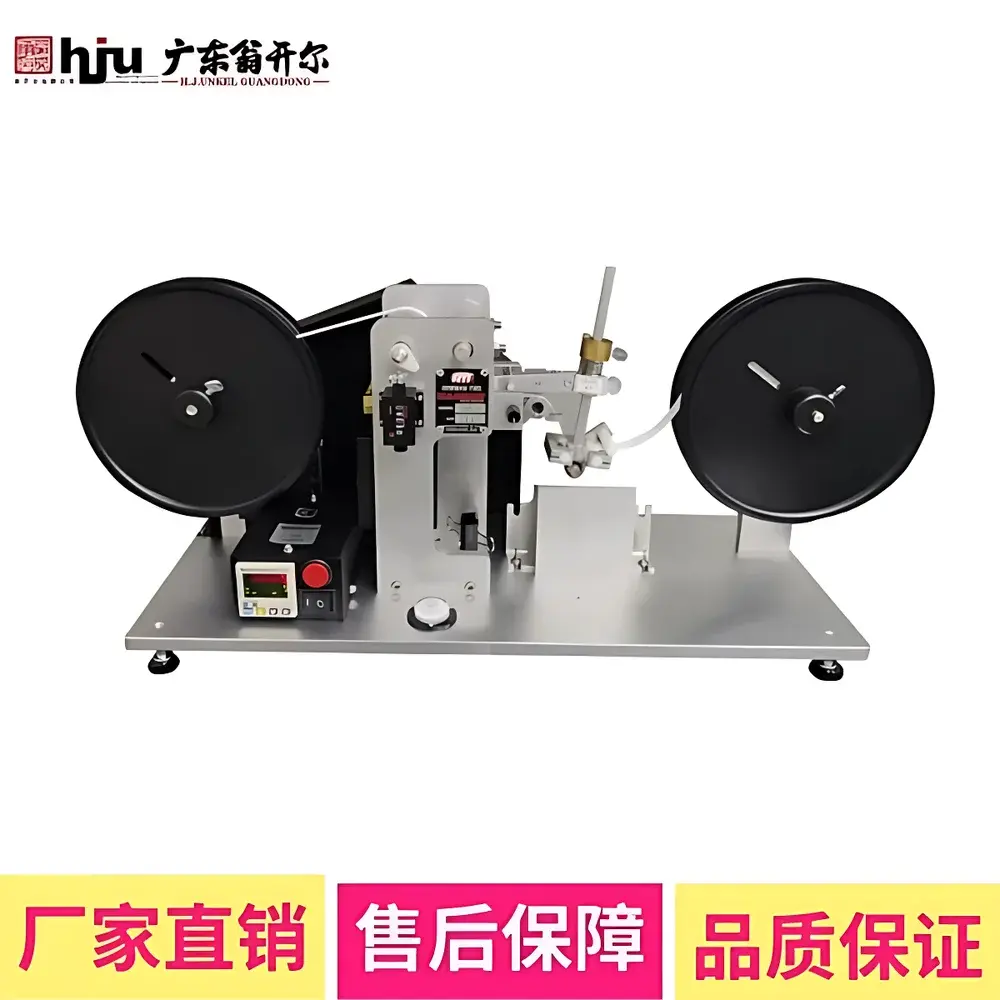
Norman Tool 7-IBB-CC Paper Tape Abrasion Tester
| Brand | Norman Tool |
|---|---|
| Origin | USA |
| Model | 7-IBB-CC |
| Load Options | 55 g, 175 g, 275 g |
| Rotational Speed | 16 rpm (50 Hz) / 18 rpm (60 Hz) |
| Counter Type | Digital LCD (0–999,999 cycles) |
| Sample Mounting | Flat & 3D fixtures included |
| Power Supply | 220 V, 50/60 Hz, 5 A |
| Weight | ~17 kg |
| Compliance | ASTM F2357-04, DIN-compatible abrasion evaluation |
Overview
The Norman Tool 7-IBB-CC Paper Tape Abrasion Tester is a precision-engineered tribological instrument designed for quantitative assessment of surface wear resistance in coated and laminated plastic substrates. Operating on the principle of controlled linear reciprocation—where a standardized abrasive paper tape is driven at constant speed across a test specimen under defined normal load—the system delivers repeatable, traceable wear data critical for quality assurance in high-volume consumer electronics manufacturing. Unlike rotary or oscillating abrasion methods, this tester replicates real-world scuffing conditions encountered during handling, pocket insertion, or repeated tactile interaction—making it especially relevant for evaluating printed legends on mobile device keypads, decorative finishes on laptop housings, and protective coatings on PDA casings. Its mechanical architecture ensures minimal thermal drift and consistent force application throughout extended test cycles, supporting long-term method validation under GLP-compliant laboratory environments.
Key Features
- Three calibrated load options (55 g, 175 g, 275 g) achieved via lever-arm mechanics and removable counterweights—enabling differentiation between soft-touch coatings and rigid overmolded surfaces.
- Dual sample mounting configurations: a flat-stage fixture for planar components and an adjustable 3D holder accommodating curved or contoured geometries (e.g., smartphone bezels, earbud housings).
- Integrated LED-powered magnifier (10×) with adjustable arm facilitates real-time visual inspection of wear progression without sample removal.
- Digital LCD cycle counter (0–999,999) with programmable stop threshold ensures precise endpoint detection—critical for pass/fail testing per internal specifications or customer requirements.
- Stable rotational drive system delivering 16 rpm (50 Hz) or 18 rpm (60 Hz), synchronized to mains frequency for metrological consistency across global laboratories.
- Robust cast-aluminum frame and stainless-steel roller assembly minimize mechanical hysteresis and ensure >10,000-hour operational durability under continuous QC use.
Sample Compatibility & Compliance
The 7-IBB-CC accommodates specimens up to 120 mm × 120 mm × 30 mm (L×W×H) and supports both rigid thermoplastics (e.g., PC, ABS, PC/ABS blends) and flexible elastomeric coatings (TPU, silicone overmolds). Its test methodology aligns with ASTM F2357-04 “Standard Test Method for Measuring Abrasion Resistance of Printed Inks and Coatings on Plastic Substrates Using a Paper Tape Abrader”, which references Taber-style wear correlation protocols while specifying paper tape grade, tension control, and endpoint criteria. Though not a DIN-certified instrument per se, its mechanical parameters (load range, tape speed, contact geometry) are dimensionally compatible with DIN 53778 and ISO 1518-1 abrasion evaluation frameworks when paired with certified abrasive tapes (e.g., Sankyo #100, Norton #400). All hardware components comply with RoHS Directive 2011/65/EU and meet CE-marking mechanical safety requirements (EN 61000-6-2/6-4).
Software & Data Management
The 7-IBB-CC operates as a standalone electromechanical system with no embedded firmware or network interface. Cycle data is captured locally via the non-volatile LCD counter and manually transcribed into LIMS or Excel-based QA databases. For laboratories requiring electronic audit trails, integration with external data acquisition systems (e.g., National Instruments DAQmx) is feasible via TTL pulse output from the motor encoder (available upon request). While the unit itself does not support 21 CFR Part 11 compliance natively, its deterministic mechanical behavior—combined with documented calibration records (NIST-traceable load verification using Class M1 weights) and operator logbooks—meets baseline GMP documentation standards for coating release testing in regulated medical device packaging applications.
Applications
- Quantitative ranking of ink adhesion and topcoat hardness in smartphone button legends subjected to >50,000 simulated actuations.
- Comparative wear screening of UV-cured acrylic vs. plasma-treated polyolefin substrates in automotive interior trim validation.
- Process qualification of two-shot molding parameters by correlating cycle count to visible substrate exposure under 275 g load.
- Supplier qualification testing for OEMs requiring ≥30,000 cycles to first micro-scratching (per internal spec T-ABR-2023).
- Failure mode analysis of anti-fingerprint coatings where wear initiation precedes cohesive delamination—observable via magnifier-assisted edge inspection.
FAQ
What abrasive paper tape is required for ASTM F2357-04 compliance?
ASTM F2357-04 specifies the use of 3M Scotch-Brite™ SC-BF or equivalent open-coat aluminum oxide paper tape (grade P120–P180), supplied in 12.7 mm width rolls. Norman Tool recommends Sankyo #100 tape for routine QC due to batch-to-batch consistency.
Can the 7-IBB-CC be used for metallic coatings?
Yes—provided the substrate is non-ferromagnetic and mechanically stable under 275 g load. However, metal-on-paper abrasion generates higher particulate debris; vacuum extraction near the test zone is advised to prevent roller contamination.
Is calibration certification included with shipment?
Each unit ships with a factory-issued calibration certificate for the load lever system, traceable to NIST Standard Reference Material (SRM) 2050a. Annual recalibration is recommended per ISO/IEC 17025:2017 Clause 6.5.
How is wear endpoint objectively determined?
Endpoint is defined as first visual observation of substrate material beneath the coating layer under 10× magnification—not gloss loss or color change. The digital counter logs total cycles at that moment, enabling statistical process control (SPC) charting across production lots.
Does humidity affect test repeatability?
Yes. Paper tape moisture content directly influences coefficient of friction. Norman Tool advises conditioning tapes at 23 °C ± 2 °C and 50 % RH ± 5 % for 48 hours prior to use, and storing unused rolls in sealed desiccant cabinets.



