
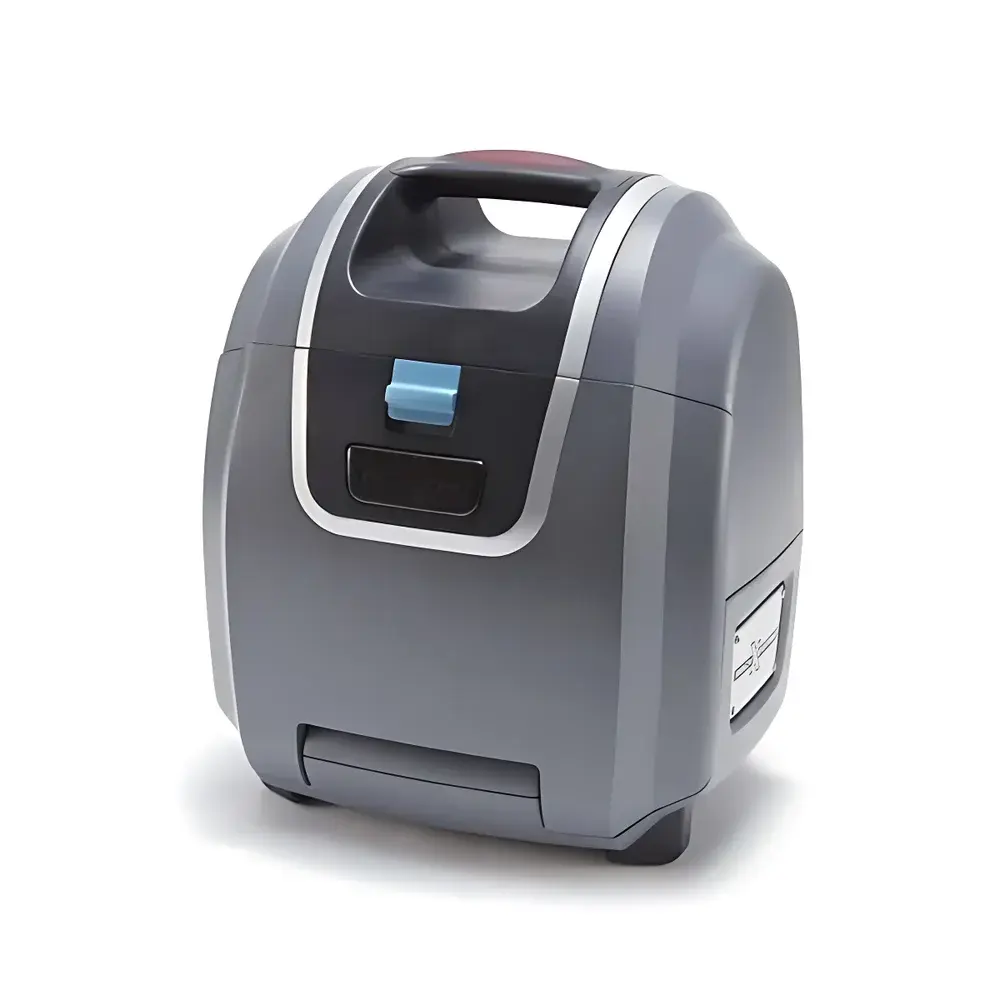
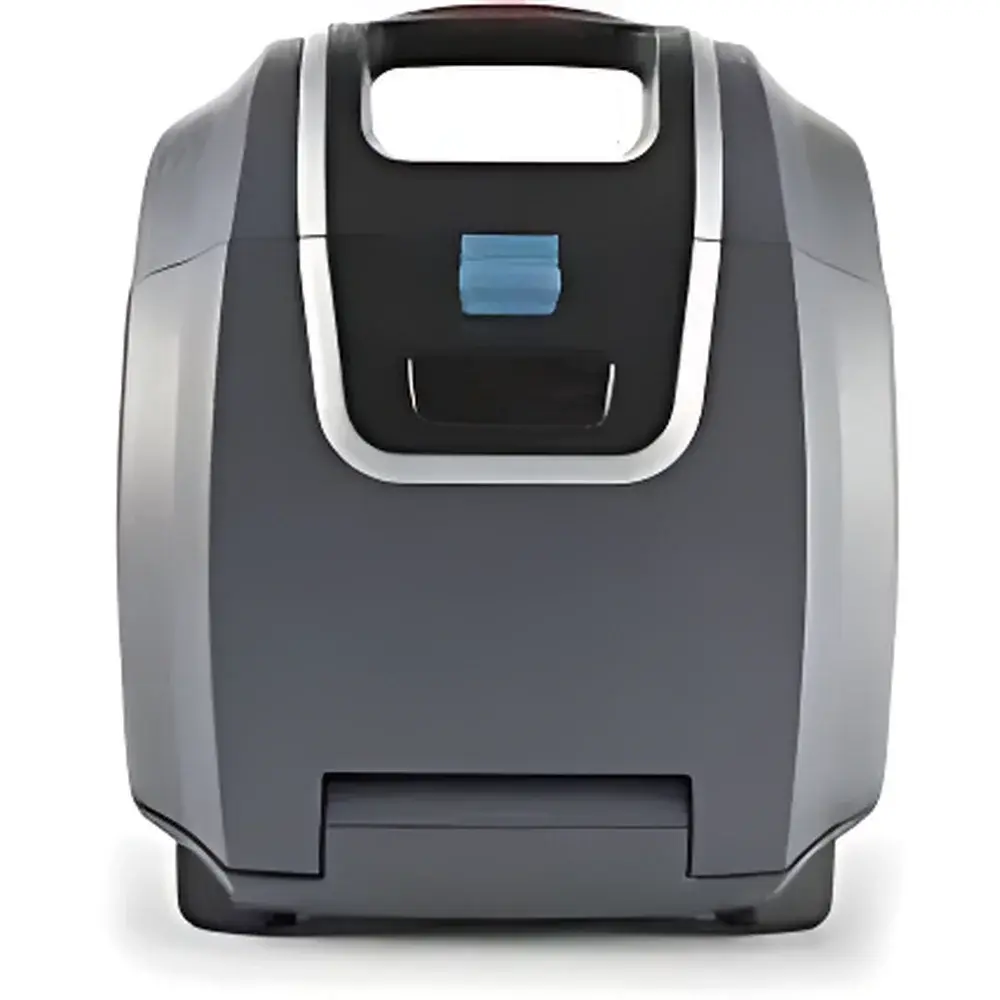
Olympus X-5000 Portable Energy Dispersive X-Ray Fluorescence (EDXRF) Spectrometer
| Brand | Olympus |
|---|---|
| Origin | USA |
| Model | X-5000 |
| Application | Field-deployable portable analysis |
| Industry Focus | Energy & Petrochemicals |
| Elemental Range | Na (11) to U (92) |
| Quantification Range | 1 ppm – 100% |
| Energy Resolution | <150 eV (FWHM at Mn Kα) |
| Repeatability | ±0.1% RSD |
Overview
The Olympus X-5000 is a field-portable, benchtop-grade Energy Dispersive X-Ray Fluorescence (EDXRF) spectrometer engineered for high-fidelity elemental quantification in demanding off-lab environments. Unlike handheld XRF analyzers, the X-5000 integrates a fully shielded, interlocked sample chamber with laboratory-class excitation and detection architecture—enabling trace-level sensitivity, matrix-independent quantification, and regulatory-grade reproducibility without compromising portability. Its core measurement principle relies on primary X-ray excitation (up to 50 kV) inducing characteristic secondary X-ray emission from sample atoms; emitted photons are resolved by a large-area silicon drift detector (SDD), delivering high count-rate capability and low-noise spectral fidelity. Designed for compliance-critical workflows, the system meets ANSI N43.3 and IEC 62495 safety standards for sealed-source instrumentation and supports audit-ready operation under GLP and ISO/IEC 17025 frameworks.
Key Features
- 50 kV, 10 W microfocus X-ray tube with selectable anode targets (Rh, Ta, Ag) optimized for light-element (Mg–Cl), transition-metal (Fe–Pb), and petroleum-specific (S, Ca, Ni, V) analysis;
- Large-area SDD detector with energy resolution <150 eV FWHM at Mn Kα (5.89 keV), enabling robust peak deconvolution across overlapping spectral regions (e.g., S Kα/Pb Mα, Ca Kα/Ti Kα);
- Six-position primary-beam filter wheel for automatic optimization of excitation conditions per element group—enhancing signal-to-background ratio and minimizing matrix effects;
- Onboard industrial PC with 8-inch color touchscreen (20.9 cm × 15.9 cm), running proprietary Olympus EDXRF software with real-time spectrum visualization, live calibration diagnostics, and offline method editing;
- Multi-algorithm quantification engine supporting Fundamental Parameters (FP), Compton Normalization, empirical calibration models, and spectral matching for unknown material identification;
- Robust mechanical design: IP54-rated enclosure, shock-absorbing chassis, and thermal management system ensuring stable operation from 10 °C to 50 °C ambient temperature;
- Integrated safety interlocks, beam shutter control, and radiation monitoring circuitry compliant with FDA 21 CFR Part 1020.40 and EU Directive 2013/59/Euratom.
Sample Compatibility & Compliance
The X-5000 accommodates heterogeneous solid, semi-solid, and liquid samples up to 29 cm × 15 cm × 11 cm (chamber dimensions), including fuel oils, lubricants, sludge, soil cores, powdered ores, alloy coupons, and packaged consumer goods. Liquid analysis is supported via sealed polypropylene or Mylar-backed sample cups to prevent spillage and contamination. The instrument conforms to ASTM D7751 (standard test method for sulfur in diesel fuel by EDXRF), ASTM D6443 (calcium, zinc, phosphorus in lubricants), and EPA Method 6200 for field screening of RCRA metals (As, Ba, Cd, Cr, Pb, Hg, Se, Ag). All calibration models are traceable to NIST SRM reference materials (e.g., SRM 2780, 2781, 1633c), and data integrity complies with FDA 21 CFR Part 11 requirements—including electronic signatures, audit trails, and user-access controls.
Software & Data Management
Olympus EDXRF Software v4.x provides a validated, configurable platform for method development, routine analysis, and regulatory reporting. It includes automated background subtraction, peak integration using iterative least-squares fitting, and dynamic dead-time correction. Data export supports CSV, XML, and PDF formats compatible with LIMS integration. The system logs full acquisition metadata—including tube voltage/current, filter position, live time, detector temperature, and operator ID—for complete chain-of-custody documentation. Remote firmware updates and method synchronization are supported via secure HTTPS connection; local data storage retains ≥10,000 spectra with timestamped calibration history.
Applications
- Petrochemical QA/QC: Quantification of sulfur, vanadium, nickel, calcium, and chlorine in crude oil, distillates, and lubricants per ISO 8754 and ASTM D2622;
- Geochemical exploration: Rapid multi-element profiling (Si, Al, Fe, Mg, Ca, K, Ti, Mn, P, S) in drill cuttings, soil, and rock fragments for lithological mapping and grade estimation;
- Environmental site assessment: In-field screening of As, Pb, Cr, Cd, Hg, and other priority pollutants in soils and sediments per EPA Region 4 protocols;
- Metallurgical verification: Positive material identification (PMI) and grade verification of stainless steels, superalloys, and scrap metal streams;
- RoHS/ELV compliance testing: Screening of Pb, Cd, Hg, Cr(VI), and Br in plastics, coatings, and electronic components without sample digestion;
- Consumer product safety: Non-destructive verification of restricted substances in toys, packaging, and cosmetics per CPSIA and EU Regulation (EC) No 1907/2006 (REACH).
FAQ
Is the X-5000 certified for use in hazardous locations (e.g., Zone 1/21)?
No—the X-5000 is not ATEX or IECEx certified. It is rated for general industrial environments and must be operated outside classified hazardous areas per NFPA 70E and OSHA 1910.120 guidelines.
Can the instrument analyze aqueous samples directly?
Yes, provided they are contained in leak-proof, X-ray-transparent sample cups (e.g., 4-mil Mylar bottom). High-salinity or acidic matrices require inert cup liners to prevent detector contamination.
Does the system support custom calibrations for proprietary formulations?
Yes—users can develop and validate custom empirical or FP-based calibrations using certified reference materials; all methods are stored with version control and calibration verification records.
What is the typical detection limit for sulfur in diesel fuel?
Under optimized conditions (Ag anode, Pd filter, 300 s counting time), LOD is ≤1.2 ppm (3σ) for S in low-sulfur diesel matrices.
How is data integrity maintained during field deployment?
All analytical sessions generate immutable audit logs with digital signatures, timestamps, and operator authentication; raw spectra and processed results are cryptographically hashed and archived locally prior to network upload.




