
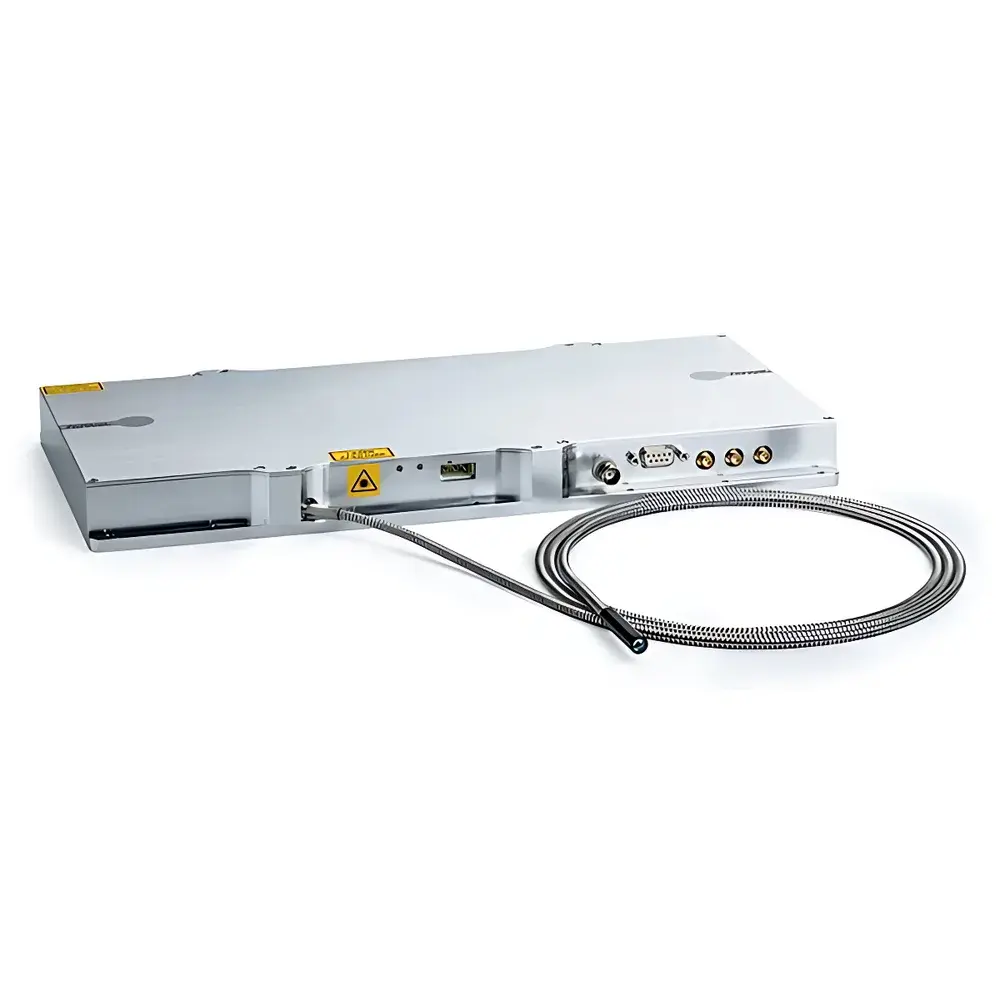
Onefive Katana Universal Picosecond & Nanosecond Pulsed Laser System
| Brand | Onefive |
|---|---|
| Origin | Switzerland |
| Model | Katana |
| Type | Solid-State Pulsed Laser System |
| Wavelength Options | 515–532 nm, 550–660 nm, 775 nm, 1030–1064 nm, 1550 nm |
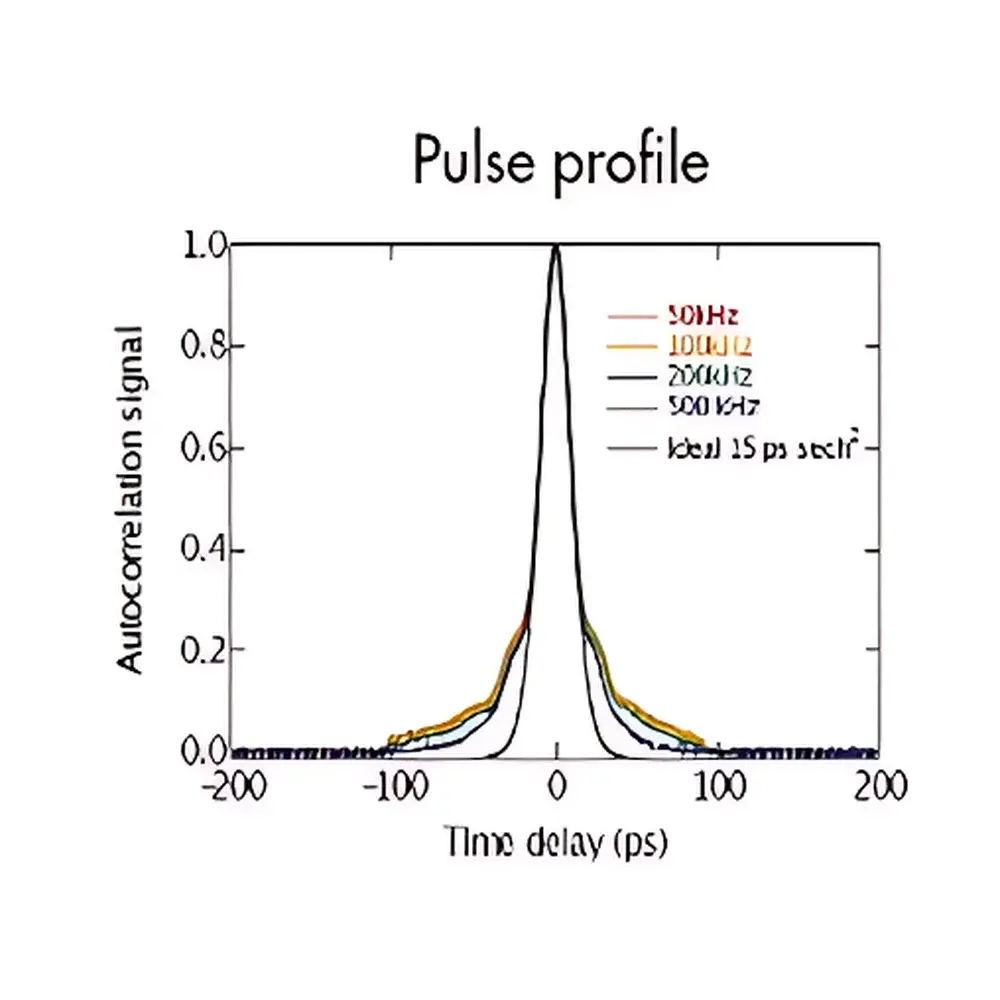
| Pulse Width | <30 ps to 10 ns (configurable) |
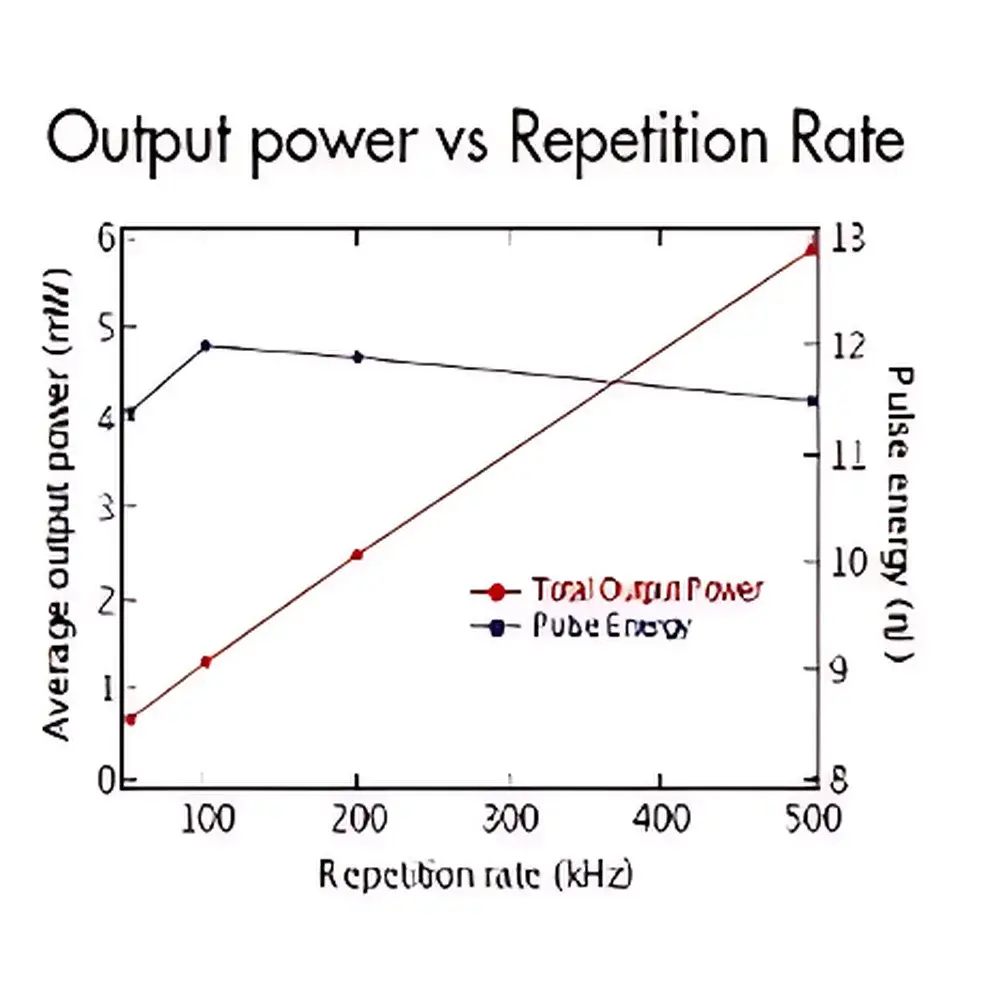
| Repetition Rate | User-selectable up to 100 MHz |
| Average Power | Up to 500 mW |
| Pulse Energy | Up to 100 nJ |
| Beam Quality | M² < 1.1, TEM₀₀ |
| Polarization Extinction Ratio | >20 dB |
| Amplitude Noise | <4.0% RMS (10 h) |
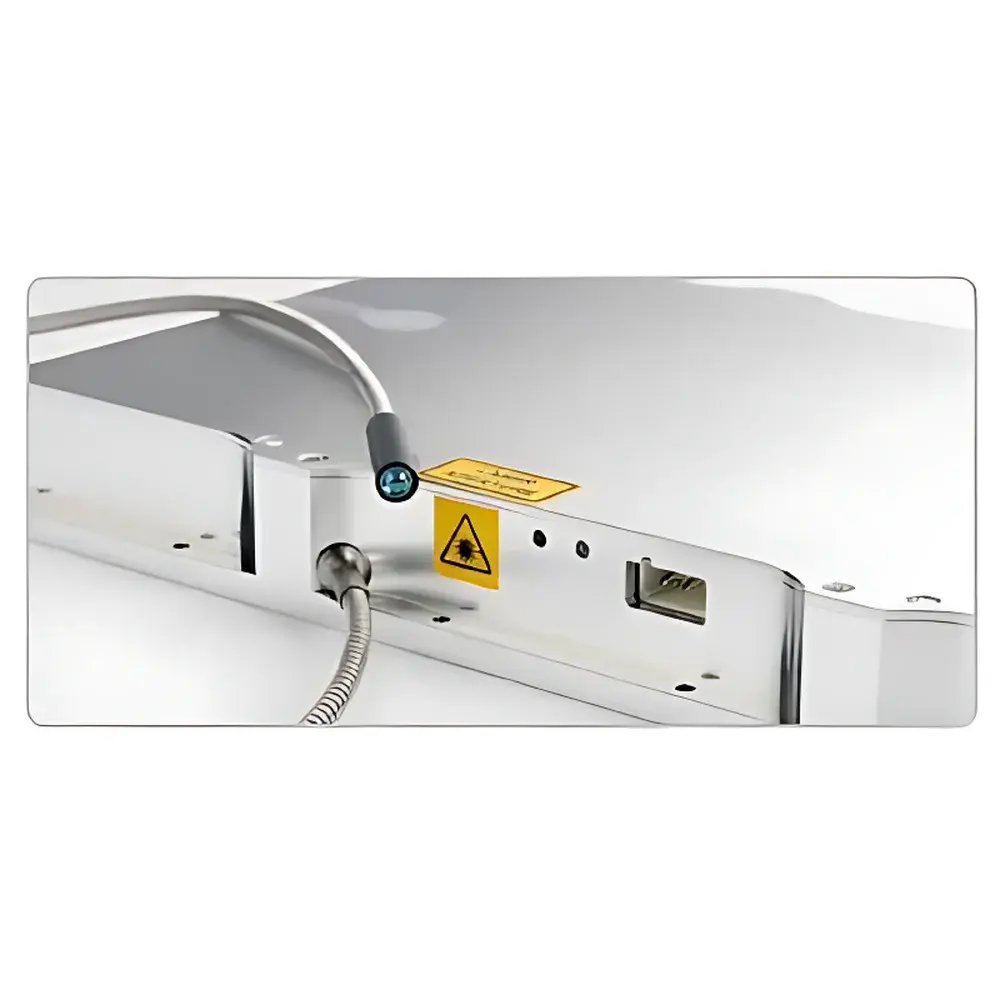
| Output | Polarization-Maintaining Fiber or Free-Space |
| Warm-up Time | <15 min |
| Operating Temperature | 15–35 °C |
| Storage Temperature | −20–65 °C |
| Dimensions (OEM) | 32 × 374 × 184 mm³ |
| Weight (OEM) | 2 kg |
| Dimensions (Benchtop) | 133 × 483 × 400 mm³ |
| Weight (Benchtop) | 7 kg |
| Power Supply | 24 VDC / 2.5 A or 90–264 VAC, 47–63 Hz |
| Power Consumption | 15 W |
| Cooling | Air-cooled |
| Environmental Compliance | IEC 60068-2-6 (vibration), IEC 60068-2-27 (shock), IEC 60068-2-29 (bump) |
Overview
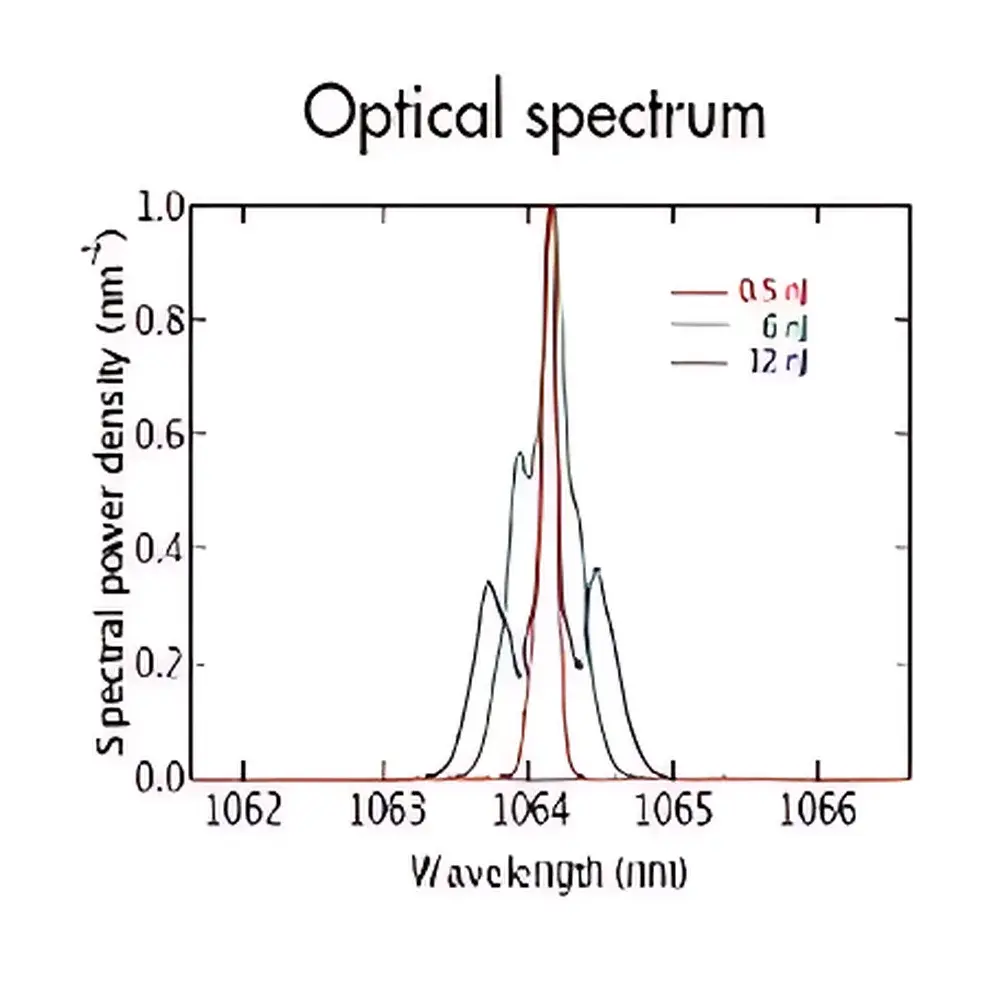
The Onefive Katana Universal Picosecond & Nanosecond Pulsed Laser System is a compact, turnkey solid-state laser platform engineered for precision timing, stability, and multi-wavelength flexibility in demanding scientific and industrial environments. Based on hybrid fiber–bulk laser architecture, the Katana integrates the robustness and pulse fidelity of diode-pumped solid-state (DPSS) gain media with the thermal management and alignment stability advantages of monolithic fiber-integrated seeding and amplification. Its core operating principle relies on actively Q-switched or mode-locked oscillation—depending on configuration—followed by nonlinear frequency conversion (e.g., SHG) and spectral filtering to deliver sub-30 ps to 10 ns pulses with near-transform-limited bandwidth (<0.1 nm) and diffraction-limited beam quality (M² < 1.1). Designed for 24/7 unattended operation across ambient temperatures from 15 °C to 35 °C, the system maintains pulse-to-pulse amplitude stability (<4.0% RMS over 10 hours) and eliminates performance drift, intermittent dropout, or warm-up-induced wavelength shift—critical for time-resolved spectroscopy, pump–probe experiments, and OEM integration into automated test equipment.
Key Features
- Single-chassis multi-wavelength operation: Selectable center wavelengths including 515–532 nm, 550–660 nm, 775 nm, 1030–1064 nm, and 1550 nm—each independently optimized for pulse duration, energy, and spectral purity.
- Programmable repetition rate: Continuously adjustable from single-shot (externally triggered) up to 100 MHz, supporting both active (TTL/LVDS) and passive (optical) synchronization modes.
- Configurable pulse parameters: Pulse width selectable between <30 ps and 10 ns; average power scalable from 20 mW to 500 mW; pulse energy up to 100 nJ—subject to duty-cycle constraints per model variant.
- TEM₀₀ output with high polarization fidelity: Linear polarization maintained via PM fiber delivery (standard) or collimated free-space output (optional); PER >20 dB ensures compatibility with polarizing optics and interferometric setups.
- Ruggedized industrial design: Qualified to IEC 60068-2-6 (sinusoidal vibration), IEC 60068-2-27 (shock), and IEC 60068-2-29 (repetitive bump); no optical realignment required after transport or mechanical stress.
- Maintenance-free operation: No consumables, no periodic alignment, no coolant circulation—designed for >10,000 power-on cycles and continuous duty over 5+ years under GLP-compliant lab conditions.
Sample Compatibility & Compliance
The Katana laser system meets essential regulatory and metrological requirements for integration into ISO/IEC 17025-accredited laboratories and FDA-regulated instrumentation. Its stable amplitude noise profile (<4.0% RMS) and deterministic trigger latency (<1 ns jitter) support compliance with ASTM E2912 (laser-based particle sizing) and ISO 13322-2 (dynamic light scattering). For life science applications—including confocal and STED microscopy—the system’s low timing jitter and high extinction ratio enable quantitative fluorescence lifetime imaging (FLIM) and time-correlated single-photon counting (TCSPC) without post-acquisition correction. All benchtop variants include CE marking per Directive 2014/35/EU (Low Voltage) and 2014/30/EU (EMC); OEM modules comply with RoHS 2011/65/EU and REACH (EC) No. 1907/2006. Optional FDA 21 CFR Part 11–compliant software logging is available for audit-trail-enabled operation in GMP environments.
Software & Data Management
Control is implemented via USB 2.0 or Ethernet (TCP/IP) using Onefive’s cross-platform Katana Control Suite (Windows/macOS/Linux), which provides GUI- and script-driven access to all operational parameters—including repetition rate, pulse width selection, burst sequencing, and external trigger edge polarity. The SDK supports Python, MATLAB, and LabVIEW APIs for seamless integration into custom automation frameworks. All parameter changes are timestamped and logged locally with SHA-256 checksum integrity verification. Optional firmware update packages include version-controlled release notes and traceable calibration metadata aligned with ISO/IEC 17025 Clause 6.6 (equipment management). Remote monitoring of internal diagnostics (TEC status, pump diode current, cavity temperature) enables predictive maintenance scheduling without interrupting experimental runs.
Applications
- Multi-wavelength fluorescence microscopy: Simultaneous excitation of multiple fluorophores (e.g., GFP, RFP, Cy5) using integrated SHG and tunable fundamental outputs—eliminating need for multiple lasers in super-resolution platforms.
- Ultrafast amplifier seeding: Low-jitter, high-repetition-rate pulses serve as master oscillators for regenerative and multipass Ti:sapphire or Yb-doped fiber amplifiers requiring precise temporal synchronization.
- LIDAR and time-of-flight ranging: Sub-ns pulse widths and <1 ns trigger jitter enable centimeter-level distance resolution in atmospheric sensing and autonomous vehicle testing systems.
- Semiconductor inspection: High peak power at 1030–1064 nm and 1550 nm enables non-contact defect mapping and carrier lifetime measurement in Si, GaAs, and compound semiconductor wafers.
- Quantum optics and single-photon sources: Triggered operation with passive/active mode selection supports heralded photon generation, quantum key distribution (QKD) testbeds, and Bell inequality verification setups.
FAQ
Is the Katana laser suitable for integration into OEM instruments?
Yes—the OEM module variant (32 × 374 × 184 mm³, 2 kg) is designed for embedded integration with standardized 24 VDC power input, TTL-compatible control lines, and PM fiber output. Mechanical and thermal interfaces comply with IPC-7351B footprint standards.
Can pulse width be adjusted in real time during operation?
Pulse width is set at factory configuration per model (e.g., Katana-05 for <30 ps, Katana-06 for 70 ps–10 ns); dynamic intra-run adjustment is not supported, but multiple preconfigured profiles can be recalled via software.
What is the maximum allowable optical feedback into the output port?
When equipped with the optional integrated optical isolator (≥30 dB isolation), the system tolerates up to −30 dBm of back-reflected power without mode instability or amplitude modulation.
Does the system support burst-mode operation with variable intra-burst spacing?
Yes—burst mode allows user-defined packet structures (e.g., 1–1000 pulses per burst) with programmable inter-pulse delays from 10 ns to seconds, synchronized to an external gate signal.
Are calibration certificates provided with each unit?
Each shipped unit includes a factory calibration report traceable to PTB (Physikalisch-Technische Bundesanstalt) standards, covering wavelength accuracy (±0.1 nm), pulse width (autocorrelator-measured), and average power (NIST-traceable thermopile sensor).





