
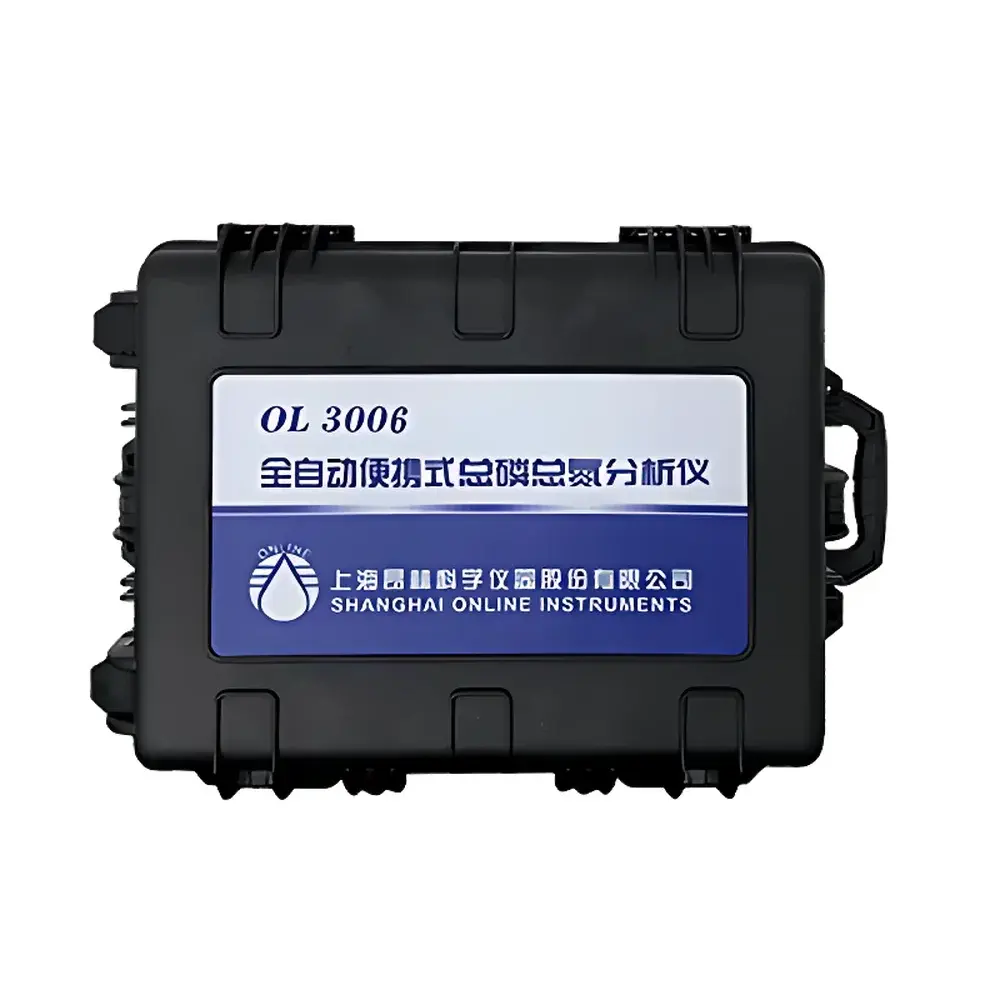
Online Instrument OL3006 Portable Automated Total Phosphorus and Total Nitrogen Analyzer
| Brand | Online Instrument |
|---|---|
| Origin | Shanghai, China |
| Manufacturer Type | Direct Manufacturer |
| Product Category | Domestic |
| Model | OL3006 |
| Measurement Parameters | Total Phosphorus (TP) and Total Nitrogen (TN) |
| Instrument Type | Portable |
| Measurement Principle | Spectrophotometry |
| TP Range | 0.04–1.2 mg/L |
| TN Range | 0.2–7 mg/L |
| Accuracy | ±5% |
| Detection Limit | TP ≤ 0.01 mg/L |
| Resolution | 0.001 mg/L |
Overview
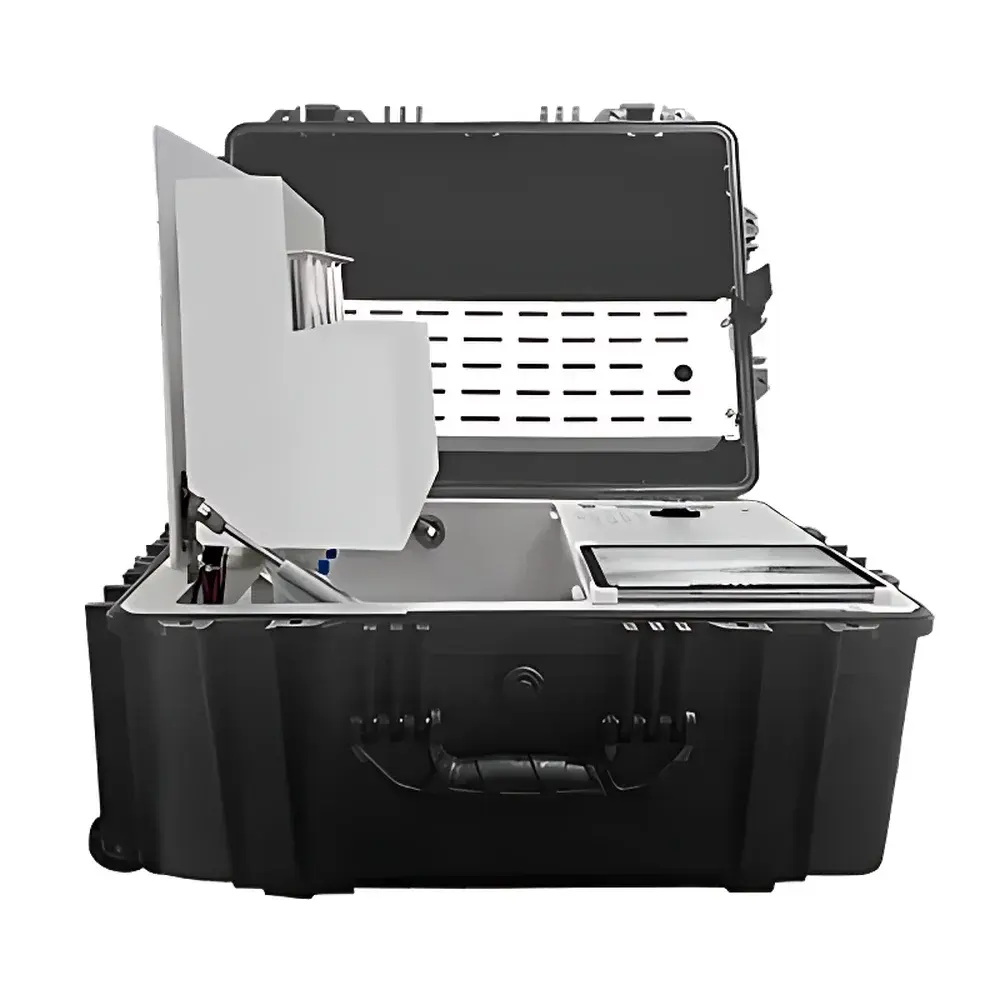
The Online Instrument OL3006 is a fully automated, portable spectrophotometric analyzer engineered for simultaneous on-site determination of total phosphorus (TP) and total nitrogen (TN) in aqueous environmental samples. It implements standardized colorimetric methodologies—ascorbic acid/molybdate blue for TP and alkaline persulfate digestion followed by cadmium reduction or UV digestion coupled with diazotization for TN—fully compliant with ISO 6878, ISO 11905-1, and EPA Method 365.3/353.2. Designed for field deployment, the OL3006 integrates sampling, high-temperature pressurized digestion, reagent dispensing, phase separation, optical measurement, waste handling, and system cleaning into a single ruggedized roll-cage enclosure. Its optomechanical architecture features temperature-stabilized LED light sources, precision interference filters, and low-noise photodiode detection—ensuring stable photometric performance under dynamic conditions, including operation inside moving monitoring vehicles.
Key Features
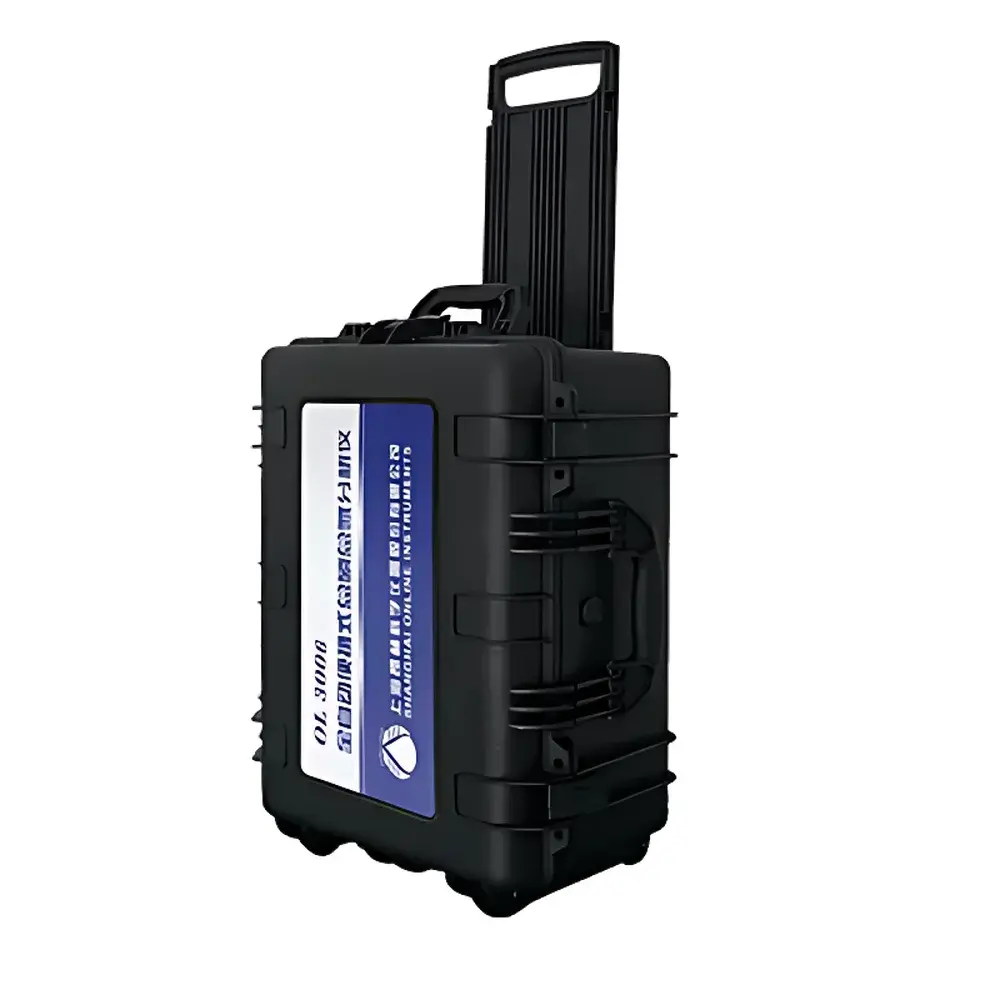
- Integrated field-deployable platform: All core analytical functions—sample aspiration, volumetric metering, reagent addition, digestion (up to 150 °C/0.3 MPa), reaction incubation, liquid–liquid extraction (where applicable), optical measurement, and waste discharge—are housed within a single IP54-rated, shock-dampened carry-on enclosure with retractable handle and reinforced wheels.
- True one-touch automation: From sample loading to final report generation, no manual intervention is required. The embedded control system autonomously executes sequence-controlled steps—including precise micro-pipetting (±1 µL repeatability), timed digestion cycles, automatic calibration verification, and endpoint absorbance acquisition at dual wavelengths (e.g., 700 nm for TP, 540 nm for TN).
- Self-cleaning fluidic pathway: Post-analysis, the system performs multi-stage rinsing using deionized water and air purge to eliminate carryover between samples, validated per ASTM D5173 for cross-contamination control.
- Embedded touchscreen HMI: A 10.1-inch industrial-grade capacitive display with glove-compatible interface enables local method selection, real-time status monitoring, QC flag review, and onboard data export (CSV/PDF).
- Secure remote access capability: Integrated LTE/Wi-Fi module supports authenticated remote instrument control, live parameter adjustment, historical data retrieval, and firmware updates via encrypted HTTPS API—compatible with common enterprise IT security policies.
Sample Compatibility & Compliance
The OL3006 accepts raw, unfiltered water samples up to 50 mL volume across five independent sample positions. It accommodates turbid, colored, or saline matrices typical of surface water, groundwater, municipal wastewater, and industrial effluents (including petroleum refinery discharges and chemical manufacturing outfalls). Digestion efficiency has been verified per ISO 15681-2 for TP and ISO 11905-1 for TN across matrix-matched reference materials (e.g., NIST SRM 1643e, LGC 6012). Data integrity meets ALCOA+ principles: audit trails record operator ID, timestamp, method version, calibration coefficients, raw absorbance values, and QC failure flags. System compliance extends to GLP/GMP-aligned workflows, supporting 21 CFR Part 11–ready electronic signatures when paired with validated LIMS integration modules.
Software & Data Management
The analyzer runs proprietary firmware v3.2 with embedded database logging (SQLite-based, encrypted at rest). Measurement data—including sample ID, location coordinates (GPS-tagged), environmental metadata (ambient T/RH), raw spectra, calculated concentrations, and QC metrics—are structured in ISO/IEC 11179-compliant format. Native LIMS connectivity is implemented via ASTM E1384-compliant HL7 ADT/ORU messaging or secure SFTP transfer. Optional cloud dashboard provides role-based dashboards for QA supervisors, trend analysis over time-series datasets, and automated regulatory report generation (e.g., EPA Form 3330-1, EU WFD reporting templates).
Applications
- Real-time ambient monitoring: Deployed from mobile laboratories during watershed surveys, emergency spill response, or seasonal eutrophication studies.
- Regulatory compliance verification: Supports routine TP/TN checks at NPDES-permitted discharge points, drinking water intake zones, and WWTP influent/effluent streams.
- Industrial process control: Used by petrochemical, semiconductor, and food processing facilities for internal effluent screening prior to municipal sewer release.
- Research-grade field analytics: Enables spatially resolved nutrient mapping in lakes, rivers, and estuaries without sample preservation artifacts or transport-induced degradation.
FAQ
What digestion methods are supported for total nitrogen analysis?
The OL3006 employs dual-mode digestion: high-temperature alkaline persulfate oxidation (for refractory organic nitrogen) and optional UV/persulfate digestion for rapid TN quantification in low-turbidity samples.
Is method validation documentation available?
Yes—full validation reports per ISO/IEC 17025 are provided, including linearity (R² ≥ 0.999), precision (RSD ≤ 3.2% at mid-range), spike recovery (92–105%), and inter-laboratory reproducibility data.
Can the instrument be operated without network connectivity?
Absolutely—the core analytical workflow functions entirely offline; network connection is required only for remote access, LIMS sync, or cloud backup.
What maintenance intervals are recommended?
Daily: Visual inspection of fluidic lines and waste container. Quarterly: Optical path cleaning and pump tubing replacement. Annually: Full calibration verification using certified CRMs and photometric standard filters.
Does the system support custom calibration curves?
Yes—users may import user-defined polynomial or linear calibration models with up to six standards, with automatic goodness-of-fit evaluation (residuals, %RSD, F-test).







