
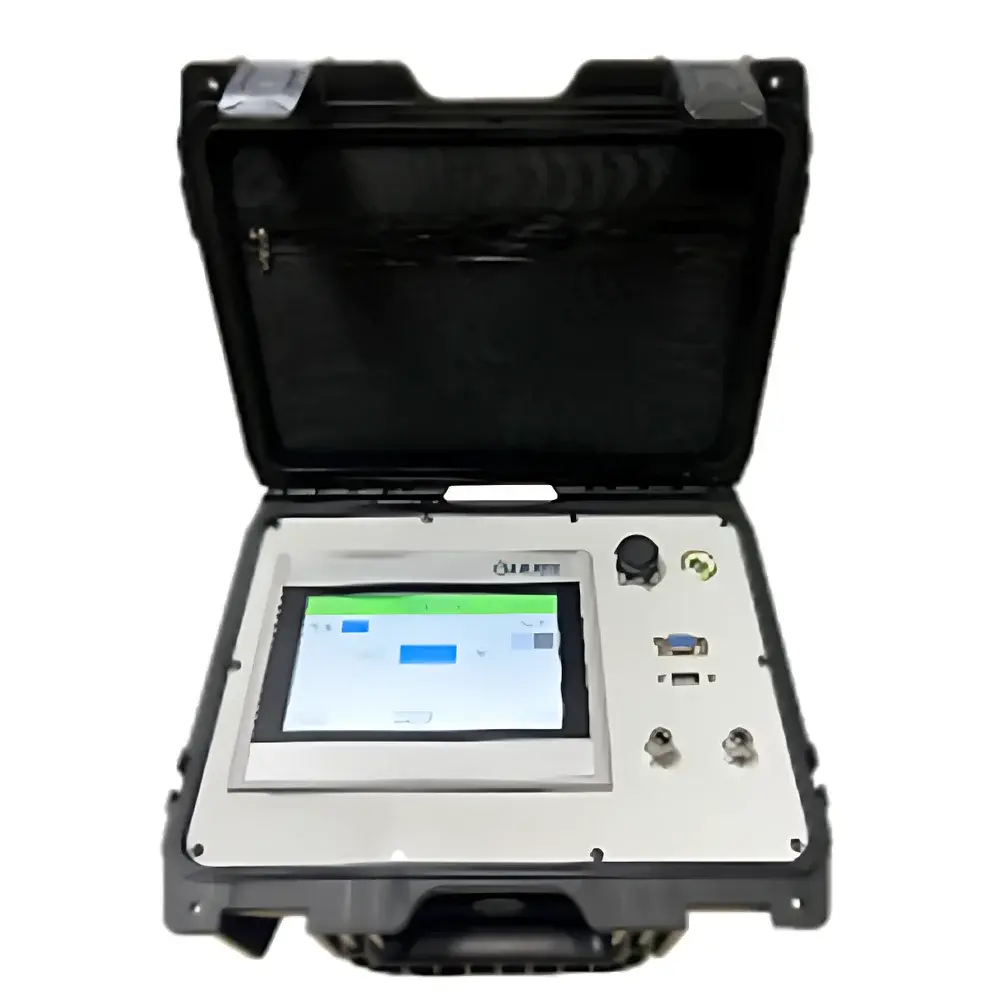
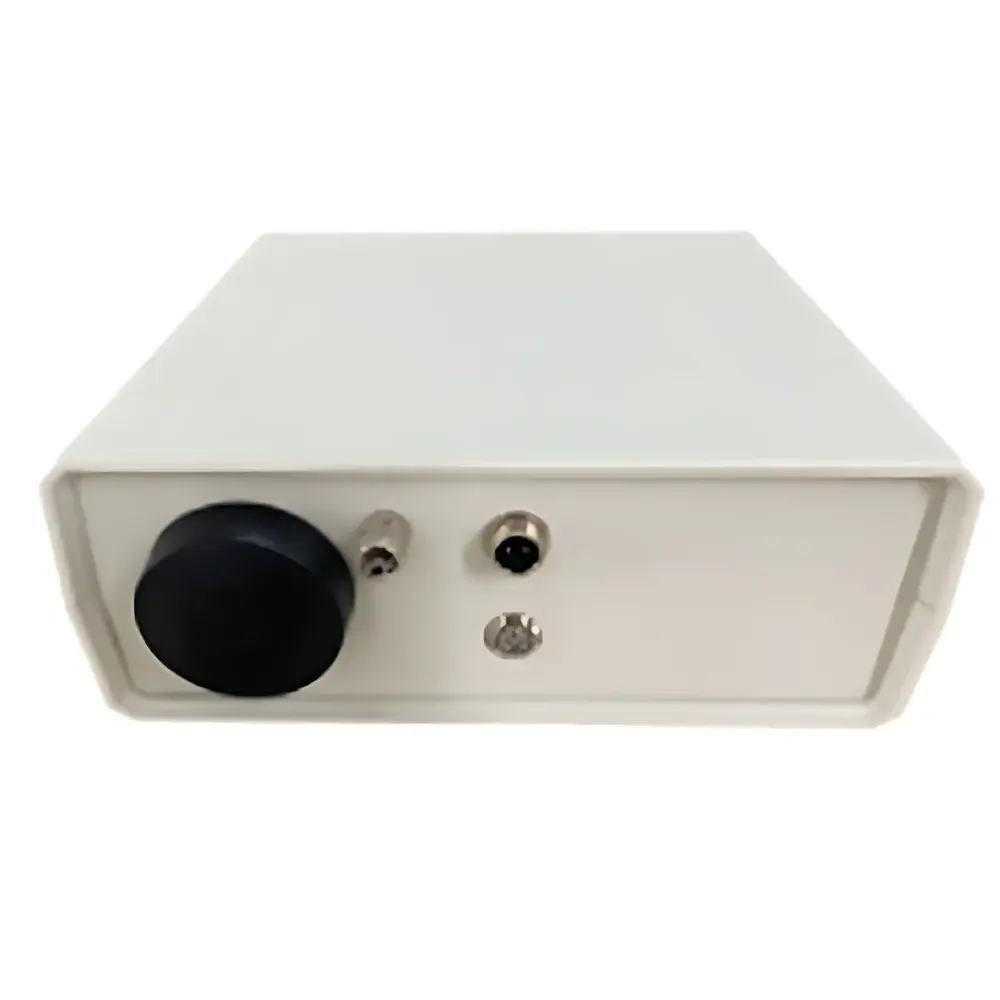
ONUEE UE2040 Portable High-Precision Methane Monitoring Module
| Brand | ONUEE |
|---|---|
| Origin | Guangdong, China |
| Manufacturer Type | Authorized Distributor |
| Product Category | Domestic |
| Model | UE2040 |
| Instrument Type | Portable |
| Measurement Principle | Tunable Diode Laser Absorption Spectroscopy (TDLAS) |
| Target Gas | CH₄ (Methane) |
| Measurement Range | 0–100 ppm (FS) and 0–40,000 ppm (FS) |
| LOD (2σ) | ≤0.4 ppm (standard), ≤0.15 ppm with 10-s averaging |
| Accuracy (2σ) | ≤0.8 ppm (low range), ≤0.25 ppm/10 s (low range), ≤250 ppm (high range), ≤100 ppm/10 s (high range) |
| Sampling Frequency | 2 Hz |
| Response Time (T90) | ≤1.8 s at 2 L/min |
| Resolution | 0.01 ppm |
| Linearity & Repeatability | Included in accuracy specification |
| Cross-Interference | Application- and gas matrix-dependent |
| Output Signals | RS485, 4–20 mA |
| Operating Temperature | −10 to +65 °C |
| Operating Humidity | 0–99% RH (non-condensing) |
| Operating Pressure | 800–1100 mbar |
| Storage Temperature | −40 to +80 °C |
| Storage Humidity | 0–99% RH (non-condensing) |
| Power Supply | 10–30 VDC |
Overview
The ONUEE UE2040 Portable High-Precision Methane Monitoring Module is an engineered solution for real-time, field-deployable quantification of methane (CH₄) concentration using Tunable Diode Laser Absorption Spectroscopy (TDLAS). This technique leverages the unique near-infrared absorption fingerprint of methane at specific wavelengths—typically around 1653 nm—to enable selective, interference-resistant detection. The module integrates a long-path reflective optical cell architecture to enhance effective path length without increasing physical footprint, thereby improving sensitivity and signal-to-noise ratio. Designed for operation across diverse environmental conditions—from sub-zero landfill perimeters to high-humidity agricultural biogas sites—the UE2040 delivers laboratory-grade metrological performance in a compact, battery-compatible form factor. Its core architecture supports trace-level detection down to sub-ppm levels while maintaining robustness against ambient temperature drift, pressure fluctuations, and particulate-laden sampling streams.
Key Features
- Active Optical Noise Suppression: Proprietary laser current modulation and synchronous detection algorithms mitigate thermal drift and electronic noise, ensuring stable baseline performance over extended deployment cycles.
- Hermetically Sealed Laser Optics: All critical optical components—including the distributed feedback (DFB) diode laser and collimating optics—are hermetically packaged to prevent contamination and maintain alignment stability under mechanical shock or vibration.
- Zero-Calibration Long-Term Stability: Factory-calibrated against NIST-traceable gas standards; designed for ≥12 months of continuous operation without field recalibration under typical environmental conditions.
- Rapid Dynamic Response: T90 response time ≤1.8 seconds at 2 L/min flow rate enables real-time tracking of transient methane plumes during mobile surveys or fugitive emission inspections.
- Low-Power Architecture: Operates within 10–30 VDC input range with peak power draw <2.5 W, compatible with portable power banks, vehicle DC systems, and solar-charged battery packs.
Sample Compatibility & Compliance
The UE2040 is validated for direct sampling of ambient air, biogas effluent, landfill headspace gas, and process vent streams containing methane concentrations spanning 0–100 ppm (for ambient monitoring) and 0–40,000 ppm (for source emission quantification). It exhibits minimal cross-sensitivity to CO₂, H₂O vapor, and common hydrocarbons when operated within specified humidity and pressure envelopes. While not certified to ATEX or IECEx standards for hazardous area use, the module complies with electromagnetic compatibility (EMC) requirements per EN 61326-1:2013 and meets RoHS Directive 2011/65/EU. For regulatory reporting applications, its measurement uncertainty budget aligns with ISO 13843:2020 guidelines for gas analyzers used in environmental monitoring, and raw data logs support audit-ready traceability for GLP-compliant workflows.
Software & Data Management
The UE2040 communicates via standard industrial protocols: Modbus RTU over RS485 and analog 4–20 mA output, enabling seamless integration into SCADA systems, PLC-based control architectures, and custom IoT telemetry platforms. Optional firmware includes timestamped ASCII log export via UART, supporting CSV-formatted records with dual-channel concentration values (low/high range), internal temperature/pressure/humidity diagnostics, and signal quality metrics (e.g., absorbance SNR, laser lock status). All firmware updates are delivered via secure signed binary packages, and configuration parameters—including span calibration offsets, alarm thresholds, and averaging windows—are stored in non-volatile memory with write-protection logic to prevent accidental modification. Data integrity is preserved through cyclic redundancy check (CRC-16) validation on all serial transmissions.
Applications
- Fugitive Emission Detection: Integration into handheld survey tools, drone-mounted payloads, and vehicle-mounted mobile labs for EPA OOOOa-compliant LDAR programs.
- Landfill & Biogas Facility Monitoring: Continuous CH₄ flux estimation at surface emission points, leachate collection wells, and flare stack bypass lines.
- Agricultural Methanogenesis Studies: In situ measurement of enteric fermentation emissions from livestock enclosures and manure storage lagoons.
- Industrial Process Control: Real-time feedback for anaerobic digester optimization, natural gas purity verification, and semiconductor chamber purge monitoring.
- Research-Grade Environmental Sensing: Deployment in eddy covariance towers, underwater sediment flux chambers (with waterproof housing adaptation), and polar climate observatories.
FAQ
Is the UE2040 suitable for Class I, Division 1 hazardous locations?
No. The UE2040 is not intrinsically safe or explosion-proof certified. It must be installed in non-hazardous zones or housed in externally rated enclosures for use in classified areas.
Can the module measure gases other than methane?
Yes. The optical platform supports reconfiguration for NH₃, C₂H₆, and C₂H₂ upon request; wavelength-specific laser modules and calibration certificates are provided separately.
What is the recommended calibration interval under continuous operation?
Annual verification against certified reference gas is advised. Field zero/span checks using certified 0 ppm and 50 ppm CH₄ standards are recommended every 90 days for mission-critical deployments.
Does the device support GPS-synchronized geotagging of measurements?
Not natively. Geolocation metadata must be added externally via host system integration using the RS485 timestamp and external GNSS receiver input.
How is moisture handled in high-humidity sampling environments?
The optical path is thermally stabilized to minimize condensation risk. For saturated streams, an inline Nafion™ dryer or chilled mirror dew point controller is recommended upstream of the inlet.
Related Products







